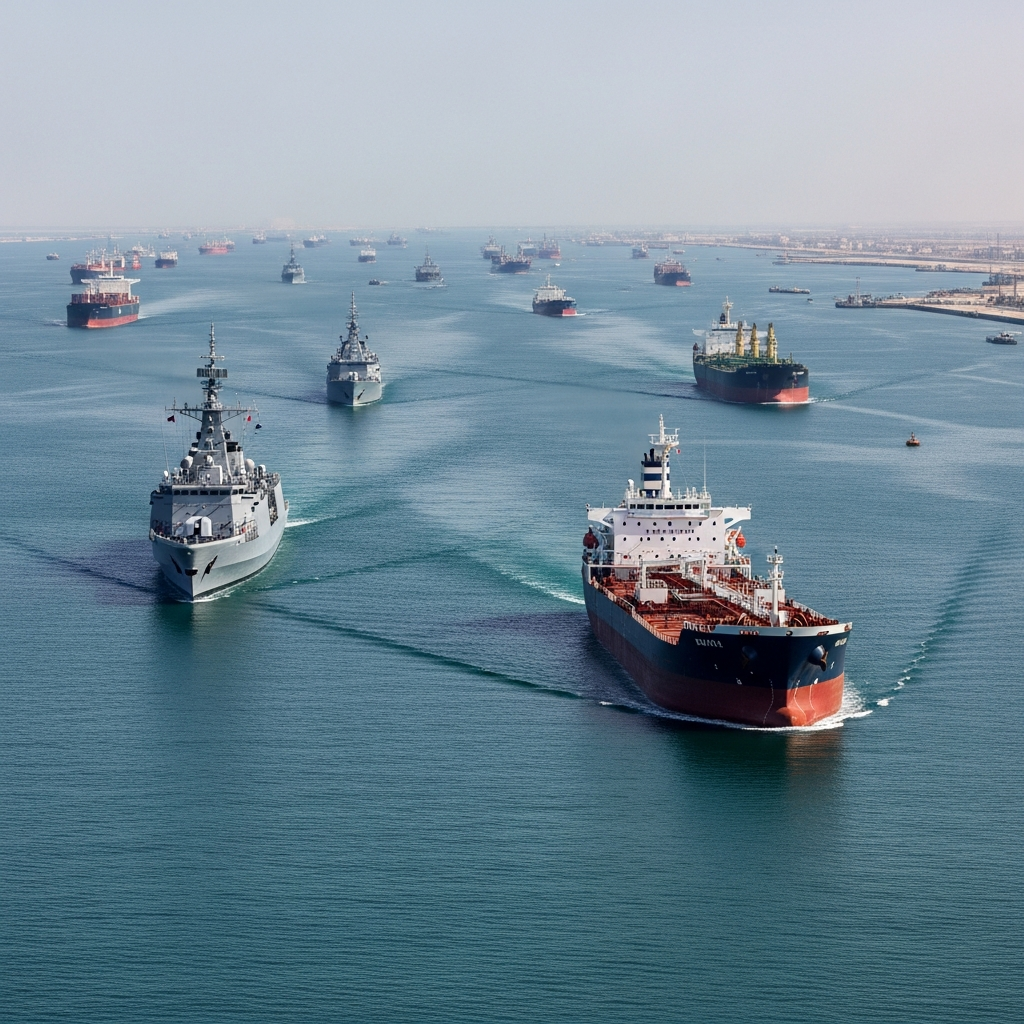
A critical global chokepoint, the Strait of Hormuz, has witnessed a significant development: several international vessels have successfully navigated the contested waterway for the first time since Iran’s effective blockade began on February 28, 2026. This unexpected maritime transit by French, Omani, and Japanese-linked ships signals a cautious, conditional resumption of traffic through a strait vital for global energy supplies. The implications for international trade, fuel prices, and ongoing diplomatic efforts are immense as the world watches whether this marks a true shift or merely a temporary reprieve in the geopolitical standoff.
Breaking the Blockade: Key Transits Emerge
In a notable turn of events, a French container ship, three Oman-linked tankers, and a Japanese-owned gas carrier made passage through the Strait of Hormuz, challenging its effective closure. This series of transits, occurring primarily on April 2 and Thursday (April 1) and Friday (April 2), 2026, has ignited discussions about the future of maritime freedom in the region.
The French Pioneer: CMA CGM Kribi
The Malta-flagged Kribi, a container ship owned by French shipping giant CMA CGM, spearheaded the breakthrough. Its transit on April 2 marked the first known passage by a Western-linked vessel since the conflict escalated. Shipping data revealed an intriguing detail: prior to entering Iranian territorial waters, the Kribi changed its destination signal to “Owner France.” This action is widely interpreted as a clear communication to Iranian authorities about its nationality, possibly facilitating its safe passage. The vessel, after a period of inactivity near Dubai, navigated a sanctioned corridor around Larak Island.
Oman and Japan Follow Suit
Following closely, two very large crude carriers (VLCCs) and one LNG tanker operated by Oman Shipping Management successfully exited the Gulf on Thursday, April 1. Oman, a key regional mediator, had critically viewed the launch of strikes while diplomatic discussions were ongoing, suggesting a potential diplomatic channel at play.
On Friday, April 2, Japan’s Mitsui OSK Lines confirmed that the LNG tanker, Sohar LNG, which it co-owns, had also crossed the strait. This made it the first Japan-linked vessel and the first LNG carrier to do so since the conflict began. Another Mitsui-owned LPG tanker, Green Sanvi, an India-flagged vessel, also departed the Gulf via Iranian territorial waters, explicitly signalling its destination as “India ship India crew.” Concurrently, the Panama-flagged very large gas carrier Danisa also transited, heading towards China.
Iran’s Selective Passage Policy and Maritime Maneuvers
These successful transits are not random; they appear to align with Iran’s revised policy to permit passage for vessels it deems “friendly.” This means ships without direct U.S. or Israeli connections are more likely to be granted access through the contested waterway. This calculated approach allows Iran to maintain pressure while potentially alleviating some international isolation and economic strain.
Strategic Use of AIS Transponders
A recurring observation during these crossings was the apparent manipulation of Automatic Identification System (AIS) transponders. Many vessels, including the CMA CGM Kribi and those operated by Oman Shipping Management and Mitsui OSK Lines, reportedly switched off their AIS signals during the crossing. Their signals disappeared from vessel-tracking data, suggesting a deliberate tactic to navigate the sensitive political landscape and avoid potential complications. This move highlights the precarious nature of maritime transit in the region, where operators employ discreet methods to secure passage.
Global Responses to Limited Access
Since March 1, approximately 150 vessels have transited the strait, predominantly those linked to Iran, China, India, and Pakistan. China, for instance, expressed “gratitude” after three of its state-owned Cosco vessels passed through. However, the overall decline in traffic is stark. The UK Foreign Secretary, Yvette Cooper, has strongly rejected any attempts by Iran to impose multi-million dollar transit fees, dubbing it “Tehran’s tollbooth” and calling for coordinated international action.
Economic Fallout and Diplomatic Crossroads
The effective closure of the Strait of Hormuz, a conduit for about one-fifth of global oil and liquefied natural gas supplies, has triggered a severe global supply shock. Fuel prices have skyrocketed worldwide, impacting consumers and industries alike. Major shipping companies have suspended operations, leading to increased operational costs and a significant spike in freight rates. Retailers, such as Next, have even warned of potential price increases for goods, with some estimates reaching 10%.
A Widening Chasm of Opinions
International leaders have offered differing views on resolving the crisis. US President Donald Trump, speaking on Wednesday, insisted that petrol prices would fall once the war concluded. He offered no solution for reopening the strait, instead inviting “sceptical US allies” to do it themselves, maintaining the war would be “worth it.” He even suggested the US could “easily” open the strait and “TAKE THE OIL, & MAKE A FORTUNE,” describing it as a “GUSHER” for the world.
Conversely, French President Emmanuel Macron declared on Thursday that a military operation to open the strait would be “unrealistic.” He emphasized that only diplomatic efforts would work, confirming his work with European and other allies to build a coalition guaranteeing free passage once hostilities cease.
Seeking a Diplomatic Off-Ramp
Amidst this, Iran’s former top diplomat, Mohammad Javad Zarif, proposed a potential path forward in the US journal Foreign Affairs. He suggested Tehran could make a deal with the United States to end the war. This would involve offering to curb its nuclear program and reopen the Strait of Hormuz in exchange for sanctions relief, a move he described as declaring “victory and making a deal that both ends this conflict and prevents the next one.” The United Nations is also reportedly considering establishing a humanitarian shipping corridor specifically for fertiliser, aiming to avert potential food shortages in vulnerable nations.
Lingering Uncertainty and the Path Forward
Despite the recent transits, the situation remains highly volatile. The historical pattern of intermittent vessel activity followed by renewed paralysis keeps commodities markets on edge. Approximately 45 ships owned or operated by Japanese companies remained stranded in the region as of early Friday, highlighting the ongoing logistical and economic challenges. The ability of certain vessels to pass through the Strait highlights Iran’s calculated approach to the blockade, allowing passage for nations perceived as neutral or diplomatically engaged while maintaining pressure related to the wider conflict.
The global shipping industry faces a “huge build-up of risk.” Calls for the protection of vessels navigating the strait continue from countries like China. The international community grapples with the urgent need to restore freedom of navigation and de-escalate regional hostilities, recognizing that a truly open Strait of Hormuz is crucial for global economic stability.
Frequently Asked Questions
What is the significance of the Strait of Hormuz to global trade?
The Strait of Hormuz is a critically important global chokepoint, through which approximately one-fifth of the world’s oil and liquefied natural gas (LNG) supplies transit. It also handles a significant portion of global trade in raw materials, including those essential for fertiliser production. Its effective closure since February 28, 2026, has had profound economic repercussions, leading to skyrocketing fuel prices worldwide, increased shipping costs, and concerns over global energy security and food supply chains.
How did international vessels manage to transit the Strait of Hormuz despite the blockade?
International vessels, including those from France, Oman, and Japan, were able to transit the Strait of Hormuz by adhering to Iran’s revised policy of permitting passage for “friendly” ships, generally those without U.S. or Israeli connections. These vessels often employed strategic maneuvers, such as changing their Automatic Identification System (AIS) destination to clearly signal their nationality (e.g., “Owner France” or “India ship India crew”) to Iranian authorities. Some vessels also reportedly switched off their AIS transponders during the crossing, disappearing from vessel-tracking data, to navigate the sensitive political landscape and avoid complications.
What are the economic impacts of the Strait of Hormuz blockade on global consumers?
The blockade of the Strait of Hormuz has had severe economic impacts on global consumers. The disruption to roughly 20% of global oil and LNG supplies has caused fuel prices to surge worldwide. Beyond energy, increased operational costs for shipping companies and soaring freight rates are translating into higher prices for various goods, with some retailers warning of potential double-digit price increases. Furthermore, concerns are rising over food security, particularly in poorer nations dependent on fertiliser imports, as the strait is also crucial for the trade of these raw materials.