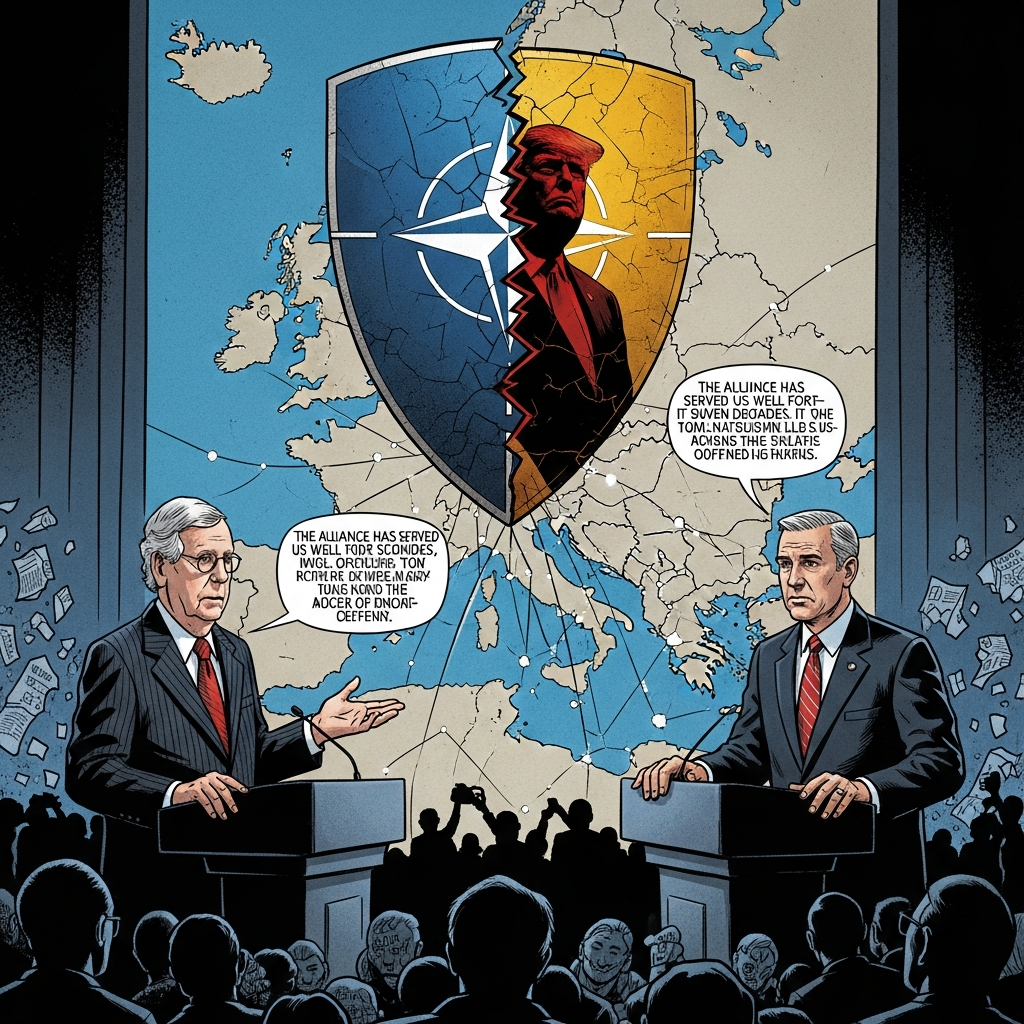
A significant ideological rift has emerged within the Republican party as influential senators, including Mitch McConnell and Thom Tillis, openly defy former President Donald Trump’s contemplation of withdrawing the United States from NATO. This rare bipartisan opposition underscores deep-seated concerns over national security, international alliances, and the strategic implications of such a move. Their warnings highlight potential aid to geopolitical rivals and a direct challenge to America’s long-standing commitments, setting the stage for a critical battle over foreign policy and presidential authority.
Trump’s Unwavering Stance on NATO Withdrawal
Donald Trump has explicitly stated his strong consideration of pulling the U.S. out of the North Atlantic Treaty Organization (NATO). In recent interviews, he affirmed he was “absolutely without question” considering this drastic step, adding that the matter was “beyond reconsideration.” His primary reason for this stance centered on NATO’s refusal to participate in a joint assault with Israel against Iran.
Trump has long been a vocal critic of the transatlantic alliance. He has previously shown skepticism toward its value. Notably, he did not consult with NATO before collaborating with Israel on the campaign against Iran. Furthermore, he chose not to invoke Article 5 of its treaty. Article 5 triggers collective defense from member states in response to an armed attack. This consistent pattern of bypassing traditional alliance structures highlights his desire for a more unilateral foreign policy.
Senior Republicans Defend the Transatlantic Alliance
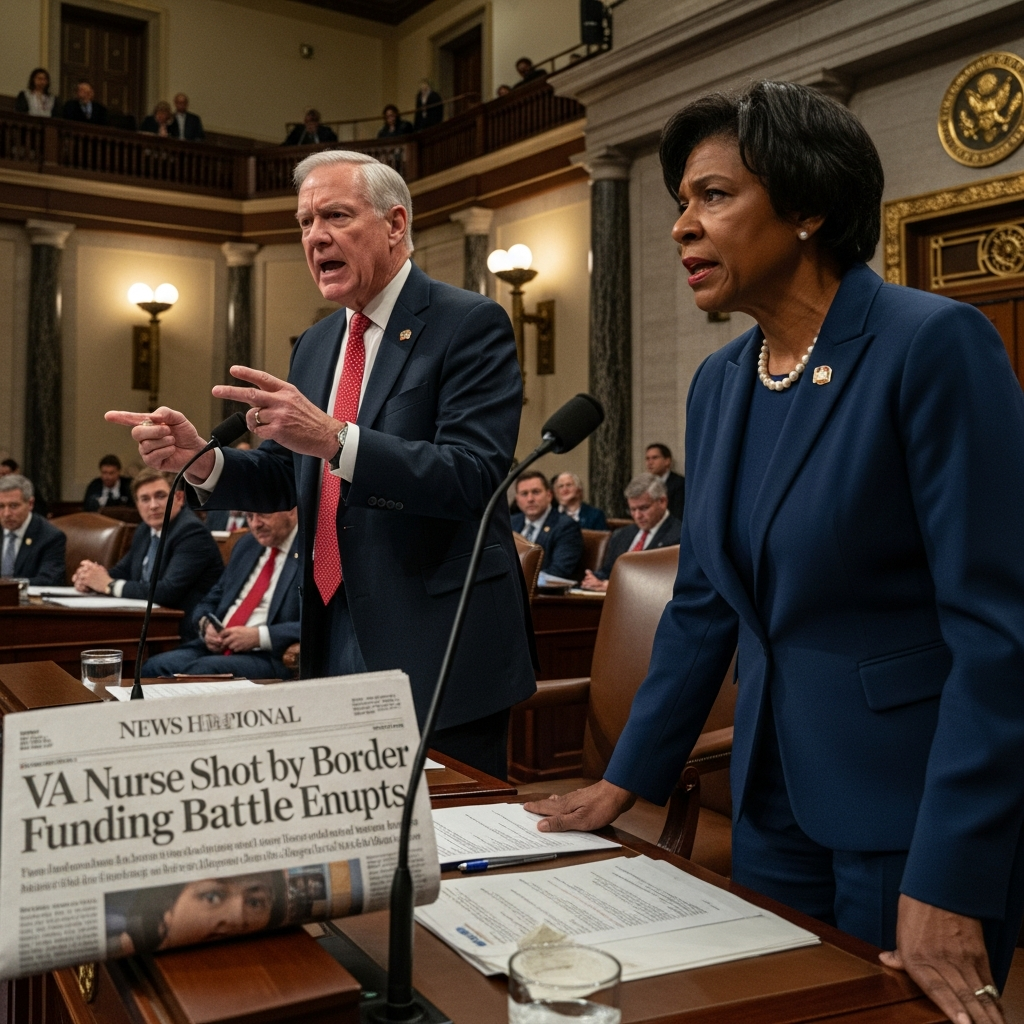
In a striking display of internal party dissent, prominent Republican senators have vehemently pushed back against Trump’s position. Their arguments emphasize the alliance’s critical role in American security. The Republican NATO split represents a significant moment for the party.
Senator McConnell’s Firm Stance
Mitch McConnell, the former Senate Republican leader, issued a powerful joint statement with Democratic Senator Chris Coons. They stressed the profound sacrifices made by NATO allies. “NATO troops fought and died in Afghanistan and Iraq alongside American forces,” their statement read. It continued, urging that the United States “must not take this sacrifice – nor our allies’ commitment to make it again – lightly.” Both McConnell and Coons, who are leading figures on the Senate defense appropriations subcommittee, acknowledged that “alliance disputes are as old as the alliance itself.” However, they firmly asserted, “Americans are safer when NATO is strong and united.” They concluded that it is “in our interest for all allies to tend this unity with care.”
Tillis Defends Alliance Security and Warns of Geopolitical Risks
Senator Thom Tillis, co-chair of the Senate NATO observer group, joined Democratic Senator Jeanne Shaheen in robustly defending the alliance. Tillis recalled NATO’s unwavering solidarity with the U.S. He reminded the public how “NATO stood by America when we were under attack and came to our aid after the September 11th attacks.” He also highlighted that “Their soldiers fought and died alongside our troops in Afghanistan.”
Tillis issued a stark warning against a potential withdrawal. He cautioned that any president contemplating such a move would be “not only fulfilling Vladimir Putin and Xi Jinping’s greatest dreams but would be undermining America’s own national security interests.” This powerful statement underscores the perception that weakening NATO would directly benefit rival powers. The senator’s strong words highlight the critical nature of the transatlantic alliance for global stability and U.S. interests.
Legal Hurdles for a NATO Withdrawal
Leaving the NATO alliance is far from a simple executive decision. A significant legal hurdle complicates any potential U.S. withdrawal. Under a 2024 law, a U.S. president cannot unilaterally withdraw from NATO. Such an action requires the support of a two-thirds majority in the Senate. Alternatively, it would necessitate an act of Congress. This legal framework makes a withdrawal politically difficult, demanding broad legislative consensus. The law acts as a critical check on presidential authority regarding international treaties.
This legislative barrier means that any move by Trump to leave NATO would face substantial challenges. It would likely ignite an intense political battle in Washington. The need for congressional approval reinforces the importance of shared decision-making on matters of national security. It also reflects a desire to prevent sudden, unilateral shifts in foreign policy that could have long-term consequences.
A Pattern of Dissent: Broader Republican Pushback Against Trump’s Foreign Policy
The Republican NATO split is not an isolated incident. It is part of a broader pattern of prominent Republican lawmakers challenging Donald Trump’s foreign policy decisions and perceived overreach of executive power. Several key instances highlight this ongoing tension:
Challenging Unilateral Military Action
In a significant show of congressional oversight, five Republican senators broke ranks with Trump to advance legislation restricting his use of military force. This occurred in response to concerns over potential military action in Venezuela and Greenland. Senators Susan Collins, Rand Paul, Lisa Murkowski, Todd Young, and Josh Hawley sided with Democrats. They supported a measure to block Trump from deploying military force “within or against Venezuela” without congressional approval. Senator Collins, despite supporting an operation that led to a Venezuelan leader’s capture, firmly opposed further long-term military involvement without specific authorization. This push for congressional authority on war powers demonstrates a bipartisan concern about executive autonomy in foreign engagements.
Rebuking Greenland Annexation Threats
Trump’s renewed threats to annex Greenland, a self-governing territory of Denmark and a NATO ally, also provoked widespread Republican condemnation. The White House had declared acquiring Greenland a “national security priority,” even suggesting military force was “always an option.” This stance drew sharp criticism.
Senator Thom Tillis called the idea “absurd” and “sick of stupid,” directly criticizing “amateurs” promoting it.
Senator Mitch McConnell warned that such threats were “unseemly” and “counterproductive.” He deemed using force against a NATO ally a “catastrophic act of strategic self-harm.”
Senator Lisa Murkowski argued that any forceful claim on Greenland would “degrade both our national security and our international relationships,” urging the U.S. to view Greenland as an “ally, not an asset.”
Congressman Don Bacon called the situation “appalling” and “demeaning” to Denmark, warning it “would be the end of his presidency” if Trump proceeded.
Senator John Kennedy unequivocally labeled invading Greenland as “weapons-grade stupid.”
These strong rebukes highlight a deep concern within the GOP about respecting allied sovereignty and maintaining international relationships, particularly within the NATO framework.
Undermining Presidential Tariff Powers
The Republican-led Senate also delivered a notable bipartisan rebuke to Trump by voting to terminate the national emergency powers he used to impose sweeping tariffs on Brazil. Five Republican senators—Collins, Murkowski, Tillis, McConnell, and Paul—joined all Democrats in this vote. This action reflected growing unease within the GOP regarding the economic impacts of the President’s tariff policies. Senator Tillis stated he saw “no rational basis” for the Brazil tariffs. This vote signaled significant internal dissent over presidential authority in trade policy, further emphasizing a desire for congressional checks and balances.
Implications for US National Security and Global Alliances
The potential for a U.S. withdrawal from NATO carries profound implications for both American national security and the global geopolitical landscape. The alliance, founded on principles of collective defense, has been a cornerstone of transatlantic stability for decades. Disrupting this fundamental commitment would create a vacuum in global leadership. It would also potentially destabilize regions from Europe to the Middle East.
Critics argue that a U.S. departure would:
Aid Geopolitical Rivals: As Tillis warned, such a move would fulfill the “greatest dreams” of adversaries like Russia and China. It would allow them to exert greater influence unchecked.
Undermine US Security: A fragmented NATO would weaken collective intelligence sharing and defense capabilities. This leaves the U.S. more vulnerable.
Damage International Standing: The U.S. would lose credibility as a reliable ally. This could lead to a decline in diplomatic influence and the formation of new, potentially less favorable, alliances.
- Increase Global Instability: Without a strong NATO, regional conflicts could escalate more easily. This poses risks to international trade routes and global supply chains.
- www.theguardian.com
- www.latimes.com
- time.com
- www.npr.org
- www.theguardian.com
The bipartisan opposition from key senators underscores a broad consensus that a strong, united NATO remains vital for American interests. It’s seen as a bulwark against aggression and a platform for collective problem-solving.
Why Are These Senators Speaking Out Now?
It is noteworthy that some of the most vocal Republican critics, such as Mitch McConnell and Thom Tillis, are in their final months in office. McConnell is retiring after a long career. Tillis has opted not to run for re-election. This timing potentially provides them greater freedom to express their disagreements without immediate political repercussions. They can speak their minds more freely. Their willingness to break with a powerful figure like Trump highlights the seriousness of their concerns regarding NATO and U.S. foreign policy direction. This provides unique insights into the core values some Republicans hold for alliances.
Frequently Asked Questions
What is the core disagreement between Donald Trump and Republican Senators McConnell and Tillis regarding NATO?
The core disagreement stems from Donald Trump’s stated consideration of withdrawing the U.S. from NATO, which he justified by citing NATO’s refusal to join a joint assault with Israel against Iran. Senators McConnell and Tillis, alongside Democrats, strongly oppose this, arguing that leaving the alliance would undermine U.S. national security, aid rivals like Russia and China, and disregard NATO’s historical support for the U.S. They emphasize the vital role of the transatlantic alliance for American safety and global stability.
What legal challenges would a U.S. president face when trying to withdraw from NATO?
Under a 2024 law, a U.S. president cannot unilaterally withdraw the United States from NATO. Such an action requires significant congressional approval. Specifically, it would need the support of a two-thirds majority in the Senate or the passage of an act of Congress. This legal framework imposes a substantial political hurdle, making a unilateral withdrawal highly difficult and unlikely without broad legislative consensus.
How does the Republican dissent on NATO relate to other foreign policy disagreements with Donald Trump?
The Republican opposition to Trump’s NATO stance is part of a broader pattern of dissent against his foreign policy and executive authority. Previously, several Republican senators broke with Trump over his use of military force in Venezuela and threats to annex Greenland, emphasizing congressional war powers and respect for allies’ sovereignty. There was also a bipartisan rebuke over his use of emergency powers to impose tariffs on Brazil. These instances collectively highlight a deep concern among some Republicans about presidential overreach and the potential damage to international alliances and U.S. global standing.
Conclusion
The open defiance by influential Republican senators like Mitch McConnell and Thom Tillis against Donald Trump’s contemplation of a NATO withdrawal marks a crucial moment in U.S. foreign policy. Their warnings underscore the profound implications for national security, international alliances, and the global balance of power. With legal hurdles requiring congressional approval for any such withdrawal, the path ahead is fraught with political challenges. This Republican NATO split reflects a deeper concern about maintaining the U.S.’s role in the transatlantic alliance, a cornerstone of its foreign policy for decades. The debate highlights the enduring tension between executive power and legislative oversight in shaping America’s global commitments. As the discussion continues, the unity and strength of NATO remain central to discussions about America’s future in an increasingly complex world.