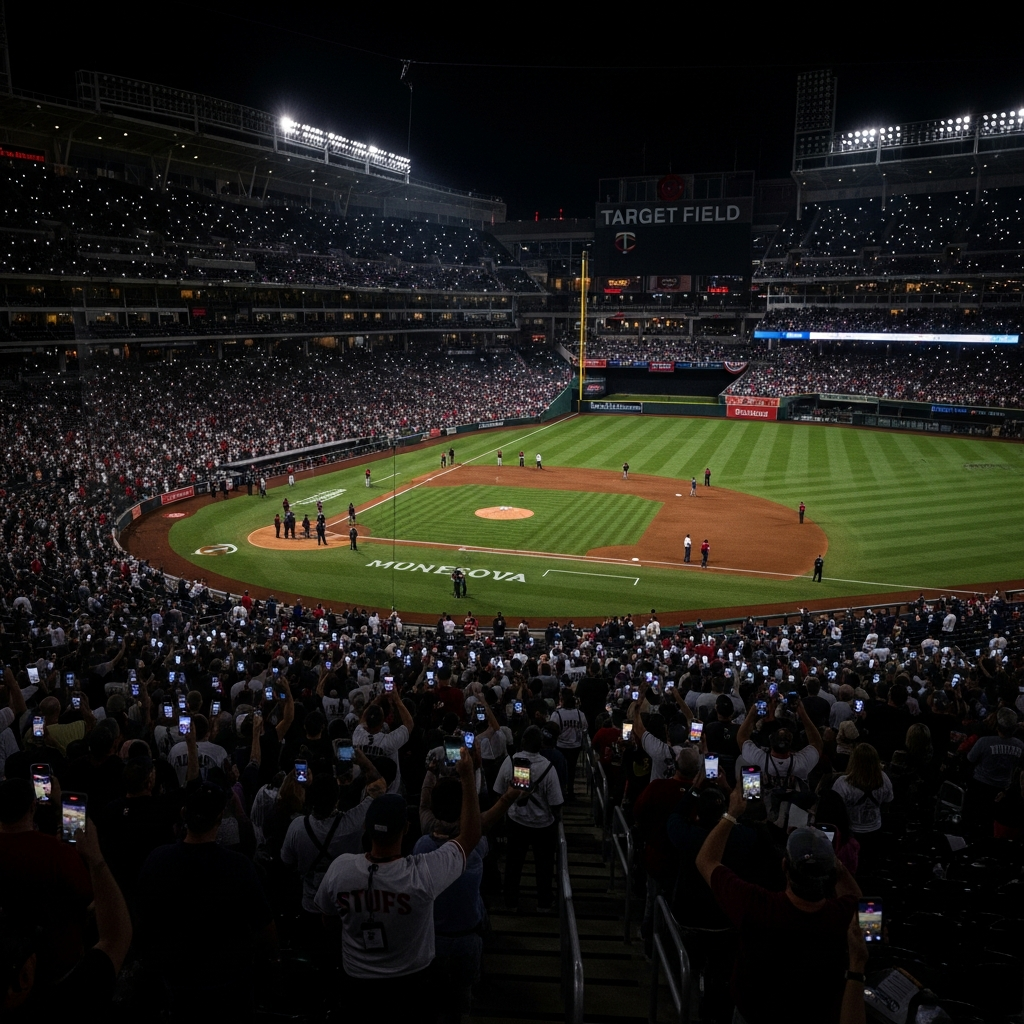
The highly anticipated Minnesota Twins home opener at Target Field was thrown into sudden darkness and dramatic chaos on Friday, April 3, 2026. Just over an hour before the first pitch against the Tampa Bay Rays, a widespread power outage struck the stadium and surrounding Minneapolis North Loop neighborhood. This unexpected blackout left fans, staff, and players in suspense, significantly delaying pregame festivities and the start of the game itself. Xcel Energy swiftly responded to the incident, working to restore power and shed light on the cause of the disruption that impacted approximately 1,540 customers.
Sudden Darkness Descends on Target Field
The incident unfolded shortly before 2:00 p.m. CDT, plunging Target Field into an eerie silence and complete darkness. Fans arriving early, staff preparing for the highly anticipated game, and even a WCCO news crew on site immediately noticed the abrupt loss of electricity. This wasn’t just an inconvenience; it brought essential stadium operations to a grinding halt. Reports quickly emerged of individuals becoming trapped in elevators, highlighting the immediate dangers and widespread impact of the power failure. The stadium’s social media channels confirmed the disruption, acknowledging the delays in what was meant to be a celebratory day.
The timing of the outage was particularly unfortunate. A home opener is a marquee event, marking the first opportunity for local fans to cheer on their team in person. It’s typically a day filled with spectacle, pyrotechnics, and special ceremonies designed to build excitement for the season ahead. Instead, the focus shifted from celebration to crisis management as officials scrambled to understand and rectify the situation.
Xcel Energy’s Rapid Response and Restoration Efforts
Xcel Energy, the local utility provider, confirmed the extensive nature of the power outage. Their data indicated that roughly 1,540 customers in the North Loop area were affected, including the iconic baseball venue. Crews were immediately dispatched to investigate the cause of the disruption. Initially, Xcel Energy projected a lengthy restoration time, with some estimates suggesting power might not return until after 3:00 p.m.
However, the utility company’s teams worked efficiently. Signs of life began to reappear by approximately 2:30 p.m., with some preliminary lighting flickering back on. By 2:48 p.m., power was largely restored across the stadium. The massive scoreboards, which had been dark monuments, illuminated once again, prompting cheers from the patient crowd. This rapid restoration, significantly sooner than initial projections, prevented an even longer delay and allowed the day’s events to eventually proceed.
Impact on Fans and Game Day Operations
The power outage created immediate logistical challenges for everyone attending the game. Long lines formed outside Target Field as fans found themselves unable to enter through the turnstiles due to non-functioning ticket scanners. Security personnel, demonstrating quick thinking, soon began expediting entry by allowing fans to show their tickets manually. This crucial adjustment helped alleviate growing queues and frustration.
Inside, concession stands temporarily ceased operations, preventing fans from purchasing food and beverages. Once power returned, card readers and other equipment quickly came back online, allowing concessions to resume normal service. Despite the unusual circumstances and initial inconveniences, the prevailing sentiment among the Twins fanbase remained remarkably positive. Reporters on site noted a distinct lack of complaints, with fans maintaining high spirits. Many simply embraced the unique situation, continuing to celebrate birthdays, first home openers, or simply the joy of being at the ballpark. This resilience underscored the deep dedication of Minnesota sports fans.
Delayed Pregame Festivities and First Pitch
The power outage necessitated a complete overhaul of the pregame schedule. The Minnesota Twins had meticulously planned a comprehensive program for their home opener. This included dramatic team introductions featuring pyrotechnics, a solemn moment of silence for departed Twins family members and servicemembers, and an impressive flag ceremony involving military veterans and Olympians. The National Anthem was set to be performed by artists from the Children’s Theatre Company, followed by a procession of Minnesota Olympians and Paralympians. Ceremonial first pitches by prominent athletes like curlers Cory Thiesse and Korey Dropkin, and Paralympic snowboarder Mike Schultz, were also on the agenda.
All these cherished traditions were placed on hold. The original first pitch, slated for 3:10 p.m. CDT, was consequently pushed back. Following the successful restoration of power, the Twins’ official channels announced a new anticipated start time of 4:05 p.m. CDT. This allowed pitchers sufficient time—at least 50 minutes—to warm up properly, ensuring player safety and game readiness. The pregame ceremonies themselves were rescheduled to begin around 3:36 p.m. CDT, a testament to the dedication of the stadium staff to salvage as much of the original experience as possible.
Broader Context for the Minnesota Twins’ 2026 Season
This unexpected power outage added another layer of complexity to what had already been a challenging start for the Minnesota Twins in the 2026 MLB season. Entering the home opener with a “quiet” 2-4 record, the team’s offense had struggled to find its rhythm, scoring only 24 runs—tying them for 17th across the league. This early season hurdle led some observers to hope for a “second power surge” from the lineup once the game finally commenced.
On the pitching front, Bailey Ober was scheduled to take the mound, looking to rebound from a rough first outing. His performance was crucial, especially given the significant blow of Pablo Lopez being sidelined for the entire season. This injury elevated Ober and Joe Ryan into pivotal roles at the top of the Twins’ rotation. The franchise was reportedly focused on rebuilding and moving forward under new manager Derek Shelton, having endured “plenty of chaos” from injuries and a “roster sell off” in the previous season. The Target Field power failure, while a temporary disruption, symbolized yet another unexpected obstacle in an already arduous journey for the Minnesota Twins.
Frequently Asked Questions
What caused the sudden power outage at Target Field before the Twins home opener?
The power outage at Target Field on April 3, 2026, was part of a larger electrical disruption affecting approximately 1,540 customers in the surrounding North Loop neighborhood of Minneapolis. Xcel Energy, the utility provider, reported that crews were swiftly dispatched to investigate the cause of the incident. While an immediate cause wasn’t detailed, Xcel Energy confirmed the widespread nature of the issue and prioritized rapid restoration efforts for Target Field and other affected customers.
How did the power outage impact fan entry and experience at Target Field?
The power outage significantly affected fan entry, initially creating long lines outside the stadium as electronic ticket scanners were non-functional. Security personnel quickly adapted by allowing fans to enter simply by showing their tickets, expediting the process. Inside, concession stands were temporarily halted but reopened once power was restored, with card readers functioning normally. Despite these initial inconveniences, fans reportedly maintained positive spirits, embracing the unusual circumstances of the delayed home opener.
Was the Twins’ home opener game against the Rays ultimately played despite the Target Field power outage?
Yes, the Minnesota Twins’ home opener against the Tampa Bay Rays was played, although it experienced a significant delay. The game, originally scheduled for a 3:10 p.m. CDT first pitch, was pushed back to 4:05 p.m. CDT after power was restored. Pregame ceremonies, including team introductions and special tributes, were also delayed but eventually took place. The incident caused a temporary disruption but did not lead to the cancellation of the highly anticipated game.
The April 3, 2026, Target Field power outage served as a dramatic, albeit temporary, halt to what should have been a seamless celebration of baseball’s return to Minneapolis. It highlighted the fragility of modern stadium operations and the critical role of utility providers. Yet, through quick action by Xcel Energy and the resilience of fans and stadium staff, the day was salvaged. The delayed first pitch allowed the Minnesota Twins to finally kick off their home season, adding another memorable chapter to the team’s ongoing narrative amidst an already challenging 2026 campaign.