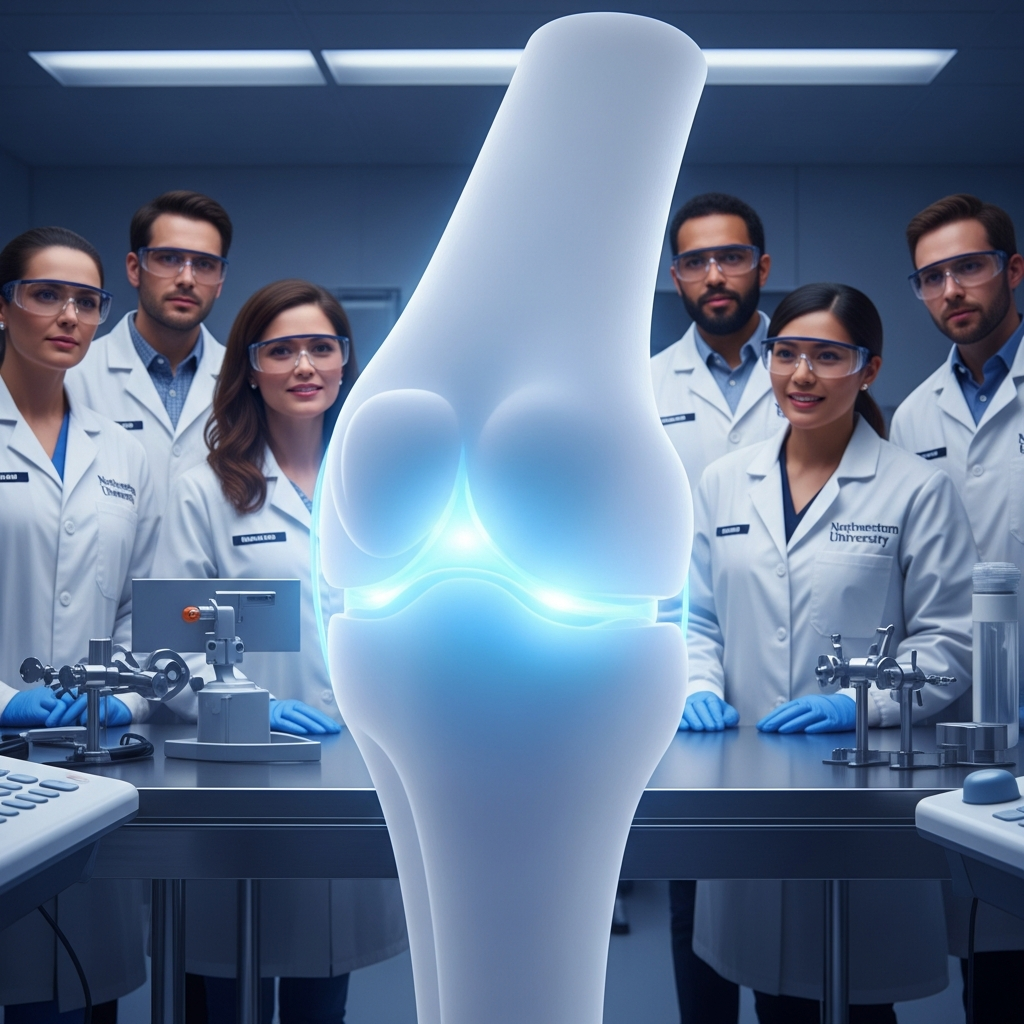
Chronic knee pain can be debilitating, limiting daily activities and robbing millions of their mobility. For decades, the message has been discouraging: once joint cartilage is damaged, it’s gone for good. But what if that wasn’t true? Scientists at Northwestern University have achieved a medical first, developing a revolutionary bioactive material that can regenerate damaged cartilage, offering a genuine pathway to pain-free movement. This groundbreaking research presents a potent new hope for the over 500 million people worldwide suffering from this pervasive issue.
Understanding the Cartilage Crisis
Cartilage serves as the body’s natural shock absorber. This smooth, elastic tissue cushions joints, allowing bones to glide effortlessly against each other. It’s essential for fluid, pain-free movement, whether you’re simply standing or embarking on a vigorous hike. Crucially, cartilage reduces pressure on bones, protecting them from the constant wear and tear of daily life.
However, cartilage is notoriously difficult to heal. Unlike most tissues, it lacks a direct blood supply, meaning it has a very limited ability to repair itself after injury or degeneration. When this vital tissue is damaged, recovery can be incredibly challenging, often leading to chronic pain, stiffness, and conditions like osteoarthritis. Current treatments frequently fall short, highlighting a critical unmet need in orthopedic medicine.
A Revolutionary Approach to Cartilage Regeneration
The breakthrough from Northwestern University centers on a novel “rubbery goo” – a sophisticated bioactive material designed to actively promote the body’s natural healing processes. Unlike passive implants, this innovative substance doesn’t just sit idly in the joint. Instead, it’s engineered to bind with and integrate into existing tissue, actively stimulating cartilage regeneration.
This remarkable material creates a complex network that precisely mimics the natural environment within healthy cartilage. This scaffold-like structure provides the ideal framework, allowing existing cells to connect, proliferate, and rebuild functional cartilage tissue. Samuel I. Stupp, who led the pioneering study, emphasized the significance of this development: “Our new therapy can induce repair in a tissue that does not naturally regenerate. We think our treatment could help address a serious, unmet clinical need.”
The Science Behind the “Goo”
The bioactive material is a carefully formulated blend of short protein fragments and a modified version of hyaluronic acid. Hyaluronic acid (HA) is a key component, naturally found in many human tissues, including the joints and brain. Stupp explained their rationale, noting, “We chose it because it resembles the natural polymers found in cartilage.” This strategic choice enhances the material’s biocompatibility and its ability to integrate seamlessly with the body’s own healing mechanisms. The combination allows the material to behave much like the natural cartilage it aims to replace, providing a stable, regenerative environment.
Promising Pre-Clinical Results Offer Hope
To rigorously test the efficacy of this new material, Stupp and his team conducted studies on damaged cartilage in sheep. This animal model was chosen specifically because sheep have weight-bearing loads comparable to human knees, making their response to treatment highly relevant for predicting human outcomes. The findings from these pre-clinical trials have been exceptionally encouraging.
Within fewer than six months, the treated cartilage demonstrated “high-quality regeneration.” Crucially, the regenerated tissue showed strong indications that this repair mechanism could be effective in humans. A significant aspect of this success is the material’s ability to regenerate hyaline cartilage. This is the robust, wear-resistant cartilage typically found in healthy joints, meaning the repair isn’t just cosmetic but creates durable, functional tissue. This regenerative capacity holds immense promise for long-term joint health and pain relief.
The Shortcomings of Current Cartilage Treatments
Despite advancements in medical technology, existing treatments for damaged knee cartilage often provide limited, short-term relief. For millions globally, the reality of cartilage repair has been a challenging journey with inconsistent outcomes. Traditional surgical interventions, cell implants, and microfracture procedures frequently lead to the formation of weaker, less durable cartilage.
A 2025 study highlighted the grim statistics associated with these conventional approaches. Microfracture surgery, for instance, has a high failure rate, with as many as 41% of patients eventually requiring total knee replacement. Even when initial results seem positive, up to 48% of patients developed arthritis over time, and only a small fraction—between 17% and 20%—were able to return to playing sports. Many also faced the prospect of additional surgeries.
While various non-surgical options exist for managing joint pain, they typically focus on symptom relief or temporary repair rather than true regeneration of hyaline cartilage. These can include:
Platelet-Rich Plasma (PRP) Therapy: Concentrated platelets injected to stimulate healing and reduce inflammation.
Stem Cell Therapy: Utilizes stem cells to aid regeneration, but often doesn’t fully restore native cartilage structure.
Viscosupplementation (Hyaluronic Acid Injections): Injects a lubricating gel into the joint, similar to the modified hyaluronic acid used in the new material, but primarily for lubrication and pain relief, not regeneration.
Radiofrequency Ablation (RFA): Uses heat to deactivate pain-transmitting nerves.
Shockwave Therapy (ESWT): Uses sound waves to stimulate healing.
Biologic Anti-inflammatory Therapies: Target molecular pathways to reduce inflammation.
Advanced Physical Therapy & Robotics: Focus on rehabilitation and strengthening.
Lifestyle Modifications: Weight management and anti-inflammatory diets.
While these therapies offer valuable support, they often don’t provide the same fundamental, durable regeneration that the Northwestern breakthrough promises. The ability to truly regrow high-quality hyaline cartilage could fundamentally shift the paradigm of cartilage repair.
A New Standard of Care for Joint Health
Researchers are optimistic that this bioactive material could revolutionize most joint surgeries. The promising findings suggest that this “goo-like” substance could one day make a profound difference for anyone striving to move without pain. The implications for long-term mobility and quality of life are immense.
“By regenerating hyaline cartilage, our approach should be more resistant to wear and tear, fixing the problem of poor mobility and joint pain for the long term,” Stupp noted. This innovative therapy also aims to “avoid the need for joint reconstruction with large pieces of hardware,” which often comes with its own set of complications and limitations. This medical first holds the potential to move beyond temporary fixes, offering a durable solution that truly addresses the root cause of cartilage-related joint pain.
Frequently Asked Questions
What is the new “rubbery goo” for knee cartilage regeneration made of?
The innovative bioactive material developed by Northwestern University scientists is composed of short protein fragments combined with a modified version of hyaluronic acid. Hyaluronic acid was specifically chosen because it naturally occurs in many bodily tissues, including joints, and resembles the natural polymers found in healthy cartilage, enhancing the material’s ability to integrate and promote regeneration.
How does this new bioactive material help regrow damaged cartilage?
This pioneering material actively binds to and integrates with surrounding joint tissue. It forms a scaffold-like network that mimics the body’s natural environment, providing a supportive structure where existing cells can connect and rebuild new cartilage tissue. Unlike passive implants, it’s designed to actively stimulate and promote the regeneration of high-quality hyaline cartilage.
How does this new cartilage regeneration method compare to current treatments for knee pain?
Current treatments for damaged cartilage, such as surgery, cell implants, and microfracture, often provide only short-term relief and can result in weaker cartilage, leading to issues like arthritis or even total knee replacement (up to 41% for microfracture surgery). This new method stands apart by actively regenerating hyaline cartilage, which is naturally more resistant to wear and tear, offering a more durable, long-term solution that aims to restore natural joint function and avoid complex hardware-based reconstructions.
The Future of Pain-Free Movement
The development of this regenerative bioactive material marks a monumental step forward in orthopedic medicine. For millions who have faced the daunting prospect of chronic knee pain and limited solutions, this breakthrough offers genuine hope. The ability to regenerate high-quality, durable cartilage could truly transform lives, restoring mobility and enabling individuals to return to activities they once enjoyed without the burden of pain. As research progresses towards human trials, this “rubbery goo” may indeed pave the way for a future where saying goodbye to knee pain is not just a wish, but a reality.