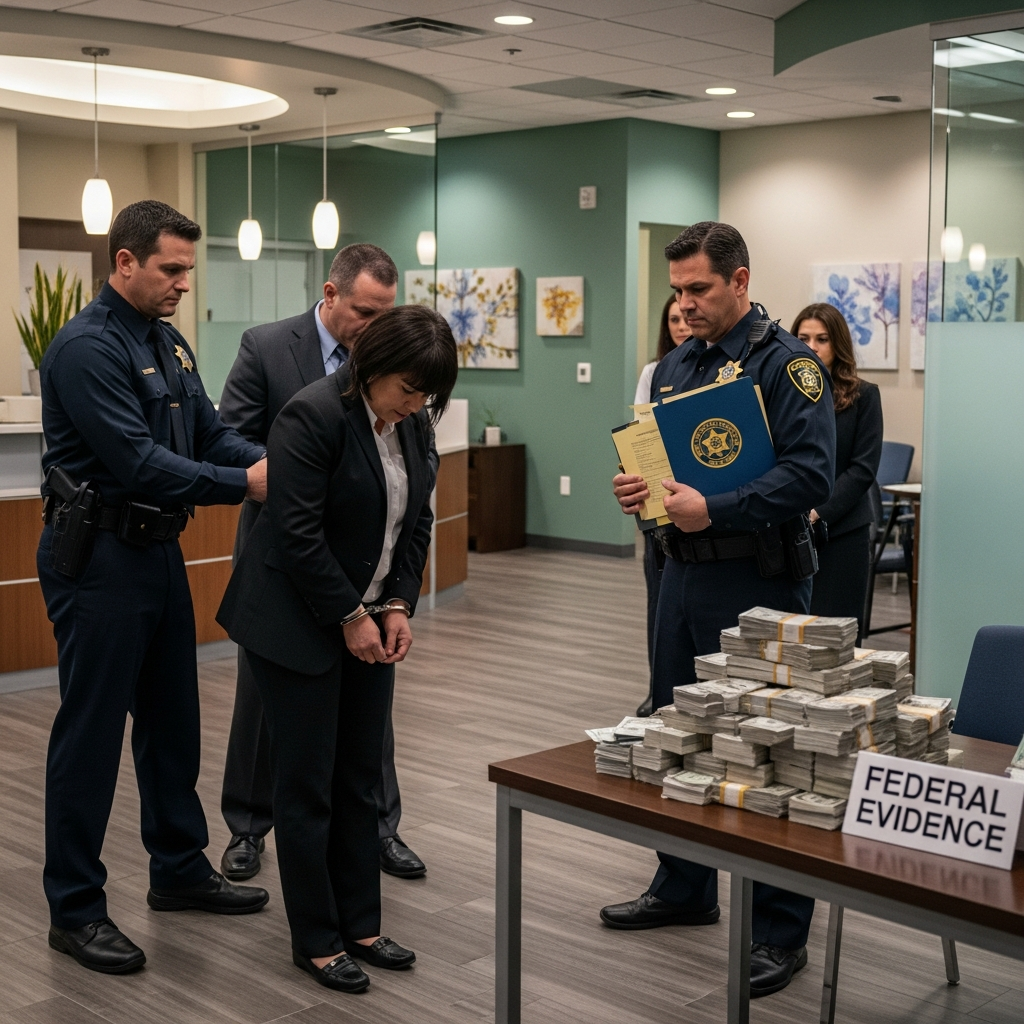
A significant federal crackdown has shaken Southern California’s healthcare landscape, exposing an alleged $50 million in fraudulent schemes and leading to eight arrests. Early April 2026 saw federal officials move against individuals and entities accused of exploiting vital healthcare programs, primarily targeting hospice care services in and around Los Angeles. This concerted effort underscores a broader national initiative to combat improper spending within federal benefits, sparking intense debate between state and federal authorities over accountability and oversight.
Federal Sting Uncovers $50M in Alleged Healthcare Fraud
Dubbed “Operation Never Say Die,” this wide-ranging investigation spearheaded by federal officials culminated in the arrests of eight individuals, with 15 ultimately facing charges. The alleged schemes collectively defrauded Medicare and other health plans of over $50 million. The operations focused heavily on various locations across Southern California, including Glendale, Artesia, Tarzana, and Simi Valley, though one arrest even extended as far as Idaho.
Unmasking Hospice Fraud: Deceptive Billing Practices
The core of the alleged fraud revolved around hospice care centers. Investigators contend that several facilities in the Los Angeles area, including St. Francis Palliative Care in Glendale and Topanga Hospice Care Inc., knowingly billed Medicare for patients who were not terminally ill. Hospice services are strictly reserved for individuals with a life expectancy of six months or less, making these alleged practices a clear violation of federal guidelines and a betrayal of the program’s intent.
These sham facilities allegedly operated by enticing individuals who did not qualify for hospice with kickbacks, often promising cash payments—such as $300 a month—or unnecessary items like nutritional shakes, non-prescription vitamins, and wheelchairs. This exploitation not only diverted taxpayer money but also put vulnerable individuals into a system designed for end-of-life care they didn’t need. One particularly egregious case involved an Artesia-based hospice owner who allegedly submitted over $9 million in fraudulent claims, receiving more than $8.5 million in payments. Prosecutors stated this owner paid both beneficiaries and marketers for referring purported patients to their company.
Beyond Hospice: Other Fraud Schemes Exposed
While hospice fraud formed the bulk of the crackdown, federal authorities also uncovered other illicit activities. Two individuals were arrested in connection with defrauding a West Coast labor union’s health care plans. Additionally, one person in Los Angeles faced charges for allegedly forging critical immigration medical documents, further illustrating the diverse nature of healthcare-related fraud. Akil Davis, assistant director of the FBI’s Los Angeles office, underscored the severity, noting that Southern California is “rife with hospice fraud.”
Political Tensions Flare Amidst Crackdown
The federal actions have ignited a political firestorm, with federal officials from the Trump administration openly criticizing California’s handling of healthcare fraud, while state authorities strongly defend their efforts. This crackdown appears to be part of a broader national anti-fraud initiative, with a stated focus on states led by Democrats.
Federal Accusations and the “Kingdom of Fraud”
First Assistant U.S. Attorney Bill Essayli, a Trump appointee, publicly condemned California’s oversight during a press conference. He famously labeled the state the “kingdom of fraud,” asserting that the Democratic-led state was not doing enough to curb improper spending. Essayli articulated a “zero-tolerance policy for criminals who defraud American taxpayers,” signaling a resolute federal stance. President Donald Trump, who in March signed an executive order establishing an anti-fraud task force led by Vice President JD Vance, highlighted this broader push against fraud in “blue states.”
California’s Defense: Proactive Measures and Counterclaims
California Governor Gavin Newsom’s office swiftly refuted these accusations, emphasizing the state’s aggressive measures already in place to combat hospice fraud. Newsom’s administration noted that a law was signed in 2021 specifically to halt the issuance of new hospice licenses due to escalating fraud concerns. Furthermore, the state has revoked over 280 hospice licenses in the past two years, with 300 providers currently under active investigation. Newsom welcomed the federal intervention, stating, “Glad the federal government is finally stepping up to do their part,” while also criticizing the federal administration for attempting to shift blame for issues within “their federal program.”
The Oz Factor: Controversial Comments and CMS Initiatives
Dr. Mehmet Oz, who heads the Centers for Medicare and Medicaid Services (CMS), played a prominent role in announcing the federal crackdown. Oz claimed that federal officials had “taken out” 221 hospices in the preceding ten weeks and pledged a comprehensive review of “every single hospice in California.” His agency is also proposing a new, publicly available hospice scoring system, using care metrics to better identify potentially illegitimate facilities and enhance transparency.
However, Oz’s involvement hasn’t been without controversy. In January, he posted a video on social media from Los Angeles, alleging that approximately $3.5 billion in hospice and home care fraud in the city was “quite a bit of it” run by the “Russian Armenian mafia.” These “baseless and racially charged allegations” led to a civil rights complaint from Governor Newsom’s office, adding another layer of complexity to the ongoing federal-state dialogue.
Deep Dive into Key Cases and Modus Operandi
The details emerging from “Operation Never Say Die” paint a stark picture of deliberate deception and exploitation within the healthcare system. The alleged fraudsters employed sophisticated tactics, often involving kickbacks and a disregard for patient eligibility.
Sham Hospices and Patient Exploitation
Specific cases reveal the blatant nature of the alleged fraud. Lolita Beronilla Minerd, a licensed vocational nurse, is accused of submitting over $9 million in fraudulent claims through Topanga Hospice Care Inc. Her facility reportedly had an astonishing 85% non-death discharge rate—nearly five times the national average. Prosecutors allege Minerd actively paid kickbacks to beneficiaries, even approaching couples in supermarkets to recruit them with promises of $300 monthly payments and unnecessary medical supplies, despite their healthy status.
Another case involved Amelou Gill and Gladwin Gill, operators of St. Francis Palliative Care in Glendale. Their facility exhibited a patient mortality rate of merely 2.3% over five years, a figure CMS Administrator Dr. Oz highlighted as far too low for a genuine hospice. The systemic nature of this fraud is further exemplified by Nita Almuete Paddit Palma and Adolfo Catbagan, who are accused of running three fraudulent hospice facilities, submitting at least $4.8 million in false claims. Disturbingly, one of Palma’s facilities allegedly operated even while she was out on bond for a prior hospice fraud conviction from December 2024, demonstrating a brazen disregard for the law.
Professionals Charged: A Breach of Trust
Among those charged were several licensed medical professionals, including three nurses, a chiropractor, and a psychologist. Their alleged involvement represents a profound breach of public trust, as these individuals are tasked with providing care, not orchestrating fraudulent schemes. Instead of legitimate end-of-life care, investigators claim the suspects diverted Medicare funds for personal gain, financing international travel, mortgage payments, car loans, and sending money overseas. This misuse of funds ultimately harms taxpayers and undermines the integrity of essential healthcare programs.
The Path Forward: Combating Future Fraud
The recent federal crackdown in Southern California is a stark reminder of the persistent challenges in safeguarding healthcare programs from fraud and abuse. The coordinated efforts, though politically charged, signify an intensifying focus on rooting out such illicit activities.
CMS’s proposed new hospice scoring system, leveraging specific care metrics, aims to provide greater transparency and an earlier warning system for potentially illegitimate facilities. Coupled with ongoing investigations and California’s own proactive measures, such as the extended moratorium on new hospice licenses until January 2027, the future may see a more robust defense against healthcare fraud. These actions are crucial steps toward ensuring that vital funds are directed to genuine patient care rather than lining the pockets of criminals.
Frequently Asked Questions
What specific types of healthcare fraud were uncovered in Southern California?
The federal crackdown primarily exposed extensive hospice care fraud, where facilities billed Medicare for patients who were not terminally ill and did not qualify for end-of-life services. These schemes often involved paying kickbacks to individuals for enrolling as fake patients. Beyond hospice fraud, the investigation also uncovered instances of defrauding labor union health plans and forging immigration medical documents, highlighting a multifaceted approach to exploiting the healthcare system.
How is the federal government working with California to combat ongoing hospice fraud?
Federal authorities, led by agencies like CMS and the FBI, are conducting investigations and making arrests, asserting a “zero-tolerance policy.” CMS Administrator Dr. Mehmet Oz announced a review of every hospice in California and proposed a new public scoring system for facilities to identify fraud risks. Simultaneously, California Governor Gavin Newsom’s office states the state has aggressively combatted fraud by revoking over 280 hospice licenses, investigating 300 providers, and implementing a moratorium on new hospice licenses until 2027.
What are the broader implications of this healthcare fraud crackdown for patients and taxpayers?
For taxpayers, this crackdown signifies an effort to reclaim billions of dollars diverted from essential Medicare and other healthcare programs, potentially stabilizing funding for legitimate services. For patients, particularly those nearing end-of-life, the enforcement aims to restore trust in the hospice system, ensuring that services are provided by legitimate providers focused on genuine care, not financial exploitation. It underscores the critical need for vigilance against fraud to protect the integrity and sustainability of the entire healthcare ecosystem.