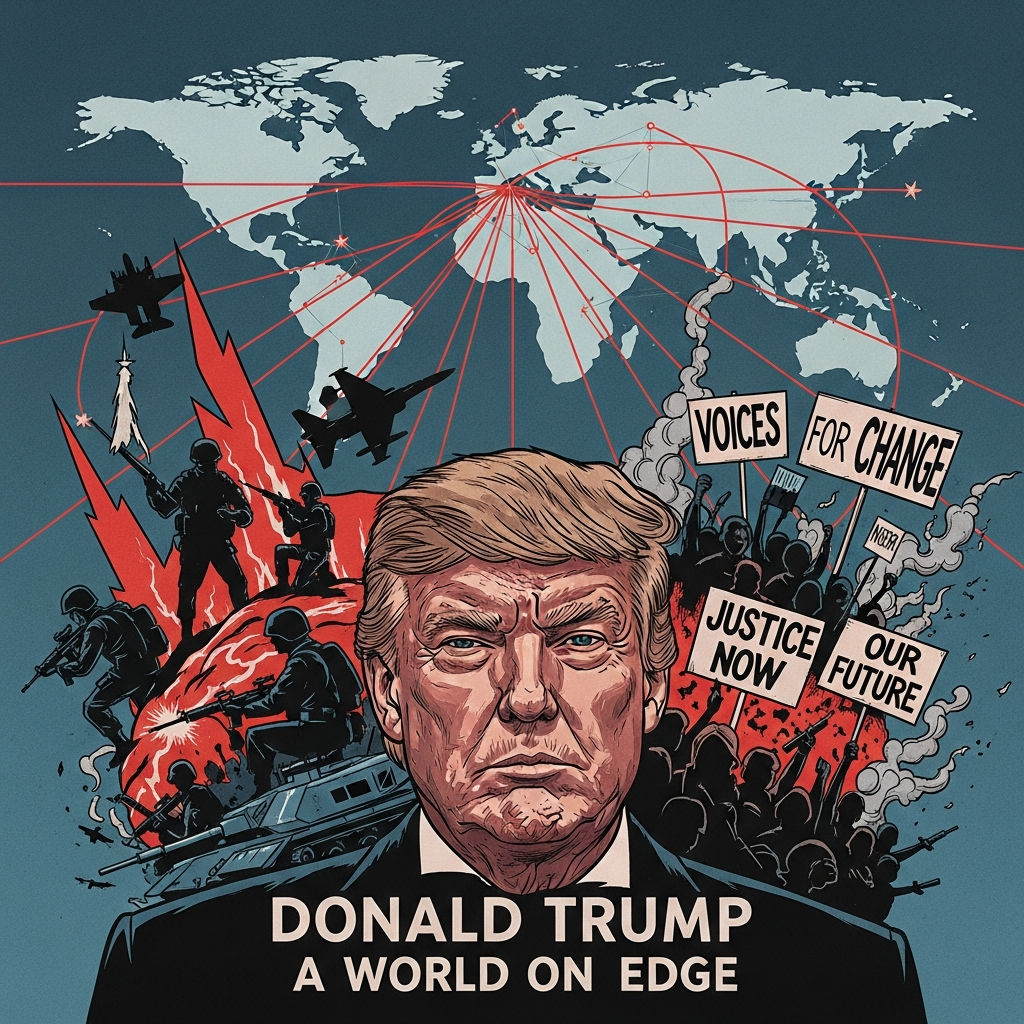
Donald Trump’s approach to Iran during his presidency was a complex tapestry of aggressive rhetoric, military posturing, and surprising diplomatic overtures. This strategy created significant global tensions and faced widespread international scrutiny. From threats to seize vital oil infrastructure to claims of successful negotiations and a complete dismantling of Iran’s military capabilities, his actions kept the world on edge. Simultaneously, these policies sparked massive protests across the US and Europe, reflecting a deep public concern over potential conflict. Understanding these multifaceted dynamics is crucial for comprehending a pivotal era in Middle Eastern geopolitics.
The Iron Fist: Trump’s Aggressive Stance on Iran
During his time in office, President Trump frequently adopted a confrontational posture towards Iran. His statements often suggested a readiness for forceful intervention, designed to exert maximum pressure on the Islamic Republic. This aggressive stance was a hallmark of his administration’s foreign policy, aiming to curb Iran’s regional influence and nuclear ambitions.
Targeting Iran’s Oil Lifeline: The Kharg Island Proposal
One of Trump’s most striking and controversial suggestions involved the potential seizure of Iran’s Kharg Island. This island is a critical export hub, handling over 90% of Iran’s oil shipments. Trump openly discussed this idea, calling it his “favorite thing” in an interview, likening it to US plans for Venezuela’s oil sector control. He described Kharg Island as having “little or no defense,” asserting it could be taken “very easily.” However, he acknowledged that such an action would necessitate a prolonged US military presence in the region.
Military Buildup and Uranium Demands
These assertive remarks were not isolated; they coincided with a significant escalation of US military activities in the Middle East. Reports indicated the Pentagon had plans to deploy up to 10,000 additional troops, with over 3,500 personnel, including 2,500 Marines, already confirmed to have arrived. Beyond territorial claims, Trump also pressed Iran to surrender nearly 1,000 pounds of uranium. This demand was presented as a condition to de-escalate ongoing conflicts, a detail reported by US officials and The Wall Street Journal. Trump further asserted that the US military campaign had surpassed expectations, claiming Iran’s air defenses, communications, navy, air force, and weapons infrastructure were comprehensively dismantled. He even suggested that Iran’s missile and drone production facilities were severely degraded, setting back its nuclear ambitions by “years.”
The Velvet Glove? Trump’s Diplomatic Signals
Despite the aggressive posturing, Trump also exhibited a willingness to engage in dialogue, often signaling potential diplomatic resolutions. These mixed signals added a layer of complexity to his administration’s Iran policy, making it challenging to predict the next move. He often hinted at ongoing negotiations, expressing optimism even amidst escalating tensions.
Extending the Strait of Hormuz Deadline
A notable instance of this diplomatic duality involved the Strait of Hormuz. Trump announced an extension for Iran to reopen this vital shipping lane, pushing the deadline by ten days. He stated this decision aimed to pause “Energy Plant destruction” during ongoing bilateral negotiations. Publicly, Trump claimed talks were progressing “very well,” despite what he labeled “erroneous statements to the contrary by the Fake News Media.” He mentioned granting a ten-day extension, despite Iran requesting seven, and asserted, “In a certain sense, we have already won.” He also warned Tehran to abandon its nuclear ambitions, threatening escalation if they failed to comply, and cited ten oil tankers passing through the Strait as a goodwill gesture.
Secret Talks and Peace Frameworks
Diplomatic efforts were reportedly underway, with Pakistan playing a mediating role through figures like parliament speaker Mohammad Bagher Ghalibaf. Trump’s envoy, Steve Witkoff, even presented a 15-point peace framework. While Iran reportedly described this framework as “one-sided,” discussions continued. Trump expressed optimism that “A deal could be made fairly quickly,” hinting at progress in these indirect talks. This blend of overt threats and subtle diplomatic engagement defined a significant period of US-Iran relations.
Iran’s Defiant Stance and Retaliation
Iran consistently met US pressure with a defiant posture, often dismissing Trump’s claims and initiating retaliatory actions. Tehran maintained its sovereignty and steadfastly refused to concede to US demands, reflecting a deeply entrenched resolve. This created a cycle of escalation and counter-escalation, complicating any path to de-escalation.
Dismissing US Claims: “Negotiating with Itself”
An Iranian military spokesperson, Lieutenant Colonel Ebrahim Zolfaghari, publicly ridiculed US ceasefire claims, asserting that Washington was merely “negotiating with itself.” He argued that the US’s once-vaunted “strategic power” had deteriorated into “strategic failure.” Zolfaghari accused the US of attempting to portray a defeat as a successful diplomatic agreement, declaring the “era of empty promises” from the US was over. He firmly stated that Iran’s stance on negotiations with the US remained unaltered, vowing the country “would never come to terms” with the United States, “not now, not ever.”
Retaliatory Strikes and Sovereignty Demands
Iran’s defiance wasn’t limited to rhetoric. The nation launched retaliatory missile attacks targeting cities like Tel Aviv, Modi’in, and Jerusalem, as well as various Gulf locations, though many were intercepted. The Iranian Foreign Minister, Abbas Araghchi, accused the US of “double standards,” pointing to Israel’s blockade of Gaza. Iran also issued a strong warning against any potential ground invasion, calling it a “big mistake.” Iran’s primary demands for any agreement included a halt to attacks, reparations for damages, and recognition of its sovereignty over the Strait of Hormuz. Despite US claims of naval dominance, Iran maintained its capabilities in mine-laying boats and shore-launched missiles, underscoring its continued military readiness.
The Public Backlash: “No Kings” Protests
Trump’s aggressive Iran policy did not go unchallenged at home or abroad. A powerful wave of public dissent manifested in widespread “No Kings” protests, demonstrating significant opposition to his administration’s actions. These demonstrations highlighted a broad public demand for peace and human rights.
Widespread Dissent Against War and Policies
Thousands across the United States and Europe participated in these “No Kings” protests, primarily decrying Trump’s policies, the ongoing Iran war, and heightened immigration crackdowns. Organizers estimated global participation could reach 9 million people, indicating a substantial surge in public dissatisfaction. The flagship event in St. Paul, Minnesota, drew thousands to the Capitol lawn, featuring Bruce Springsteen. He honored victims Renee Good and Alex Pretti, reportedly killed by federal agents, declaring, “Your strength and your commitment told us that this was still America. And this reactionary nightmare… will not stand.” Protests spanned all 50 US states, with 3,100 reported events, many in traditionally “red states” and suburban areas, signaling a geographically diverse opposition.
Core Grievances and International Resonance
Protesters specifically targeted Trump’s Immigration and Customs Enforcement (ICE) raids, the escalation of tensions with Iran, and rollbacks of transgender rights. Demonstrators carried signs like “Put down the crown, clown” and utilized creative expressions like “frog kings” and “Cats Against Trump.” The “No Kings” sentiment resonated internationally under the banner of “No Tyrants,” with rallies in Rome against right-wing policies, London protesting the “far right,” and Americans joining unions in Paris against “endless wars.” Republican Party officials, including the White House and the NRCC, dismissed these demonstrations as “leftist funding networks” or “Hate America Rallies.” Despite these criticisms, the protesters’ determination was evident, with messages like a massive banner at the Capitol reading, “We had whistles, they had guns. The revolution starts in Minneapolis,” emphasizing a perceived power imbalance and a steadfast commitment to their cause.
Geopolitical Ramifications and Human Cost
The volatile relationship between the US and Iran under Trump had tangible and severe consequences, affecting global markets and human lives. The military actions and rhetoric directly impacted regional stability and international economic indicators.
Impact on Global Oil Markets
The ongoing tensions and military actions, including reported US-Israel strikes on Iran, had a significant impact on global oil markets. Brent crude prices surged, reaching $119.5 a barrel in March, marking its highest price since June 2022. This spike underscored the fragility of global energy security in the face of Middle Eastern instability. The potential threat of seizing Kharg Island or blocking the Strait of Hormuz further amplified these concerns, driving market volatility.
The Toll of Conflict
The human cost of the conflict was tragic. Reports indicated over 1,900 deaths in Iran, 1,100 in Lebanon, and 18 in Israel. US and Israeli forces reportedly eliminated dozens of Iranian leaders, including Revolutionary Guards naval commander Alireza Tangsiri, killed in a strike on Bandar Abbas. Israel also reported hitting targets near Isfahan’s airbase and nuclear sites. Admiral Brad Cooper of US Central Command highlighted Tangsiri’s death as a major blow to Iran’s navy, vowing further strikes. Amidst these developments, Trump also criticized NATO allies for not supporting US actions and characterized Iranians as “great negotiators but lousy fighters,” reiterating his claims of victory.
Frequently Asked Questions
What was Donald Trump’s “favorite” proposal regarding Iran’s oil exports?
Donald Trump explicitly suggested the possibility of seizing Iran’s Kharg Island, describing it as his “favorite thing.” Kharg Island is crucial for Iran, responsible for over 90% of its oil exports. Trump characterized the island as having “little or no defense” and claimed it could be taken “very easily,” but acknowledged such an action would necessitate a prolonged US military presence. This proposal aimed to “take the oil in Iran,” drawing parallels to US plans for Venezuela’s oil sector.
What key geographic areas are central to the US-Iran tensions discussed?
Several critical geographic areas are central to the discussions of US-Iran tensions. These include Kharg Island, Iran’s primary oil export hub; the Strait of Hormuz, a vital international shipping lane for oil transit; and various cities impacted by retaliatory strikes such as Tel Aviv, Modi’in, and Jerusalem in Israel, alongside locations within the Persian Gulf. Additionally, areas within the US and Europe, like St. Paul, Minnesota, and capital cities, were hubs for protests against Trump’s Iran policies.
How did global oil markets react to the escalation of US-Iran tensions under Trump?
The escalation of US-Iran tensions under the Trump administration had a significant impact on global oil markets. Following reported US-Israel strikes on Iran, Brent crude prices surged dramatically. In one instance, Brent crude reached $119.5 a barrel in March, marking its highest price since June 2022. This price increase reflected the market’s concern over potential disruptions to oil supplies from the Middle East, particularly given threats to critical shipping lanes like the Strait of Hormuz and key export facilities like Kharg Island.
Conclusion
Donald Trump’s Iran policy was undeniably a period of intense geopolitical maneuvering, characterized by a stark blend of aggressive threats and tentative diplomatic overtures. From proposals to seize Iran’s oil heartland on Kharg Island and demanding uranium surrender, to extending deadlines for the Strait of Hormuz and engaging in indirect talks, his administration’s approach was multifaceted and often contradictory. Iran, in turn, responded with firm defiance, dismissing US claims as self-serving and launching retaliatory strikes while demanding sovereignty and reparations. The backdrop of these high-stakes interactions was a global surge in “No Kings” protests, demonstrating widespread public unease over potential war and human rights concerns. The lasting impact on global oil markets and the tragic human cost underscore the profound ramifications of this complex and volatile chapter in international relations. Future US administrations, regardless of their approach, will likely grapple with the precedents set during this period.