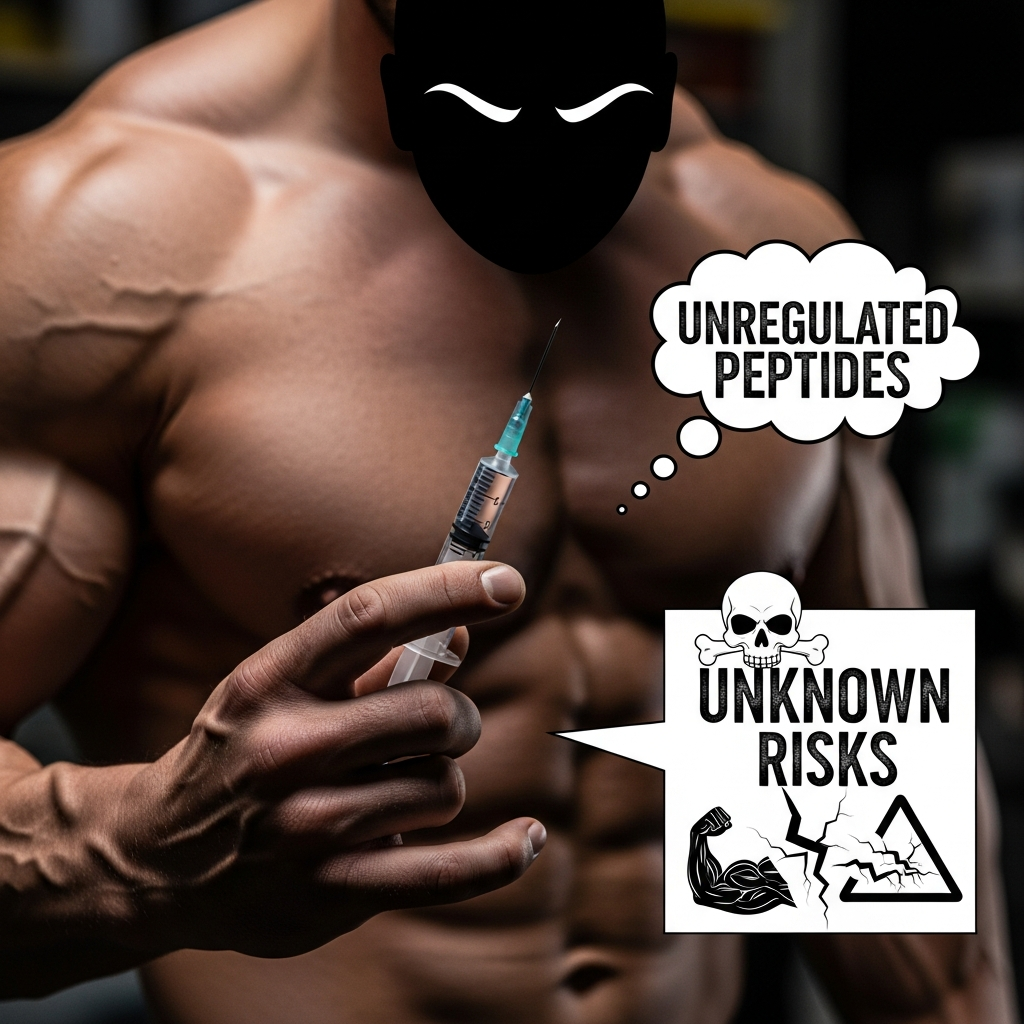
The pursuit of peak physical performance and rapid recovery has led many men down a risky path: the self-injection of unregulated peptides. Touted online as revolutionary biohacking tools for building muscle, shedding fat, and accelerating healing, these experimental compounds are gaining alarming popularity. However, behind the bold claims and glowing anecdotes lies a stark reality of unproven efficacy, significant health risks, and a marketplace operating in a precarious legal grey area. This in-depth look reveals why experts, from medical professionals to elite strength coaches, are sounding the alarm on this dangerous trend, urging caution over the allure of a quick fix.
The Magnetic Pull of Peptides: Seeking the Edge
For fitness enthusiasts and athletes, the promise of peptides is undeniably appealing. Imagine recovering from injuries in record time, pushing harder in the gym, and achieving a more muscular physique with less effort. This dream has fueled a surge in interest, especially among those frustrated with conventional recovery timelines or seeking an “edge” beyond traditional supplements.
Take Judd, a 52-year-old Texas resident and fitness industry veteran, whose journey with peptides began after a severe accident. He suffered mitochondrial damage, leaving him with life-threatening reactions to common chemicals and restricting his diet to just two foods for 15 years. Judd credits Thymosin Alpha-1, a peptide believed to regulate immune response, with finally alleviating his chronic inflammation and “giving him his life back.”
Yet, even Judd’s positive initial experience took a dark turn. When he experimented with BPC-157 (Body Protection Compound-157), a peptide often marketed for muscle, tendon, and bone healing, he experienced a severe autoimmune reaction. “My body attacking my own joints… I felt like I was dying,” he recounts, describing 11 months of debilitating side effects, including anhedonia – an overwhelming sense of gloom. His story underscores a critical truth: even promising compounds can carry unforeseen, long-lasting consequences when used without rigorous scientific oversight.
What Are Peptides, and What Makes Them So Risky?
At their core, peptides are short chains of amino acids, the building blocks of proteins. They occur naturally in the body, playing diverse roles from hormone regulation to immune function. Familiar examples include insulin and semaglutide (the active ingredient in popular weight loss drugs like Ozempic), both of which are FDA-approved pharmaceutical-grade peptides.
However, the peptides surging in popularity among biohackers and gym-goers are a different breed entirely. These are synthetic, experimental compounds, often identified by alphanumeric codes like BPC-157, TB-500, CJC-1295, and Ipamorelin. While some boast intriguing preclinical studies, almost all lack robust human clinical trials to establish their safety, effective dosage, or long-term effects. This critical distinction is consistently overlooked in the online narrative.
The “Research Use Only” Loophole: A Regulatory Vacuum
The primary reason these substances are so accessible despite being unapproved for human use lies in a regulatory loophole. Many online vendors market peptides as “for research use only,” a disclaimer that sidesteps strict pharmaceutical regulations. This allows individuals to easily purchase vials online, often from international sources like China, and self-administer them at home. The sheer volume of these online sales has created what former FDA deputy commissioner Howard Sklamberg describes as “a Wild West.”
This lack of regulation has severe implications:
Purity Concerns: Without stringent manufacturing standards, there’s no guarantee of what’s actually inside the vial. Products can be underdosed, overdosed, mislabeled, or contaminated with heavy metals, residual chemicals, or other harmful substances. As Dr. Spencer Nadolsky, an obesity specialist, warns, “You don’t even know what you’re getting.”
Sterility Risks: Unlike pharmaceutical-grade injections, unregulated vials often lack the required sterility, leading to a real risk of serious infections, abscesses, or systemic complications from botched self-injections.
Unknown Dosing: Users often “make up” their own dosages based on anecdotal advice from online forums or social media, with no scientific basis for safety or efficacy.
Beyond the Hype: The Troubling Lack of Evidence
The public narrative surrounding peptides is “wildly out of sync with what has actually been proven,” according to Flynn McGuire, a researcher in musculoskeletal medicine. While online influencers label peptides as “biohacking healing tools,” the scientific picture is far murkier.
The overwhelming majority of research on popular compounds like BPC-157 comes from preclinical animal models, primarily rodents. Dr. McGuire highlights that only a handful of low-quality human reports exist for BPC-157, often lacking control groups, making it impossible to draw reliable conclusions. The fundamental differences in how animals metabolize peptides, the doses used, and injection methods mean that animal study findings rarely translate directly to humans.
“We don’t have long-term human data. We barely have short-term human data,” Dr. McGuire emphasizes. This scientific void exists largely because no pharmaceutical company owns these experimental peptides, removing the financial incentive to fund expensive, rigorous human trials required for FDA approval.
Serious Theoretical Risks: What Science Fears
While the benefits remain largely unproven, the theoretical risks associated with unregulated peptide use are far from trivial. Experts point to several alarming possibilities:
Cancer Promotion: Many peptides, including BPC-157, are thought to stimulate angiogenesis (the growth of new blood vessels) and influence cell growth pathways. These are the same mechanisms implicated in cancer biology. As Dr. McGuire warns, “If you’re introducing something that allows neovascularisation, that could either cause [cancer] to grow or cause it to spread,” especially in individuals with undiagnosed or precancerous conditions. Cell and molecular biologist Paul Knoepfler echoes this, noting that BPC-157 could theoretically promote the growth of precancerous cells.
Organ Overgrowth and Acromegaly: Peptides that manipulate growth hormone pathways, like CJC-1295 and Ipamorelin, carry risks such as insulin resistance, swelling, and in extreme cases, acromegaly – a serious condition involving excessive growth hormone production leading to bone and organ enlargement. Dr. Florence Comite cautions against thinking “if a little bit is good, then a lot must be better,” as mega-doses can lead to dangerous side effects like an enlarged liver or spleen.
Delayed Proper Medical Care: Dr. Nadolsky warns that relying on unproven peptides for injuries can delay proper medical assessment and treatment. “You think, ‘Oh, I’ll just inject this stuff until it gets better,’ and you might be missing something important.”
Unforeseen Autoimmune Reactions: As Judd’s experience with BPC-157 demonstrates, some users report severe and persistent autoimmune responses, causing the body to attack its own tissues.
“Stacking” Dangers: The practice of injecting multiple experimental peptides simultaneously, often referred to as a “stack” (like the “Wolverine Stack” of BPC-157 and TB-500), further amplifies unknown risks. Cardiologist Eric Topol of Scripps Research Translational Institute calls this practice “dangerous,” as it complicates identifying the source of any adverse effects.
The Echo Chamber of Social Media and Influencer Culture
The rise of injectable peptides is inextricably linked to social media. Online influencers, biohackers, and even celebrities like Joe Rogan and Jennifer Aniston have openly discussed or promoted peptide use, creating a powerful echo chamber of anecdotal success stories. Fitness coaches like Will Clarke, who works with strongman athletes, sees this firsthand. “They’re just copying what a stranger on TikTok told them,” he says, noting that many young individuals seek a “quick fix” without understanding the complexities.
This online environment suffers from significant reporting bias. “No one gets online to say how bad something worked for them,” Dr. McGuire points out. Negative experiences are often silenced, as Judd discovered when he was banned from an online forum for questioning BPC-157’s safety. This creates a skewed perception, where purported benefits are amplified, and severe risks are downplayed or ignored. Dr. Steven Lu, a GP and Chief Medical Officer, notes a marked increase in patient inquiries, with teenagers being particularly susceptible to social media’s influence.
Expert Warnings: A Unified Call for Caution
Across the board, experts are united in their message: the science is simply not ready for the widespread human use of these unregulated peptides.
Shane Reece, an established strength coach in the strongman world, has seen peptides like BPC-157 become an “underground strength and conditioning drug.” While he admits to experimenting with BPC-157 himself for specific deadlines, he stresses its limitations. “It doesn’t touch tendons in humans,” he states, contrary to popular belief. His biggest concern is that peptides are often used to mask pain, delaying proper rehabilitation. “All you’re going to do is reduce the inflammation, give yourself a sensation that the pain has gone, but the real issue hasn’t gone.”
Dr. Nadolsky emphasizes the “Wild West” nature of the market, where patients arrive convinced peptides are a “silver bullet” for everything from tendon pain to gut issues, yet he always returns to the core issue: “There’s no human clinical data. Nothing.”
Even doctors who might prescribe peptides as an “adjunct” therapy, such as concierge physician Dr. Amanda Kahn, do so with extreme caution, ensuring patients fully understand the experimental nature of the drugs. The consensus is clear: these are not “cure-alls.”
The Peptide Playbook: Claims vs. Scientific Reality
Here’s a breakdown of common peptides marketed in the health and fitness space, contrasting their popular claims with the scientific evidence:
BPC-157 (Body Protection Compound-157):
Usage: Marketed for rapid tendon, ligament, muscle, and gut healing; anti-inflammatory effects. Often called the “Wolverine shot.”
Science Says: Evidence is almost exclusively from rodent studies. Human trials are scarce and often low-quality. Not an approved human drug. Significant concerns exist regarding theoretical cancer risks due to its angiogenic properties and variable purity of ‘research chemical’ products.
TB-500 (Thymosin Beta-4 fragment):
Usage: Promoted for soft tissue healing, improved mobility, and often “stacked” with BPC-157 (the “Wolverine Stack”).
Science Says: Animal studies suggest potential for tissue repair, but robust human trials for sports injuries are absent. Unregulated products have widely varying purity and dosage, with claims based on anecdotes, not clinical data.
Thymosin Alpha-1:
Usage: Adopted online for immune support and anti-inflammatory benefits.
Science Says: Pharmaceutical-grade Thymosin Alpha-1 is approved for specific clinical conditions in some countries. However, versions sold online are entirely unregulated, and there’s no evidence supporting general wellness use in healthy individuals. Long-term safety data is lacking.
CJC-1295 / Ipamorelin:
Usage: Marketed for significant muscle gain, fat loss, improved sleep, and anti-aging effects by increasing growth hormone release.
Science Says: Limited human research exists. Manipulating growth hormone carries real risks, including insulin resistance, fluid retention, and theoretical cancer concerns. Unregulated online products are often mislabeled and pose unknown dangers.
GHK-Cu (Copper Peptide):
Usage: Popular in skincare for elasticity and wound healing; some biohackers claim anti-aging or recovery benefits via injection.
Science Says: Human research supports topical GHK-Cu for collagen production and wound healing. However, evidence for injectable use is minimal, with most claims derived from cell studies rather than clinical trials.
Tesamorelin & Sermorelin:
Usage: Tesamorelin (prescription) for HIV-related belly fat. Sermorelin for sleep and recovery.
Science Says: Tesamorelin has approved medical use. Sermorelin’s broader efficacy for sleep/recovery outside specific conditions lacks robust data. Both, if unregulated, carry purity and dosing risks.
Frequently Asked Questions
What are peptides, and why are unapproved versions risky for human use?
Peptides are short chains of amino acids that perform various functions in the body. While some, like insulin, are FDA-approved medications, the “unapproved” peptides widely used for muscle and recovery are experimental compounds. They are risky because they lack rigorous human clinical trials to establish safety, effective dosing, or long-term effects. This means users become unwitting test subjects, facing potential side effects like cancer promotion, organ enlargement, autoimmune reactions, and debilitating psychological issues, as highlighted by expert researchers like Dr. Flynn McGuire and individuals like Judd.
Where do individuals typically obtain unregulated injectable peptides, and what are the inherent dangers of these sources?
Most individuals purchase unregulated injectable peptides online from vendors labeling them “for research use only,” which exploits a legal loophole. They can also be sourced from “wellness clinics” or certain compounding pharmacies, particularly those that have pivoted from manufacturing GLP-1s. The inherent dangers include an alarming lack of quality control; products may be contaminated, underdosed, overdosed, or entirely mislabeled. Furthermore, the absence of sterility in these unregulated products significantly increases the risk of severe infections, abscesses, or other complications from self-injection, as warned by Dr. Spencer Nadolsky.
Given the expert warnings, should I consider using injectable peptides for muscle growth or faster recovery, and what are safer alternatives?
Given the overwhelming consensus from medical professionals, researchers, and experienced coaches presented in this article, it is strongly advised against using unregulated injectable peptides for muscle growth or faster recovery. The severe theoretical risks, lack of human clinical data, and significant issues with product purity and safety far outweigh any unproven, anecdotal benefits. Safer and scientifically proven alternatives for muscle growth and recovery include consistent, progressive strength training, proper nutrition rich in protein and fiber, adequate sleep, and targeted, medically supervised physical therapy or rehabilitation plans for injuries. Always consult a qualified physician before considering any experimental treatments.
Conclusion: The Safest Path to Strength and Recovery
The appeal of injectable peptides – faster healing, increased energy, and enhanced muscle growth – is undeniable in today’s performance-driven culture. However, the reality painted by experts like Dr. Flynn McGuire, Shane Reece, and Dr. Spencer Nadolsky is one of significant uncertainty and grave potential harm. These substances operate in a legal grey area, lacking the rigorous testing and oversight required for human application. The “research use only” label has transformed everyday individuals into unwilling participants in dangerous, uncontrolled experiments.
Until comprehensive human research catches up with the hype, and robust regulation is firmly in place, the risks of self-administering these potent biological compounds belong entirely to the user. The most effective, safest, and most sustainable path to achieving fitness goals and recovering from injuries remains rooted in established practices: proper rehabilitation, gradual training progression, meticulous nutrition, sufficient sleep, and, crucially, professional medical guidance when injuries arise. Don’t fall for the quick fix; prioritize your long-term health and rely on proven science.