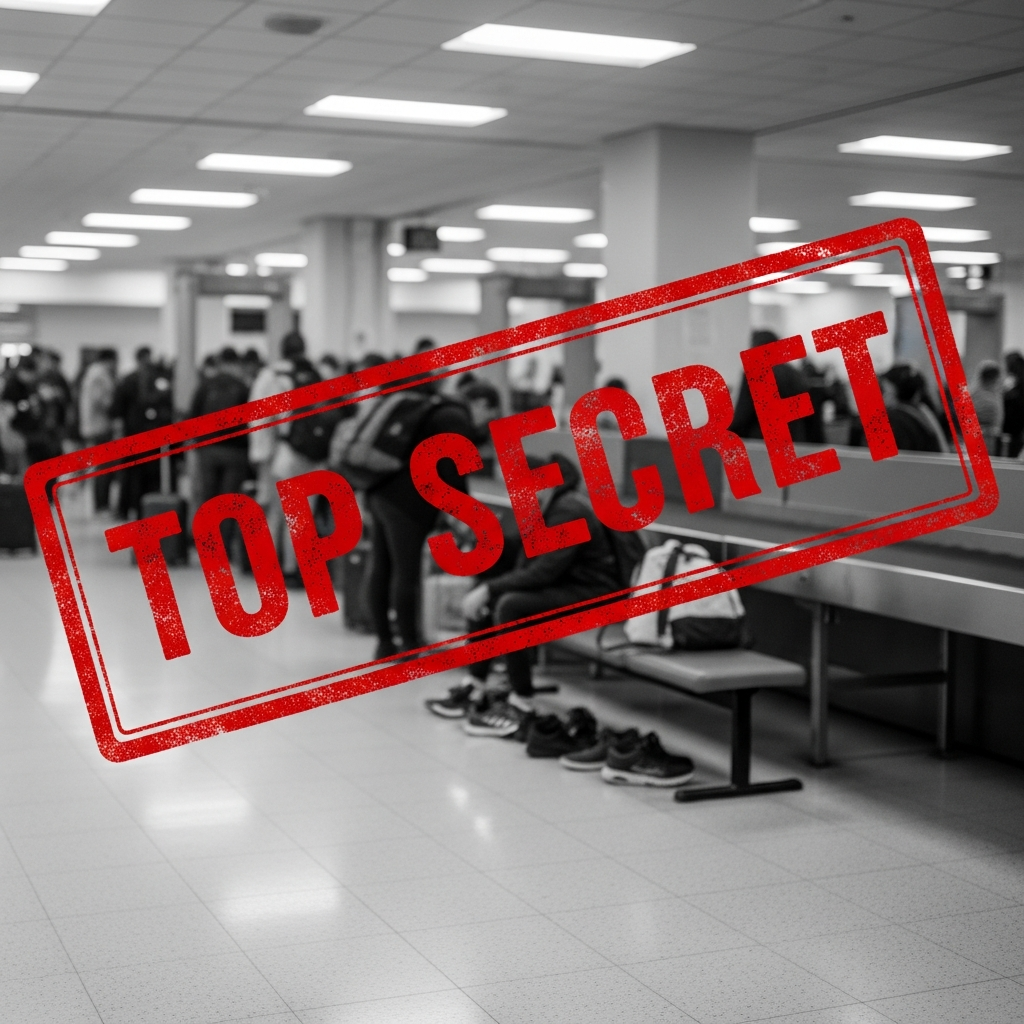
Airport security is under severe scrutiny. An explosive internal report from the Department of Homeland Security’s (DHS) watchdog uncovered critical vulnerabilities in TSA screenings nationwide. Alarming findings, particularly concerning a change in the “shoes-off” policy, were allegedly suppressed. This report was then classified as “Top Secret,” keeping vital information from the very agency tasked with fixing the problems. The consequences for national security and air travelers are profound, raising serious questions about government oversight and accountability.
Dangerous Flaws Exposed: The “Shoes-Off” Policy Under Fire
Undercover “red team” investigators conducted simulated security breaches at airports. Their findings were chilling. The audits revealed serious vulnerabilities in Transportation Security Administration (TSA) procedures. A key concern centered on a 2025 policy change. This change allowed passengers to keep their shoes on during screening.
Investigators questioned whether existing technology could effectively detect threats. These threats might be concealed in footwear. Many full-body scanners are not designed for this specific detection. This creates a significant security gap. The “shoes-off” rule was initially implemented after the 2006 “shoe bomber” attempt. Its removal sparked concerns that convenience may have compromised safety.
The DHS Inspector General (IG) first warned Secretary Kristi Noem in August 2025. This was just weeks after the new policy began. Warnings continued later that year. Despite these alerts and a legal deadline, Noem took no public action. Instead, officials increased the classification level of the IG’s findings. This prevented their public release or wider review.
Accountability Evaded: Noem’s Contradictory Claims
Former DHS Secretary Kristi Noem previously testified to lawmakers. She claimed “all recommendations” from the Inspector General’s report were implemented. This statement, made under oath, now appears false. In a March 4 memo, Inspector General Joseph Cuffari directly contradicted Noem. He stated his office received no evidence to support her claims.
The TSA has failed to respond to the audit for nearly five months. Auditors still await a formal “management decision.” This decision would outline whether the agency agrees with the findings. It would also detail planned corrective actions. Without it, all recommendations remain officially “open and unresolved.” This creates a dangerous void in security protocols.
The Buried Truth: A Report Locked Away
The breakdown in oversight stems from an extraordinary DHS decision. A crucial finding from the TSA’s red team testing was designated “Top Secret.” This came with severe distribution limits. Access was restricted to just 13 individuals across government. This elite group included only three members of Congress. Seven DHS employees and one Executive Office of the President staffer also had access.
Crucially, TSA leadership was entirely excluded from this list. Inspector General Cuffari noted that any further distribution needed Secretary Noem’s written permission. Auditors identified a major problem. Yet, the agency responsible for fixing it was barred from accessing the findings. This restriction lasted over five months. Repeated requests from the Inspector General to lift these limits went unanswered. Even Congress found its ability to discuss the audit hampered.
Political Interference and Oversight Collapse
This isn’t an isolated incident. Reports suggest a broader pattern of interference. DHS general counsel allegedly informed the OIG that Secretary Noem claimed unilateral authority to terminate IG investigations. This highly unusual assertion was revealed in a letter from Senator Tammy Duckworth. The OIG was also asked to disclose every active audit and criminal investigation. This request was described as “unprecedented.”
Such “tacit threats” raise alarms about the OIG’s independence. While a Secretary can, by law, halt an investigation for national security, this provision has never been invoked. The surrounding circumstances suggest a deliberate attempt to stifle oversight. This political maneuver risked aviation safety for untold numbers of travelers. It fundamentally undermined the integrity of the watchdogs.
TSA Under Duress: Compounding Risks
The failure to address security vulnerabilities occurs during a critical time. The Department of Homeland Security recently experienced a funding lapse. This shutdown severely strained TSA operations. Over 450 TSA officers left the workforce during this period. Callouts among frontline screeners surged into double digits.
Airports nationwide faced longer lines and thinner staffing. Screening operations became uneven. These conditions amplify the consequences of any unresolved security gap. The inability of the system to process and respond to identified threats highlights a critical weakness. It questions whether national security can withstand both political and operational pressures simultaneously. This ongoing political gridlock directly impacts national security readiness.
Congressional Scrutiny and Future Outlook
The House Committee on Homeland Security is now confronting this severe lapse. A core accountability mechanism appears to have completely stalled. TSA’s acting administrator is scheduled to testify before lawmakers. This testimony comes amidst intense scrutiny. Lawmakers will demand answers. They want to know what the audit found. More importantly, they will question why key findings were classified “Top Secret.” They also want to understand why access was so severely limited.
New DHS Secretary Markwayne Mullin faces an immediate challenge. His leadership will be crucial in restoring trust and addressing these critical issues. The focus will be on ensuring transparency. It will also be on implementing necessary security enhancements. The safety of millions of air travelers depends on these actions.
Frequently Asked Questions
What security vulnerabilities were identified in the DHS watchdog report?
The DHS Inspector General’s report identified critical vulnerabilities in TSA airport screenings. A primary concern was the 2025 policy change allowing passengers to keep their shoes on. “Red team” tests showed existing full-body scanners often cannot detect threats concealed in footwear, creating a “significant security vulnerability.” The report directly contradicted claims that technology was adequate for this policy change, highlighting a clear gap in detection capabilities.
Why was the DHS watchdog report classified “Top Secret” and kept from TSA leadership?
A key finding of the “red team” testing was designated “Top Secret” by DHS leadership. Access was strictly limited to just 13 individuals across government, including Secretary Noem’s office, but critically excluded TSA leadership. This decision prevented the operational agency responsible for fixing the security issues from accessing or engaging with the findings for over five months, despite repeated requests from the Inspector General to lift these restrictions. The reclassification and restriction have been criticized as a deliberate attempt to suppress the report and avoid accountability.
How does the controversy surrounding airport security affect air travelers?
The controversy directly impacts air travelers by potentially compromising their safety. Unresolved security vulnerabilities, particularly concerning threat detection in footwear, mean passengers may be exposed to greater risks. The ongoing political gridlock, DHS funding lapse, and resulting TSA staffing shortages further exacerbate these risks, leading to uneven screening operations and longer lines. Ultimately, this situation forces travelers to question the integrity and effectiveness of current airport security measures.
The revelations paint a stark picture of a system under severe strain. Critical security warnings were not only ignored but actively suppressed. This deliberate obstruction of oversight creates unacceptable risks for air travelers. Restoring public confidence requires immediate action. The new DHS Secretary faces immense pressure to prioritize national security over political agendas. Transparency, accountability, and swift implementation of corrective actions are paramount. The integrity of U.S. aviation security depends on it.