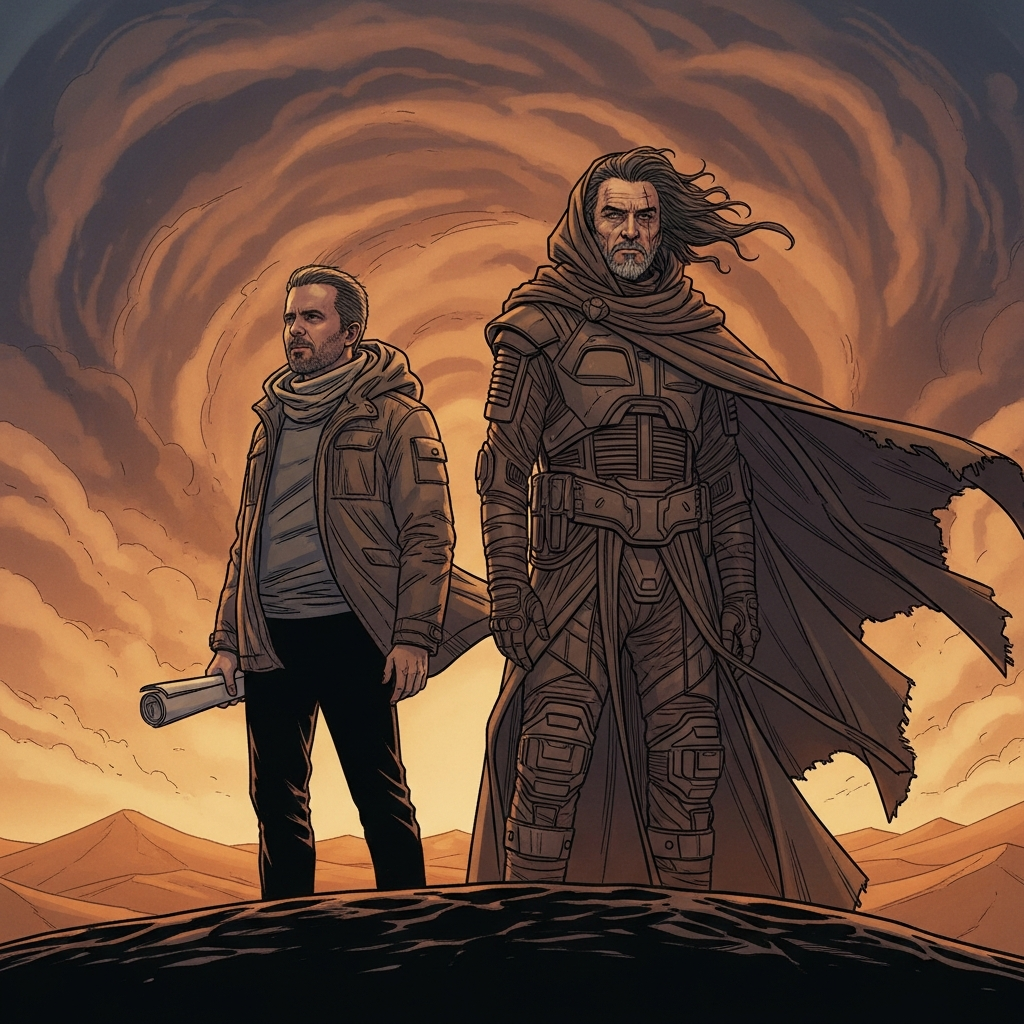
The spice must flow, and with it, new revelations! Denis Villeneuve’s highly anticipated Dune: Part Three is rapidly approaching, and its first official teaser trailer has dropped like a sandstorm across Arrakis. Fans are buzzing as this concluding chapter, based on Frank Herbert’s seminal 1969 novel Dune Messiah, promises an even more intense journey for Paul Atreides. Prepare for a staggering 17-year time jump, pushing Timothée Chalamet’s Paul into a darker, more jaded phase of his messianic destiny. He must now grapple with the holy war he ignited, his complex political marriage to Princess Irulan (Florence Pugh), and the fraught relationship with Chani (Zendaya). This isn’t just a film; it’s a spectacle envisioned for the grandest scale.
Decoding the Teaser: Villeneuve’s Vision for Arrakis
The initial Dune: Part Three trailer isn’t just a preview; it’s a statement. Director Denis Villeneuve has explicitly called this film an “IMAX experience,” designed from the ground up to be seen on the largest possible screens. He affirmed that this is “how we dreamed the movie,” emphasizing the immersive journey awaiting audiences. This dedication to visual grandeur has even sparked a unique fan creation online: the “Franken-IMAX” trailer, which cleverly combines vertical and horizontal trailer versions to mimic the expansive IMAX aspect ratio. This ingenious fan effort highlights the intense anticipation for Villeneuve’s vision.
Villeneuve’s technical choices underscore his commitment to epic scale. He revealed that “most of” Dune: Part Three was shot in 65 millimeter, with a “big part of it” specifically filmed using IMAX film cameras—a first for the director. For the brutal desert sequences, he deliberately opted for digital IMAX cameras, explaining his preference for “the brutality of the digital IMAX” to capture the harshness of Arrakis. This nuanced approach demonstrates a meticulous artistic decision-making process, ensuring each visual texture serves the story.
The film is slated for a theatrical release on Friday, December 18, 2026, sharing its debut with Avengers: Doomsday. However, Dune: Part Three will command exclusive rights to IMAX screens for its initial weeks, guaranteeing that fans seeking the director’s preferred format will find only his vision in premium theaters. Tickets for these showings are expected to vanish quickly. Adding a fresh visual perspective, Linus Sandgren (La La Land) steps in as cinematographer, bringing a “refreshing twist” while maintaining the series’ iconic desolate desert landscapes and imposing architectural aesthetics.
The Atreides Legacy: A New Generation and Lingering Conflict
The teaser immediately plunges viewers into the emotional fallout of Dune: Part Two, confirming Paul and Chani’s enduring, albeit complicated, relationship. Despite Paul’s political marriage to Princess Irulan, the trailer opens with a tender, pivotal scene: the couple discussing names for their unborn child. Paul suggests “Ghanima” for a girl, expressing a desire for her to be “strong, like her mother.” Chani, in turn, proposes “Leto” for a boy, honoring the wisdom of Paul’s late grandfather.
It’s no longer a major spoiler, given the novel’s age and previous adaptations, to reveal that twins are on the way. Both children are destined for significant roles in the future of Arrakis. Rising talent Ida Brooke (Silo) and Nakoa-Wolf Momoa, son of co-star Jason Momoa, are cast as the Atreides children, marking the latter’s screen debut. This new generation promises to deepen the emotional stakes and expand the narrative scope, bringing both hope and immense peril to the Atreides line.
War Feeds on Itself: Paul’s Burden and Lady Jessica’s Stern Words
Nearly two decades after Paul unleashed his Fremen forces, the war he set in motion rages on. The trailer portrays widespread conflict and bloodshed, demonstrating that Paul’s authority as emperor is far from universally accepted. Even with the Harkonnens largely out of the picture, a true ceasefire remains elusive, with Stilgar still leading his Fremen warriors into battle.
Paul expresses his profound internal conflict to his mother, Lady Jessica (Rebecca Ferguson). “War feeds on itself,” he states, “The more I fight, the more our enemies fight back.” He seeks guidance, asking, “How did Father do it?” Jessica’s poignant and pointed response, “Your father never started a war,” underscores her disapproval and highlights Paul’s heavy burden of leadership. This exchange showcases the moral complexities Paul now faces, with his own mother holding him accountable for the escalating violence. Timothée Chalamet’s decision to shave his head for the role is interpreted as a symbolic visual cue, hinting at Paul’s ongoing “descent into war-waging madness” and his grim embrace of his destiny.
Shocking Returns and Sinister New Faces
The Dune universe expands with both familiar figures and chilling new adversaries, promising an intricate web of alliances and betrayals.
Duncan Idaho’s Ghola: A Familiar Face with New Purpose
Despite his heroic sacrifice in the first Dune film, Jason Momoa returns to the franchise, but not as the Duncan Idaho we knew. He appears as Hayt, a “Ghola”—an artificial human or clone—resurrected from the cells of the deceased Idaho. This nuanced return aligns with Herbert’s novels, where the Ghola is presented to Paul, often with motivations that are far from benevolent. The trailer offers a brief glimpse of Momoa back in action, engaged in hand-to-hand combat, leaving audiences to ponder the full implications of this resurrection. His presence on character posters alongside other key figures further emphasizes his significant role in the upcoming narrative.
Scytale: Robert Pattinson’s Chilling Tleilaxu Agent
Robert Pattinson joins the star-studded cast as Scytale, a morally ambiguous antagonist who promises to be a fan favorite from the novels. Scytale is a Tleilaxu Face Dancer—a genetically-engineered shapeshifter—who operates as a spy for factions opposing House Atreides. Pattinson brings a unique intensity to the role, complete with striking bleach-blond, slicked-back hair and a “chilling glare” that hints at his menacing presence. This role marks Pattinson’s latest foray into major genre franchises, following his acclaimed performances in Harry Potter, Twilight, and The Batman.
Alia Atreides and Farok: Expanding the Ensemble
The trailer also officially confirms Anya Taylor-Joy’s expanded role as Alia Atreides, Paul’s precocious younger sister, whose presence was tantalizingly teased at the end of Dune: Part Two. Her unique abilities and connection to the spice will undoubtedly play a crucial part in the unfolding drama. Additionally, Isaach de Bankolé is a newly confirmed cast member, joining as Farok, as revealed by the recently released character posters. These new additions promise to enrich the already complex tapestry of characters vying for power and influence on Arrakis.
Paul’s Transformation: Messiah or Tyrant?
Paul Atreides’ ascension to Muad’Dib, the Fremen chosen one, has granted him legions of loyal followers, and the trailer hints at the intoxicating effect of such messianic status. Paul appears to fully embrace this role, showcasing a powerful public persona. In a chilling voiceover, he declares, “I’m not afraid to die, but I must not die…” This statement underscores the immense burden and self-importance now inextricably linked to his position, suggesting he views himself as indispensable to the future of the universe.
However, the path of a messiah is often fraught with tragedy. The trailer’s ominous final shot, depicting Zendaya’s Chani poised “ready to strike who might be Chalamet’s Paul,” strongly suggests a sorrowful, perhaps even violent, resolution to their complex relationship. The film appears to offer a “looser interpretation” of Dune Messiah, potentially allowing for more “IMAX-ready space battle spectacle.” This creative liberty could intensify the visual impact of Paul’s struggles, even if it means a departure from the novel’s more internal conflicts, delivering an “explosive finale” that balances narrative depth with grand cinematic action.
Villeneuve’s Final Bow: A Conclusion, Not Just a Trilogy
Denis Villeneuve has made it clear that Dune: Part Three will be his final entry into Frank Herbert’s universe. He emphasizes that this is “not like a trilogy” in the traditional sense, but rather a complete arc for Paul Atreides. This approach suggests a focused narrative conclusion, bringing Paul’s complex journey to its definitive end under Villeneuve’s masterful direction.
The Dune cinematic universe, produced by Legendary, has already achieved remarkable success. Dune: Part One (2021) and Dune: Part Two (2024) collectively grossed an astounding $1.12 billion globally and garnered eight Oscars from 15 nominations, including Best Picture nods for both. The franchise has also expanded to television with the critically acclaimed prequel series Dune: Prophecy on HBO and HBO Max, further cementing its place as a significant force in science fiction entertainment.
Frequently Asked Questions
What is the release date for Dune: Part Three and which book is it based on?
Dune: Part Three is scheduled for release on Friday, December 18, 2026. It is based on Frank Herbert’s 1969 novel Dune Messiah, the direct follow-up to the original Dune. The film will feature a significant 17-year time jump from the events of Dune: Part Two, exploring Paul Atreides’ continued struggles with holy war and his messianic status.
Who are the new cast members joining Dune: Part Three?
Robert Pattinson is a major new addition, cast as Scytale, a villainous Tleilaxu Face Dancer. Anya Taylor-Joy, who had a cameo in Dune: Part Two, will officially join the main cast as Alia Atreides. Additionally, Isaach de Bankolé has been confirmed to play the character Farok, as revealed through the recent character posters.
How is Denis Villeneuve optimizing Dune: Part Three for the theatrical experience?
Director Denis Villeneuve designed Dune: Part Three as an “IMAX experience,” primarily shooting in 65mm and using IMAX film for a significant portion, alongside digital IMAX cameras for desert scenes. The film will have exclusive IMAX screen access during its initial release, sharing its December 18, 2026, opening with Avengers: Doomsday. This strategy ensures audiences seeking the director’s grand vision will find Dune: Part Three on the largest possible screens.
Conclusion
The teaser for Dune: Part Three promises an explosive, visually stunning, and emotionally resonant conclusion to Denis Villeneuve’s epic adaptation. From the introduction of Paul and Chani’s children and the return of Duncan Idaho as a Ghola, to the chilling debut of Robert Pattinson’s Scytale and the intense continuation of the holy war, every detail points to a film of immense scope and ambition. Villeneuve’s commitment to an unparalleled IMAX experience, coupled with the dramatic narrative twists from Dune Messiah, sets the stage for a truly unforgettable cinematic event. As Paul Atreides grapples with his destiny as Muad’Dib, audiences worldwide will be on the edge of their seats. Get ready to return to Arrakis on December 18, 2026, and witness the final chapter of Paul’s legendary tale. To fully prepare, be sure to rewatch Dune: Part One and Dune: Part Two, both available on HBO Max.