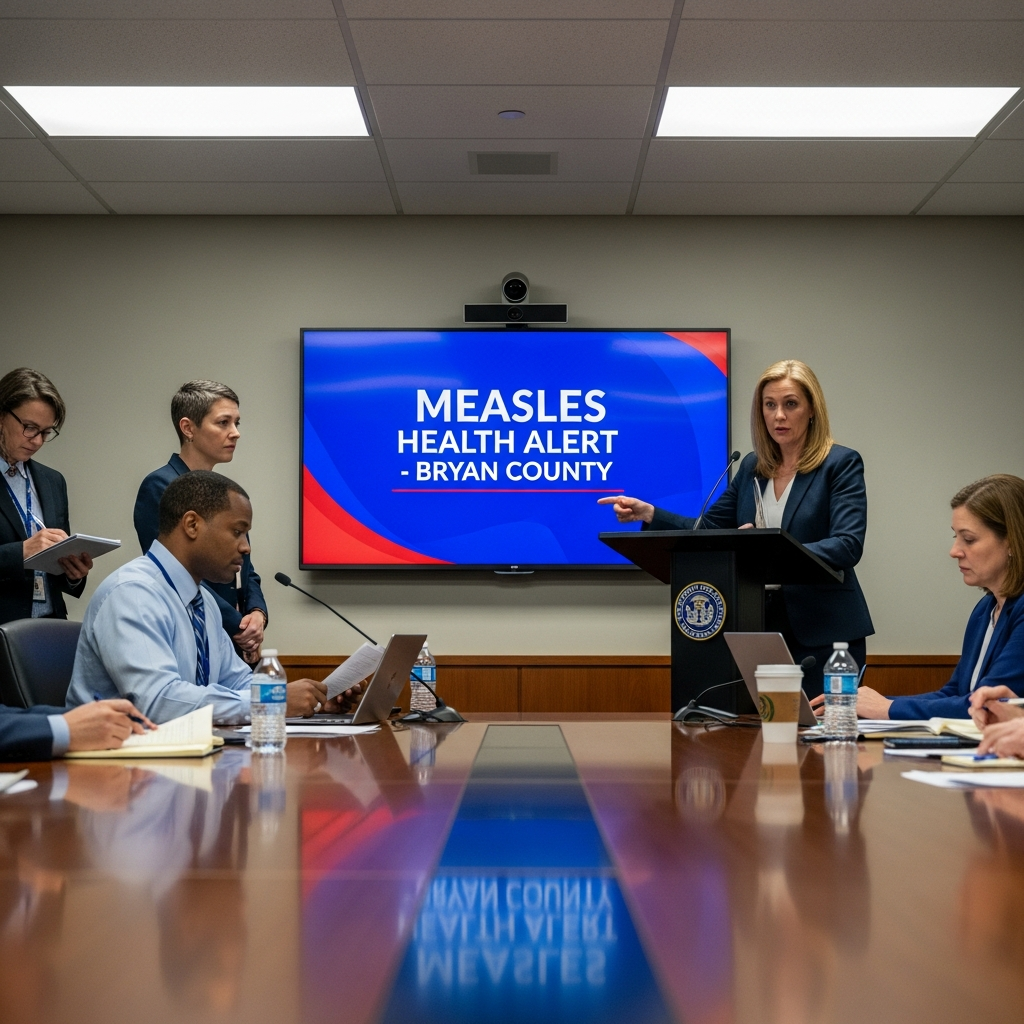
An urgent public health advisory has been issued in Georgia following the confirmation of the state’s second measles case for 2026. This latest development involves an unvaccinated resident in Bryan County, underscoring the critical need for continued vigilance and robust vaccination efforts across the region. Health officials are actively responding to prevent further transmission, emphasizing the highly contagious nature of this preventable disease.
Understanding the Latest Bryan County Measles Case
The Georgia Department of Public Health (DPH) has officially confirmed a new instance of measles in a Bryan County resident. This individual, who was reportedly unvaccinated, had recently traveled outside of Georgia prior to developing symptoms. However, health authorities have clarified that this travel was not international, narrowing the scope of potential exposure origins. The confirmation of this case marks the second instance of measles detected in Georgia during 2026, prompting immediate action from public health agencies.
As part of their standard protocol, DPH officials are diligently contacting all individuals who may have been exposed to the virus. This proactive measure aims to mitigate further spread and ensure that those at heightened risk are fully informed. While the specific out-of-state travel destination remains undisclosed, the focus is squarely on containment and community protection within Georgia.
The Resurgence of Measles: A Growing Concern
Measles, once nearly eradicated in many parts of the world due to widespread vaccination, has unfortunately seen a resurgence in recent years. This global trend poses a significant public health challenge, particularly in areas with declining vaccination rates. The appearance of a second Georgia measles case in such a short period serves as a stark reminder that this highly infectious disease remains a serious threat, capable of rapid spread within susceptible populations.
The virus is not merely a childhood ailment; it can lead to severe complications, including pneumonia, encephalitis (brain swelling), and even death, especially in young children and immunocompromised individuals. Understanding its transmission and symptoms is paramount for residents of Georgia and beyond.
How Measles Spreads and What to Look For
Measles is renowned for its extreme contagiousness, making rapid identification and isolation crucial.
Highly Contagious Nature
The measles virus spreads primarily through airborne droplets. When an infected person coughs or sneezes, tiny virus particles are released into the air. These particles can then be inhaled by others, leading to infection. Alarmingly, the measles virus can linger in the air or on surfaces for up to two hours after an infected person has left an area. This extended viability makes it particularly challenging to contain, as transmission can occur without direct contact with the infected individual.
Recognizing Symptoms
Symptoms of measles typically emerge within 7 to 14 days following exposure to the virus. The initial phase often mimics a common cold, beginning with a high fever, persistent cough, runny nose, and watery, red eyes. Several days later, the characteristic measles rash appears. This rash starts as tiny red spots on the face and hairline, then rapidly spreads downwards to the neck, torso, arms, and legs. The spots may merge together, giving the skin a blotchy appearance.
Anyone experiencing these symptoms, especially if they have traveled recently or been in contact with a confirmed case, should seek medical attention promptly. It’s critical to call ahead before visiting a doctor’s office or emergency room to allow healthcare providers to take necessary precautions to prevent further spread.
Protecting Your Community: The MMR Vaccine
The most effective defense against measles is vaccination. The measles, mumps, and rubella (MMR) vaccine is a safe and highly effective immunization.
The Power of Vaccination
The MMR vaccine provides robust protection against measles, significantly reducing the risk of infection and severe disease. When a high percentage of a community is vaccinated, it creates “herd immunity,” which protects vulnerable individuals who cannot be vaccinated (such as infants or those with compromised immune systems). The decline in measles cases observed globally in previous decades was a direct result of successful, widespread MMR vaccination programs.
CDC Recommendations for the MMR Vaccine in Georgia
The Centers for Disease Control and Prevention (CDC) provides clear guidelines for MMR vaccination. Children typically receive their first dose of the vaccine between 12 and 15 months of age. A second dose is recommended between 4 and 6 years old. This two-dose schedule offers long-lasting immunity. Adults who are unsure of their vaccination status or require proof of immunity can consult their healthcare provider for testing or booster shots. For residents concerned about measles in Georgia, checking personal and family vaccination records is a vital first step.
Georgia’s Measles Landscape: 2025 vs. 2026
The current situation in Georgia highlights a concerning trend. With two confirmed measles cases already reported in 2026, the state is on a trajectory that warrants close monitoring. For context, Georgia recorded a total of 10 confirmed measles cases throughout the entirety of 2025. This comparison underscores the importance of swift public health interventions and renewed public awareness campaigns for the MMR vaccine in Georgia.
The first 2026 case was reported in the Coastal Health District earlier in the year, preceding this latest confirmation in Bryan County. These instances emphasize that measles can emerge in various parts of the state, necessitating a comprehensive and coordinated public health response.
The Public Health Response in Bryan County and Beyond
Upon confirmation of a measles case, public health departments like the Georgia DPH initiate a detailed investigation. This includes identifying the source of infection, tracing all potential contacts, and advising individuals on monitoring for symptoms and preventing further spread.
These efforts are crucial for containing outbreaks and protecting the broader community. The DPH also serves as a vital resource for the public, offering guidance on vaccination, symptom recognition, and what steps to take if exposure is suspected. Consulting a physician with any questions about the measles vaccine or recommended schedules is always advised.
Key Questions Still Unanswered
While public health officials have confirmed many details surrounding the Bryan County case, some information remains under investigation. The specific destination of the individual’s out-of-state travel has not been publicly released. Understanding travel patterns is often critical in tracing the origin and potential spread vectors of infectious diseases. The DPH continues its thorough investigation to gather all pertinent details and provide further updates as they become available.
Frequently Asked Questions
What are the primary symptoms of measles and how contagious is the virus?
Measles typically begins with a high fever, a cough, a runny nose, and watery, red eyes, appearing 7 to 14 days after exposure. A distinctive red rash then emerges on the face and spreads down the body. The virus is extremely contagious, spreading through airborne droplets when an infected person coughs or sneezes. Crucially, the measles virus can remain viable in the air or on surfaces for up to two hours, meaning transmission can occur even after an infected individual has left the area.
How effective is the MMR vaccine, and where can Georgia residents access vaccination information?
The MMR (measles, mumps, rubella) vaccine is highly effective at preventing measles, with two doses offering over 97% protection. The CDC recommends the first dose between 12 and 15 months of age, and the second between 4 and 6 years old. Georgia residents seeking vaccination information, scheduling, or guidance on their status should contact their primary care physician, local health department (including the Georgia DPH), or a nearby clinic. These resources can provide personalized advice and direct access to the vaccine.
Given the recent cases, what immediate steps should Georgia residents take to protect themselves and their families?
With a second measles case confirmed in Georgia, residents should immediately verify their and their family’s vaccination records to ensure they are up-to-date with the MMR vaccine. If unvaccinated or unsure, consult a healthcare provider promptly. Be vigilant for measles symptoms, especially if you have traveled or been in contact with someone who is ill. If symptoms appear, call your doctor before visiting their office or an emergency room to allow them to prepare for your arrival and prevent potential virus spread to others in the waiting area.
Staying Vigilant Against Measles in Georgia
The confirmation of a second Georgia measles case in Bryan County for 2026 serves as an urgent reminder of the ongoing threat posed by this highly contagious disease. While health officials work tirelessly to contain and investigate, individual action remains the most powerful defense. Ensuring full vaccination with the MMR vaccine, understanding the symptoms, and seeking timely medical advice are critical steps for protecting personal health and contributing to community immunity. Staying informed through reliable sources like the Georgia Department of Public Health is essential as we collectively navigate this public health challenge.