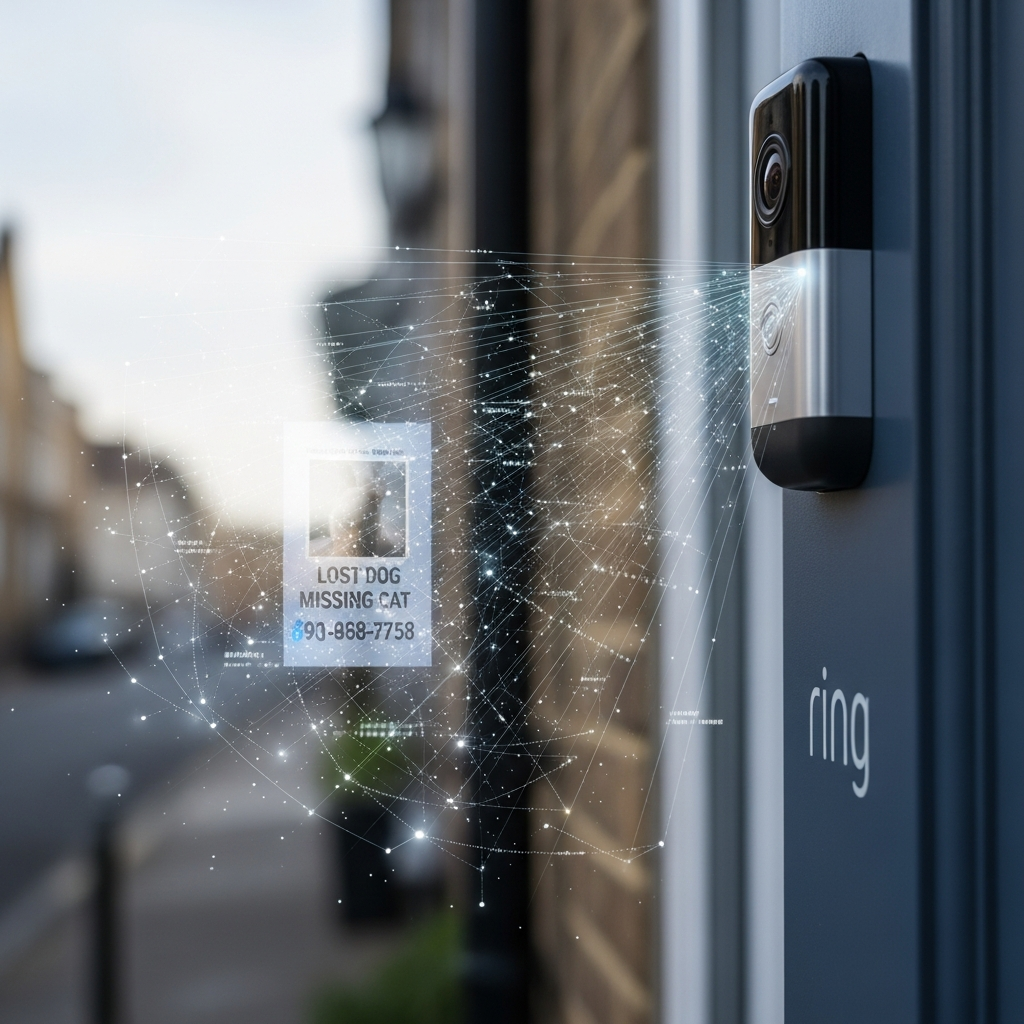
Amazon Ring’s latest feature, “Search Party,” advertised during the Super Bowl with heartwarming imagery of lost pets, has ignited a fierce debate among privacy advocates. This seemingly innocent tool, designed to reunite owners with their furry companions, reveals a much deeper, more troubling vision of widespread digital surveillance. Expert organizations, like the Electronic Frontier Foundation (EFF), warn that this new AI-powered capability represents a significant escalation in how consumer devices could soon identify, track, and locate anything—or anyone—within a vast network of cameras.
At its core, Ring’s “Search Party” allows users to leverage AI analysis across neighborhood Ring devices. It scans footage to identify potential matches for lost animals. While presented as a benevolent solution, critics highlight its potential for mission creep. The concern isn’t just about pets; it’s about the technology’s inherent ability to expand. This could easily integrate with existing biometric identification features, such as “Familiar Faces,” which already uses face recognition to scan individuals in camera view and match them against pre-approved lists. The potential combination of these technologies paints a concerning picture of ubiquitous, unconsented tracking.
The Slippery Slope of Biometric Identification
The integration of advanced AI and biometric identification into everyday consumer devices like Ring cameras raises significant ethical and legal questions. “Familiar Faces,” for instance, already operates by scanning faces and matching them against a database. While marketed for convenience, such as recognizing family members, it opens the door to broader applications. Imagine a scenario where the “Search Party” feature evolves to identify not just pets, but also people, vehicles, or specific objects across an entire neighborhood’s Ring network. This blurs the line between personal security and pervasive public surveillance.
Several states have recognized these risks, enacting data privacy laws that require explicit, informed consent before biometric data can be collected or used. Ring’s existing features, and certainly its future capabilities, could run afoul of these protections. Unfortunately, the patchwork nature of U.S. privacy laws means many residents lack similar safeguards. This legal vacuum allows companies to push the boundaries of surveillance technology, often with little public oversight or understanding of the long-term implications for civil liberties. The need for comprehensive biometric data regulations is more pressing than ever.
A History of Privacy Controversies and Law Enforcement Ties
This isn’t Ring’s first foray into contentious privacy territory. The company has a well-documented history of privacy violations and a disturbingly close relationship with law enforcement. For years, the EFF has chronicled numerous instances where Ring devices, initially purchased for personal home security, have inadvertently become tools for broader surveillance. These problems include microphones capturing street audio far beyond private property and employees having “dangerously overbroad access” to customer footage.
In 2023, Ring settled with the Federal Trade Commission (FTC) over these very issues. The FTC found that Ring’s lax attitude toward privacy and security allowed employees and third-party contractors to view, download, and transfer sensitive customer video data for their own purposes. This case highlighted the critical need for companies handling personal data to implement robust security measures and strict access controls.
Ring’s collaboration with law enforcement has also been a continuous source of concern. As far back as 2016, the company actively courted police departments, offering free devices to integrate into their networks. Initially, Ring provided law enforcement with warrantless access to user footage. Although they claimed to cease this practice in 2024, the company quickly established new partnerships. Agreements with major police technology firms like Axon and Flock Safety now facilitate the integration of Ring cameras into wider police intelligence networks. These partnerships enable law enforcement to request Ring footage directly from users, bypassing traditional legal channels and expanding the AI surveillance apparatus available to authorities. This effectively sidesteps earlier attempts to limit direct access, maintaining a broad network of data feeds for police use.
Reclaiming Your Privacy: Disabling “Search Party”
One of the most alarming aspects of the “Search Party” feature is that it’s often enabled by default. This “opt-out” approach places the burden on individual users to actively manage their privacy settings. Many users may not even be aware that their devices are contributing to a neighborhood-wide surveillance network, however well-intentioned the “lost pet” narrative might be.
Protecting your digital rights means taking proactive steps. It’s crucial for Ring owners to review and adjust their settings. Taking control of your personal data begins with understanding where and how your information is being used.
How to Disable Ring’s “Search Party” Feature:
Follow these simple steps to disable the “Search for Lost Pets” function on your Ring cameras:
Open the Ring app on your smartphone or tablet to access the main dashboard.
Tap the menu icon (☰), usually located in the top left corner of the screen.
Select Control Center from the menu options.
Within the Control Center, tap on Search Party.
Locate and tap Disable Search for Lost Pets.
Finally, tap the blue Pet icon next to “Search for Lost Pets” to turn this feature off for each individual camera you own.
(Note: You might also see options here to disable “Natural Hazards (Fire Watch)” by tapping its blue Flame icon. Review all options to ensure your settings align with your privacy preferences.)
The Broader Implications of Smart Home Surveillance
The rise of smart home security devices, while offering convenience and a sense of safety, brings unprecedented challenges to individual privacy. The “Search Party” feature is just the latest example of how companies can leverage advanced technology, often under the guise of public good, to expand their data collection and surveillance capabilities. This trend “turbocharges the extreme dangers” of allowing such pervasive monitoring to proliferate without stringent regulations and public awareness.
Consumers must critically assess the trade-offs between perceived convenience and fundamental digital rights. The long-term societal impact of an unchecked surveillance state, designed to “catch us all in its net,” demands attention. We need to reject disingenuous framing that minimizes privacy concerns and recognize the full potential of these technologies.
Frequently Asked Questions
What is Ring’s “Search Party” feature and why is it a privacy concern?
Ring’s “Search Party” feature uses AI to scan footage across multiple Ring devices in a neighborhood to help identify lost pets. While seemingly benign, privacy advocates like the EFF warn it’s a significant concern because it expands pervasive biometric identification. This technology could easily be adapted to track individuals, vehicles, or objects, creating a vast surveillance network without explicit consent. It sets a precedent for ubiquitous monitoring, blurring lines between personal security and public oversight.
How can I disable the “Search Party” feature on my Ring device?
To disable the “Search Party” feature, open your Ring app and navigate to the main dashboard. Tap the menu icon (☰), then select “Control Center.” From there, tap “Search Party” and then choose “Disable Search for Lost Pets.” Finally, tap the blue Pet icon next to the feature name to turn it off for each of your cameras. This proactive step helps protect your personal data from being included in the network.
What are the broader implications of AI biometric surveillance in smart home devices like Ring?
The broader implications of AI biometric surveillance in devices like Ring are substantial. They include the erosion of individual privacy, potential for misuse of personal data, and expansion of governmental and corporate surveillance capabilities. Features like “Search Party” and “Familiar Faces” normalize biometric data collection, which can lead to unconsented tracking and identification. This raises significant ethical questions regarding civil liberties, especially in the absence of robust data privacy laws, and empowers a “surveillance state” that could monitor citizens without clear oversight or accountability.
Conclusion: Prioritizing Privacy in the Digital Age
The narrative around “Search Party” exemplifies a broader trend: companies leveraging emotional appeals to introduce powerful surveillance technologies. While the desire to reunite lost pets is noble, the methods employed by Ring carry significant risks to individual privacy and freedom. The long history of privacy violations, coupled with deep ties to law enforcement, underscores the need for vigilance. As consumers, our collective awareness and proactive engagement are crucial. By understanding how these technologies work and taking steps to manage our smart home security settings, we can push back against the erosion of privacy and help shape a more secure digital future.