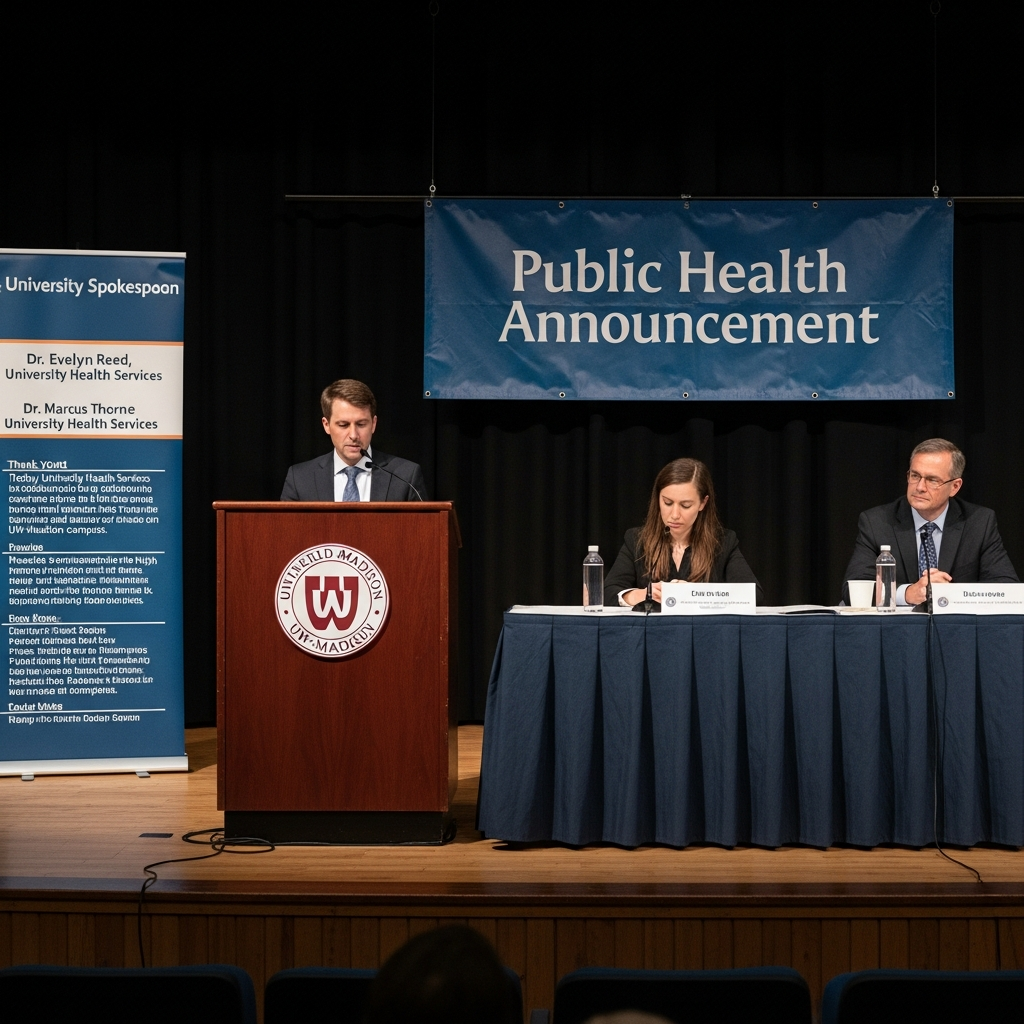
A critical public health alert has been issued for the University of Wisconsin-Madison community and surrounding Dane County. Health officials recently confirmed a case of measles in a UW-Madison student, marking the second such instance in Wisconsin for 2026. This highly contagious virus, contracted during recent international travel, has prompted a rapid response from state and local health agencies. For anyone connected to the UW-Madison area, understanding the facts, potential exposure sites, and crucial next steps is paramount to safeguarding personal and community health.
Understanding the Confirmed Measles Case at UW-Madison
The confirmed UW-Madison measles case involves a student who resides in an off-campus apartment in Madison. Officials from University Health Services (UHS), Public Health Madison and Dane County (PHMDC), and the Wisconsin Department of Health Services (DHS) have verified the student is now recovering after receiving medical care. This situation underscores the ongoing global risk of measles reintroduction, even in highly vaccinated populations.
Crucially, this Dane County case is distinct and unrelated to Wisconsin’s first measles confirmation of 2026, which involved a resident in Waukesha County. Both cases, however, share a common origin: international travel. The student’s infection was identified following their return from abroad, highlighting how quickly diseases can spread across borders in an interconnected world.
Rapid Response: Safeguarding the Campus and Community
Upon confirmation, health authorities initiated an immediate and extensive contact tracing effort. Jake Baggott, associate vice chancellor and executive director of University Health Services, reported that approximately 4,000 individuals potentially exposed to the virus have been directly notified. This proactive and robust public health response aims to contain any further spread efficiently.
Public health teams are collaborating closely with UW-Madison to identify all potential exposure sites and inform those who might be at risk. The university has reassured its community that once identified and assessed, all five campus locations previously noted as potential exposure sites are now safe for normal operations. However, vigilance remains key, and officials continue to monitor the situation.
Key Exposure Locations and Times in Madison
Public Health Madison & Dane County and the Wisconsin Department of Health Services have provided a detailed list of locations and specific timeframes where the infected student was present, and where others may have been exposed. If you were at any of these sites during the specified times, it is vital to assess your immunization status and follow health guidelines.
Qdoba Restaurant (2 N. Park Street, Madison, WI): Sunday, January 25, from 1:00 p.m. to 5:00 p.m.
UW-Madison Brogden Psychology Building (1202 W. Johnson Street, Madison, WI): Monday, January 26; Tuesday, January 27; and Wednesday, January 28, all from 12:00 p.m. to 6:00 p.m.
Waisman Center (1500 Highland Avenue, Madison, WI): Monday, January 26, from 4:00 p.m. to 7:00 p.m., and Wednesday, January 28, from 10:00 a.m. to 1:00 p.m.
UW-Madison Genetics Building: Biotechnology Center Building (425 Henry Mall, Madison, WI): Tuesday, January 27, from 10:30 a.m. to 1:00 p.m.
UW-Madison Union South (1308 W. Dayton Street, Madison, WI): Tuesday, January 27, from 2:00 p.m. to 5:00 p.m.
Public health officials emphasize that additional locations may be added to their websites if further potential exposure points are identified.
Understanding Measles: A Serious and Highly Contagious Threat
Measles is an extremely contagious respiratory illness caused by a virus. It spreads through the air when an infected person coughs or sneezes. The virus particles can remain airborne or on surfaces for up to two hours after the person has left the area. This high transmissibility means that an astonishing 90% of unvaccinated individuals exposed to the virus are likely to become infected.
Recognizing Symptoms and Potential Complications
Symptoms typically emerge 10 to 21 days after exposure. Initial signs often mimic a common cold, including a runny nose, a persistent cough, and red, watery eyes (conjunctivitis). A high fever, often exceeding 104°F, is also characteristic. Three to five days after these initial symptoms, a distinctive red rash with raised bumps usually appears, starting at the hairline and spreading downwards to the face, neck, trunk, and limbs.
The dangers of measles extend far beyond a rash. It can lead to serious health complications such as pneumonia (a lung infection), brain swelling that can cause brain damage, and deafness. In some severe cases, measles can even be fatal. Data from the Wisconsin Department of Health Services indicates that 1 in 4 people who contract measles in the U.S. require hospitalization. Tragically, one or two out of every 1,000 children in the U.S. who get measles will die from the disease, even with the best medical care.
Vaccination: Your Best Defense Against Measles
The most effective way to prevent measles is through vaccination with the Measles, Mumps, and Rubella (MMR) vaccine. Two doses of the MMR vaccine offer 97% protection against the disease and generally provide lifelong immunity. The CDC recommends these doses be administered at 12-15 months and 4-6 years of age. Individuals born before 1957 are typically considered immune due to widespread exposure at that time.
UW-Madison’s campus is fortunate to have a high level of protection; an estimated 95% of the student population is vaccinated against measles. This high vaccination rate, often referred to as “herd immunity,” significantly reduces the virus’s ability to spread within the campus community. However, a broader state context raises concerns. The U.S. Centers for Disease Control and Prevention (CDC) for the 2023-2024 school year estimated Wisconsin’s MMR vaccination rate for kindergartners to be the second lowest in the nation. This statewide vulnerability increases the risk of outbreaks and underscores the continued importance of vaccination efforts. In 2025, Wisconsin reported 36 measles cases, all in unvaccinated individuals, with two requiring hospitalization. This serves as a stark reminder of the vaccine’s protective power.
What to Do If You Were Potentially Exposed
If you believe you may have been exposed to measles, especially if you were at one of the identified locations, immediate action is crucial.
Check Your Immunization Status: Verify your MMR vaccine status as soon as possible. Wisconsinites can often check their immunization records through the state immunization registry.
Quarantine Guidelines:
Unvaccinated Individuals: If you are not fully vaccinated and have been exposed, you are required to quarantine for 14 days, starting one week after your exposure. UW-Madison’s University Health Services extends this recommendation to 21 days for unvaccinated students and staff from the date of exposure. During quarantine, stay home from work or school and avoid all public places.
Fully Vaccinated Individuals: If you are fully vaccinated and have no symptoms, you are not required to quarantine. However, all individuals, regardless of vaccination status, should actively monitor for symptoms for 21 days post-exposure.
Seek Medical Advice (Call First!): If you develop any symptoms consistent with measles, do not go directly to a clinic or hospital. Instead, immediately call your doctor’s office, clinic, or Public Health Madison & Dane County (PHMDC) by phone. This allows healthcare providers to take necessary precautions to prevent further transmission to other patients and staff. UW-Madison students can contact UW Health Services at 608-265-5600 for guidance. For confidential assistance in finding a doctor or clinic, you can dial 211.
Taking these steps helps protect not only yourself but also the wider community, especially vulnerable populations such as infants too young to be vaccinated and individuals with compromised immune systems.
Frequently Asked Questions
What are the key symptoms of measles and how long after exposure do they appear?
Measles symptoms typically appear 10 to 21 days after exposure. Initial symptoms resemble a cold and include a runny nose, persistent cough, red and watery eyes, and a high fever often exceeding 104°F. Three to five days later, a characteristic red rash with raised bumps emerges, usually starting at the hairline before spreading across the body.
Where were the primary potential measles exposure locations identified around the UW-Madison campus?
Health officials identified several key exposure locations. These include the Qdoba Restaurant at 2 N. Park Street, the UW-Madison Brogden Psychology Building, the Waisman Center, the UW-Madison Genetics Building: Biotechnology Center Building, and UW-Madison Union South. Specific dates and times for each location are crucial for assessing potential exposure.
What are the quarantine guidelines for UW-Madison students and staff following potential measles exposure?
Unvaccinated individuals who have been exposed are required to self-quarantine for 14 to 21 days after exposure, staying home from work or school. Vaccinated individuals without symptoms are not required to quarantine but should monitor for symptoms for 21 days. Anyone developing symptoms should contact their doctor or UW Health Services by phone before visiting a clinic.
Stay Informed and Stay Protected
This recent UW-Madison measles case serves as a powerful reminder of the importance of vaccination and global health vigilance. While the university community benefits from a high vaccination rate, the broader state context and international travel risks mean continued awareness is essential. By understanding the symptoms, knowing the exposure sites, and adhering to public health guidance, we can collectively work to prevent further spread and ensure the health and safety of everyone in Dane County and beyond. Stay informed, confirm your vaccination status, and don’t hesitate to contact health professionals if you have concerns.