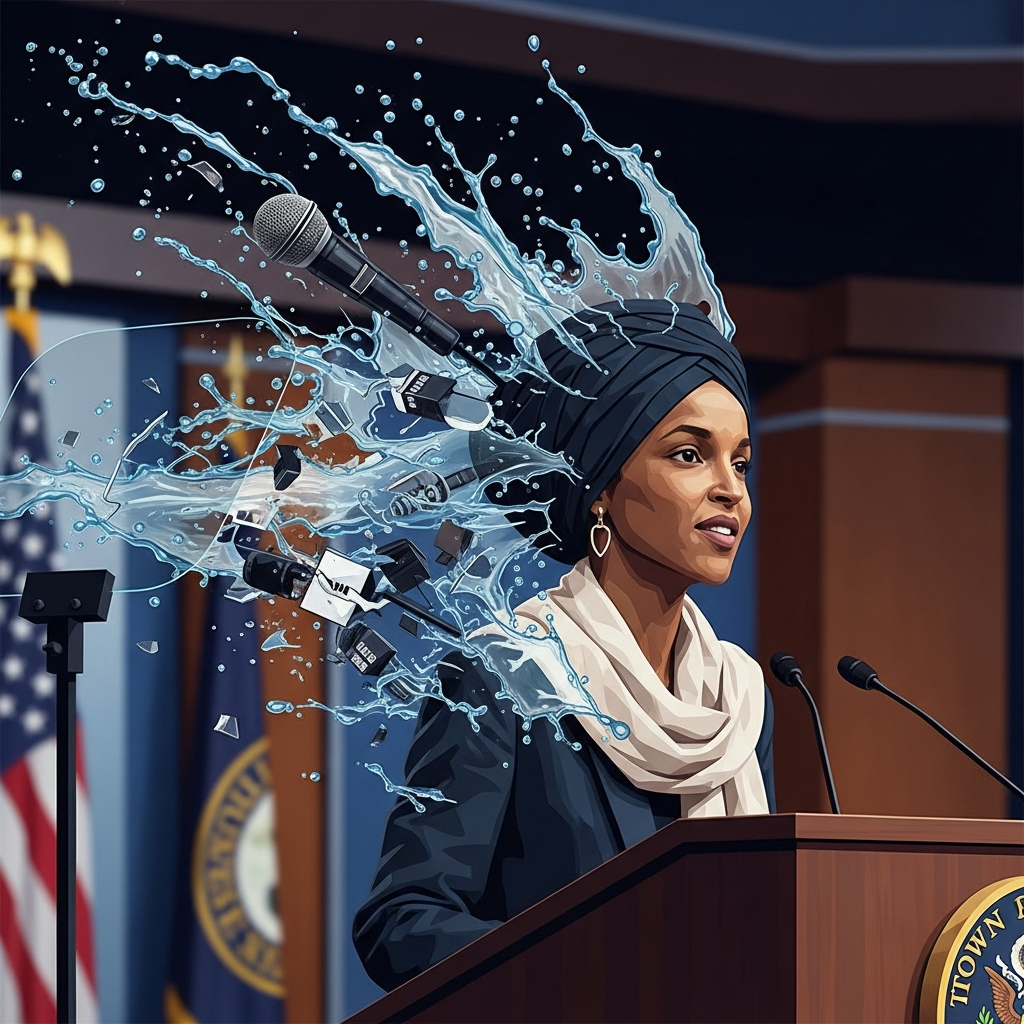
A shocking incident unfolded during a recent town hall in Minneapolis, as Congresswoman Ilhan Omar was the target of an assault involving an unknown liquid. This concerning event, which saw an audience member spray a substance at the Minnesota representative, has ignited widespread condemnation and amplified crucial discussions about political violence and the safety of elected officials. Despite the attack, Representative Omar demonstrated remarkable resilience, choosing to continue her town hall and reaffirming her commitment to her constituents. The incident quickly drew national attention, underscoring the volatile nature of contemporary political discourse in the United States.
The attack occurred during a critical discussion on immigration policy, a topic at the forefront of local and national debate. Officials swiftly intervened, arresting the assailant and launching an investigation into the mysterious liquid used in the spray. This article delves into the specifics of the incident, the political backdrop that frames it, and the broader implications for public figures in an increasingly polarized environment.
The Alarming Incident: What Happened at the Town Hall
On Tuesday, January 27, 2026, Representative Ilhan Omar was hosting a town hall meeting in a north Minneapolis basement, attended by approximately 100 people. The focus of the gathering was the contentious presence of federal immigration officials in Minnesota, particularly in light of recent fatal shootings involving US citizens and immigration agents. The atmosphere was already charged as Omar addressed the crowd, advocating for the abolition of Immigration and Customs Enforcement (ICE) and calling for Homeland Security Secretary Kristi Noem to resign or face impeachment.
Suddenly, an individual identified as Anthony James Kazmierczak, 55, approached the podium. Witnesses, including a BBC journalist present, described him using a syringe to spray a liquid at the congresswoman. The substance reportedly had a sour, chemical-like smell. As Kazmierczak was tackled by security, he was heard yelling, “You must resign,” and later, “pitting us against each other.” Minneapolis police immediately arrested him, booking him into Hennepin County Jail on suspicion of third-degree assault. Forensic experts were dispatched to the scene to analyze the sprayed liquid.
Omar’s Defiant Response and Community Support
Remarkably, Congresswoman Omar was uninjured and quickly reassured the attendees. “I’m ok. I’m a survivor so this small agitator isn’t going to intimidate me from doing my work. I don’t let bullies win,” she posted on X (formerly Twitter) shortly after the incident. Despite urges from officials and concerned attendees to end the event and seek medical checks, Omar resolutely insisted on continuing the town hall. “Please don’t let them have the show,” she pleaded, later declaring, “We are Minnesota strong, and we will stay resilient in the face of whatever they might throw at us.” This powerful display of resolve resonated deeply with many, including attendee Alfred Flowers Jr., who praised her “courage and strength to still stay and finish the town hall for the people.”
The immediate condemnation of the Ilhan Omar attack was swift and bipartisan. Minneapolis Mayor Jacob Frey stated that “violence and intimidation have no place in Minneapolis.” Even Republican Representative Nancy Mace, a vocal political opponent of Omar, condemned the act, emphasizing that “no elected official should face physical attacks.” The U.S. Capitol Police (USCP) also issued a strong statement, calling the assault an “unacceptable decision” and promising “swift justice” through collaboration with federal partners to ensure the assailant faces the “most serious charges possible.”
The Political Backlash and Broader Context
The incident did not occur in a vacuum. It unfolded amidst heightened tensions surrounding immigration enforcement in Minneapolis. The town hall itself was prompted by two fatal shootings of US citizens by immigration officials that month: Renee Good in January and Alex Pretti the previous week. These tragic events had fueled local protests and public outcry, setting a tense backdrop for Omar’s impassioned call to abolish ICE.
Congresswoman Omar, who represents Minnesota’s fifth Congressional District, has frequently been a target of intense political criticism and divisive rhetoric, particularly from former President Donald Trump. Trump has repeatedly attacked Omar, labeling her a “radical left lunatic,” “disgusting,” and a “fake sleazebag.” He has also questioned her patriotism and, in a social media post, even suggested she “should be in jail, or even a worse punishment, sent back to Somalia.” In a highly inflammatory move following this specific town hall assault on Ilhan Omar, Trump baselessly accused her of staging the attack.
Escalating Political Violence and Threats
This incident highlights a disturbing trend of increasing threats and violence against elected officials in the United States. The U.S. Capitol Police revealed a concerning surge in threats against members of Congress, their families, and staff. Their annual report documented 14,938 investigations into “concerning statements, behaviors, and communications” in the preceding year—a significant jump from 9,474 investigations just two years prior. This marks the third consecutive year that such threats have climbed.
Omar herself has drawn a direct correlation between Trump’s rhetoric and an escalation in political violence. As an immigrant who arrived in the U.S. as a refugee at age 12 and later became a citizen, her background often becomes a focal point for xenophobic attacks. She made history in 2019 as the first Somali-American, first African-born American, and one of the first two Muslim American women to serve in the US Congress. Her unwavering advocacy for progressive ideals, including immigration reform and universal healthcare, has made her a prominent figure in national debates and, unfortunately, a frequent target. The attack at her town hall serves as a stark reminder of the dangerous intersection of heated political rhetoric and its real-world consequences.
Frequently Asked Questions
What exactly happened to Congresswoman Ilhan Omar at her town hall?
During a town hall meeting in Minneapolis, Congresswoman Ilhan Omar was assaulted by 55-year-old Anthony James Kazmierczak. He used a syringe to spray an unknown, sour-smelling liquid at her while she was speaking. Kazmierczak was immediately tackled by security and arrested by Minneapolis police, facing third-degree assault charges. Despite the Ilhan Omar attack, she was uninjured and defiantly continued the town hall, stating she would not let bullies win.
What was the town hall about that led to the incident?
The town hall focused on the controversial presence of federal immigration officials in Minneapolis and recent fatal shootings involving US citizens and immigration agents. Shortly before the assault on Ilhan Omar, she had publicly called for the abolition of Immigration and Customs Enforcement (ICE) and demanded the resignation or impeachment of Department of Homeland Security Secretary Kristi Noem. This contentious topic and Omar’s strong stance likely fueled the assailant’s actions.
How does this attack relate to broader political violence trends in the U.S.?
This incident is sadly part of a troubling pattern of escalating political violence and threats against elected officials. The U.S. Capitol Police reported a significant increase in investigations into threats against members of Congress. The attack on Congresswoman Omar, a frequent target of inflammatory rhetoric from figures like former President Donald Trump, underscores how polarizing language can contribute to a climate where such physical confrontations occur. It highlights the urgent need for enhanced security and a de-escalation of hostile political discourse.
Conclusion: Resilience in the Face of Intimidation
The assault on Ilhan Omar during her town hall represents more than just a localized incident; it serves as a potent symbol of the challenges facing public figures in today’s political landscape. Her unwavering resolve to continue the event, declaring “We are Minnesota strong,” resonated as a powerful message against intimidation. While the investigation into the unknown liquid and the assailant’s motives continues, the episode underscores the critical need to address the rising tide of political violence and the impact of divisive rhetoric. Protecting democratic discourse and ensuring the safety of elected representatives remains paramount as communities grapple with intense policy debates and partisan divides.