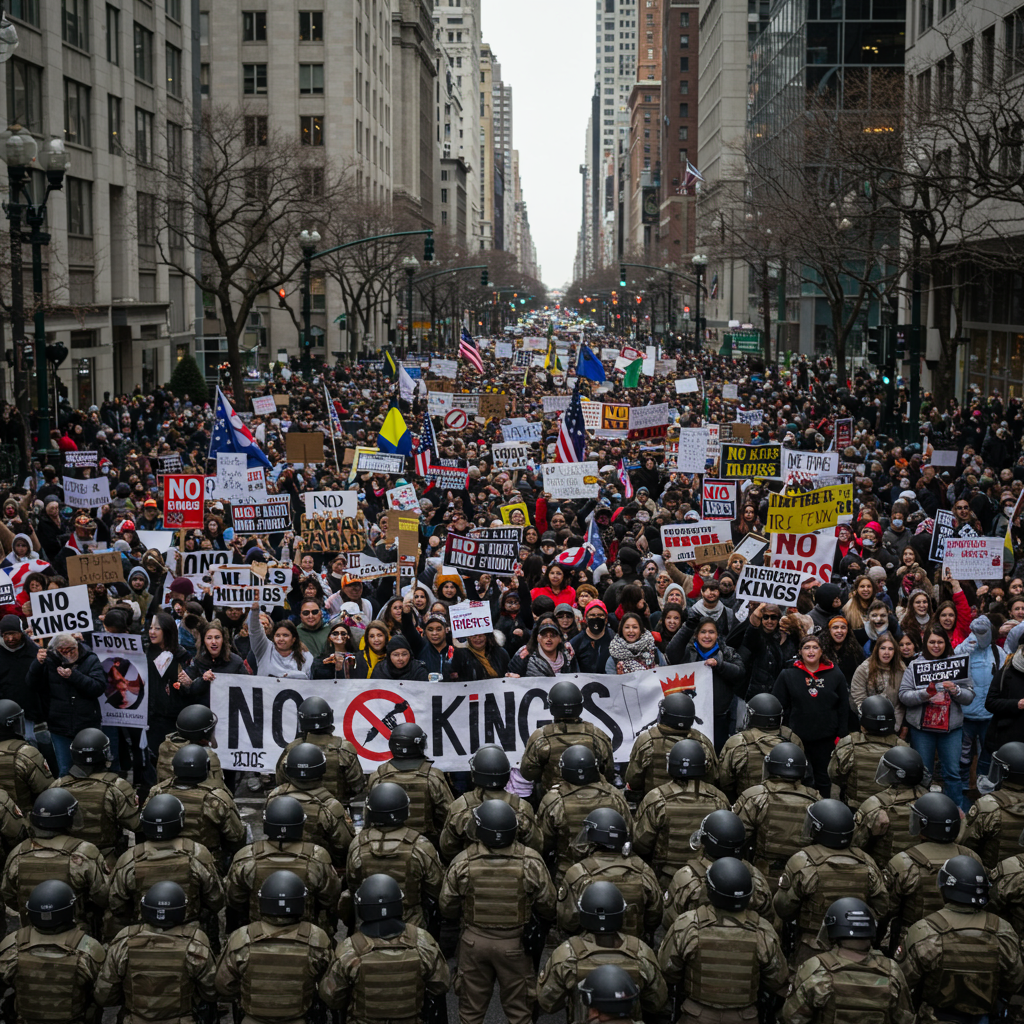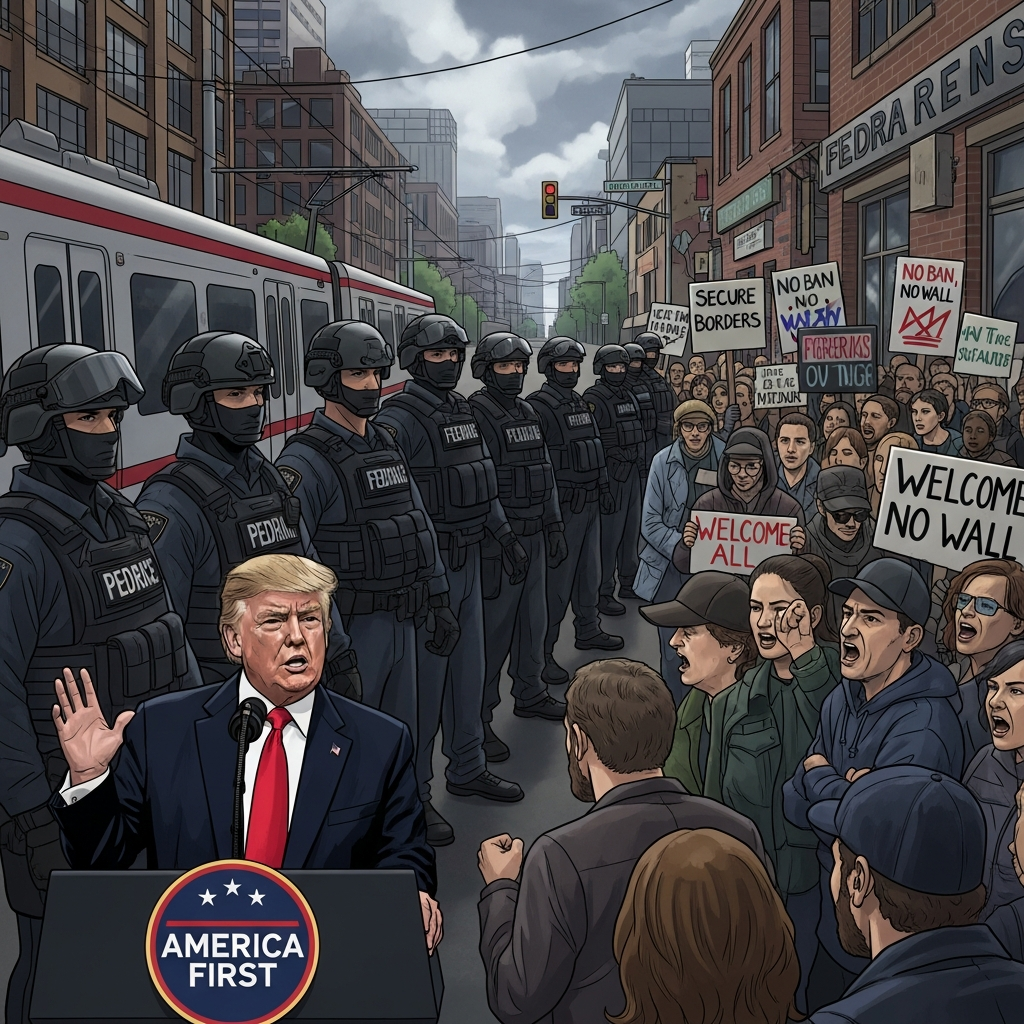
Following a contentious fatal shooting in Minneapolis, the Trump administration has aggressively reinforced its hardline immigration enforcement tactics and rhetoric. This intensified stance, aimed at bolstering federal authority, comes despite escalating local opposition and emerging divisions within the Republican coalition. The incident has thrust federal-local cooperation, or lack thereof, into the national spotlight, prompting intense debate over the role of federal agents in cities actively resisting their presence.
Escalating Immigration Enforcement in Minneapolis
The recent fatal shooting by a federal agent in Minneapolis served as a critical flashpoint, prompting the Trump administration to double down on its uncompromising immigration policies. President Donald Trump and his senior officials quickly mobilized, publicly defending the agent’s actions and the administration’s robust enforcement strategies. Their messaging consistently shifted blame toward Democratic state and local leaders, accusing them of undermining federal law enforcement efforts and fueling local unrest. This incident highlights ongoing tensions between federal directives and local autonomy in managing immigration enforcement.
The Tragic Shooting of Renee Nicole Good
The catalyst for this renewed enforcement push was the shooting of Renee Nicole Good, a 37-year-old mother of three, by an Immigration and Customs Enforcement (ICE) agent in Minneapolis. Reports indicate that federal agents were conducting an enforcement mission when the incident occurred. Vice President JD Vance controversially labeled Good’s death a “tragedy of her own making,” connecting it to a “larger, sinister left-wing movement” actively opposing law enforcement. Homeland Security Secretary Kristi Noem echoed these sentiments, accusing Good of “domestic terrorism.” However, video evidence largely fails to corroborate claims of Good’s aggressive involvement in protest activities, and eyewitnesses have disputed official accounts suggesting the officer was in immediate danger.
Administration’s Unified Defense & Blame Game
A concerted effort from top administration officials saw them appearing across news outlets and social media, universally defending the federal officer and the administration’s “heavy-handed” tactics. Their core argument posits that Minnesota Governor Tim Walz and Minneapolis Mayor Jacob Frey were failing to adequately support federal agents, thereby exacerbating tensions. President Trump himself explicitly called out Walz and Frey in social media posts, alleging that “Democrat run Sanctuary Cities and States are REFUSING to cooperate with ICE” and “encouraging Leftwing Agitators.” This consistent narrative aims to paint local Democratic leadership as directly responsible for any operational difficulties or public backlash faced by federal agents.
Contradicted Narratives and Internal Dissent
Despite the administration’s unified public front, internal concerns arose regarding the messaging. While the President privately and publicly defended the agent, there was White House apprehension that his immigration narrative was being overshadowed by the Minneapolis chaos. Furthermore, specific claims by officials like Vice President Vance—that Good drove her car toward an agent, striking him, and that the officer had previously suffered severe injuries—were widely disputed by eyewitness accounts and subsequent analyses of video footage. These contradictions have raised questions about the administration’s transparency and the factual basis of its defense, potentially eroding trust among various stakeholders, including the public and elements within federal agencies.
Republican Allies Questioning Strategy
The administration’s aggressive posture in Minneapolis didn’t receive unanimous backing, even from within its own party. Some prominent Republicans began openly questioning the long-term viability and wisdom of maintaining a significant ICE presence in a state where local leaders vehemently opposed it. Congressman James Comer suggested that if local officials put ICE agents in harm’s way, perhaps the federal government should relocate its operations. Oklahoma Governor Kevin Stitt also voiced concerns, asking “What is the endgame? What is the solution?” He highlighted the principle of federalism and state rights, questioning whether Americans truly desired the deportation of every non-U.S. citizen, indicating potential strategic missteps.
DHS Concerns and Border Patrol Reservations
Beneath the surface of public defiance, significant unease brewed within the Department of Homeland Security (DHS). Multiple officials expressed apprehension that Secretary Kristi Noem’s public statements, particularly her immediate blaming of Renee Good while her department led the investigation, were harming DHS’s reputation and further endangering federal law enforcement personnel. Sharing videos of the shooting internally, some officials felt Noem was doing a “disservice” and undermining their credibility. A former senior Border Patrol official also revealed that some agents on the ground in Minneapolis felt their mission was no longer productive enough to justify the inherent risks and tenuous situations they faced, hinting at a morale issue within the ranks.
Unwavering Stance and Reinforcements
Despite the mounting criticism and internal concerns, the Trump administration conveyed no plans to alter its enforcement strategy in Minnesota. Senior White House officials maintained that “We’re not changing our posture on a policy front,” attributing the rising rhetoric to Democrats. This resolve was underscored by plans to deploy additional federal resources to Minneapolis, signaling a commitment to double down rather than withdraw. Attorney General Pam Bondi affirmed that various federal agencies, including the DEA, ATF, and FBI, would provide support, asserting they would “do what they can to keep citizens safe if Walz won’t do it.” This move effectively escalated the federal presence, intensifying the standoff.
White House Messaging: Cooperation vs. Chaos
A central tenet of the White House’s messaging was to contrast Minneapolis’s situation with other cities where federal immigration operations allegedly proceed smoothly. Deputy Attorney General Todd Blanche highlighted Texas, noting a significantly higher number of deportations without similar protests. He attributed this success to local law enforcement cooperation, arguing it enables safe operations. White House officials also cited Washington, D.C., and Memphis, Tennessee, as examples of Democratic-led cities where mayors worked effectively with the administration, leading to “safer” environments without “chaos or craziness.” This narrative aimed to frame Minneapolis’s turmoil as a direct consequence of local leaders’ non-cooperation, implicitly pressuring them to align with federal demands.
Unexpected Pushback: NRA and Legal Debates
The administration’s stance even faced an unusual challenge from the National Rifle Association (NRA), typically a staunch Republican ally. After US Attorney Bill Essayli, a Trump appointee, posted a social media comment suggesting a high likelihood of being legally justified in shooting someone who approaches law enforcement with a gun, the NRA issued a rare public rebuke. Calling Essayli’s sentiment “dangerous and wrong,” the NRA urged waiting for a full investigation rather than “demonizing law-abiding citizens.” This unexpected friction underscored the complexity of the situation and the potential for the administration’s rhetoric to alienate even its traditional supporters, particularly when Second Amendment rights appeared to be implicated. The administration’s defense of the agent, referencing the individual’s “decision-making process,” further highlighted the nuanced and often contradictory positions taken on citizen rights versus law enforcement actions.
Looming Government Shutdown Threat
The immigration enforcement dispute also quickly entwined with critical legislative matters, specifically the looming deadline for government funding. Senate Minority Leader Chuck Schumer declared that Democrats would block a government spending bill if the Department of Homeland Security (DHS) funding bill, which he deemed “woefully inadequate to rein in the abuses of ICE,” was included. This move dramatically heightened the risk of a partial government shutdown, using the enforcement controversy as leverage to push for reforms within DHS and ICE operations. The political brinkmanship over immigration policy thus threatened to impact broader government functions, illustrating the far-reaching implications of the Minneapolis incident.
The Proposed “Off-Ramp” and Data Sharing Debate
Amidst the legislative threats and local resistance, the Trump administration presented a conditional “off-ramp” to Governor Walz. Attorney General Pam Bondi sent a letter urging Minnesota to repeal its “sanctuary policies” and share sensitive data—including Medicaid, food assistance, and voter information—with the federal government. This, Bondi argued, would “bring an end to the chaos” by enabling efficient fraud investigations, saving taxpayer money, and ensuring welfare funds reached legitimate recipients. However, Democratic National Committee Chair Ken Martin immediately condemned this offer as an “attempt at extortion,” warning it would “undermine local elections and build a national database for Trump’s political revenge and retribution.” This proposal further intensified the debate over federal overreach and privacy concerns.
Presidential Focus Amidst Domestic Turmoil
Despite the critical national discussions surrounding immigration enforcement, a perceived lack of presidential focus emerged. While White House officials stressed President Trump’s engagement, his attention appeared divided. Reports indicated that on one evening, he hosted a private screening of the First Lady’s documentary, and on a snowy Sunday morning, he issued a press lid to lash out at a historic preservation group from behind closed doors via social media. This contrast between the gravity of the Minneapolis situation and the President’s public activities led some observers to question the administration’s prioritization, even as allies urged a more focused approach to the evolving crisis.
Frequently Asked Questions
What sparked the recent escalation in Trump’s immigration enforcement?
The renewed escalation in the Trump administration’s immigration enforcement strategy was directly triggered by the fatal shooting of Renee Nicole Good by an ICE agent in Minneapolis. This incident ignited public outrage and local opposition, prompting the administration to double down on its hardline policies. Officials quickly defended the agent’s actions and blamed local Democratic leaders for obstructing federal operations and fostering an environment of non-cooperation. The administration framed the event as evidence of a need for stronger federal authority against what it termed “left-wing agitators.”
Which specific policies or actions are being questioned by Republicans regarding federal immigration presence?
Even within the Republican Party, questions arose regarding the administration’s strategy in Minneapolis. Key Republicans like Congressman James Comer and Oklahoma Governor Kevin Stitt publicly questioned the wisdom and necessity of maintaining a heavy federal immigration presence where local leaders openly opposed it. They raised concerns about federalism, state rights, and the potential for escalating tensions or “losing more innocent lives.” There was also internal dissent within DHS and among some Border Patrol agents regarding the mission’s productivity and the reputational risks posed by officials’ public statements.
What are the potential consequences of the continued standoff between federal and local officials in Minnesota?
The persistent standoff between federal and local officials in Minnesota carries several potential consequences. Firstly, it could lead to increased public unrest and potential violence, as federal agents operate without local law enforcement cooperation. Secondly, it threatens government funding, with Democrats leveraging the DHS spending bill to demand reforms, potentially leading to a partial government shutdown. Thirdly, the administration’s proposed “off-ramp,” demanding data sharing in exchange for de-escalation, raises significant privacy concerns and accusations of federal overreach, further polarizing political discourse.
The unfolding situation in Minneapolis reveals the intricate and often volatile intersection of immigration policy, federal authority, and local governance. As the Trump administration remains resolute in its enforcement strategy, the divisions within its political coalition and the legislative challenges ahead suggest a protracted and contentious battle over the future of immigration policy in the United States. This ongoing conflict underscores the profound impact such events have on public trust, intergovernmental relations, and the national political landscape.