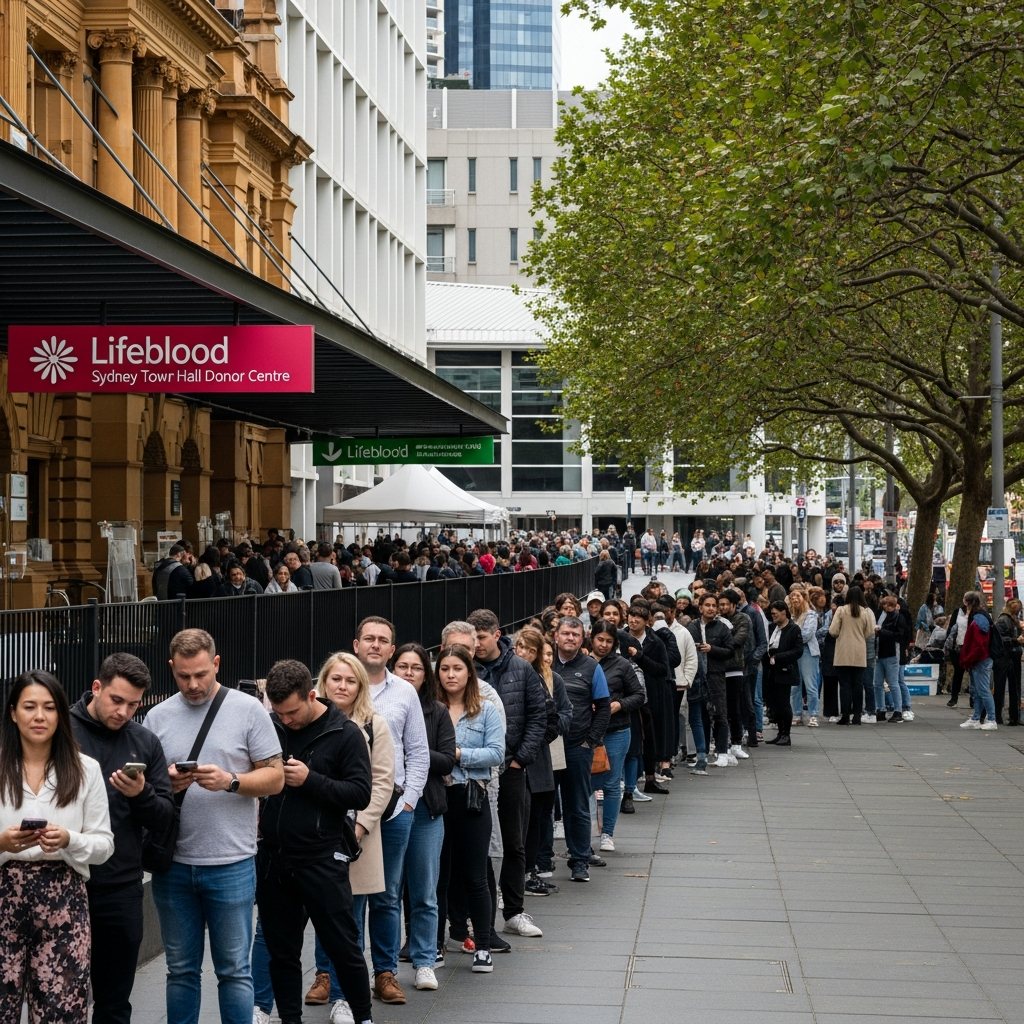
In the wake of a horrific terror attack at Bondi Beach on December 15, 2025, Sydney residents demonstrated an extraordinary outpouring of solidarity, overwhelming local blood donation centers. Hours-long queues, some stretching for seven hours at the Lifeblood Sydney Town Hall Donor Centre, became powerful symbols of community resilience. Despite the unprecedented wait times and operational challenges, citizens were undeterred, channeling their grief and shock into immediate, tangible action to support those affected by the tragedy.
Unprecedented Demand at Lifeblood Centres
The scale of the community’s response was immediate and immense. Following the devastating events at Bondi Beach, which resulted in numerous casualties and injuries, the Australian Red Cross Lifeblood issued a critical appeal. This call highlighted an urgent need for blood, particularly O negative, the universal blood type vital for emergency and trauma care. Across Sydney, donation centers quickly reached full capacity.
Mobile donation sites, such as the one in Dee Why, also experienced record numbers of people arriving to donate. Lifeblood staff reported being overwhelmed by the public’s eagerness to contribute. The sheer volume of support even caused temporary outages on Lifeblood’s website and made phone lines extremely busy. New South Wales Premier Chris Minns actively encouraged public blood donations, underscoring it as a practical way to assist in a time of crisis.
The Critical Need for O-Negative Blood
The specific appeal for O negative blood was crucial. This blood type can be safely transfused to patients of any blood type, making it indispensable in emergency situations where there’s no time to match a patient’s blood. The urgency of the situation meant every O negative donation could potentially save a life in the critical hours following the attack. This focused need further galvanized the community, with many O negative donors like Jennifer Rose expressing their determination to provide this vital “emergency blood.”
Overcoming Operational Challenges
Despite the physical and digital strain, the resolve of Sydney residents never wavered. Individuals interviewed by the BBC echoed a shared sentiment: “It doesn’t matter how long it takes.” Twenty-one-year-old Alex’s words, “This is all we can do,” resonated with many who saw donation as their direct way to help. Immigrants like Kamille Poli felt a deep obligation to support their new community during such a difficult time, emphasizing, “the least we can do.” This collective determination transformed queues into powerful statements of unity and defiance against hatred.
A Community United: Voices of Resilience
The overwhelming response transcended the immediate medical need, becoming a profound expression of collective identity and shared values. Australians rallied together, firmly rejecting acts of terror and antisemitism. As one man stated, “In Australia we do not accept this. We are all about peace.” This powerful message of unity against hate was evident in impromptu mourning ceremonies and gatherings at the Bondi Pavilion, where people laid flowers and sang songs.
The attack, which targeted a Hanukkah event, sparked deep grief but also strengthened bonds. Rabbi Yossi Shuchat led a menorah lighting, emphasizing remembrance “by adding in light and adding in goodness and kindness.” This sentiment underlined a widespread desire to counter darkness with compassion and solidarity. From British-born Rabbi Eli Schlanger to Holocaust survivor Alex Kleytman, the victims represented diverse members of society, yet their loss united the community in mourning and a renewed commitment to peace.
Beyond Donations: A Collective Stand Against Hate
The heroic actions of individuals like Ahmed Al Ahmed, a fruit shop owner who bravely tackled one of the gunmen, exemplify the spirit of courage that emerged from the tragedy. Al Ahmed, who sustained multiple gunshot wounds, was hailed as a “genuine hero” for undoubtedly saving lives. His selfless act, described by his parents as not discriminating between nationalities, perfectly mirrored the community’s broader response of unity and mutual support. This extended beyond donations to a collective stand against all forms of hatred, prompting national leaders like Prime Minister Anthony Albanese to pledge further action, including strengthening Australia’s already stringent gun laws.
The Context of the Tragedy: What Happened at Bondi
The terror attack unfolded at Archer Park near Bondi Beach around 6:47 PM local time on December 15, 2025. Investigations quickly labeled it an act of antisemitism and terror. This devastating incident tragically claimed the lives of 15 people, with victim ages ranging from a 10-year-old girl to individuals in their late eighties. Among those killed were prominent community members, including Rabbi Eli Schlanger, Rabbi Yaakov Levitan, and Holocaust survivor Alexander Kleytman, who reportedly died shielding his wife. Dozens more were injured, with several remaining in critical condition.
Authorities identified the perpetrators as a father and son, with strong links to the Islamic State terrorist group. The 50-year-old father, a licensed firearms holder, was killed by police at the scene. His 24-year-old Australian-born son remains in critical condition. This incident marked Australia’s deadliest mass shooting since the 1996 Port Arthur massacre, prompting a national conversation on security and reaffirming Australia’s strict stance on gun control.
A Targeted Act of Terror
The attack specifically targeted a “Chanuka by the Sea 2025” event, organized by the Chabad of Bondi Jewish centre. Approximately 1,000 people were attending the celebration for the first day of Hanukkah. This deliberate targeting of a religious gathering intensified the shock and sorrow within the Jewish community and across Australia. It served as a stark “wake-up call,” as described by local MP Allegra Spender, highlighting the constant security concerns faced by minority communities. This tragic event underscored the imperative for vigilance and unwavering support for all communities against acts of violence and hatred.
Long-Term Impact and Sustained Support
While the immediate outpouring of blood donations was crucial, Lifeblood staff emphasized that the need for blood would continue “into next week and beyond.” They strongly encouraged individuals to make appointments for future donations, reminding the public that blood donation is an ongoing requirement for the healthcare system. The sustained call for appointments ensures that hospitals can continue to provide essential care, not only for the victims of the Bondi attack but for all patients requiring transfusions.
The community’s response highlights the enduring power of collective action in the face of adversity. The initial wave of support laid a foundation for sustained community vigilance and generosity. This commitment extends beyond emergency response, fostering a stronger, more connected community capable of confronting future challenges with shared resolve.
How to Continue Offering Assistance
For those wishing to contribute, making a blood donation appointment remains a vital way to support healthcare services. Lifeblood centers across Sydney and Australia consistently need donations of all blood types. Beyond direct blood donations, supporting local community organizations dedicated to aiding victims and promoting interfaith dialogue can also provide crucial assistance. The tragic events at Bondi underscore the importance of ongoing engagement in strengthening community bonds and fostering a culture of peace and mutual respect.
Frequently Asked Questions
What was the immediate aftermath and community response to the Bondi Beach terror attack?
Following the antisemitic terror attack at Bondi Beach on December 15, 2025, Sydney experienced an immediate and overwhelming community response. Thousands of residents lined up at blood donation centers, with wait times reaching up to seven hours. This massive outpouring of support, despite operational challenges at Lifeblood centres, demonstrated profound solidarity and a collective defiance against hatred. The community’s resilience was evident as people sought practical ways to help those affected by the tragedy.
How can Sydney residents continue to support victims through blood donations?
While the initial demand for blood was immediate, the need for donations, particularly O negative blood, extends “into next week and beyond,” as highlighted by Lifeblood staff. Sydney residents are strongly encouraged to schedule appointments for future blood donations through the Australian Red Cross Lifeblood website or by calling their donation line. This ensures a consistent supply for both the attack victims and other patients requiring transfusions, emphasizing that ongoing support is crucial.
What made the Bondi Beach terror attack particularly devastating for the Australian community?
The Bondi Beach terror attack on December 15, 2025, was particularly devastating due to its classification as an antisemitic terror attack, explicitly targeting a Hanukkah event with around 1,000 attendees. It resulted in 15 fatalities, including a 10-year-old girl and several prominent community members, and dozens of injuries. This incident marked Australia’s deadliest mass shooting since 1996, shaking a nation proud of its strict gun laws and multicultural harmony, prompting a national reflection on unity, security, and countering extremism.
Conclusion
The response of Sydney residents to the Bondi Beach terror attack stands as a powerful testament to human compassion and collective strength. In the face of unimaginable tragedy, the community chose unity over division, demonstrating an unwavering commitment to supporting those in need. The hours spent in blood donation queues were not merely waits, but acts of profound solidarity, embodying the spirit of a nation that rejects hatred and embraces resilience. As the city continues to heal, the legacy of this inspiring response will serve as a lasting reminder of what can be achieved when a community stands together.