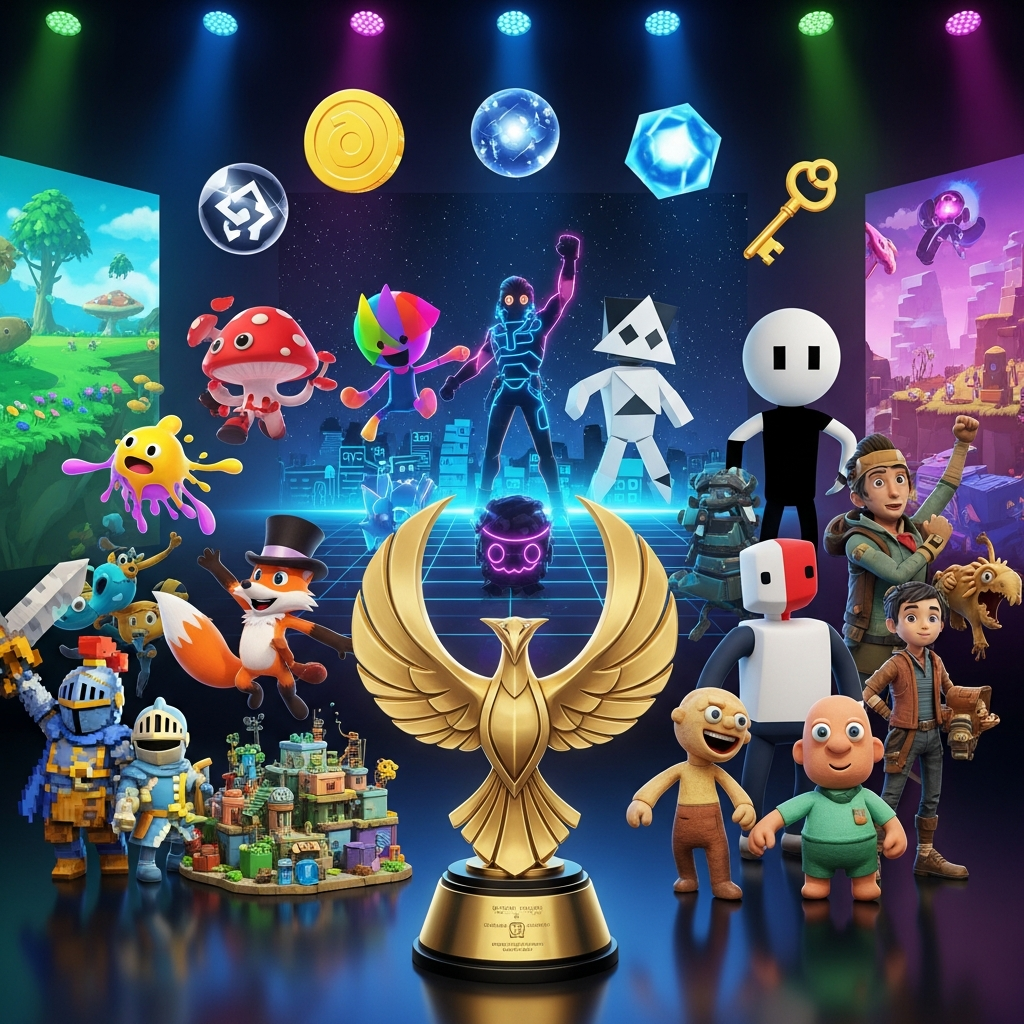
The landscape of video games is undergoing a profound transformation. Major industry awards, once dominated by lavish, multi-million dollar “AAA” productions, are now increasingly celebrating the ingenuity of independent studios. This seismic shift highlights a growing preference among players for accessible, innovative, and often lower-budget titles. It’s a clear signal that the future of gaming may be less about blockbuster spectacles and more about creative freedom and player connection.
The Shifting Landscape of Gaming Awards
At recent annual video game awards ceremonies, a compelling narrative unfolded. The spotlight shone not on the industry giants like Ubisoft, Electronic Arts, or Sony, but on a small, 30-person studio from France. This changing dynamic underscores a significant evolution in what players value and what resonates with critics. The traditional model of colossal budgets and years-long development cycles is being challenged by agile, creative teams.
An Indie Darling Takes Center Stage
Take Clair Obscur: Expedition 33 as a prime example. Developed by Sandfall Interactive, a studio established just five years prior, this game became a favorite for the top prize. Set in a dark Belle Époque world, it offers a distinct experience, crafted for less than $10 million. This budget is a mere fraction of what typical blockbusters demand. The game’s success is a testament to the power of compelling vision over sheer financial might, showcasing that genuine innovation often springs from smaller, more focused teams.
Why Big-Budget AAA Games Are Struggling
The shift isn’t just about indie games rising; it’s also about the increasing difficulties faced by many AAA productions. For years, the industry chased hyper-realistic graphics and expansive worlds, believing bigger was always better. However, this strategy is proving unsustainable for many. Players are beginning to question the immense commitment required for these games, both in time and money.
Soaring Costs and Diminishing Returns
Developing a major AAA title today can cost hundreds of millions of dollars. Shawn Layden, former president and CEO of Sony Interactive Entertainment America, noted how game development costs escalated from $20 million to well over $100 million. Sony’s successful Spider-Man 2, for instance, cost more than $300 million to produce. Despite these investments, recent big-budget releases have seen mixed results. Electronic Arts reportedly spent $125 million on Immortals of Aveum, which received lukewarm reviews. Sony’s Concord, costing $200 million, was shut down mere weeks after its release. This indicates a growing weariness among investors for high-risk, unproven franchises. Matthew Ball, a video-game analyst, points out that spending on premium games has made it an expensive hobby, with consoles at $450 and major titles at $70.
The Player’s Evolving Preferences
Beyond costs, player preferences are evolving rapidly. Joost van Dreunen, CEO of Aldora, suggests we are witnessing “the decline of AAA” games. Modern gamers, especially younger demographics, aren’t necessarily prioritizing hyper-realism or 80-hour commitments. Instead, they seek social interaction, easy accessibility, and shorter, more varied play sessions. Mat Piscatella, an analyst at Circana, emphasizes that “the graphical part of gaming isn’t driving adoption or play.” He highlights “social hooks, easy access, the ability to pick up and play anywhere” as key factors. This sentiment is clearly reflected in platforms offering diverse, quick-play experiences.
The Indie Advantage: Accessibility and Innovation
Independent games often thrive by offering what AAA cannot: agility, creative risks, and a direct connection with player communities. They frequently explore unique mechanics, art styles, and narratives that might be deemed too niche for a blockbuster budget. This freedom allows for a constant stream of fresh ideas. Moreover, many indie titles are designed to be more accessible, both in terms of cost and the devices they can be played on.
The Roblox Phenomenon and Beyond
Services like Steam and Roblox have become fertile ground for these lower-budget titles. Roblox, in particular, has seen explosive growth, with its player base nearly doubling to 150 million in a single year. Games on this platform are inexpensive to develop using its proprietary tools and can be enjoyed on virtually any device. Titles like “Steal A Brainrot” and “Grow A Garden” allow players to engage for just five or ten minutes a day. This casual, social-first approach contrasts sharply with the immersive, long-form commitment often required by AAA games. Geoff Keighley, who runs the annual awards show, observed that while nominees once came from a small group of large publishers, today “we’re seeing both a globalization of big-budget development and real pathways to success for smaller independent teams.”
Industry Shake-Ups and Future Outlook
The challenges faced by large gaming corporations have led to significant restructuring. The industry has seen substantial job cuts, with 14,600 positions eliminated last year, following 10,500 the prior year. Studio closures have also nearly doubled, creating a “doom loop” for big-budget projects.
Job Cuts and Studio Closures
Major companies like Amazon, Microsoft (Xbox parent), and Embracer Group have announced layoffs. China-based NetEase Inc. has closed or spun off several studios. Simon Zhu, former president of global investments for NetEase, predicts a “shortage of supply of high-quality games for the next five years.” These dramatic changes signal a necessary re-evaluation of business models within the industry.
Learning from Hollywood’s Past
This period of transformation in gaming mirrors shifts seen in the movie industry. Similar to Hollywood’s reliance on a few major franchises, the gaming world still has its titans, such as the eagerly anticipated Grand Theft Auto VI from Take-Two Interactive Software Inc. Yet, as with film blockbusters, investors are becoming cautious about massive spending on unknown game franchises after costly failures. The expectation for a “not-great AAA game” to sell millions of copies, as Zhu notes, has drastically fallen. This suggests a more discerning market for large-scale projects.
Frequently Asked Questions
What factors are driving the rise of indie games over AAA titles?
The rise of indie games is fueled by several interconnected factors. Soaring development costs for AAA games make them riskier and more expensive for players. Meanwhile, player preferences are shifting towards more accessible, innovative, and social experiences that don’t demand lengthy commitments. Indie studios, with their lower budgets and greater creative freedom, can rapidly adapt to these demands, offering fresh gameplay, unique aesthetics, and diverse genres. Platforms like Roblox and Steam further facilitate their reach and ease of play.
Which specific indie games or platforms are examples of this industry shift?
Clair Obscur: Expedition 33 by Sandfall Interactive is a prime example of an indie title gaining significant recognition, even as a top contender at major awards. This 30-person studio’s success demonstrates the impact of focused creative vision. Platforms like Roblox and Steam are critical to this shift, providing accessible development tools and vast user bases. Roblox titles such as “Steal A Brainrot” and “Grow A Garden” exemplify the casual, social, and user-generated content trend that appeals to a broad, often younger, audience.
What does the shift towards indie games mean for the future of game development and industry investment?
This shift signifies a redirection of focus in game development. It suggests a move away from solely pursuing hyper-realistic graphics and towards valuing innovative mechanics, unique storytelling, and strong community features. For industry investment, it implies a greater willingness to back smaller, more agile teams with compelling ideas, potentially reducing the massive, high-risk investments typically associated with AAA blockbusters. This could foster a more diverse and creatively vibrant gaming ecosystem, where success is less tied to budget size and more to genuine player engagement.
The Future is Independent
The video game industry stands at a crossroads. While blockbuster franchises will always have a place, the undeniable success of independent titles signals a more diverse and dynamic future. This movement promises a greater variety of games, more accessible experiences, and a renewed focus on innovation and community. As Geoff Keighley highlighted, pathways to success for smaller, independent teams are now clearer than ever, ensuring a vibrant future for players and creators alike.