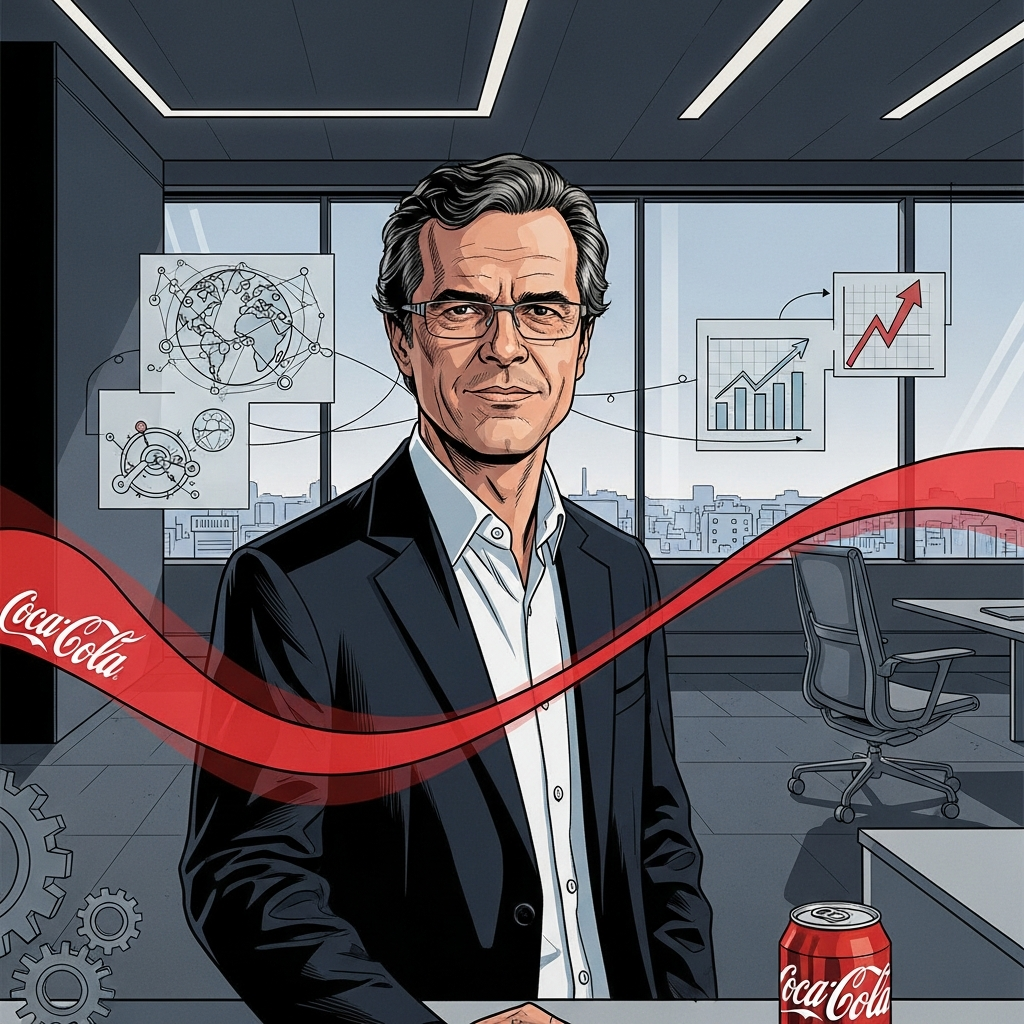
A significant leadership shift is underway at The Coca-Cola Company, as it prepares to welcome Henrique Braun as its next Chief Executive Officer. This pivotal appointment, effective March 31, 2026, marks a new chapter for the global beverage giant. Braun, currently the Executive Vice President and Chief Operating Officer, will succeed James Quincey, who has helmed the company for nearly nine years. Quincey will transition into the role of Executive Chairman of the Board, ensuring his continued involvement and strategic guidance for the Atlanta-based corporation.
A New Era Dawns for Coca-Cola Leadership
The board of directors’ election of Henrique Braun signals a meticulously planned succession designed to maintain Coca-Cola’s formidable market position and drive future innovation. This change reflects the company’s commitment to strategic evolution amidst a dynamic global beverage landscape. The transition will see Braun, 57, nominated to stand for election as a director at the 2026 Annual Meeting of Shareowners, solidifying his leadership role within the organization.
The announcement has resonated across the industry, highlighting a seamless handover of power from one seasoned executive to another. Such methodical succession planning is characteristic of major corporations like Coca-Cola, ensuring stability and a clear vision for the years ahead.
Henrique Braun: A Profile in Global Leadership
Henrique Braun brings nearly three decades of dedicated experience to his upcoming role as Coca-Cola’s new CEO. His career began with the company in Atlanta in 1996, laying the groundwork for an extensive journey through diverse global markets. His impressive trajectory includes crucial leadership positions across North America, Europe, Latin America, and Asia. These roles, encompassing supply chain management, new business development, marketing, innovation, and bottling operations, have provided him with a comprehensive understanding of Coca-Cola’s vast ecosystem.
Since January 2025, Braun has served as Executive Vice President and Chief Operating Officer, overseeing all of Coca-Cola’s operating units globally. This recent appointment as COO specifically groomed him for the top leadership position, mirroring the career paths of previous CEOs like Kent Mathur. His academic background is equally robust, holding a bachelor’s degree in agricultural engineering, a Master of Science degree, and an MBA. Braun’s Brazilian heritage is also considered a valuable asset, particularly in fostering international connections.
A Legacy of International Experience
Braun’s experience in international markets is particularly noteworthy. He previously served as Senior Vice President and President, International Development (2023-2024), President of the Latin America operating unit (2020-2022), and President for Greater China & South Korea (2013-2016). His tenure in these regions equipped him with invaluable expertise in navigating complex consumer preferences and economic environments, including inflationary pressures. Industry experts, such as Duane Stanford of Beverage Digest, emphasize Braun’s strong track record in collaborating with bottlers, a skill deemed critical for the company’s future growth strategies. His success with revenue-sharing models in Latin America and the U.S. demonstrates his ability to drive positive outcomes through strong partnerships.
James Quincey’s Transformative Nine-Year Tenure
James Quincey, 60, will leave an indelible mark on The Coca-Cola Company as he transitions from CEO to Executive Chairman. His nine-year tenure at the helm, following a 30-year career with the company, has been characterized by transformative leadership. Quincey is widely credited with evolving Coca-Cola into a “total beverage company,” expanding its portfolio beyond traditional sodas to include sparkling water, coffee, energy drinks, and a strong emphasis on zero-sugar options. This strategic focus on consumer connection led to the addition of more than 10 new billion-dollar brands under his watch.
Under Quincey’s leadership, Coca-Cola underwent a significant strategic overhaul of its operating model. This created a more agile and networked organization. He championed digital transformation and modernized marketing efforts, successfully guiding the company through the unprecedented challenges of the COVID-19 pandemic. David Weinberg, Coca-Cola’s lead independent director, lauded Quincey as a “transformative leader” whose strategies cemented Coca-Cola’s global industry leadership. The company’s stock price experienced a notable increase of nearly 63% during his time as CEO, a testament to his impactful leadership.
Shaping the Modern Beverage Giant
Quincey’s strategic vision extended to major refranchising initiatives and the adept management of challenging bottling investments. He consistently expanded the brand portfolio and market share, laying a robust foundation for his successor. Reflecting on his career, Quincey expressed immense gratitude, emphasizing the privilege of serving such an enduring business. He also offered a strong endorsement of Braun, describing him as a “trusted and highly experienced business partner” and the “right leader to steer the company and the Coca-Cola system for future growth and success.”
Navigating Future Challenges and Opportunities
As Henrique Braun prepares to become Coca-Cola CEO, he has articulated clear strategic priorities. These include building upon the strong foundation established by Quincey. He aims to identify and pursue the best global growth opportunities. Additionally, Braun seeks to enhance responsiveness to evolving consumer needs and leverage technology to boost overall business performance and growth. He expressed enthusiasm for the future, highlighting significant opportunities in a rapidly changing global market. A key aspect of his vision is to unlock future growth in close partnership with Coca-Cola’s extensive network of bottlers.
However, Braun will inherit leadership during a complex period for U.S. food and beverage companies. The industry faces several concurrent challenges. There is increased scrutiny over ingredients, exemplified by initiatives like “Make America Healthy Again,” advocating for the removal of certain components. Coca-Cola has already responded by planning a U.S. version of its flagship soda using cane sugar instead of corn syrup. International consumer sentiment also presents a challenge, with instances of consumer pullback driven by anti-American sentiment in various markets, such as Mexico.
Strategic Vision Amidst a Complex Landscape
Furthermore, the company has acknowledged areas for improvement within its existing portfolio. Outgoing CEO James Quincey openly admitted that the $5.1 billion acquisition of Costa Coffee “didn’t work out as we expected,” with growth outside traditional retail stores slower than anticipated. Braun’s agenda will likely include navigating ongoing economic uncertainty and sustained pressure to expand into new categories. He may also face the task of reviving or strategically repositioning brands like Mr. Pibb to maintain market relevance. Despite these hurdles, Coca-Cola’s vast portfolio of over 200 brands and Braun’s extensive experience provide a solid platform for adaptation. The continuity of leadership at the Atlanta headquarters reinforces the city’s standing on the global business stage and Coca-Cola’s role as a flagship corporate citizen.
Frequently Asked Questions
Who is Henrique Braun and what is his background at Coca-Cola?
Henrique Braun is the incoming Chief Executive Officer of The Coca-Cola Company, effective March 31, 2026. He joined Coca-Cola in 1996 and has almost three decades of experience within the company. His career spans diverse international roles, including leadership positions in Latin America, Greater China & South Korea, and International Development. Most recently, he served as Executive Vice President and Chief Operating Officer, overseeing all global operating units. Braun holds a bachelor’s degree in agricultural engineering, a Master of Science degree, and an MBA.
When will Henrique Braun officially assume the role of Coca-Cola CEO?
Henrique Braun is set to officially take over as Chief Executive Officer of The Coca-Cola Company on March 31, 2026. This date marks the end of James Quincey’s nine-year tenure as CEO. Following this transition, James Quincey will assume the role of Executive Chairman of the Board, ensuring a smooth and strategic handover of leadership responsibilities within the organization.
What are the key strategic priorities for Coca-Cola under incoming CEO Henrique Braun?
Under Henrique Braun’s leadership, Coca-Cola’s key strategic priorities include identifying and pursuing global growth opportunities. He aims to enhance the company’s responsiveness to evolving consumer needs and leverage technology to improve overall business performance. Braun has also emphasized unlocking future growth through robust partnerships with Coca-Cola’s extensive network of bottlers worldwide. These priorities build upon the strong foundation established by his predecessor, James Quincey.
Conclusion
The appointment of Henrique Braun as Coca-Cola’s new CEO marks a thoughtfully orchestrated transition. It signifies both continuity and strategic evolution for one of the world’s most iconic brands. With James Quincey transitioning to Executive Chairman, the company ensures a blend of fresh leadership and enduring wisdom. Braun’s deep international experience, operational expertise, and focus on growth and consumer responsiveness position Coca-Cola to navigate future market complexities and capitalize on emerging opportunities. This leadership change reinforces Coca-Cola’s commitment to sustained growth, innovation, and its foundational presence in Atlanta as it continues to shape the global beverage industry.