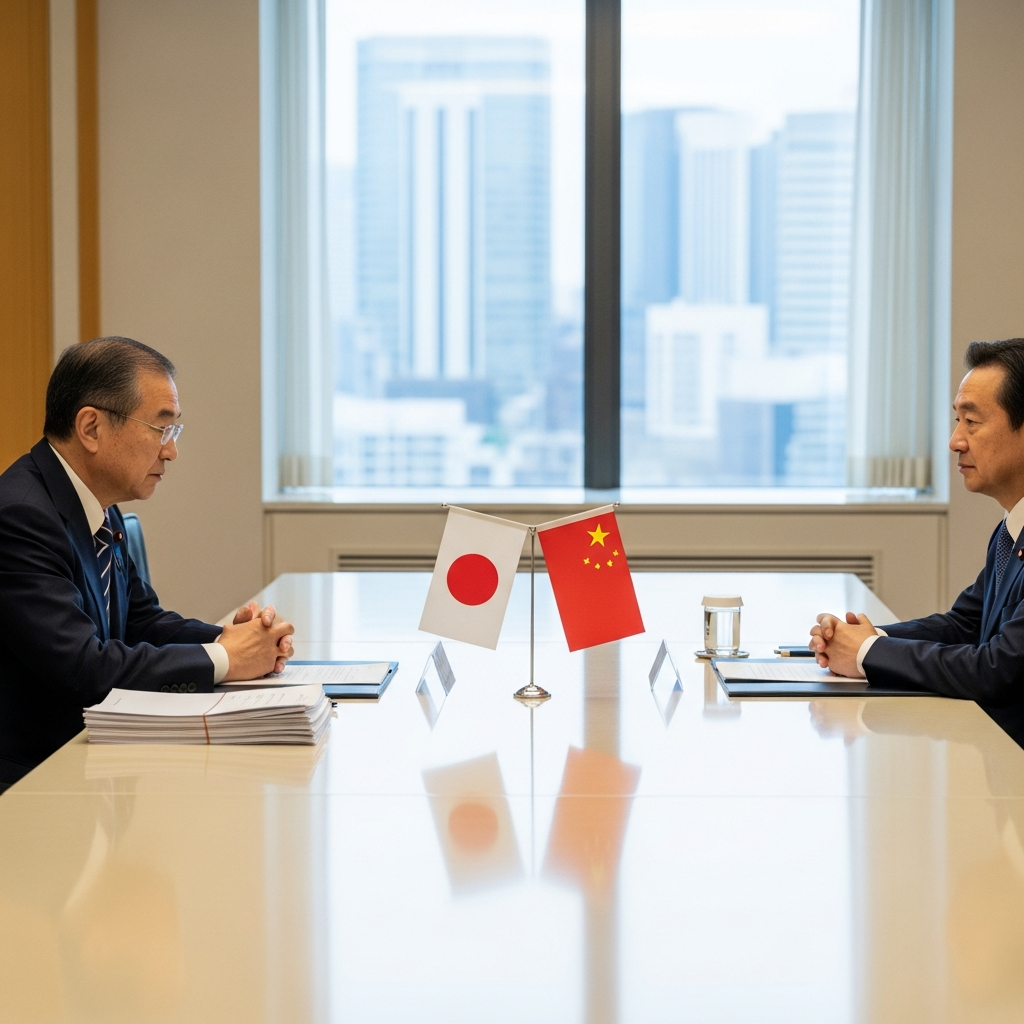
A significant diplomatic storm is brewing in East Asia as Japan has formally summoned China’s ambassador to Tokyo, delivering a strong protest over an alleged radar incident. This critical development underscores rising tensions between the two regional powers, particularly concerning maritime activities in disputed waters. The move signals Japan’s grave concern over what it perceives as a dangerous escalation, demanding immediate explanations and measures to prevent future provocations. Such diplomatic actions often follow serious infringements, highlighting the delicate balance of power and the ever-present risk of miscalculation in the Indo-Pacific.
Alleged Radar Incident: What Triggered Japan’s Protest?
The core of the current diplomatic crisis revolves around an alleged incident involving a Chinese vessel and a Japanese asset. While specific details remain under wraps, “radar incident” in this context typically refers to the use of fire-control radar. This type of radar is employed to ‘lock on’ to a target, an action that precedes missile launch or hostile engagement. For Japan, such an act constitutes a serious military provocation, violating international maritime safety protocols and potentially endangering personnel.
This alleged targeting incident likely occurred within or near the contested waters of the East China Sea. This region is a flashpoint due to overlapping territorial claims, notably around the Senkaku Islands (known as Diaoyu in China). Both nations regularly deploy naval and coast guard vessels, as well as aircraft, to assert their sovereignty, leading to frequent, often tense, standoffs. Japan views any targeting with fire-control radar as a direct threat to its national security and regional stability.
Historical Context: A Volatile East China Sea
The East China Sea has been a theater of strategic competition and minor clashes for decades. The unresolved dispute over the Senkaku/Diaoyu Islands fuels much of this tension. Japan administers these uninhabited islands, but China also claims them, citing historical rights. Beijing frequently sends Coast Guard vessels into waters around the islands, which Japan considers an infringement on its territorial sovereignty. These incursions are often met with strong protests from Tokyo.
Beyond the islands, the vast maritime area holds significant geopolitical and economic importance. It sits along crucial shipping lanes, is rich in fishing grounds, and is believed to contain substantial hydrocarbon reserves. This combination of territorial claims, resource competition, and strategic waterways ensures that any military or quasi-military incident carries a high risk of escalation. Both nations also operate air defense identification zones (ADIZ) that overlap in parts of the East China Sea, further complicating air and sea interactions.
Diplomatic Fallout: Tokyo’s Stern Message to Beijing
Japan’s decision to summon the Chinese ambassador is a powerful diplomatic gesture, indicating the extreme seriousness with which Tokyo views the alleged radar incident. Summoning an ambassador is not a routine diplomatic meeting; it is a formal protest used when one nation believes another has committed a grave transgression. This act conveys a clear message: Japan demands accountability and a halt to such activities.
During the summons, Japanese officials would have conveyed their government’s condemnation, formally protested the alleged action, and likely demanded a full explanation and assurance that such incidents will not recur. Tokyo expects Beijing to acknowledge the seriousness of the event and take corrective measures. The Japanese Ministry of Foreign Affairs will likely reiterate its commitment to international law and maritime safety, urging China to respect these principles.
China’s Anticipated Response and Regional Implications
Historically, China’s responses to such accusations often involve denial, counter-accusations, or downplaying the event. Beijing might claim its vessel was operating within its sovereign rights, or that the Japanese account is inaccurate. They might also issue their own protests regarding Japanese activities in the region, turning the tables in a tit-for-tat diplomatic exchange. The outcome of these diplomatic exchanges will significantly impact the already strained Sino-Japanese relationship.
Such incidents also reverberate across the wider Indo-Pacific. Japan is a key ally of the United States, and any direct military provocation against Japan is a concern for Washington. Other regional partners, like Australia and South Korea, who share concerns about maritime security and China’s assertive behavior, will also be closely observing the situation. This event could strengthen calls for greater cooperation among like-minded nations to uphold a free and open Indo-Pacific, potentially leading to increased joint exercises and diplomatic coordination.
Why Radar Locking is a Dangerous Precedent
The alleged use of fire-control radar is particularly alarming because it represents a direct act of simulated targeting. Unlike general surveillance radar, fire-control radar is designed to guide weapons to a target. When a vessel or aircraft “locks on” with this type of radar, it communicates an implicit threat of imminent attack. This action is considered a highly provocative step, far more serious than mere shadowing or close proximity.
Such an incident carries a significant risk of miscalculation. In a high-stress environment, an unintended movement or a misinterpreted signal could rapidly escalate a tense situation into an open conflict. The lack of robust crisis communication mechanisms between Chinese and Japanese military forces further amplifies this risk. International maritime law emphasizes safe conduct and the avoidance of dangerous maneuvers, principles that the alleged radar lock-on appears to violate directly. De-escalation and clear communication are paramount to prevent a dangerous incident from spiraling out of control.
Frequently Asked Questions
What is a “fire-control radar lock,” and why is it considered a military provocation?
A fire-control radar lock occurs when a military vessel or aircraft uses its weapon targeting system to acquire and track another craft. This type of radar provides precise data needed to guide a missile or shell to its target. It’s considered a serious military provocation because it signifies an immediate readiness or intent to engage hostilely. Unlike search or navigation radar, a “lock-on” implies a direct threat, dramatically increasing the risk of miscalculation or an accidental conflict, as it simulates the precursor to an attack.
Where do most maritime incidents between Japan and China typically occur?
Most maritime incidents between Japan and China predominantly occur in the East China Sea, particularly around the disputed Senkaku Islands (Diaoyu Islands in China). This uninhabited archipelago is claimed by both nations, leading to frequent deployments of coast guard and naval vessels from both sides. Incidents also take place in the broader East China Sea, a region critical for shipping lanes, fishing, and potential energy reserves, where both countries assert overlapping territorial and economic interests.
What are the typical diplomatic outcomes when an ambassador is summoned for a serious incident?
When an ambassador is summoned, the primary outcome is a formal, high-level protest. The summoning nation conveys its grave concerns, demands explanations, and seeks assurances that such incidents will not reoccur. While it doesn’t always lead to immediate de-escalation or a complete resolution, it serves to publicly register displeasure and exert diplomatic pressure. Outcomes can range from a formal apology (rare), a denial and counter-protest, or a commitment to discuss the issue through existing channels. It signifies a significant strain on bilateral relations, prompting heightened international scrutiny.
Conclusion
Japan’s summoning of China’s ambassador over an alleged radar incident is a stark reminder of the persistent and escalating tensions in the East China Sea. This diplomatic protest highlights Tokyo’s firm stance against perceived military provocations and its commitment to defending its sovereignty and maritime security. While China’s response remains to be fully seen, the incident underscores the urgent need for greater transparency, adherence to international norms, and reliable communication channels between the two Asian giants. Without these, the risk of miscalculation in this strategically vital and highly contested region will continue to cast a long shadow over global stability.