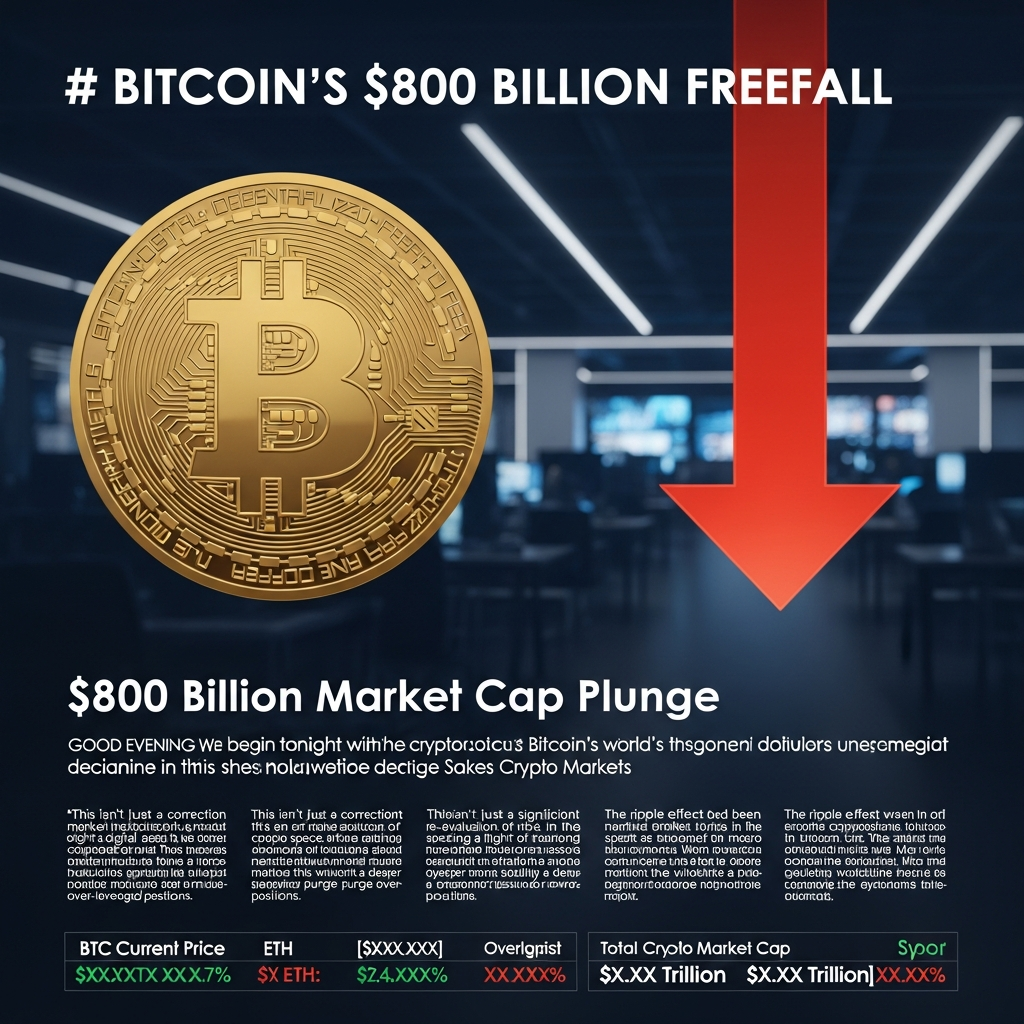
Bitcoin, the world’s leading cryptocurrency, has experienced a stunning downturn, shedding an estimated $800 billion from its market capitalization since hitting its 2025 peak just last month. This precipitous fall has erased all of its gains for the year, leaving investors questioning the future trajectory of the volatile asset. The recent slide, which saw Bitcoin dip below $82,000 before a slight rebound, marks its lowest trading level since April and signals its worst monthly performance since the turbulent market of 2022. Understanding the forces behind this massive liquidation is critical for anyone invested in the digital asset space.
The current market environment is a complex interplay of macroeconomic anxieties, geopolitical shifts, and crypto-specific vulnerabilities. From an initial high of nearly $125,000 on October 6, Bitcoin’s value has plummeted by roughly one-third. This significant correction mirrors broader unease across global financial markets, where a “risk-off” sentiment has taken hold, driving capital away from speculative assets.
The Macroeconomic Storm: Why Crypto is Crashing
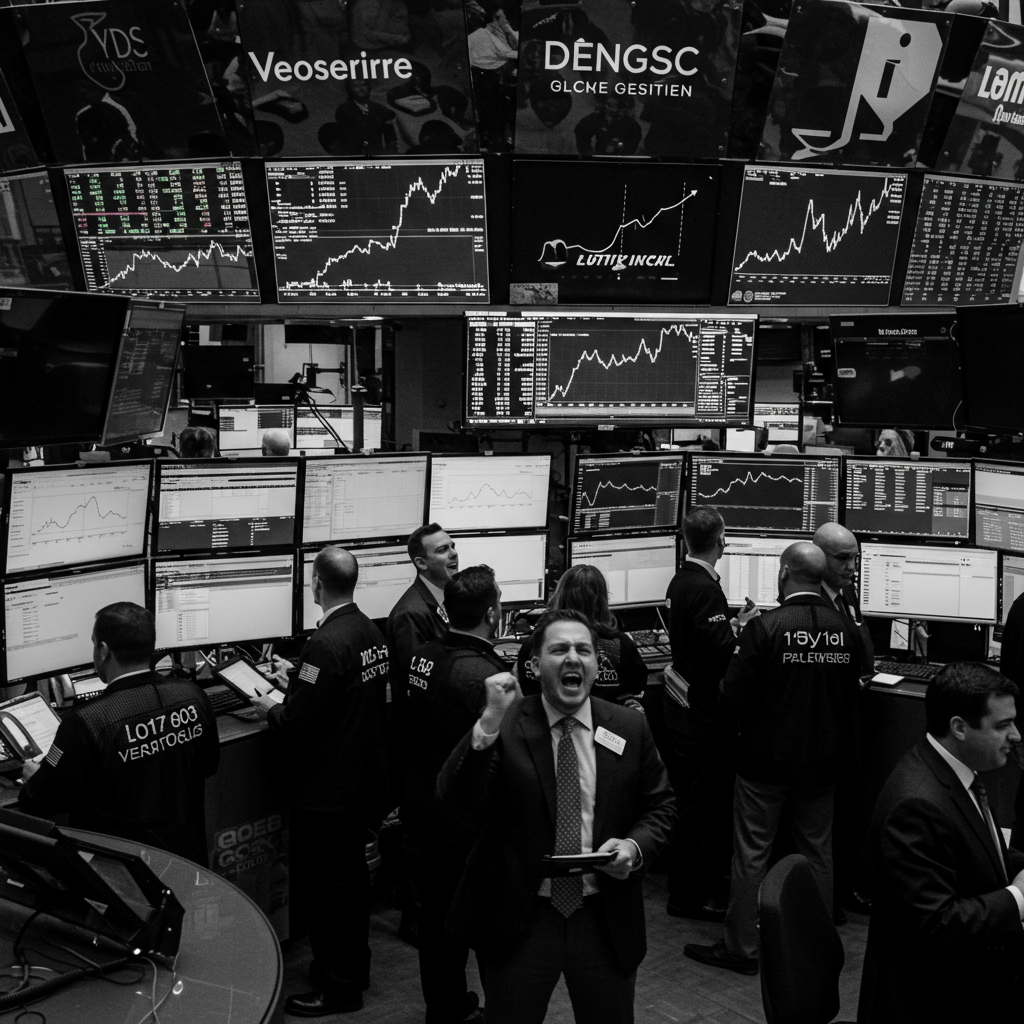
The recent volatility in the cryptocurrency market is not an isolated event; it’s intricately linked to a wider macroeconomic landscape. Wall Street has been grappling with a confluence of factors that have collectively contributed to a pervasive sense of caution among investors.
Trump’s Tariffs: The Unseen Catalyst
A major driver of the “risk-off” sentiment emerged earlier in 2025 with the implementation of former President Donald Trump’s “Liberation Day” tariffs. On April 3, 2025, the U.S. stock market endured its most severe one-day sell-off since 2020, triggered by new tariffs imposing a baseline 10% rate on all U.S. trading partners, with additional duties for “bad actors.” This aggressive trade policy, which saw China facing an overall tariff rate of 54%, sent shockwaves through global markets.
Megacap tech stocks, often dubbed the “Magnificent Seven,” bore the brunt, collectively losing an estimated $900 billion (later noted as $800 billion) in market capitalization. Companies like Apple and Nvidia saw massive declines due to supply chain concerns and broader economic slowdown fears. This protectionist shift not only impacted equities but also initiated a widespread flight from perceived risky assets, directly affecting the cryptocurrency market. Economists warned of a potential “stagflationary scenario” with rising inflation and falling GDP, pushing the economy toward recession. The tariffs, signaling a significant move towards deglobalization, fundamentally altered the investment landscape for capital markets and cryptocurrencies alike.
AI Bubble Fears & Tech Stock Correlation
Beyond the direct impact of tariffs, concerns over a potential “bubble” in artificial intelligence (AI) and tech stocks have amplified the downturn. Experts note a strong correlation between tech stocks and Bitcoin’s performance. “When tech sneezes, it’s natural to expect Bitcoin to catch a cold,” remarked Nic Puckrin, an investment analyst and co-founder of The Coin Bureau. As investors reconsider their exposure to high-growth, potentially overvalued tech assets, the ripple effect inevitably reaches cryptocurrencies, which are often categorized alongside tech as riskier investments.
Federal Reserve Policy & Labor Market Weakness
Investor caution is further compounded by signs of weakness in the labor market and uncertainty surrounding the Federal Reserve’s interest rate decisions. Economists increasingly anticipate the Fed will defer cutting rates, leading to a tighter monetary policy outlook. This expectation typically makes investors less willing to hold speculative assets. Thomas Chen, CEO of cryptocurrency firm Function, captured this sentiment, asking, “The future is uncertain. It almost feels like it’s moving back to the question: do I even want to hold [bitcoin] in this environment?” The confluence of these factors creates an unfavorable climate for cryptocurrencies, which thrive in periods of abundant liquidity and economic optimism.
Crypto-Specific Pressures: Leverage and Liquidations
While macroeconomic headwinds set the stage, specific dynamics within the cryptocurrency market exacerbated Bitcoin’s fall, notably the widespread use of leverage. Trading platforms like Coinbase offer products such as “perpetual futures,” enabling traders to use leverage as high as 10-to-1 on their crypto positions. While this can amplify gains, it dramatically magnifies losses.
When prices tumble, even a small drop in the underlying asset can lead to an outsized loss on a leveraged trade. If an investor cannot meet their margin requirements, the trading platform may automatically liquidate their position. This forced selling, known as a margin call, creates a cascading effect, adding further downward pressure on prices. Nigel Green, CEO of deVere Group, explained, “When traders borrow heavily to magnify positions, any reversal triggers liquidations that accelerate the move.” Data confirms this, with nearly $1 billion worth of leveraged derivatives positions across crypto assets liquidated in a violent two-day plunge earlier in the year. This cycle of liquidation significantly contributed to the rapid shedding of value.
The Broader Crypto Impact: Ethereum and XRP’s Struggles
Bitcoin’s downturn has not spared the wider cryptocurrency market. Altcoins, particularly Ethereum (ETH) and Ripple (XRP), have experienced even more severe corrections, highlighting their heightened sensitivity to market shifts and their high correlation with Bitcoin.
Ethereum, the world’s second-largest cryptocurrency, plunged to a two-year low earlier in April, dipping below $1,500. This represented a staggering 64% drop from its December 2024 peak of $4,100, significantly outpacing Bitcoin’s decline. The “digital gold” narrative often provides Bitcoin with greater resilience during uncertainty, while Ethereum’s growth is more tied to network usage, DeFi, and scaling solutions, which struggle amidst broader market slumps. Similarly, XRP plummeted to a five-month low of $1.67, shedding over 25% of its value in a single month, also attributed to the widespread “trade war pain.” The overall crypto market cap was reportedly slashed by $800 billion since January, underscoring the deep impact across the entire sector.
Navigating Volatility: A Historical Perspective
Despite the current sharp declines, it’s crucial to place Bitcoin’s performance within its historical context. Large price corrections are not uncommon for the cryptocurrency, which is renowned for its extreme volatility. Experts often point out that Bitcoin has consistently rebounded from previous crashes, demonstrating remarkable resilience over its lifespan.
Brian Vieten, a research analyst at Siebert Financial, noted that Bitcoin has historically experienced approximately five corrections of 20-30% or more during its bull markets. He suggested that the current issues might represent “temporary headwinds.” For some long-term investors, lower crypto prices can even be viewed as a significant “buying opportunity,” echoing the sentiment that market dips often precede future rallies. However, the current landscape is undeniably complex, with the added layer of ongoing macroeconomic and geopolitical uncertainty.
Frequently Asked Questions
What specific factors are driving the recent Bitcoin price plunge?
The recent Bitcoin price plunge is driven by a combination of macroeconomic and crypto-specific factors. Key among these are the U.S. “Liberation Day” tariffs implemented by former President Trump in April 2025, which triggered a broad “risk-off” sentiment across global financial markets and severely impacted tech stocks. This was compounded by ongoing concerns about a potential AI bubble, uncertainty surrounding the Federal Reserve’s interest rate decisions (with expectations for deferred rate cuts), and signs of weakness in the labor market. Additionally, crypto-specific pressures like widespread margin calls and the liquidation of leveraged positions exacerbated the downward trend.
How have President Trump’s tariffs impacted the cryptocurrency market?
President Trump’s “Liberation Day” tariffs, introduced in April 2025, served as a major macroeconomic shock for the crypto market. These tariffs caused a massive sell-off in traditional stock markets, with megacap tech stocks losing hundreds of billions in market capitalization. As cryptocurrencies are often treated as high-risk assets that correlate with tech stocks, this broad market instability led investors to pull capital from crypto. The tariffs contributed to fears of higher inflation and slower global economic growth, reducing overall market liquidity and pushing capital towards traditional safe havens, thus significantly contributing to Bitcoin’s (and altcoins like Ethereum and XRP’s) decline.
Is the current Bitcoin downturn considered a normal market correction, or something more serious?
While large declines are historically common for Bitcoin, experts have mixed views on the current downturn. Historically, Bitcoin has experienced numerous corrections of 20-30% or more during bull markets, and it has always rebounded. Analysts like Brian Vieten suggest these could be “temporary headwinds,” viewing lower prices as a potential buying opportunity. However, the scale of the current $800 billion market cap loss since the October 2025 peak, coupled with significant macroeconomic shocks like President Trump’s tariffs and concerns over AI bubbles and Federal Reserve policy, indicates a more profound “risk-off” environment. This suggests the downturn is more serious than a typical correction, rooted in fundamental shifts in global economic sentiment.
Conclusion: What’s Next for Bitcoin?
Bitcoin’s dramatic $800 billion loss since its October peak underscores the inherent volatility of the cryptocurrency market, especially when confronted with powerful macroeconomic forces. The confluence of President Trump’s tariffs, lingering AI bubble concerns, and the Federal Reserve’s cautious stance has created a challenging environment for digital assets. While the pressures from leveraged liquidations have undoubtedly amplified the recent slide, historical patterns suggest that significant corrections are part of Bitcoin’s journey.
For investors, the current period demands careful consideration. While some see the lower prices as a compelling opportunity, others remain wary of the uncertain global economic outlook. The coming months will be critical in determining whether Bitcoin can once again demonstrate its remarkable resilience, or if the current headwinds signal a prolonged period of consolidation. Staying informed about both macroeconomic developments and specific crypto market trends will be key to navigating this dynamic landscape.