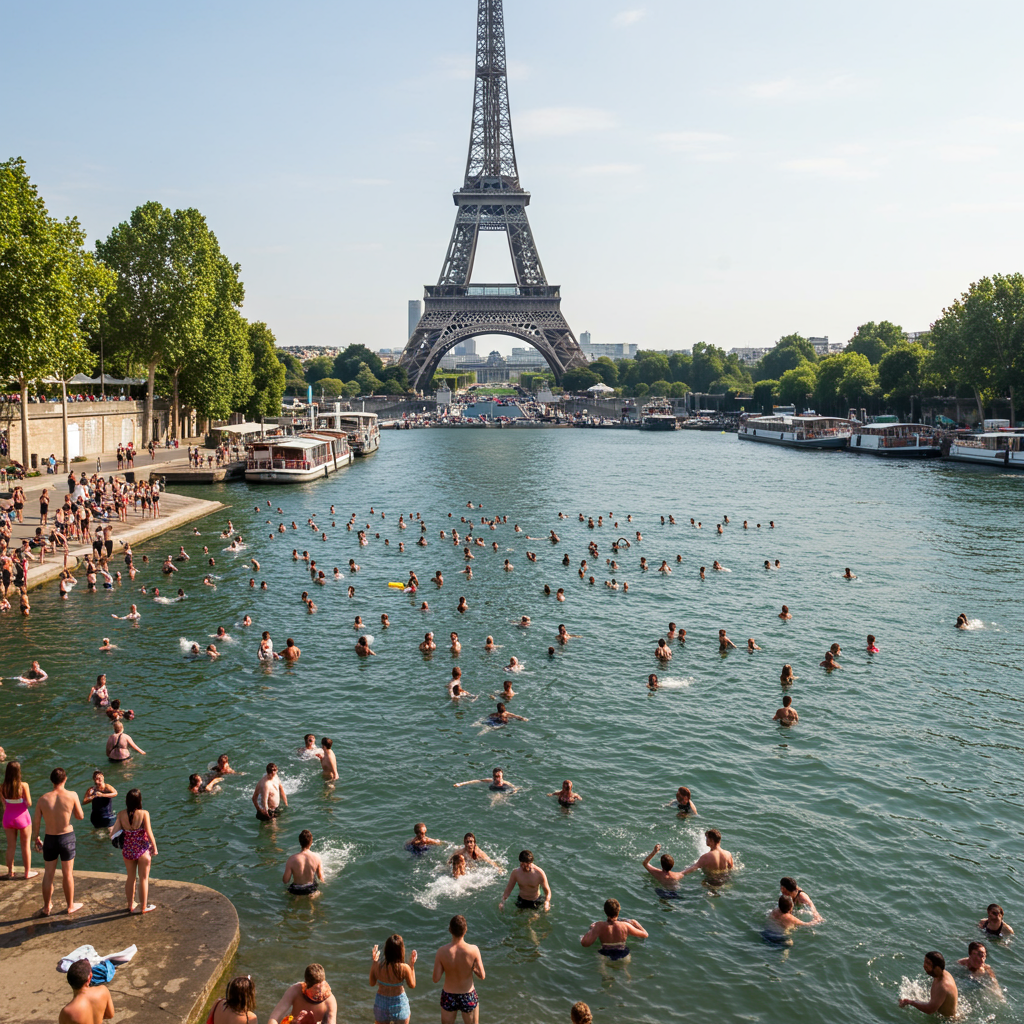
Parisians and visitors can once again swim in the iconic river seine, marking the end of a century-long ban that began in 1923. This historic reopening, which commenced on July 5, 2025, transforms a long-prohibited activity into a new urban leisure opportunity. It follows years of extensive cleanup efforts, significantly accelerated by the need to prepare the waterway for the Paris 2024 Olympic Games. The return of public bathing fulfills a decades-old promise and represents a notable achievement in urban environmental reclamation.
For over a century, the Seine remained off-limits for swimming primarily due to severe pollution levels that posed significant health risks. Industrial waste, sewage runoff, and river navigation hazards made the water unsafe for human contact. Public officials first vowed to restore the river to swimmable conditions in 1988. This commitment set the stage for a prolonged, multi-phase cleanup initiative aimed at drastically improving water quality throughout the Parisian stretch of the Seine.
The Monumental Cleanup Effort
Making the Seine suitable for swimming again required a massive investment and coordinated infrastructure upgrades. Approximately €1.4 billion ($1.5 billion / £1.2 billion) was dedicated to the ambitious cleanup project leading up to the 2024 Olympics. Key components of this effort involved enhancing the city’s wastewater management system. Thousands of homes and businesses that were previously misconnected and draining sewage directly into the river were properly linked to the sewer network.
Significant improvements were also made to water treatment facilities upstream. Additionally, large underground rainwater storage basins were constructed. These reservoirs, capable of holding millions of liters (equivalent to over 20 Olympic pools), are designed to prevent sewage overflows into the river during periods of heavy rainfall. Such overflows have historically been a major source of pollution, particularly of faecal bacteria like E. coli and enterococci. The success of these measures was put to the test when the Seine hosted Olympic open-water swimming and triathlon events last year, demonstrating a significant step forward in water quality.
Welcoming Swimmers Back to the River
On the morning of July 5th, dozens of eager swimmers, some having waited decades for this moment, gathered at designated sites to be among the first to legally dip into the Seine in 101 years. The atmosphere was celebratory, with participants describing the experience as exhilarating. Reports noted cries of joy and surprise at the water’s temperature as swimmers entered the “emerald-green” flow. Paris Mayor Anne Hidalgo participated in an inaugural swim, presenting a bottle of river water as a symbolic gesture of confidence. She described the event as fulfilling a “childhood dream” and a vital part of adapting Paris to rising temperatures linked to climate change.
Public swimming is now permitted exclusively within three specially created, supervised zones. These designated bathing sites offer essential amenities to enhance the experience for visitors. Each area includes changing rooms, showers, and beach-style furniture, providing space for people to relax by the water. The sites are strategically located for accessibility and scenic views, allowing individuals to swim near famous landmarks.
Where to Swim and What to Expect
Three specific locations along the River Seine in Paris have been opened for seasonal public swimming. One site is situated near the iconic Eiffel Tower, another is located close to the historic Notre Dame Cathedral and Île Saint-Louis in central Paris, and a third, the Bras Marie site, is in the eastern part of the city. These areas are open free of charge, though operation is seasonal, initially planned until the end of August.
Access to the swim zones operates at scheduled times, and there are minimum age requirements ranging from 10 to 14 years depending on the location. Lifeguards are stationed at all three sites to ensure safety and supervise swimmers. Due to varying depths and potential underwater obstacles, diving is not permitted in these areas. The sites can accommodate between 150 and 300 swimmers at a time, managing capacity for comfort and safety.
Addressing Water Quality and Safety
Despite the extensive cleanup and official declarations of meeting European standards on most days, water quality remains a critical factor and a subject of ongoing monitoring and some public skepticism. Authorities conduct daily tests for bacterial levels using live sensors and water samples. A flag system is in place at each site to visibly indicate the current safety level for swimming. While officials, including Ile-de-France prefect Marc Guillaume, have described the water quality as “exceptional,” independent monitoring suggests variability, particularly after rain.
The primary challenge to consistent water quality is Paris’s older sewage system. Heavy rainfall can still overwhelm the system, leading to the discharge of untreated water into the river. Consequently, the swimming sites are likely to close temporarily the day following significant rain events to allow water quality to recover. Lifeguards are trained to assess swimmers’ abilities, and while the designated areas are supervised, swimming outside these marked zones remains strictly prohibited and subject to fines. Strong currents and boat traffic, though managed within the zones, are inherent river conditions swimmers should be aware of.
A Legacy for Paris and Beyond
The reopening of Seine swimming is celebrated by city and national leaders as a profound achievement. President Emmanuel Macron highlighted it as the result of a “collective effort” and a moment of national “pride,” noting it fulfills the long-standing promise initiated by Jacques Chirac. Beyond recreation, the project is framed within a broader vision of urban adaptation to climate change, providing residents with accessible ways to cool down during increasingly frequent heatwaves.
Paris’s success in making its urban river swimmable again aligns with a growing trend in other European cities, like Berlin and Oslo, where efforts are underway to reclaim waterways for public use. The reopening serves as an inspiration for urban planners and environmentalists globally. Looking ahead, there are plans to establish 14 additional bathing spots further along the Seine and the Marne rivers outside the immediate city limits, building on the momentum generated by this historic development. While some residents remain hesitant, preferring to wait until the river feels “squeaky clean,” the initial turnout and enthusiasm signal a strong public desire to embrace this new era for the Seine.
Frequently Asked Questions
What was the reason for the century-long ban on swimming in the Seine?
Swimming in the River Seine was banned in 1923 primarily due to severe water pollution. Industrial waste, untreated sewage, and increasing river traffic created dangerous and unhygienic conditions, posing significant health risks to anyone who entered the water. Decades of gradual decline in water quality led to the official prohibition to protect public health.
Where are the designated public swimming areas located in Paris?
Currently, there are three official designated sites for public swimming in the River Seine in Paris. One is situated near the Eiffel Tower, another is located close to Notre Dame Cathedral and Île Saint-Louis, and the third is the Bras Marie site in eastern Paris. These areas are equipped with facilities and supervised by lifeguards for safety.
How is the water quality of the Seine monitored for safety?
Authorities implement rigorous daily monitoring of the Seine’s water quality at the designated swim sites. This involves using live sensors and taking water samples to test for key indicators of pollution, particularly faecal bacteria like E. coli and enterococci. A flag system is also used at each location to provide visual updates to the public on the current safety status for swimming based on these test results.
The reopening of the River Seine for swimming after more than 100 years marks a significant milestone for Paris. It is a testament to sustained environmental efforts, a direct legacy of the Paris 2024 Olympics, and a forward-looking step in making urban spaces more livable and adaptable to environmental challenges. While monitoring and safety remain crucial, the opportunity to swim in the heart of Paris represents a powerful symbol of renewal and progress.