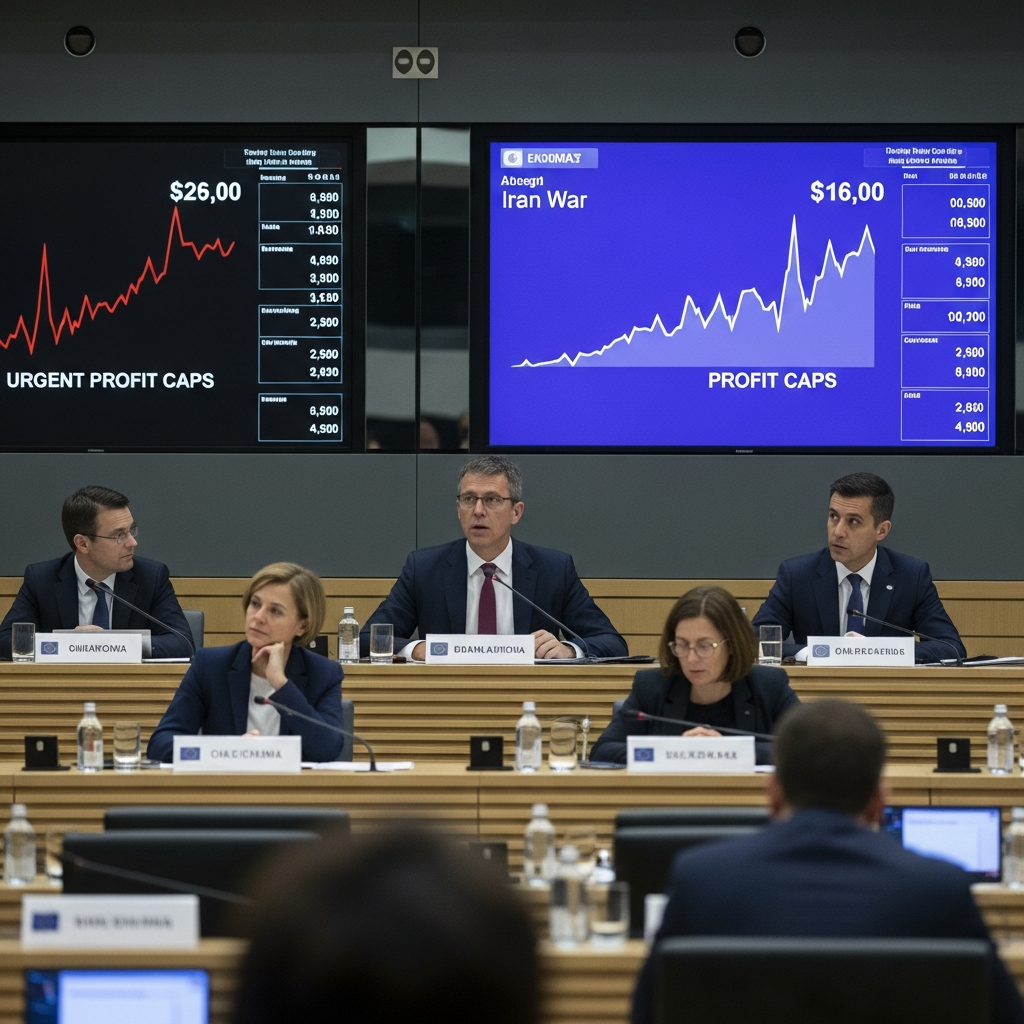
Europe is facing an urgent economic challenge as five key finance ministers call for an EU-wide windfall tax on energy companies. This bold move aims to address soaring oil and gas prices, directly linked to a recent “war in Iran,” which threaten to escalate inflation and severely strain household budgets across the continent. The proposed measure signals a robust response to geopolitical events impacting daily European life.
Europe’s Urgent Call for Energy Profit Caps
In a decisive move, the finance ministers from Spain, Germany, Italy, Portugal, and Austria are urging the European Union to impose a bloc-wide windfall tax on energy companies. Spanish Economy Minister Carlos Cuerpo confirmed on Saturday, April 5, 2026, that these nations had signed a joint letter to the European Commission. The letter specifically cited “market distortions” as the core reason for their urgent appeal. This collective action highlights a shared concern over how the ongoing conflict in the Middle East is driving up oil prices. Such a rise places a “significant burden on the European economy and on European citizens,” the ministers emphasized, advocating for a fair distribution of this economic strain.
Geopolitical Turmoil Fuels Economic Strain
The immediate catalyst for Europe’s escalating energy costs is the reported “war in Iran,” intensified by US-Israeli strikes beginning February 28, 2026. This conflict has led to Iran blocking most tanker traffic through the critical Strait of Hormuz. This maritime chokepoint is vital, accounting for approximately 20% of global oil and gas supply. Its disruption profoundly threatens to stress fuel markets for months, if not longer. Consequently, European gas prices have reportedly surged over 70 percent since the conflict’s outset. The economic fallout is already visible: annual inflation in the 21 Eurozone countries climbed to 2.5% in March 2026, a notable increase from 1.9% in February. This inflationary trend is largely attributed to the sharp rise in oil prices.
Echoes of the 2022 Energy Crisis: A Precedent for Action
Europe’s heavy reliance on imported oil and gas makes it particularly vulnerable to external shocks. This susceptibility was starkly exposed in 2022 following Russia’s full-scale invasion of Ukraine. That crisis pushed inflation into double digits across many European nations. In response, the EU swiftly implemented a “solidarity contribution.” This emergency measure included significant caps on excess energy profits. The current proposal by the five finance ministers explicitly seeks to revive a “similar EU-wide contribution instrument.” They argue this would not only address present “market distortions and fiscal constraints” but also send a powerful message. It would underscore that “those who profit from the consequences of the war must do their part to ease the burden on the general public.”
Addressing Europe’s Energy Vulnerability and Future Outlook
The current situation underscores Europe’s long-standing energy vulnerabilities. European Union Energy Commissioner Dan Jorgensen issued a grim warning this week. He stated that the disruption from the Strait of Hormuz closure means fuel prices are unlikely to “go back to normal in a foreseeable future.” Commissioner Jorgensen also voiced specific short-term worries regarding Europe’s supply of refined petroleum products, such as jet fuel and diesel. This outlook reinforces the urgency of the ministers’ call for decisive action. The EU’s energy chief has indicated the Commission is actively considering reviving its 2022 crisis measures. These include not only a tax on windfall profits but also proposals to curb grid tariffs and introduce new taxes on electricity.
The Broader Debate: Fairness, Profits, and Green Transition
The debate over energy profit caps extends beyond immediate crisis management. It touches on fundamental questions of fairness and economic responsibility during geopolitical turmoil. The ministers’ letter clearly conveys that entities benefiting from war-related economic fallout must contribute to alleviating public hardship. Environmental organizations like Greenpeace have openly accused oil companies of accumulating “Mideast ‘war profits'” amidst the current situation. This adds another layer to the discussion, linking present profits to broader ethical concerns. Furthermore, France has even suggested that an additional tax could aid the transition away from fossil fuels, blending crisis response with long-term climate goals.
What Could Happen Next? Potential EU Responses
The European Commission now faces pressure to act swiftly. The precedent set by the 2022 “solidarity contribution” provides a clear roadmap. Should the Commission move forward, we could see a rapid development of a new EU-wide instrument. This could involve direct profit caps or a windfall tax mechanism. Such a measure would aim to redirect a portion of exceptional energy company earnings to alleviate consumer burdens and stabilize the economy. The goal is to provide immediate relief and send a strong signal of unified European action in the face of ongoing energy market instability.
Frequently Asked Questions
What is driving the recent surge in European energy prices?
The primary driver behind the recent surge in European energy prices is the “war in Iran,” specifically linked to US-Israeli strikes that began on February 28, 2026. This conflict led to Iran’s blockade of most tanker traffic through the Strait of Hormuz, a critical chokepoint for approximately 20% of global oil and gas supply. This disruption significantly strains fuel markets, causing oil and gas prices to soar and contributing to increased inflation across the Eurozone.
Which European countries are advocating for energy profit caps?
Five European Union finance ministers are leading the charge for EU-wide energy profit caps. These include the Spanish Economy Minister Carlos Cuerpo, along with his counterparts from Germany, Italy, Portugal, and Austria. They collectively signed a letter to the European Commission, made public on April 5, 2026, urging for a “similar EU-wide contribution instrument” to address market distortions and ensure a fair distribution of the economic burden from rising energy costs.
How might an EU-wide energy windfall tax impact consumers?
An EU-wide energy windfall tax aims to mitigate the financial strain on European households by ensuring that energy companies profiting significantly from the crisis contribute to public relief. Historically, such measures, like the 2022 “solidarity contribution,” have helped to stabilize prices and support consumers during periods of high energy costs. If implemented, a new tax could lead to various mechanisms for consumer support, such as subsidies, reduced utility bills, or direct financial aid, although specific impacts would depend on the final policy details.
Conclusion
The unified call from five influential European finance ministers for an EU-wide windfall tax on energy companies underscores the severe economic impact of the “war in Iran.” With inflation rising and fuel prices expected to remain high, the urgency for action is palpable. Drawing on lessons from the 2022 energy crisis, the European Union is poised to consider decisive measures to ensure fairness and alleviate the burden on its citizens. This critical moment highlights Europe’s ongoing challenge to secure energy stability amidst global geopolitical volatility, reinforcing the need for proactive and equitable policy responses.