Amidst an escalating government shutdown, President Donald Trump has issued an unprecedented directive: federal Immigration and Customs Enforcement (ICE) officers will be deployed to U.S. airports starting Monday, March 24, 2026. This controversial move, announced via social media, is conditional on Democrats agreeing to a bill that fully funds the Department of Homeland Security (DHS). The threat aims to address severe airport security delays caused by a partial shutdown that has left Transportation Security Administration (TSA) agents working without pay for weeks.
The Looming Deadline: ICE at U.S. Airports
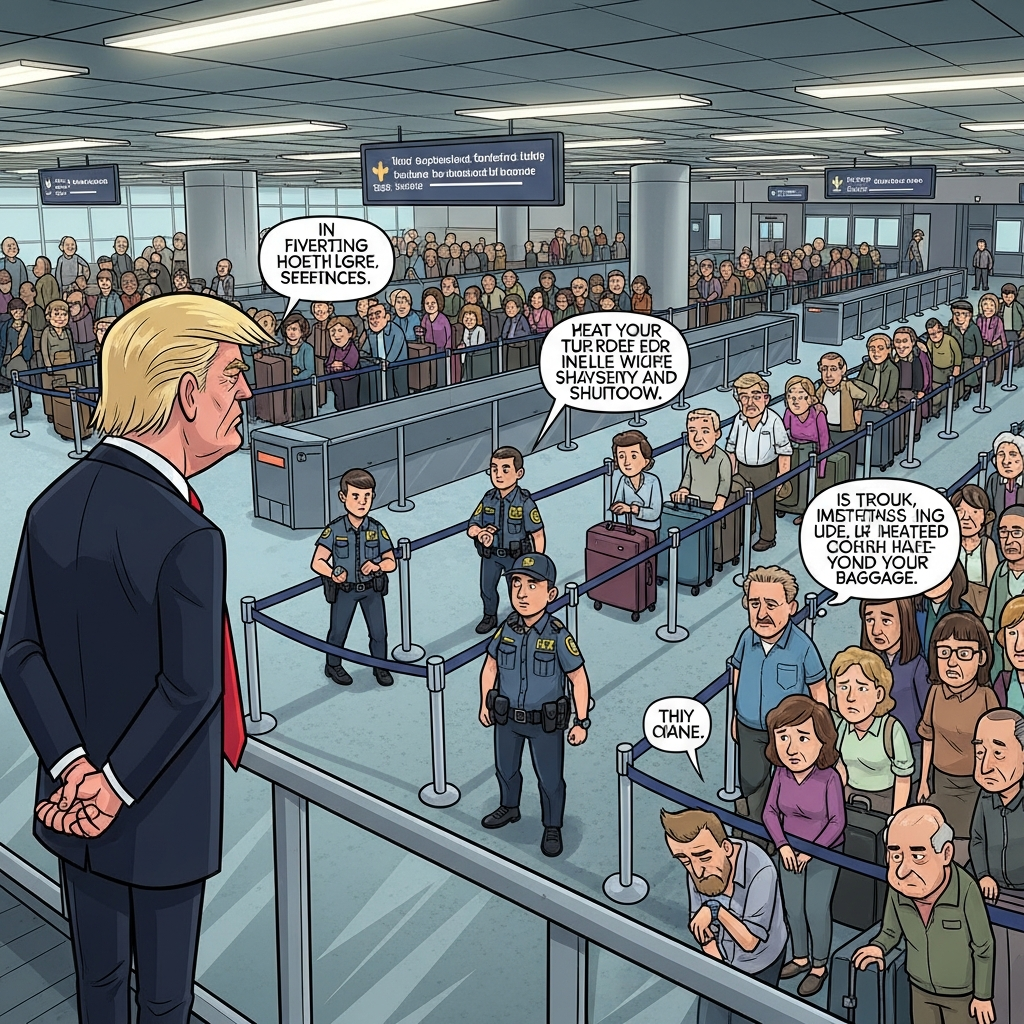
On a Saturday, President Trump declared his intention to dispatch ICE agents to national airports, stating, “ICE is ready to go on Monday.” He vowed these federal immigration officers would ensure “Just and Proper Security” and undertake the “immediate arrest of all Illegal Immigrants who have come into our Country.” The president specifically targeted immigrants from Somalia who are illegally present in the U.S., claiming they had “totally destroyed” Minnesota. This mandate represents a significant expansion of immigration enforcement into civilian travel hubs. However, Trump’s public statements offered little detail on how ICE personnel, primarily focused on immigration law enforcement, would integrate with or supersede existing airport security protocols typically handled by TSA.
Behind the Standoff: DHS Funding Crisis
The current crisis stems from a partial government shutdown that commenced on February 14, following Congress’s failure to approve funding for the Department of Homeland Security. DHS oversees a vast array of critical national functions, including border security, counter-terrorism efforts, immigration services, and emergency management. While ICE, another DHS agency, received substantial additional funding in a legislative package the previous year and remains operational, the TSA has borne the brunt of the shutdown. Its nearly 50,000 employees, deemed essential, continue to work but without compensation, leading to widespread disruptions.
Travel Chaos: The Unpaid TSA Workforce
The impact of the DHS shutdown on air travel has been immediate and severe. Prolonged security lines and delays have become common at major U.S. airports as unpaid TSA officers face mounting financial strain. The Department of Homeland Security reports that at least 376 TSA employees had resigned since the shutdown began. Additionally, “call-out rates” – officers reporting sick – have significantly increased. For example, Houston Hobby International Airport recorded a staggering 55% call-out rate for its security personnel on March 14, highlighting the operational strain on the nation’s aviation security. This unprecedented staffing crisis raises serious questions about public safety and operational efficiency.
Political Battle Lines: Demands and Deadlock
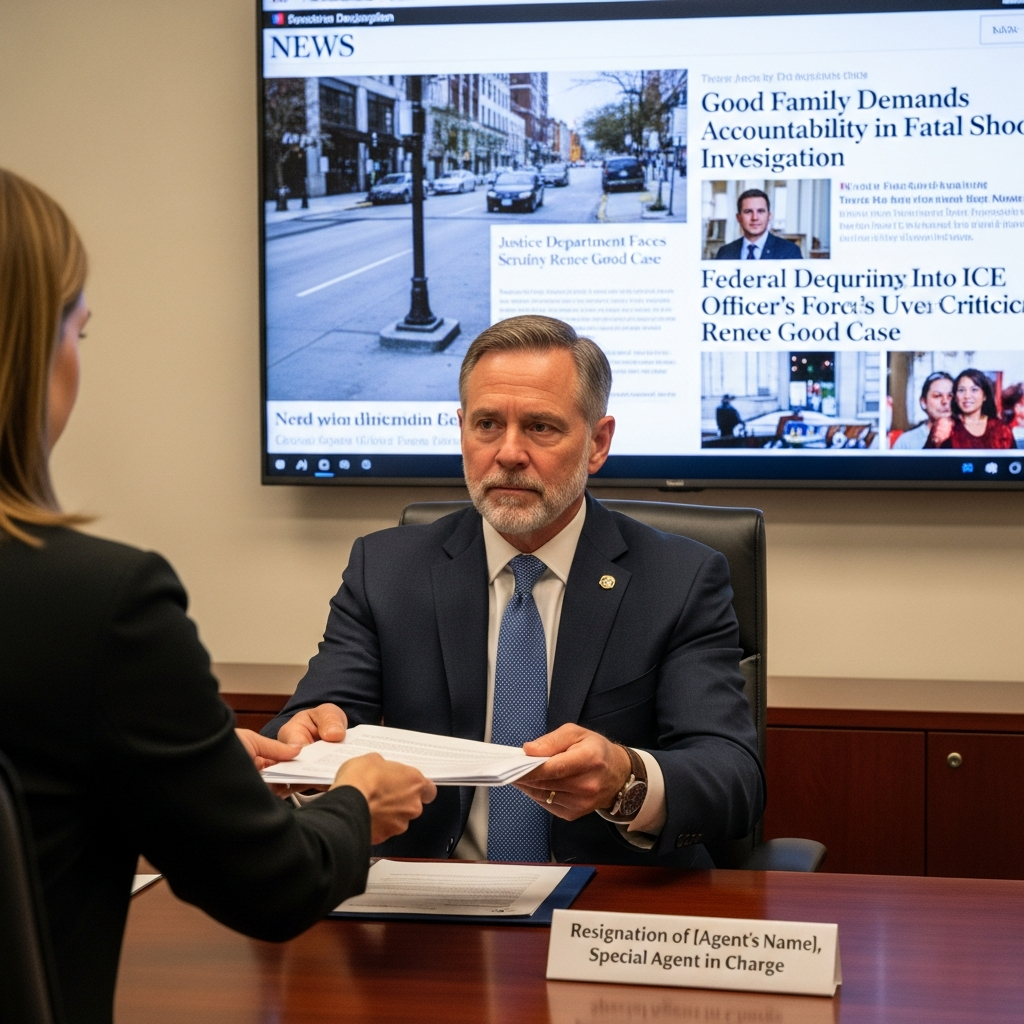
The proposed deployment of ICE agents is deeply intertwined with a contentious political battle over immigration policy. Democrats have pledged to block full DHS funding unless significant reforms are implemented for federal immigration enforcement. Their demands include improved identification protocols for agents, a new code of conduct for these agencies, and a greater reliance on judicial warrants for arrests and home entries. These demands gained urgency after a recent immigration crackdown in Minnesota, linked to allegations of fraud involving Somali residents, tragically resulted in the fatal shootings of two U.S. citizens, Renee Good and Alex Pretti, by federal law enforcement.
Conversely, Republicans insist on funding all components of DHS, rejecting Democrats’ efforts to pass a stand-alone bill to pay TSA workers. Senate Majority Leader John Thune (R-S.D.) accused Democrats of holding airport travelers and workers “hostage.” Senate votes over the weekend underscored the legislative impasse, with neither party successfully advancing their preferred funding bills. The standoff highlights a profound ideological divide, with Democrats seeking greater oversight on immigration enforcement and Republicans prioritizing comprehensive departmental funding.
Broader Context: Trump’s Aggressive Immigration Strategy
President Trump’s threat to deploy ICE to airports is not an isolated event; it aligns with a broader, more aggressive immigration strategy characterized by what legal experts describe as a “de-legalization campaign.” This approach aims to expand the “undocumented population” by undermining various pathways to legal residency and protection, thereby increasing the number of individuals vulnerable to detention and removal.
The administration has previously pursued policies that:
Target Refugees: Implementing travel bans, drastically reducing refugee caps, and pausing green card processing for those already admitted.
Revoke Temporary Protected Status (TPS): Ending protections for hundreds of thousands from countries deemed unsafe, forcing them into precarious legal positions.
Impact DACA Recipients: Increasing arrests and deportations of Dreamers, despite their protected status.
Restrict Asylum Seekers: Barring access to the asylum system for new arrivals and using tactics like “Pretermission” to quickly remove asylum seekers to third countries without full hearings.
Arrest Legal Visa Holders: Implementing policies allowing for the arrest and deportation of U and T visa holders (victims of crime assisting law enforcement).
Undermine Humanitarian Parole Programs: Pausing or terminating programs for various nationalities, leaving many without legal protections.
- Target Student and Work Visa Holders: Increasing fees for certain visas and conducting high-profile workplace raids.
- fortune.com
- www.nbcnews.com
- apnews.com
- www.theguardian.com
- www.aljazeera.com
Against this backdrop, the specific targeting of Somali immigrants at airports and the broader threat to arrest “all Illegal Immigrants” reflect a consistent pattern of expanding enforcement and increasing the vulnerability of immigrant communities, regardless of their legal status or prior protections.
Operational Questions and Expert Concerns
The announcement has triggered significant operational questions and concerns among experts. President Trump’s posts offered no specifics on how ICE would practically integrate with TSA’s existing screening procedures. Critics point out that ICE agents primarily focus on immigration law enforcement and lack the specialized training required for airport security, which TSA personnel undergo. Introducing militarized immigration enforcement into civilian spaces like airports, where families and the elderly are present, raises fears of escalating tensions, potential for harm, and a fundamentally altered travel experience. Industry analysts also warn that the current high rate of TSA absences, combined with the proposed ICE deployment, could lead to further strain, fatigue, and potential security vulnerabilities.
Glimmers of Hope? Ongoing Negotiations
Despite the legislative deadlock, there have been some indications of progress in resolving the shutdown. Stalled talks between Democrats and the White House have recently resumed. Republican and Democratic senators have been engaged in closed-door meetings with White House officials for several consecutive days. Senate Democratic leader Chuck Schumer (D-NY) described these discussions as “productive conversations.” However, Senate Majority Leader John Thune (R-S.D.) emphasized the urgent need for a swift compromise, warning that if a solution is not found quickly, “things are going to get worse and worse,” particularly in light of the escalating airport lines and security concerns. The outcome of these negotiations remains uncertain as the Monday deadline for ICE deployment approaches.
Frequently Asked Questions
What is President Trump’s proposed action regarding ICE and airport security?
President Trump announced he would order U.S. Immigration and Customs Enforcement (ICE) officers to begin assisting with airport security starting Monday, March 24, 2026. This directive is contingent upon Democrats agreeing to fund the Department of Homeland Security (DHS). The president explicitly stated that ICE agents would focus on the “immediate arrest of all Illegal Immigrants,” specifically targeting individuals from Somalia who are in the country illegally. This move aims to address staffing shortages and long lines at airports caused by the ongoing partial government shutdown impacting TSA operations.
What specific reforms are Democrats demanding for federal immigration enforcement agencies?
Democrats are demanding several key reforms as a condition for funding the Department of Homeland Security (DHS). These include requiring federal law enforcement officers to clearly identify themselves, implementing a new code of conduct for these agencies, and increasing the use of judicial warrants for arrests and property entry. These demands gained urgency following a deadly immigration crackdown in Minnesota that resulted in the fatal shootings of two protesters. Democrats argue these reforms are essential for accountability and preventing abuse of power within immigration enforcement.
How has the Department of Homeland Security (DHS) shutdown impacted U.S. air travel and airport security?
The partial Department of Homeland Security (DHS) shutdown has significantly impacted U.S. air travel by causing widespread disruptions and security concerns. Most Transportation Security Administration (TSA) employees, deemed essential, have been working without pay since February 14. This situation has led to an increase in “call-out rates” (officers reporting sick) and resignations among TSA staff, with at least 376 employees quitting since the shutdown began. The resulting staffing shortages have created unusually long security lines and delays at major airports across the country, affecting traveler experience and potentially compromising security efficiency.
Conclusion
The political stalemate over funding the Department of Homeland Security has reached a critical juncture, directly impacting millions of travelers and the nation’s security infrastructure. President Trump’s controversial threat to deploy federal immigration officers to airports underscores the urgency of the situation and the deep divisions over immigration policy. As negotiations continue, the prospect of ICE assuming a role in airport security raises complex questions about operational effectiveness, human rights, and the nature of public safety in civilian spaces. The resolution of this crisis will undoubtedly shape not only the immediate future of air travel but also the broader landscape of immigration enforcement and governmental accountability.