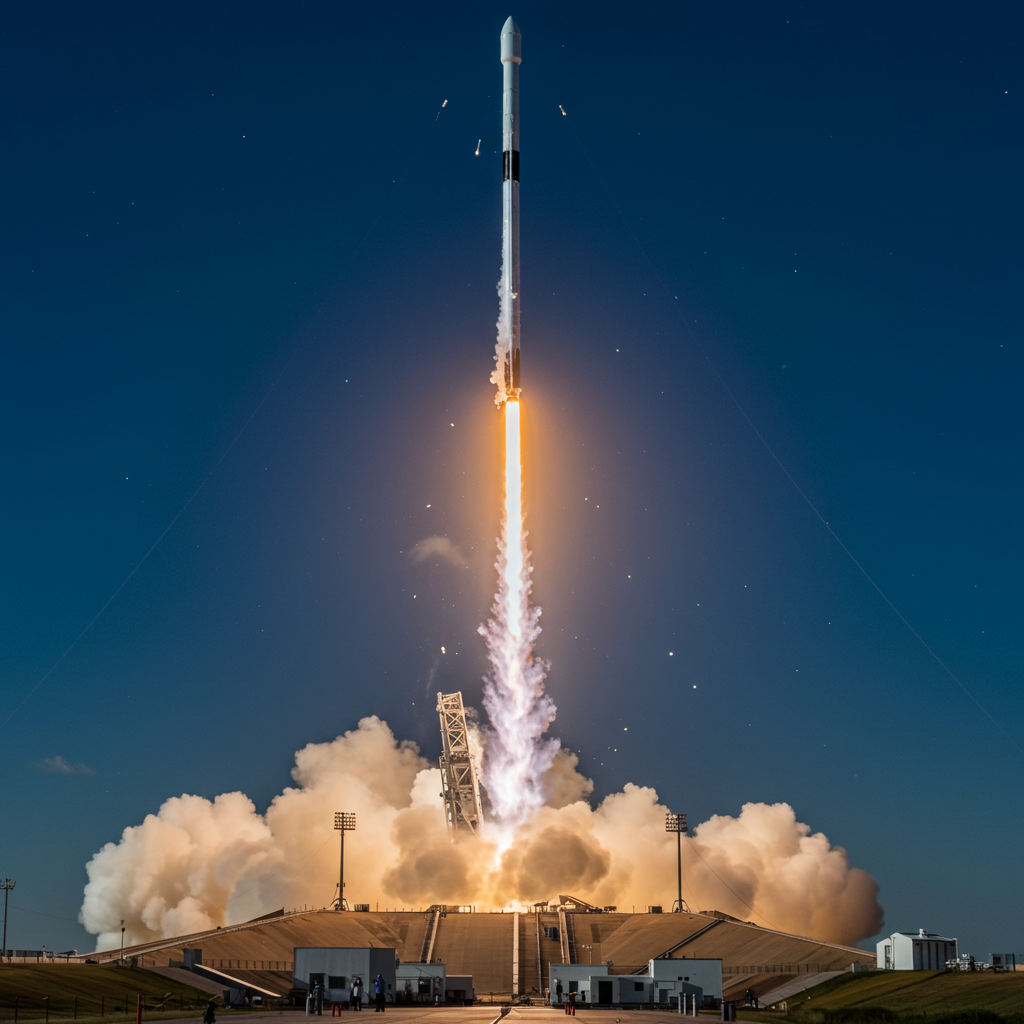
Humanity’s return to the Moon is taking another monumental step forward as NASA’s Artemis II moon rocket, comprising the towering Space Launch System (SLS) and the Orion spacecraft, has completed its journey back to Launch Complex 39B at Kennedy Space Center in Florida. This crucial rollout sets the stage for a historic crewed mission around our celestial neighbor, an endeavor not undertaken in over half a century. The anticipation is palpable for the four astronauts who will soon embark on this pioneering voyage, pushing the boundaries of human deep-space exploration.
The Grand Return: A Meticulous Rollout
The colossal Artemis II moon rocket began its approximately four-mile (6.4 kilometers) trek from the iconic Vehicle Assembly Building (VAB) to Pad 39B in the early hours of a Friday morning. This intricate journey, which typically lasts between 11 and 12 hours, was carefully orchestrated. The entire stack, standing at an impressive 322 feet (98 meters) tall and weighing nearly 5,000 tonnes with its mobile launch platform, moved at a snail’s pace.
This deliberate crawl, reaching a maximum speed of just over one mile per hour (1.6 km/h), is no accident. It’s designed to minimize any stress on the multi-billion-dollar rocket and its intricate launch tower. Engineers monitor every inch of the path, ready to spot unwelcome movements. The specialized Crawler-Transporter 2, a marvel of engineering built in 1965 for the Apollo era Saturn V rockets, transported the immense payload. This goliath, 114 feet (35 meters) wide with eight sets of 7.5-foot (2.3 meters) treads, crushes imported river rocks into near-sand beneath its 18-million-pound (8.1 million kg) combined load.
This marks the second time the Artemis II moon rocket has made this particular journey to the launch pad. An earlier attempt in January saw the vehicle at the pad for initial tests.
Overcoming Technical Hurdles: The Helium Fix
The previous rollout to the launch pad, in January, was ultimately cut short due to a critical technical issue. During one of two planned “wet dress rehearsals” – comprehensive fueling tests that simulate launch day operations – engineers identified a problem. There was a blockage in a helium flow line within the rocket’s upper stage.
Helium plays an absolutely vital role in rocket operations. It is used to pressurize the propellant tanks. A fault in this system could compromise engine performance or even prevent the safe draining of fuel. Rather than attempting a complex, risky on-pad investigation, NASA managers made the prudent decision to roll the SLS back into the VAB on February 25th.
Inside the vast VAB, specialists gained full access to the helium circuit. They utilized work platforms to reach critical valves and plumbing. During this period, suspect components, including a seal in the helium line, were replaced. Engineers also took the opportunity to swap out flight batteries in essential systems. Extensive tests were then conducted, confirming that the fault had been completely cleared. This meticulous approach underscores NASA’s commitment to safety and mission success, ensuring every component is flight-ready.
The Artemis II Mission: Blazing a New Trail
The upcoming Artemis II mission represents a pivotal moment for NASA and for human spaceflight. It will be the very first flight in the Artemis program to carry astronauts aboard the Orion capsule, making it the second overall spaceflight for the SLS and Orion system following the uncrewed Artemis I in 2022. The primary objective is not a lunar landing, but a critical circumlunar flyby.
This ten-day journey will loop around the far side of the Moon. The four-person crew will travel approximately 4,700 miles beyond the lunar far side, a distance farther from Earth than any humans have ever traveled. This mission will serve as the inaugural major test of the Orion spacecraft’s life-support systems with a human crew onboard. It’s a crucial dress rehearsal, validating the hardware and systems that will eventually enable humanity’s sustained presence on the Moon.
Meet the Crew: Pioneers of Lunar Exploration
A dedicated team of four astronauts has been selected for this historic Artemis II mission. These individuals represent the pinnacle of space exploration and bring a wealth of experience to this groundbreaking journey:
Commander Reid Wiseman (NASA): A veteran of the International Space Station, bringing leadership and flight experience.
Pilot Victor Glover (NASA): Another ISS veteran, set to become the first African American to fly around the Moon.
Mission Specialist Christina Koch (NASA): Holds the record for the longest single spaceflight by a woman, and will be the first woman to fly around the Moon.
Mission Specialist Jeremy Hansen (Canadian Space Agency): The first Canadian astronaut ever to fly to the Moon, representing international collaboration in space.
In preparation for their imminent departure, the crew recently entered a standard pre-flight quarantine at NASA’s Johnson Space Center in Houston. This mandatory period ensures their health and prevents any illnesses from jeopardizing the mission. They will continue training, simulations, and medical checkouts before flying to Kennedy Space Center approximately five days before liftoff.
Launch Windows and Future Horizons
With the Artemis II moon rocket now securely on Pad 39B, NASA is diligently working through final preparations. This includes plugging the launch tower back into the vehicle, running final pressure tests on the helium system, and rehearsing parts of the countdown. Following these evaluations, NASA’s mission management team will conduct a comprehensive review of all data.
The initial launch window for Artemis II opens in early April. The first opportunity is currently set for April 1st, with subsequent windows available through April 6th. Should any delays arise, another launch opportunity is available later in the month on April 30th. Weather, technical readiness, and orbital mechanics all play a role in determining the exact launch date.
The successful completion of Artemis II is a vital stepping stone for the broader Artemis program, which aims to establish a long-term human presence on and around the Moon.
Artemis III: Currently projected for 2025 or 2026, this mission aims to achieve the first human lunar landing since the Apollo era. It will involve astronauts transferring from the Orion capsule to commercial lunar landers, such as SpaceX’s Starship or Blue Origin’s Blue Moon, in lunar orbit.
Artemis IV: Scheduled for 2028, this mission will further build out the infrastructure for a sustained human presence, potentially involving the construction of a lunar outpost or gateway.
The journey of Artemis II to the launch pad is more than just a logistical maneuver; it symbolizes the relentless pursuit of knowledge and the enduring human spirit of exploration. It brings us closer to a future where the Moon is not just a destination, but a proving ground for humanity’s next giant leaps into the solar system.
Frequently Asked Questions
What was the reason for the Artemis II rocket’s delay and previous rollback?
The Artemis II moon rocket experienced a delay and was rolled back into the Vehicle Assembly Building (VAB) from the launch pad in late February. This was due to a helium pressurization issue detected in the rocket’s upper stage during a “wet dress rehearsal” fueling test. Helium is crucial for maintaining pressure in propellant tanks, and a fault could compromise engine performance or safe fuel draining. Engineers repaired the issue in the VAB by replacing suspect components, including a seal in the helium line, and conducting extensive tests to confirm the fix.
Where will the Artemis II mission travel, and when is its next launch window?
The Artemis II mission will not land on the Moon but will embark on a historic circumlunar flyby. The Orion spacecraft, carrying four astronauts, will loop around the far side of the Moon, traveling approximately 4,700 miles beyond it – a record distance for human spaceflight. The mission is targeted for launch in early April, with initial opportunities from April 1st through April 6th, and another window opening on April 30th from Kennedy Space Center’s Launch Complex 39B in Florida.
What is the ultimate goal of the Artemis program, and what missions follow Artemis II?
The ultimate goal of the Artemis program is to establish a long-term human presence on and around the Moon, utilizing it as a stepping stone for future deep-space missions, including Mars. Following the Artemis II moon rocket mission, the next major milestone is Artemis III, which aims to achieve the first human lunar landing since 1972, projected for 2025 or 2026. This mission will involve astronauts using commercial lunar landers to reach the surface. Artemis IV, targeted for 2028, will focus on further building out infrastructure for a sustained lunar presence.