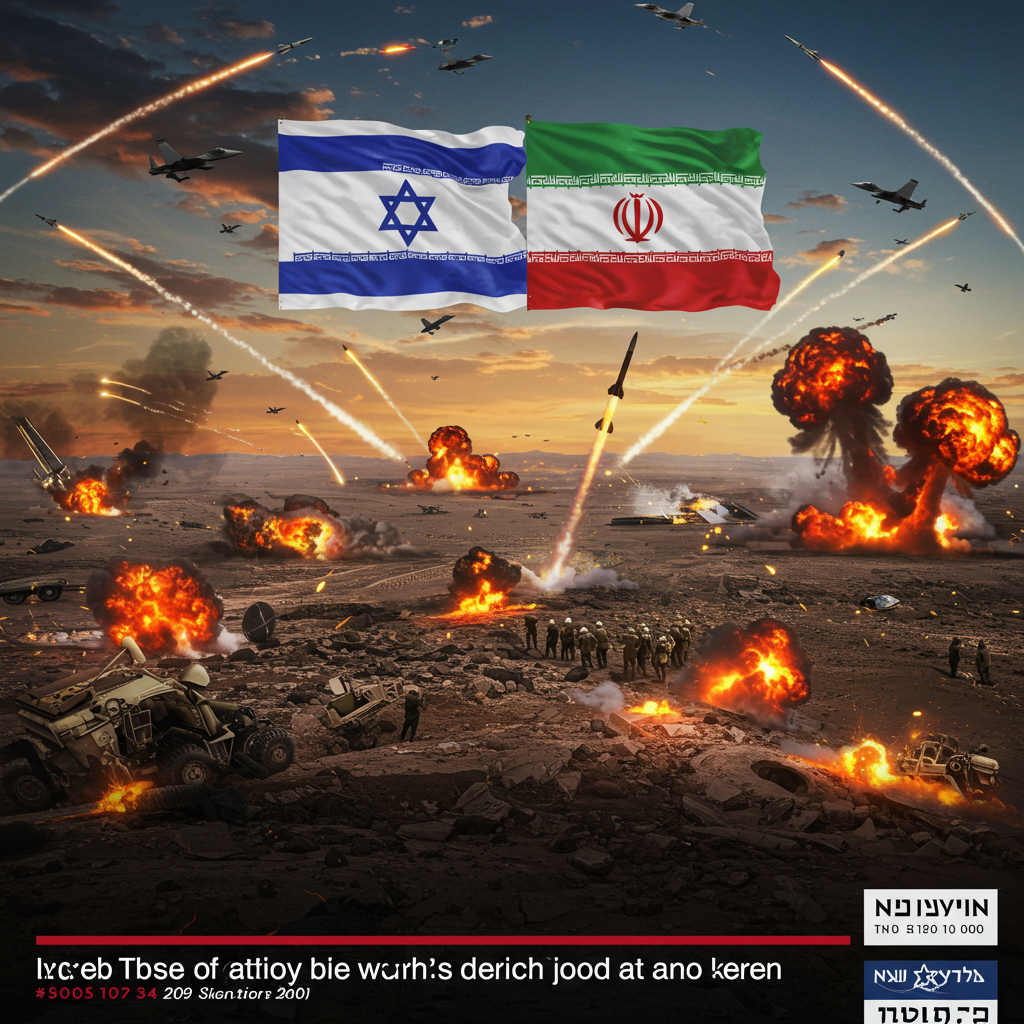
The Middle East faces escalating geopolitical turmoil in March 2026. Iran has intensified retaliatory strikes on Gulf energy sites following an Israeli attack on its crucial South Pars gas field. Amidst these fierce exchanges, Israeli Prime Minister Benjamin Netanyahu made a significant declaration. He stated Iran can no longer enrich uranium. This dramatic development unfolds as global energy markets reel, humanitarian crises deepen, and international calls for de-escalation grow louder.
The Expanding Conflict: A Volatile March in the Middle East
March 2026 has witnessed a dangerous escalation across the Middle East. Iran is launching intensified attacks throughout the Gulf region. These actions directly respond to an earlier Israeli strike. The target was Iran’s vital South Pars gas field. This field is a shared asset with Qatar. It forms a cornerstone of Iran’s energy infrastructure. The ongoing hostilities began on February 28. They have sent global fuel prices soaring. These events threaten to further entangle Iran’s Arab neighbors. These nations are already grappling with the conflict’s far-reaching consequences.
Netanyahu’s Bold Claim on Iran’s Nuclear Capabilities
A pivotal development in this tense period came from Israeli Prime Minister Benjamin Netanyahu. He asserted Iran’s capacity to enrich uranium and produce ballistic missiles has been neutralized. This declaration, made during a press conference, implies a significant degradation of Iran’s nuclear program. Iran consistently maintains its nuclear efforts are for peaceful purposes. However, it has previously enriched uranium up to 60% purity. This level is close to weapons-grade. Netanyahu also expressed hope for an internal uprising. He targeted the Islamic Republic. Current reports, however, show no organized opposition. This follows January’s crushed protests. U.S. President Donald Trump has consistently stated Iran must “never have a nuclear weapon.” Significant Iranian near-bomb-grade material is believed to be under the rubble of a bombed mountain facility.
Waves of Retaliation and Targeted Infrastructure
The cycle of attacks has been relentless. Following Israel’s strike on the South Pars field, Iran retaliated extensively.
Gulf Energy Hubs Attacked: Heavy explosions rocked Dubai in the UAE. Air defenses intercepted incoming fire. Bahrain’s Interior Ministry reported a warehouse fire from shrapnel. Kuwait’s Mina Al-Ahmadi oil refinery was hit by Iranian drones. This caused fires and impacted its 466,000 barrels per day processing capacity. Saudi Arabia intercepted multiple Iranian drones. They targeted its oil-rich Eastern Province. Qatar’s Ras Laffan liquefied natural gas (LNG) facility sustained extensive damage. This is estimated to reduce exports by 17%. It could cost $20 billion annually in lost revenue. Repairs may take up to five years.
Israeli Counter-Strikes: Israel responded with airstrikes on Tehran, Iran’s capital, early on March 19. This happened during Nowruz celebrations. Israeli strikes also targeted Iranian and Syrian sites. This included infrastructure in Syria. It marked Israel’s first such attack during this specific conflict. This followed Israel reporting over a dozen Iranian missile launches on March 19 alone. Sirens sounded across central Israel, from Haifa to the Dead Sea. Missile fragments were found in the Golan Heights.
Shipping Under Threat: The Strait of Hormuz, critical for one-fifth of the world’s oil, has seen nearly all traffic halted. This is due to attacks on commercial ships and threats. A vessel was set ablaze off the UAE coast. Another was damaged near Qatar. An Iranian drone struck Saudi Arabia’s SAMREF refinery in Yanbu on the Red Sea. This threatens alternative oil routes. The International Maritime Organization (IMO) works on a “safe maritime corridor.” It aims to protect 3,000 vessels and 20,000 seafarers stranded.
Global Economic Ripple Effects and Energy Market Turmoil
The conflict has sent shockwaves through the global economy. It directly impacts consumers worldwide.
Soaring Energy Prices: Brent crude oil, the international benchmark, briefly surged above $119 a barrel. This is a more than 60% increase since the war began. European natural gas prices have roughly doubled. Gasoline prices are climbing. Georgia became the first US state to suspend fuel taxes to ease consumer pain.
Supply Chain Disruptions: Beyond oil and gas, key raw materials face obstruction. This includes helium for computer chips and sulfur for fertilizers. This threatens shortages and price hikes across global supply chains.
Financial Market Volatility: Global stock markets have tumbled. U.S. stocks pared early losses, but the instability highlights the profound link between Middle East geopolitics and financial health.
Sanctions Reconsideration: The U.S. considers lifting sanctions on about 140 million barrels of Iranian oil. This oil is currently at sea. This move could reduce the “Iranian discount.” It highlights the severe global supply situation. It aims to bring more crude to market, to Iran’s benefit. President Trump acknowledged oil prices would rise. He expected a slight downturn in the economy.
Humanitarian Crisis and Regional Destabilization
The human toll of the conflict is devastating. It creates widespread displacement and loss of life.
Lebanon’s Plight: Israeli strikes against the Iran-backed Hezbollah militant group in Lebanon have displaced over 1 million people. This is roughly 20% of the population. Over 1,000 people have been killed, according to Lebanese authorities. Many families now shelter in schools or on the streets. The Islamic holiday of Eid al-Fitr was devoid of its usual joy. France has pledged nearly $20 million in humanitarian aid.
Casualties Across the Region: Over 1,300 people have been killed in Iran. Palestinian women were killed in an Iranian strike in the West Bank. In Israel, 15 people have died from Iranian missile fire. Two were killed in Ramat Gan. Four died in the occupied West Bank from an Iranian missile strike. Israeli military operations against Hezbollah reportedly killed over 500 militants. At least 13 U.S. military members have also been killed. This includes six Air Force crew members in Iraq.
Attacks on US Personnel and Bases: A former U.S. base near Baghdad’s airport provides logistical support to American operations. It has been attacked over 65 times since March 2. Iran-backed Iraqi militias conducted these attacks. They involved 73 drones and numerous missiles. These attacks wounded airport security personnel. The U.S. Embassy in Baghdad and consulate in Irbil have also been targeted.
US Role and International Responses
The United States finds itself deeply involved. It coordinates with Israel. It also faces internal and international scrutiny.
Trump-Netanyahu Dynamics: President Donald Trump and Prime Minister Netanyahu have shown diverging opinions. Trump warned Netanyahu against further attacks on the South Pars field. This was despite being informed of Israel’s initial plans. Trump denies Israel pushed the U.S. into war. He thanked Netanyahu for leading efforts to prevent Iran from developing nuclear weapons. He controversially linked Japan’s surprise attack on Pearl Harbor to the need for surprise in U.S. operations.
Military Actions and Funding: The U.S. conducts deeper strikes into Iranian territory. It deploys 5,000-pound bombs on underground weapon-storage facilities. It hunts Iranian boats in the Strait of Hormuz. An F-35 fighter jet made an emergency landing after a combat mission over Iran, possibly due to Iranian fire. The Pentagon seeks an additional $200 billion for the conflict. This is framed as essential for national military readiness.
- Diplomatic Efforts and Calls for Restraint: EU leaders called for a moratorium on strikes on energy infrastructure. They urged Iran to cease attacks on neighbors. Bahrain, Qatar, and the UAE condemned Iran’s actions. Gulf countries requested a UN Security Council meeting. This aimed to enforce a resolution demanding an immediate halt to attacks. Turkey has also called for diplomacy. It accused Israel of being the “primary instigator.” It also criticized Iran’s “unacceptable” attacks.
- www.pbs.org
- apnews.com
- ktar.com
- www.djournal.com
- <a href="https://www.yakimaherald.com/news/nationandworld/nation/the-latest-iran-retaliates-against-gulf-energy-sites-as-stocks-sink-worldwide/article_6c58d359-75ab-554c-9f16-10e10cbdf11c.html”>www.yakimaherald.com
Navigating a Precarious Future
The ongoing conflict underscores the delicate balance of power. It highlights the intricate web of alliances and antagonisms in the Middle East. With key leaders eliminated and military capabilities degraded, Iran’s new leadership continues its retaliatory strikes. The U.S. faces the daunting question of securing Iran’s nuclear program and enriched uranium. President Trump rules out ground troops. Yet he maintains the necessity of preventing nuclear weapons. The world watches anxiously as diplomacy struggles against escalating military actions. The profound economic and human costs continue to mount.
Frequently Asked Questions
What is the current status of Iran’s uranium enrichment program amid the conflict?
Israeli Prime Minister Benjamin Netanyahu recently stated that Iran’s ability to enrich uranium has been neutralized due to the ongoing conflict. While Iran has historically insisted its nuclear program is for peaceful purposes, it had been enriching uranium up to 60% purity, a level close to weapons-grade. Much of this near-bomb-grade material is reportedly buried under a mountain facility previously targeted by U.S. bombings. The U.S. has maintained a firm stance that Iran must never develop nuclear weapons.
How have the recent attacks impacted global oil and gas prices?
The intensified attacks on Gulf energy sites, particularly the closure of the Strait of Hormuz, have caused significant volatility in global oil and gas markets. Brent crude oil, the international standard, surged above $119 a barrel, marking over a 60% increase since the conflict began in late February 2026. European natural gas prices have also approximately doubled. These price hikes are leading to higher gasoline costs for consumers and increased transportation expenses across the global supply chain, affecting a wide range of goods and contributing to inflationary pressures.
What efforts are international bodies making to ensure freedom of navigation in the Strait of Hormuz?
The Strait of Hormuz, vital for global oil shipments, has seen nearly all traffic halted due to the conflict. International bodies, including the European Union and the UN Security Council, have called for Iran to stop interfering with navigation. The International Maritime Organization (IMO) is actively working to establish a “safe maritime corridor” for the thousands of vessels and tens of thousands of seafarers currently stranded in the Persian Gulf. However, the IMO has stressed that only a cessation of hostilities will truly resolve the issue, and its resolutions are non-binding. Some EU nations are also exploring ways to specifically ensure navigation freedom.
Conclusion:
The Middle East stands at a critical juncture in March 2026, grappling with a rapidly escalating conflict. It transcends regional borders. The intense cycle of Iranian retaliation for Israeli strikes, coupled with Netanyahu’s claims regarding Iran’s uranium enrichment, signals profound shifts in geopolitical dynamics. As energy markets remain volatile, humanitarian crises demand urgent attention. Global leaders seek stability. The path forward remains uncertain. A concerted international effort towards de-escalation and diplomatic resolution is paramount. It aims to avert further widespread devastation and restore a semblance of peace to the region.