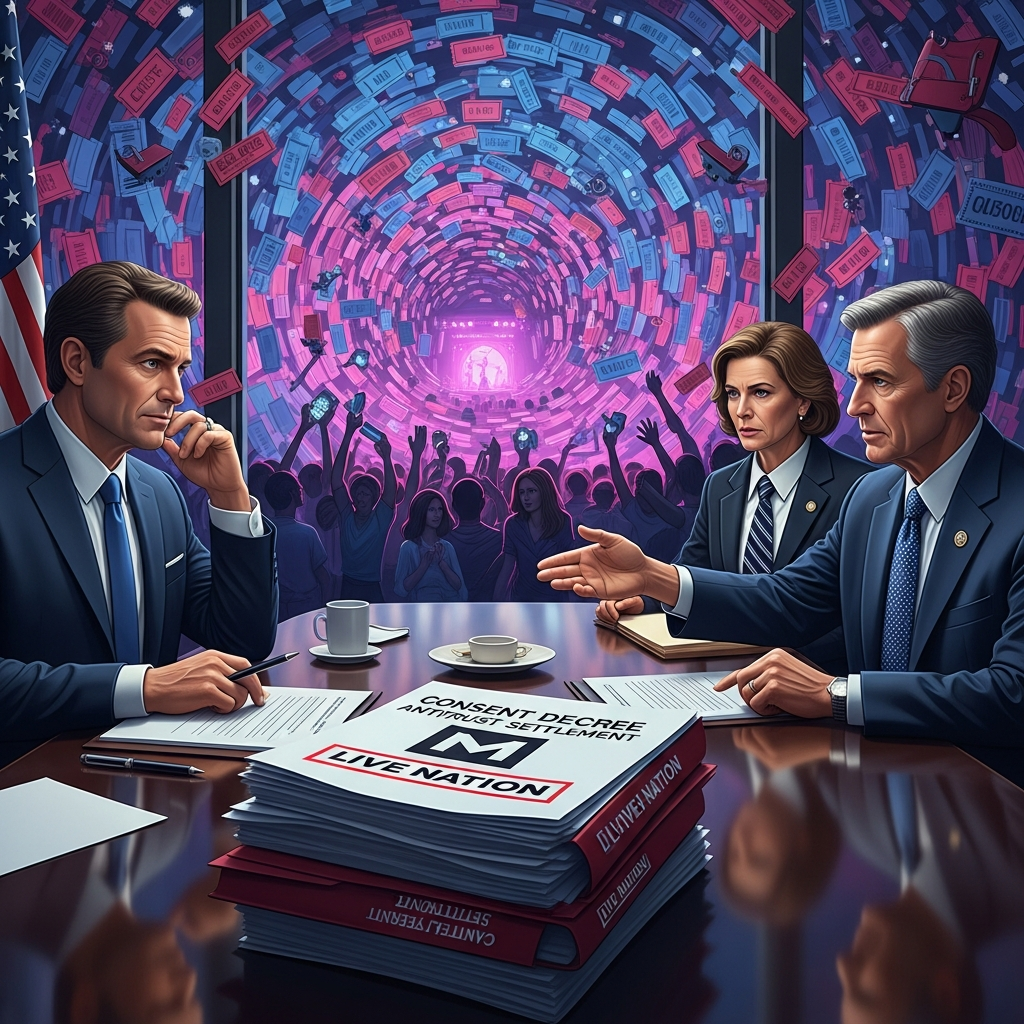
The live entertainment landscape is bracing for significant shifts as ticketing giant Live Nation reaches a tentative settlement with the US Justice Department in a landmark antitrust case. This resolution, spurred by years of controversy and a particularly chaotic Taylor Swift Eras Tour ticket sale in 2022, aims to curb Live Nation’s alleged monopolistic control over the concert industry. While the proposed deal offers some structural changes, its impact on fans, artists, and competition remains a subject of intense debate among legal experts and industry stakeholders.
Live Nation’s Reign: A Decade of Dominance Under Fire
Since its 2010 merger with Ticketmaster, Live Nation has operated as a colossal force in live events. The combined entity manages an extensive array of operations, including concert promotion, artist management, venue ownership, and the vast primary ticketing market through Ticketmaster. Critics, including the Justice Department, have long argued that this vertical integration stifles competition, allowing Live Nation to exert undue influence and impose excessive fees.
The flashpoint arrived with the infamous 2022 Taylor Swift Eras Tour ticket sale. Millions of fans faced crashed websites, exorbitant prices, and frustrating delays, igniting a public outcry that propelled the Justice Department to action. Their lawsuit, joined by nearly 40 states, painted Live Nation as a monopoly controlling virtually all live entertainment in the US. Initially, the government sought to break up the company, a far more drastic measure than the current settlement proposes.
During the recent trial, damning testimony emerged. Witnesses alleged that Live Nation leveraged its dominant position to pressure venues into exclusively using Ticketmaster services. John Abbamondi, a former executive at Brooklyn’s Barclays Center, recounted how Live Nation CEO Michael Rapino allegedly threatened to divert concerts after the venue partnered with rival ticket seller, SeatGeek. A recording played in court captured Rapino stating it would “be a tough time to deliver tickets or concerts, with a new competitor in town,” a remark Abbamondi interpreted as a direct threat, leading to a reduction in shows. Live Nation, however, denied these claims, attributing any venue popularity decline to competition.
Unpacking the Tentative Settlement: Key Provisions and Changes
The proposed settlement, which still requires judicial approval, introduces several core provisions designed to foster competition and address anticompetitive behaviors:
Expanded Ticketing Options: Live Nation will allow businesses to use multiple vendors for ticket sales, effectively opening Ticketmaster’s platform to rival ticketing operators like SeatGeek for ticket listings and technology access.
Promoter Flexibility: Touring artists performing at Live Nation-owned or operated venues will gain the freedom to hire alternative promoters.
Venue Divestiture: The company commits to divesting up to 13 concert halls, reducing its physical footprint.
Financial Redress: Live Nation will pay $280 million in damages to the nearly 40 states that participated in the antitrust lawsuit.
Fee Caps: Ticketmaster will be required to cap its service fees at 15% for certain venues.
Exclusivity Limits: Exclusivity contracts, which previously mandated artists booking Live Nation venues to use its ticketing services, will now be limited to four years. Venues can also place a portion of their tickets on competing platforms.
- Consent Decree Extension: The existing consent decree with the Justice Department will be extended for another eight years, ensuring continued oversight.
- www.bbc.com
- www.latimes.com
- www.belganewsagency.eu
- www.musicbusinessworldwide.com
- abcnews.com
Live Nation President and CEO Michael Rapino praised the settlement, calling it “a major step in improving the concert experience for artists and fans.” He emphasized that the changes would offer artists greater flexibility in choosing partners and strategies, ultimately aiming for more affordable concert costs. Following news of the proposed deal, Live Nation’s shares saw a positive bump, rising by approximately 6-10%.
Mixed Reactions: A Court’s Displeasure and State Attorneys’ Resolve
Despite the company’s positive outlook, the settlement has met with considerable pushback and skepticism. Judge Arun Subramanian, who oversees the case, publicly expressed strong disapproval after learning that the Justice Department and Live Nation had secretly signed the deal days before informing the court. He called it “absolute disrespect for the court, the jury and this entire process,” noting he had been “kept in the dark.”
Moreover, several states involved in the lawsuit have declined the settlement, vowing to continue their legal fight. New York Attorney General Letitia James, a vocal critic, stated that the agreement “fails to address the monopoly at the centre of this case, and would benefit Live Nation at the expense of consumers.” She asserted that the states have a strong case and will proceed independently to ensure fair competition. Washington D.C.’s attorney also moved for a mistrial, highlighting the ongoing legal friction.
Expert Weigh-In: Will Anything Truly Change for Fans?
The efficacy of the settlement in truly reforming the live events industry remains a key concern. Serona Elton, an attorney and interim vice dean at the University of Miami’s Frost School of Music, acknowledged the dual perception of the outcome – either a win against anticompetitive behaviors or an insufficient measure. She clarified that while being a monopoly isn’t inherently illegal, the use of anticompetitive tactics is. Elton cautioned that while venues might see benefits, “music fans should not think this is going to bring ticket prices down to an affordable level as there are other causes behind the sky-high ticket prices.”
Stephen Parker, executive director of the National Independent Venue Assn., expressed significant skepticism. He stated that the proposed settlement “does not appear to include any specific and explicit protections for fans, artists, or independent venues and festivals.” Parker also voiced concerns that new requirements for Ticketmaster to host listings from resale platforms could inadvertently empower “predatory resellers” and exacerbate price gouging, potentially worsening the problem for consumers.
The Justice Department defended the timing of the settlement, suggesting it accelerates relief for American consumers by avoiding a lengthy appeals process, despite confidence in prevailing at trial. However, the internal dynamics of the DOJ, including recent personnel changes, have also drawn scrutiny, though officials maintained the decision to settle was solely focused on achieving competitive relief.
Live Nation’s Mammoth Footprint and Ongoing Challenges
Live Nation’s financial prowess underscores its immense influence. In 2025, the company organized over 55,000 concerts worldwide, attracting a staggering 159 million attendees. Its financial results for that year showed revenues soaring to $25.2 billion, a 9% increase, with operating profit jumping over 50% to $1.3 billion. The firm holds stakes in 460 venues, further cementing its control.
Despite its success, Live Nation continues to face criticism from fans, lawmakers, and competitors regarding its alleged artificial inflation of ticket costs through various fees and service charges. While Live Nation argues that artists and their management ultimately set ticket prices, and that venues receive the bulk of added fees, critics point out that Live Nation often owns the venues or manages the artists for many shows, complicating this defense. This settlement, while significant, is just one of several legal battles Live Nation faces, with ongoing lawsuits from the Federal Trade Commission and multiple class-action suits from concertgoers highlighting the enduring challenges to its market dominance.
Frequently Asked Questions
What are the main terms of the Live Nation antitrust settlement?
The tentative settlement requires Live Nation to allow multiple vendors for ticket sales, enable touring artists to hire alternative promoters, and divest up to 13 concert halls. Additionally, it mandates a $280 million payment in damages to the states involved, caps certain Ticketmaster service fees at 15%, and limits venue exclusivity contracts to four years. The existing consent decree with the Justice Department will also be extended for eight years.
How will the Live Nation settlement affect concert ticket prices and availability for fans?
The settlement aims to increase competition by allowing more ticketing vendors and promoter choices, which could theoretically lead to lower service fees and more transparent pricing. However, expert opinions are divided. Some suggest that while venues might benefit, fans shouldn’t expect significant drops in overall ticket prices, as other factors beyond Live Nation’s control also contribute to high costs. Concerns also exist that allowing more resale platforms could inadvertently worsen price gouging.
Why are some states and the presiding judge critical of the Live Nation settlement?
The presiding judge, Arun Subramanian, expressed strong disapproval, citing “absolute disrespect” because Live Nation and the Justice Department signed the deal days before informing the court. Several states, led by New York Attorney General Letitia James, have declined the settlement. They argue it fails to adequately address Live Nation’s core monopoly, benefits the company at consumers’ expense, and plan to continue their independent legal actions, seeking a more comprehensive solution.
Conclusion
The Live Nation antitrust settlement marks a pivotal, albeit controversial, moment in the ongoing battle for fairness and competition in the live entertainment industry. While it introduces significant structural changes aimed at fostering choice for venues and artists, the true impact on ticket prices and the overall concert experience for fans remains to be seen. As some states push forward with their own legal challenges, the debate over Live Nation’s powerful influence and the future of live event ticketing is far from over. The coming years will reveal whether this settlement truly ushers in a new era of genuine competition or merely a new chapter in a long-standing saga.