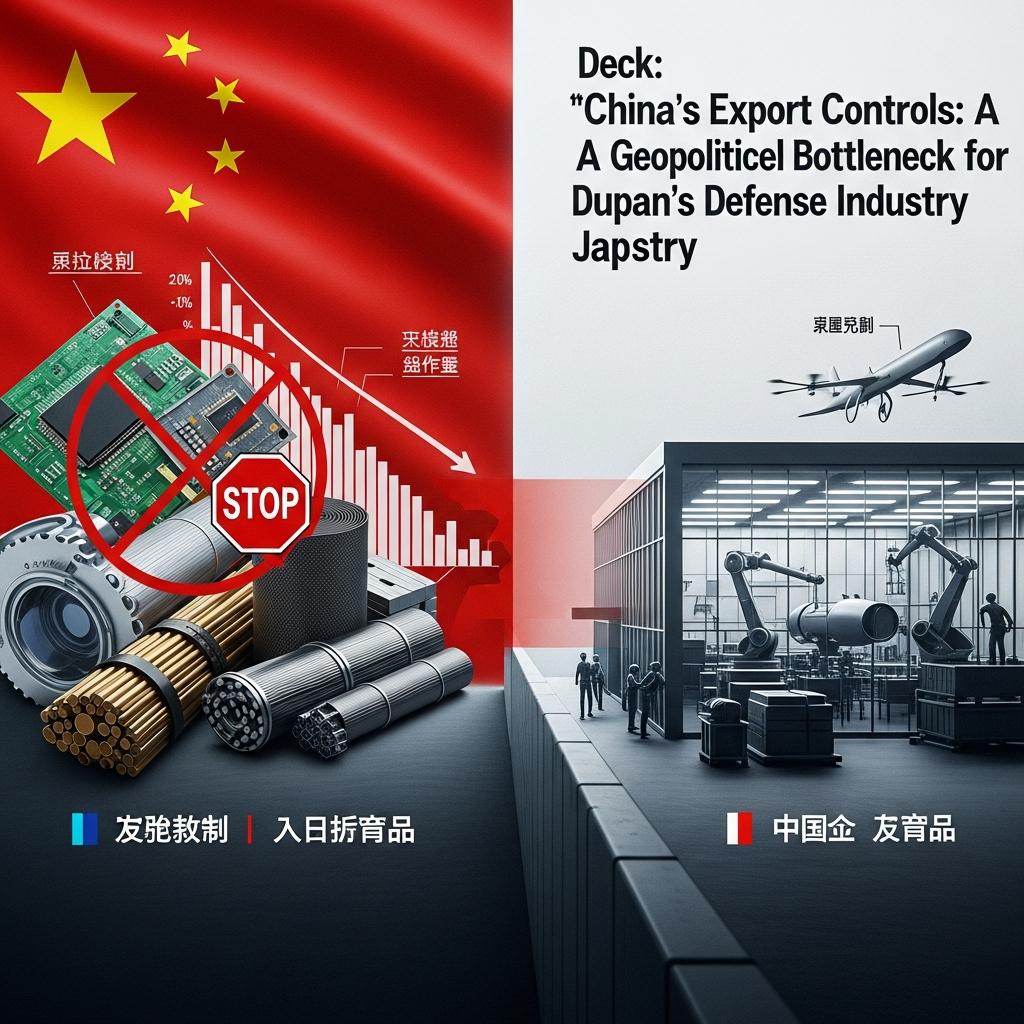
Beijing has significantly escalated economic pressure on Tokyo, announcing stringent export controls targeting 40 Japanese entities. This move, made public on February 24, 2026, dramatically intensifies the diplomatic tensions between the two powerful East Asian nations. The measures focus on “dual-use goods,” products with both civilian and military applications, signaling China’s intent to influence Japan’s defense capabilities and reshape regional security dynamics.
This decisive action places 20 Japanese companies and organizations on an outright export ban list. Another 20 entities face stricter scrutiny, requiring individual export licenses and firm commitments regarding end-use. The comprehensive nature of these new restrictions indicates a strategic deployment of economic tools in a long-standing geopolitical rivalry.
Beijing’s Latest Move: Targeting Japan’s Defense Sector
China’s Ministry of Commerce announced these new export control measures, broadening existing diplomatic rifts. The action directly impacts some of Japan’s largest industrial conglomerates and key research institutions. Beijing views these entities as deeply involved in the research, development, and production of military equipment. This includes a wide array of items, from ships and aircraft to radar systems and missiles.
The decision represents a direct response to, and an amplification of, ongoing diplomatic friction. It utilizes economic leverage to potentially disrupt Japan’s defense-related industries and research capabilities. This step underscores China’s willingness to use trade policy as a strategic instrument in its foreign relations.
The Two-Tiered Sanction System Explained
The new controls operate on two distinct levels, each with specific implications for Japanese entities.
Firstly, 20 Japanese entities are now on a primary export control list, facing an outright ban. For these organizations, Chinese exporters are completely prohibited from shipping dual-use goods. This restriction also extends globally, preventing foreign exporters from sending any China-made dual-use products to these listed firms. Prominent organizations on this stringent list include:
Mitsubishi Heavy Industries subsidiaries: Specifically, Mitsubishi Heavy Industries Shipbuilding and Mitsubishi Heavy Industries Aero Engines.
Kawasaki Heavy Industries.
IHI.
National Defense Academy of Japan.
These entities are explicitly identified as contributors to Japan’s military strength.
Secondly, an additional 20 Japanese entities have been placed on a “watch list.” While not an outright ban, trade involving dual-use items with these companies will now face “stricter scrutiny.” The commerce ministry confirmed that exports to these watch-listed entities will not be approved if they are determined to “contribute to enhancing Japan’s military capabilities.” Notable entities on this watch list include:
Subaru Corporation: Specifically its aerospace division, which holds defense production contracts.
Sumitomo Heavy Industries.
Institute of Science Tokyo: A public research university.
Itochu Aviation.
TDK Corporation.
Mitsubishi Materials Corp.
Companies intending to export to these watch-listed entities must apply for individual export licenses. They must also provide a written commitment. This commitment confirms the items will not contribute to Japan’s military capabilities.
What Are “Dual-Use Items” and Why Do They Matter?
At the core of these new restrictions lies the concept of “dual-use items.” These are products, technologies, or software that primarily serve civilian purposes but also possess significant potential for military applications. Understanding this definition is crucial for grasping the intent behind China’s export controls on Japan.
Dual-use items can range from advanced materials and electronics to specialized machinery and software. For instance, high-precision manufacturing equipment used to produce car parts could also be adapted for making missile components. Similarly, advanced navigation systems designed for commercial aircraft might also find use in military drones. Their versatility makes them strategically sensitive.
The strategic significance of controlling these exports is profound. By restricting access to dual-use items, China aims to directly impede Japan’s ability to develop or produce military systems. This includes preventing the enhancement of existing defense capabilities. The measures target the very foundational components and technologies that underpin modern military strength. This approach highlights how economic policy can become a powerful tool in geopolitical maneuvering, directly impacting national security interests.
China’s Stated Rationale: Curbing “Re-militarization”
China has strongly defended its new export controls, articulating clear justifications for their implementation. A spokesperson from the Ministry of Commerce explicitly stated that these measures are primarily “aimed at deterring Japan’s remilitarization and nuclear ambitions.” This official stance frames the actions as a necessary step to maintain regional stability and prevent what Beijing perceives as a dangerous military buildup by Japan.
Beijing asserts that these actions are “completely legitimate, reasonable, and lawful.” The Chinese government emphasizes that the measures are narrowly focused. They target “only a small number of Japanese entities” and apply “only to dual-use items.” This careful phrasing aims to reassure the international community and businesses. China maintains that these new controls will not negatively impact normal economic and trade exchanges between the two countries. “Japanese entities that act in good faith and comply with the law have nothing to worry about,” the spokesperson assured. This messaging seeks to mitigate concerns about broader trade disruptions while firmly asserting China’s right to implement such controls.
Japan’s Response and Broader Geopolitical Context
Japan swiftly reacted to China’s announcement, expressing strong condemnation. The Japanese government officially protested the export controls, demanding their immediate withdrawal. This response highlights the serious implications Tokyo perceives from Beijing’s economic leverage. It reflects the ongoing and often strained bilateral relations between the two economic powerhouses.
This latest move by China fits into a prolonged history of diplomatic tensions between Japan and China. Their relationship is often characterized by economic competition, historical grievances, and strategic rivalries in East Asia. China’s actions can be seen as an escalation within this broader geopolitical context. It uses economic tools to exert influence over Japan’s foreign and defense policies.
The comprehensive nature of the lists, targeting both direct military producers and companies with defense contracts or research capabilities, underscores China’s intent. Beijing seeks to apply significant economic pressure. This pressure could potentially disrupt Japan’s defense-related industries and research institutions. The international community will closely watch how these export controls affect regional stability and global supply chains.
Economic Fallout and Supply Chain Implications
The imposition of export controls carries significant economic ramifications, particularly for Japanese corporations. Companies on both the ban and watch lists must now reassess their supply chains. They might need to find alternative suppliers for critical dual-use components and technologies previously sourced from China. This could lead to increased production costs, delays, and potential disruptions to their operations. The impact extends beyond defense contractors, affecting companies whose commercial products rely on Chinese components that could be classified as dual-use.
The ripple effects could also extend globally. Many international companies use Chinese-made components in their products. If these components are destined for Japanese entities involved in defense, they too could face restrictions. This adds complexity to global supply chain management, demanding greater scrutiny of end-users and end-uses. The article notes that it remains unclear whether strategically important materials, such as rare earth minerals, are included in these new controls. If so, the economic fallout could be even more pronounced, affecting a wider array of industries.
This strategic move by China represents a substantial escalation. It demonstrates China’s increasing willingness to deploy economic tools as a primary instrument in its geopolitical and diplomatic disputes. This pressure extends well beyond traditional political rhetoric, directly impacting economic sectors.
Navigating the New Landscape: Challenges for Businesses
The new export controls create a complex operational landscape for Japanese and international businesses alike. Companies on the watch list, even without an outright ban, face significant hurdles. They must apply for individual export licenses for dual-use items. This process requires a written commitment ensuring the items will not contribute to enhancing Japan’s military capabilities. Such requirements introduce bureaucratic delays and increase compliance burdens.
Furthermore, the scope of these restrictions extends beyond the listed entities. The Chinese commerce ministry clarified that even Japanese entities not on the watch list could face restrictions. This applies if their transactions involve Japanese military end-users, military applications, or any other end-uses that could enhance Japan’s military capabilities. This broad definition introduces considerable uncertainty. Companies must conduct thorough due diligence on all their Japanese partners to avoid inadvertent violations.
Despite the stringent measures, China has indicated a pathway for sales under “special circumstances.” Firms could apply to sell to the listed entities if their export is deemed necessary. However, the criteria for such exceptions remain vague, adding another layer of complexity. This ambiguity places a heavy burden on companies to navigate a rapidly evolving regulatory environment.
Frequently Asked Questions
What specifically are “dual-use items” targeted by China’s export controls?
Dual-use items are products, technologies, or software primarily designed for civilian functionality but also possessing the inherent capacity to significantly contribute to the development or production of weapons and military systems. China’s new export controls target these items to prevent them from enhancing Japan’s military capabilities. Examples could include advanced materials, electronics, and specialized machinery, which have both commercial and defense applications.
Which Japanese companies are most affected by China’s new export control measures?
China’s measures target a total of 40 Japanese entities. Twenty are on an outright export ban list, including subsidiaries of major industrial players like Mitsubishi Heavy Industries, Kawasaki Heavy Industries, and IHI, as well as the National Defense Academy of Japan. Another 20 are on a “watch list” facing stricter scrutiny, such as carmaker Subaru (for its aerospace division), Sumitomo Heavy Industries, Institute of Science Tokyo, Itochu Aviation, TDK Corporation, and Mitsubishi Materials Corp.
How might China’s export controls impact the broader economic relations between China and Japan?
While China claims these measures are narrowly focused and won’t disrupt normal trade, they significantly escalate economic pressure. Japanese companies, particularly those involved in defense or related research, face supply chain disruptions and increased compliance burdens. The controls could force a re-evaluation of sourcing strategies and potentially lead to higher costs. This strategic use of export controls marks a substantial intensification of economic leverage, impacting the overall trust and stability in bilateral trade relations.
Conclusion
China’s decision to impose export controls on 40 Japanese entities marks a pivotal moment in the complex bilateral relationship between Beijing and Tokyo. By targeting “dual-use goods” and key defense-related industries, China has amplified its economic pressure, aiming to curb what it perceives as Japan’s “re-militarization.” This move, announced on February 24, 2026, has drawn strong protests from Japan, further straining already tense diplomatic ties.
The two-tiered system of bans and watch lists presents significant challenges for affected Japanese corporations and global supply chains. It underscores the increasing weaponization of economic policy in international relations. As both nations navigate this escalated landscape, the long-term impact on East Asian security, global trade dynamics, and the future of China-Japan relations remains a critical area of observation. Businesses worldwide must now consider the implications of such geopolitical tensions on their own operational resilience and compliance strategies.