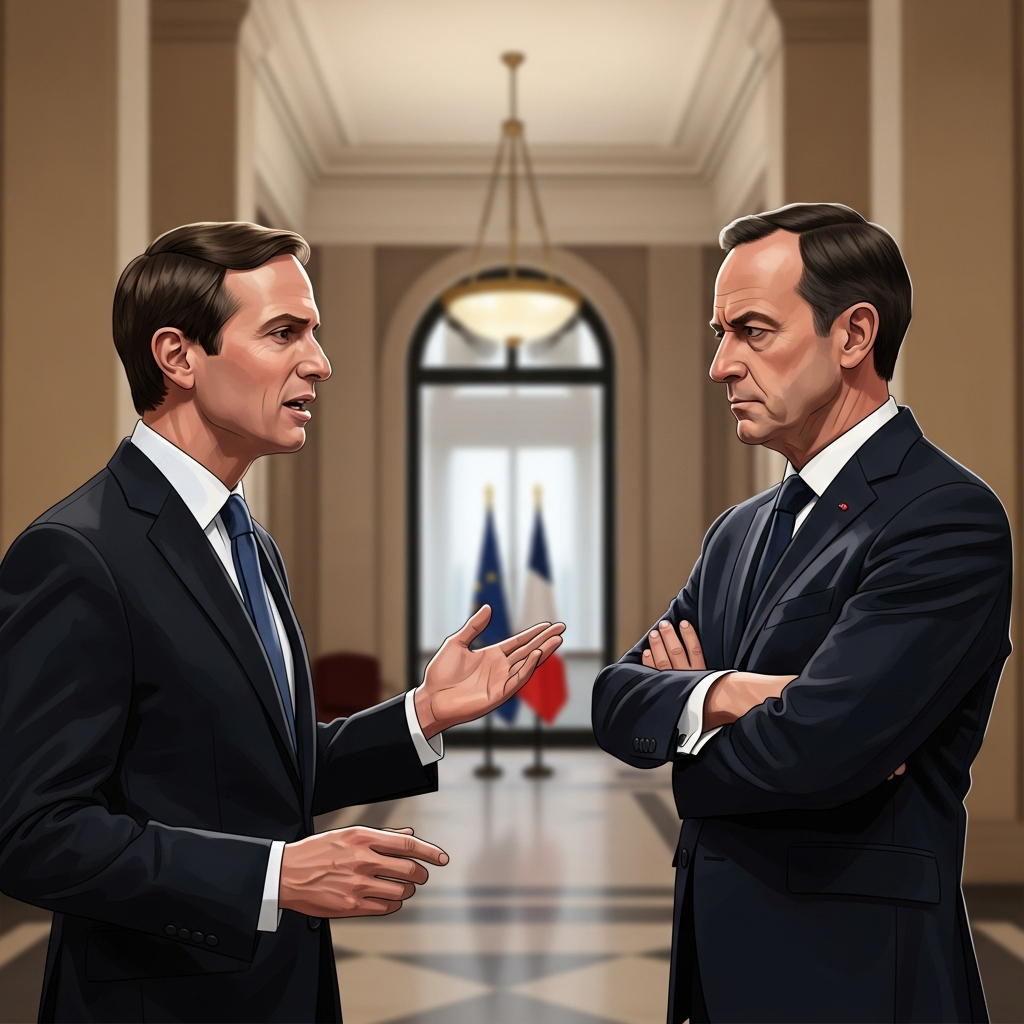
In an unprecedented diplomatic move, France has barred the US ambassador, Charles Kushner, from direct access to its government ministers. This significant escalation in tensions stems from Kushner’s repeated failure to attend official summonses by the French Foreign Ministry, most recently concerning controversial US comments on the death of a French far-right activist. The decision underscores a “serious freeze” in relations between two long-standing allies, highlighting a profound disagreement over diplomatic protocol and perceived interference in domestic affairs. This development sends a strong signal about France’s resolve to protect its national sovereignty against external commentary.
Diplomatic Fallout: Why France Imposed the Ban
The immediate catalyst for France’s stern action was Ambassador Charles Kushner’s non-appearance at a crucial meeting. French Foreign Minister Jean-Noël Barrot had formally summoned Kushner to address comments made by the US State Department. These statements, reposted by the US embassy in Paris, concerned the death of Quentin Deranque, a young far-right activist. French officials viewed the US remarks as an unacceptable intrusion into their national debate.
According to a French foreign affairs ministry statement, Kushner “did not appear” for the scheduled meeting. This disregard for diplomatic summonses led Minister Barrot to request that Kushner “no longer have direct access to members of the French government.” This means the ambassador is now unable to conduct private meetings with ministers or engage in back-channel conversations vital for diplomacy.
The Quentin Deranque Incident: A Catalyst for Tension
The diplomatic storm erupted following the tragic death of Quentin Deranque, 23, in Lyon. Deranque died from severe head injuries on February 12 after a brawl involving radical left and far-right supporters. This incident deeply shocked France, prompting widespread anger. Authorities have since charged six people with murder, with 11 arrests made. A parliamentary assistant to a leftwing MP has also been charged with complicity.
The tragedy became a flashpoint for international controversy. The US State Department’s Counterterrorism Bureau posted on X (formerly Twitter) that reports of Deranque being “killed by left-wing militants, should concern us all.” The post further stated that “Violent radical leftism is on the rise and its role in Quentin Deranque’s death demonstrates the threat it poses to public safety.” France strongly condemned these comments as “interference,” rejecting any external exploitation of the tragedy.
US State Department’s Controversial Stance Sparks Outrage
The US embassy’s re-sharing of the State Department’s X post ignited French indignation. French Foreign Minister Barrot publicly criticized the commentary as “interference.” He emphatically stated, “We reject any instrumentalisation of this tragedy… for political ends.” Barrot added a pointed critique, remarking, “We have no lessons to learn, particularly on the issue of violence, from the international reactionary movement.”
France interpreted the US statements as taking sides in a domestic debate unrelated to American interests. While the US embassy’s posts used careful language, France saw them as an outsider commenting on internal affairs. When France sought a direct explanation from Ambassador Kushner, it was met with his absence. This perceived silence and disrespect further fueled France’s decision to restrict his access.
Kushner’s Pattern of Diplomatic “No-Shows”
This is not the first time Ambassador Charles Kushner has snubbed a French summons. In August 2025, the French Foreign Ministry called him to a meeting after he published an open letter to President Emmanuel Macron. In the letter, Kushner criticized what he termed France’s “lack of sufficient action” in confronting antisemitism. He failed to appear for that meeting as well, citing personal commitments.
On that occasion, the US Chargé d’affaires attended in Kushner’s absence. This repeated pattern of non-attendance, coupled with public comments on sensitive French domestic issues, has been interpreted by France as an “apparent misunderstanding of the basic expectations of an ambassador’s mission.” Such actions challenge established diplomatic protocols and mutual respect.
Broader International Ramifications and Italian Spat
The death of Quentin Deranque has also sparked broader international tensions beyond the US-France relationship. Italy’s right-wing Prime Minister Giorgia Meloni described Deranque’s death as “a wound for all of Europe.” She condemned “a climate of ideological hatred sweeping several nations.” President Macron, in turn, criticized Meloni for interfering in French domestic affairs, echoing Barrot’s sentiments.
These international comments underscore the sensitivity of the incident within France. The French government firmly believes that internal tragedies should not be exploited for political ends by external actors. The simultaneous rebukes to both the US and Italy highlight France’s determination to maintain its sovereignty in addressing domestic issues.
The Ambassadorship Under Scrutiny: Charles Kushner’s Background
Charles Kushner, father of Donald Trump’s son-in-law Jared Kushner, was appointed as US ambassador to France. His diplomatic career has been marked by controversy. In 2005, Kushner pleaded guilty to 16 counts including tax evasion, making false statements, and witness tampering. The witness tampering charge famously involved hiring a sex worker to seduce his brother-in-law, who was cooperating with prosecutors.
He served 14 months in prison and received a presidential pardon from Donald Trump in 2020. Three years after his pardon, Kushner donated $1 million to Trump’s Make America Great Again Inc Super PAC. This background has drawn scrutiny to his appointment and conduct as an ambassador, particularly when diplomatic decorum is paramount.
Impact on US-France Relations
While the French ministry clarified that Charles Kushner can still carry out his duties and engage in “diplomatic exchanges” with officials, the ban is a significant blow. It effectively renders him a “figurehead with no function” in terms of direct governmental influence. An ambassador’s primary role is to foster robust communication and build relationships at the highest levels of the host government.
This unprecedented move signals a “serious freeze” in relations. The long-standing alliance between France and the United States, founded on shared history and values, relies fundamentally on mutual respect. France now feels disrespected by Kushner’s actions and the perceived interference. This situation inevitably weakens the United States’ ability to effectively represent its interests in France. It curtails the ambassador’s capacity to influence decisions or hear crucial explanations directly from French ministers. The incident serves as a stark reminder of the delicate nature of international diplomacy.
Frequently Asked Questions
What led France to ban US Ambassador Charles Kushner from government meetings?
France imposed the ban primarily due to Ambassador Charles Kushner’s repeated failure to attend official summonses from the French Foreign Ministry. The most recent instance involved his absence from a meeting requested by Foreign Minister Jean-Noël Barrot. This meeting was called to discuss controversial US State Department comments concerning the death of French far-right activist Quentin Deranque, which France deemed as “interference” in its domestic affairs. His prior absence in August 2025 over criticism of France’s stance on antisemitism also contributed to this decision.
Who is Charles Kushner and what is his diplomatic background?
Charles Kushner is the father of Jared Kushner, former President Donald Trump’s son-in-law. Prior to his ambassadorship, he was a real-estate magnate. His past includes a 2005 conviction for tax evasion, making false statements, and witness tampering, for which he served 14 months in prison before being pardoned by President Trump in 2020. His diplomatic experience is relatively recent, and his tenure as US ambassador to France has been marked by public criticism of the French government and non-adherence to diplomatic protocols.
What are the broader implications of France’s ban on US-France diplomatic relations?
The ban signifies a “serious freeze” in US-France diplomatic relations, challenging a long-standing alliance. While not a complete rupture, it severely limits Ambassador Kushner’s ability to directly engage with French ministers, effectively making him a “figurehead” for high-level government interactions. This situation diminishes the United States’ diplomatic influence in France, as critical discussions and negotiations will bypass the ambassador. France views the ban as a necessary response to perceived disrespect and interference, underscoring the importance of adherence to diplomatic etiquette and non-interference in sovereign domestic matters.