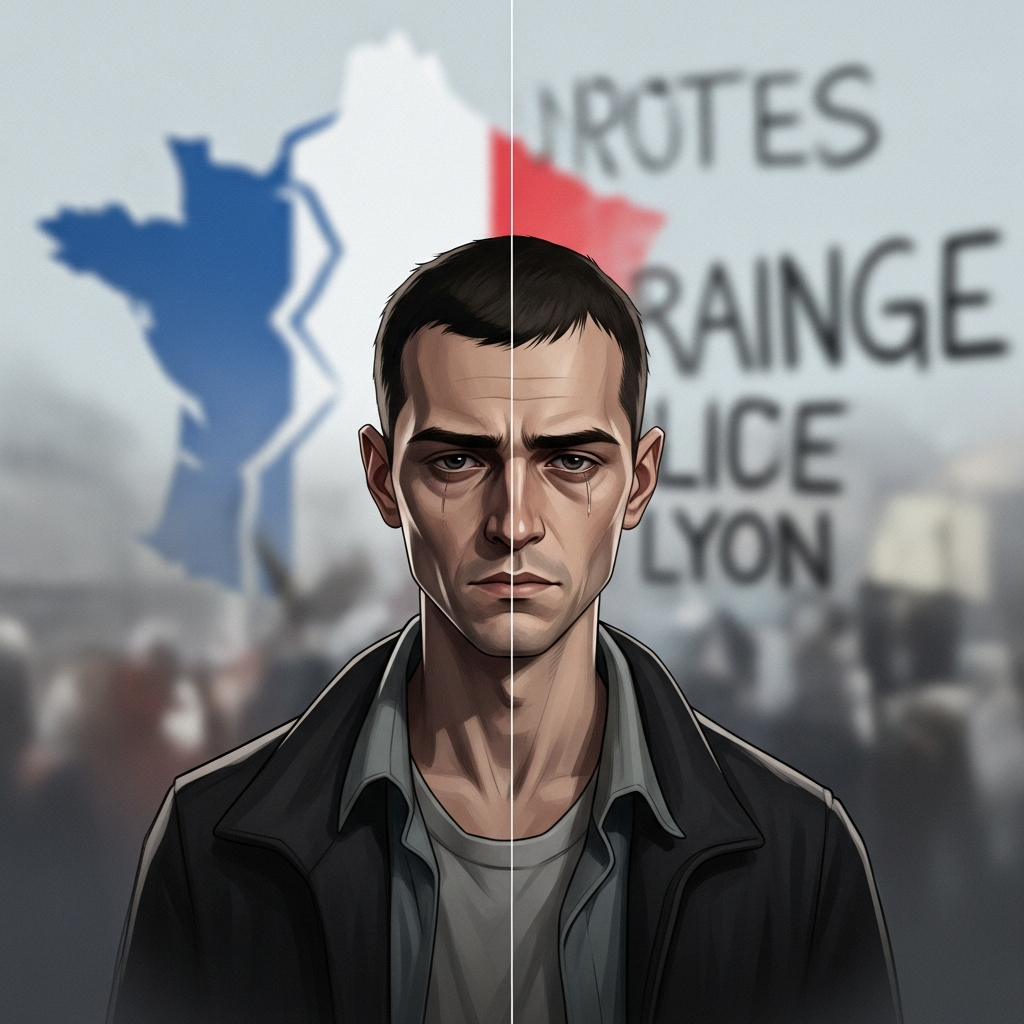
In a grim turn that has sent shockwaves through the French political landscape, the fatal beating of a far-right activist in Lyon has ignited a fierce national debate over political violence and escalating extremism. The death of 23-year-old Quentin Deranque on February 12th has not only devastated his family but has also thrust France into a period of intense polarization, with profound implications for upcoming elections and the very fabric of its democratic discourse.
This tragic event, likened by some to a “Charlie Kirk moment” for France, has forced a critical reckoning for both the hard left and the far right. While the comparison to American populist dynamics might be imperfect, the incident undeniably marks a pivotal point, threatening to further destabilize France’s already tense political environment. Investigations are ongoing, but the arrest of suspects allegedly linked to hard-left groups has dramatically intensified calls for accountability and sparked widespread accusations across the political spectrum.
The Tragic Incident in Lyon: A Catalyst for Tension
Quentin Deranque, a conservative Catholic student and fervent nationalist, succumbed to fatal head injuries on February 12th after a brutal assault in Lyon. The attack occurred on the fringes of a protest targeting the hard-left France Unbowed (LFI) party, near the Sciences Po university. Reports suggest Deranque was set upon by multiple masked and hooded individuals, believed to be members of the Antifa-aligned Young Guard. This group, founded by LFI MP Raphaël Arnault, had reportedly provided security for LFI in the past and was banned the previous year. Lyon, historically a hotbed of far-right activism, has seen a recent surge in militant left-wing organizations, leading to increasingly violent street clashes.
The immediate aftermath saw a rapid escalation of political rhetoric. The incident quickly became a national focal point, broadcast widely and sparking outrage. Initial details pointed to a fractured skull and fatal brain injuries as the cause of death, prompting a homicide investigation by the Lyon public prosecutor’s office. This act of violence, rare in its deadly outcome for recent French political clashes, has laid bare the deep-seated animosities festering between France’s extreme factions.
Accusations and Political Blame Game
The death of Deranque swiftly plunged France into a heated blame game, amplifying existing ideological divides. Right-wing and far-right opponents were quick to point fingers at France Unbowed and its veteran leader, Jean-Luc Mélenchon. Critics accused the party of fostering an environment of violence and tension through its combative rhetoric and far-left policies, which notably include strong criticisms of Israel. “LFI KILLS” stickers and graffiti appeared at the site of the attack and during subsequent rallies, directly linking the party to Deranque’s demise.
Mélenchon, a three-time presidential candidate, vehemently denied his party’s culpability. He stated unequivocally, “We have absolutely nothing to do, either directly or indirectly, with the death of this young Deranque.” However, the credibility of this denial was challenged when it was confirmed that one of the 11 individuals arrested was Jacques-Elie Favrot, a parliamentary aide to LFI lawmaker Raphaël Arnault. Another former aide, Adrian Besseyre, was also implicated. Arnault promptly announced the termination of his aide’s contract, underscoring the severity of the connection. Seven suspects currently face preliminary charges, including intentional homicide, aggravated violence, and criminal conspiracy, with most reportedly linked to the Young Guard Antifa cell.
National Rallies and Divided Sentiments
Days after Deranque’s death, approximately 3,000 to 3,200 people participated in a tense march through Lyon, honoring the fallen activist. The demonstration, organized by far-right and nationalist groups, began with a minute’s silence. Many attendees, some wearing face masks or dressed in black, carried white tulips, pictures of Deranque, and banners proclaiming “Justice for Quentin” and “The extreme left kills.” Chants such as “LFI complicit, Antifa murderers” and “Young Guard in prison, free the city of Lyon” echoed through the streets, reflecting the deep anger and blame directed at the hard left. Some specifically displayed stickers reading “Quentin, killed by Mélenchon’s militia.”
The rally drew a diverse crowd of traditionalist Catholics, nationalists, and far-right activists, including members of Collectif Némésis, an anti-migration feminist group Deranque was reportedly protecting during the attack. Despite calls from Lyon’s Green Party mayor, Grégory Doucet, to ban the rally over fears of violence, Interior Minister Laurent Nunez permitted it, citing the need to balance public order with freedom of expression. A significant police deployment was put in place. While the march concluded without major physical altercations, local officials reported investigating instances of Nazi salutes, racist, and homophobic slurs captured on video, highlighting the darker elements present. Conversely, some Lyon residents displayed signs from their windows stating “Lyon is antifa” or “Love is greater than hate,” showcasing the city’s starkly divided sentiments.
Crucially, Deranque’s parents, through their lawyer, chose not to participate in the demonstration. They expressed a profound wish for the event to proceed “without violence” and “without political statements,” seeking a focus on remembrance rather than political exploitation. Their plea underscored the personal tragedy at the heart of the national uproar.
Macron’s Appeal for Calm and Government Response
French President Emmanuel Macron swiftly appealed for calm from “everyone,” stressing that “In the Republic, no violence is legitimate” and “There is no place for militias, no matter where they come from.” He underscored the government’s commitment to firmness and responsibility, declaring a forthcoming meeting with ministers to comprehensively review violent activist groups linked to political parties. This signals a potential crackdown on such organizations, reflecting growing official concern over escalating political violence across France.
The incident’s international resonance also underscored its gravity. The US State Department labeled Deranque’s killing “terrorism” and attributed it to rising “violent radical leftism,” a characterization that prompted pushback from French officials who advocated for national unity and cautioned against foreign interference. Italian Prime Minister Giorgia Meloni described the killing as “a wound for all Europe,” leading Macron to advise her to refrain from interfering in French internal affairs. Diplomatic sources also reported the postponement of a high-level French-Italian summit, though a direct link to Deranque’s death remained unconfirmed. These international reactions highlight the broader European and global anxieties surrounding the rise of political extremism.
Lasting Impact on French Politics and Elections
The killing of Quentin Deranque has injected an explosive element into France’s already volatile political climate, particularly ahead of crucial municipal elections in March and the 2027 presidential race. The incident is being strategically leveraged by right-wing forces, with far-right National Rally leader Jordan Bardella advocating for a “common front” against Mélenchon’s party. While the National Rally advised its supporters to avoid Saturday’s rallies, it concurrently characterized the hard left as a significant danger to the nation, skillfully positioning itself as a voice of reason against perceived extremism.
The fallout has significantly fractured left-wing unity. Former French President François Hollande, a prominent figure from the mainstream Socialist Party, publicly declared an end to any future collaborations with Mélenchon’s party, stating, “The relationship with France Unbowed is over.” This marks a considerable shift, as the Socialist Party had previously allied with LFI in past elections. This incident is set to have lasting repercussions on French political dynamics and electoral strategies, potentially reshaping alliances and influencing voter sentiment for years to come. The challenge for Macron’s government and for all democratic institutions is to manage this escalating polarization and prevent further violence, ensuring that political disagreements do not devolve into tragic conflict.
Frequently Asked Questions
What are the key details surrounding Quentin Deranque’s death in Lyon?
Quentin Deranque, a 23-year-old far-right nationalist activist and conservative Catholic student, died on February 12th after sustaining fatal head injuries during a brutal assault in Lyon, France. The attack occurred near Sciences Po university, on the sidelines of a protest against the hard-left France Unbowed (LFI) party. He was reportedly beaten by multiple masked and hooded individuals, believed to be members of the Antifa-aligned Young Guard group. Eleven individuals have been detained in connection with the killing, with seven facing preliminary charges, including a parliamentary aide to an LFI lawmaker.
How has Deranque’s killing impacted French politics and upcoming elections?
Déranque’s death has dramatically polarized French politics, exacerbating tensions ahead of municipal elections in March and the 2027 presidential race. It has put the hard-left France Unbowed (LFI) and its leader Jean-Luc Mélenchon under intense scrutiny, with right-wing parties accusing them of fostering violence. This incident has led to a significant fracturing of left-wing unity, with former President François Hollande declaring an end to future alliances with LFI. The far-right National Rally is also leveraging the event to characterize the hard left as a national danger, aiming to gain political ground.
What broader issues of political violence and extremism does this incident highlight in France?
This tragic event underscores the dangerous escalation of political extremism and violence in France, particularly the clashes between far-left and far-right factions, often concentrated in cities like Lyon. It highlights the challenge for President Macron’s government, which has vowed to address “violent action groups linked to political parties” and ensure “no place for militias.” The incident has also drawn international attention, with the US State Department labeling it “terrorism” and attributing it to rising “violent radical leftism,” reflecting global concerns over political polarization and the erosion of democratic discourse.