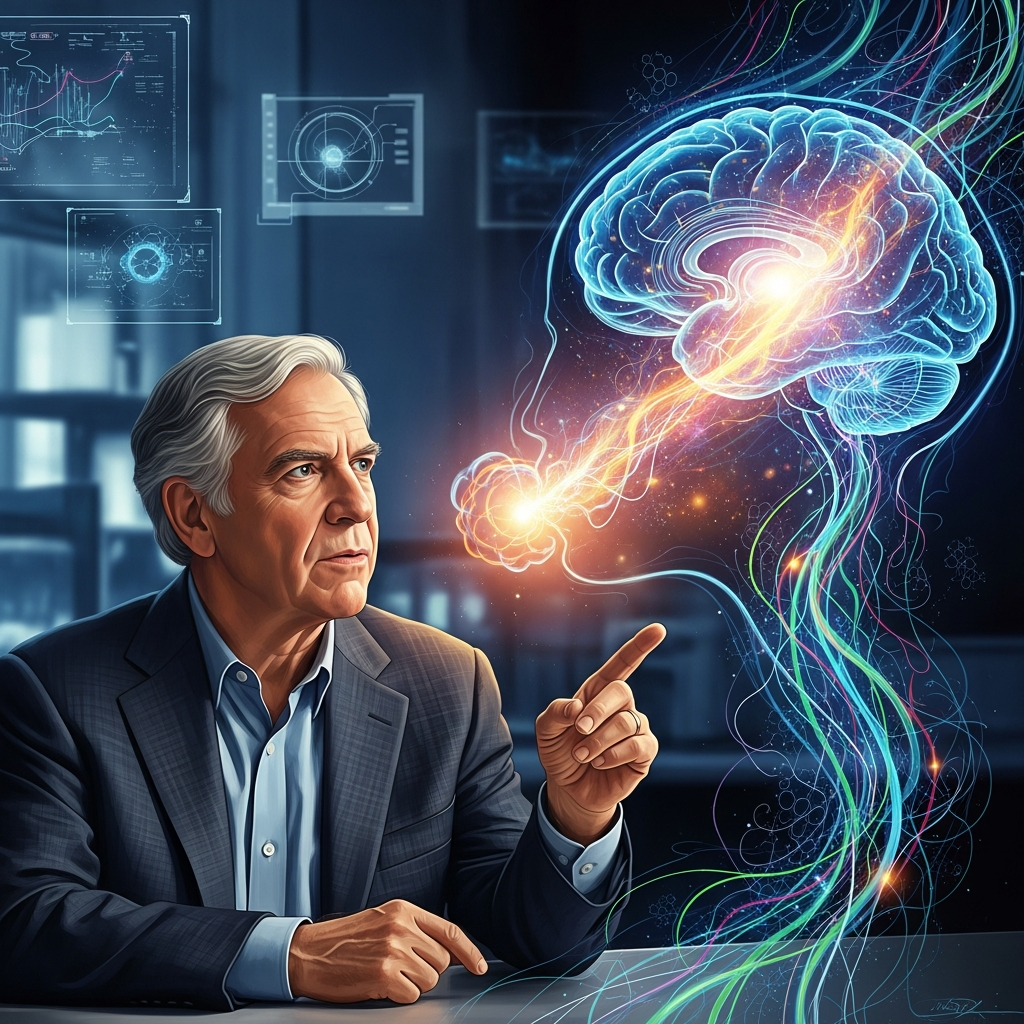
The enigma of consciousness remains one of humanity’s most profound scientific and philosophical challenges. What is this subjective inner world of thoughts, feelings, and perceptions that defines our existence? From ancient philosophers to modern neuroscientists, experts across diverse fields have grappled with its mysteries. Today, groundbreaking research, including insights from journalist Michael Pollan’s deep dive in “A World Appears,” is pushing the boundaries of what we understand about the mind, not just in humans, but across the biological spectrum, and even in the realm of artificial intelligence.
The Enduring Mystery of Consciousness: A Grand Challenge
Consciousness, specifically “phenomenal consciousness”—that subjective “what-it’s-like” inner sense, or qualia—is the core conundrum. It’s the feeling of seeing the color red, the warmth of love, or the pang of fear. For centuries, this internal experience has baffled thinkers. Why should living matter generate such rich, personal sensations? This question lies at the heart of what philosopher David Chalmers famously termed the “hard problem of consciousness”: how do physical processes in the brain give rise to subjective mental states?
The sheer diversity of approaches to this problem is astonishing. Over 350 theories attempt to explain consciousness, ranging from quantum mechanics to the entire cosmos. These theories broadly fall into several categories:
Dualism: Proposes that mental and physical realms are distinct substances.
Monism: Argues reality is composed of one fundamental “stuff.”
Materialism: The dominant scientific view, asserting only physical states are real, with mental states explained by them.
Idealism: Posits that the mental is fundamental, and physical reality derives from a cosmic mind.
Panpsychism: A middle ground, suggesting even fundamental particles possess some form of proto-consciousness.
Modern neuroscience overwhelmingly embraces materialism, seeking to map consciousness to specific brain circuits and neural activity. Yet, the “explanatory gap”—the leap from neurons firing to the feeling of happiness—persists. This ongoing quest to bridge the physical and the phenomenal drives much of the contemporary research.
Mapping the Mind: Leading Scientific Theories
In the pursuit of understanding, scientists have developed sophisticated, empirically testable theories. Michael Pollan’s exploration highlights two prominent models:
Integrated Information Theory (IIT): Views consciousness as identical to the intrinsic causal power structure of information. It suggests consciousness arises when a system has a high degree of integrated information, meaning its parts are highly interconnected and collectively form a unified experience.
- Global Neuronal Workspace Theory (GNWT): Proposes that consciousness emerges from the dynamic sharing of information among specialized brain areas. A “global workspace” makes information accessible to multiple cognitive processes, leading to conscious awareness.
- www.newscientist.com
- nautil.us
- www.theatlantic.com
- neurosciencenews.com
- www.medicalnewstoday.com
Beyond these well-established frameworks, new ideas continue to emerge. A novel “relativistic phenomenon” theory, proposed by physicists and philosophers, suggests consciousness is not an absolute property but exists “with respect to some observer.” It argues that our inability to detect consciousness in another’s brain from a third-person perspective is akin to observing from the “wrong cognitive frame of reference.” From a first-person perspective, direct internal measurements of neural activity manifest as phenomenal consciousness. This groundbreaking theory aims to dissolve the hard problem by using mathematical principles similar to those found in physics, proposing consciousness as a relational, rather than absolute, property.
Beyond the Human Brain: Sentience Across Species
Pollan’s journey into consciousness begins with a foundational question: what constitutes sentience, the basic feeling of being alive? His conversations with philosopher Paco Calvo and plant biologists Stefan Mancuso and František Baluška challenge conventional thinking. They contend that plants are sentient, capable of problem-solving, and can even be anesthetized, suggesting intelligence might not exclusively depend on neurons. This raises a provocative idea: perhaps life and consciousness are far more intimately intertwined than our brain-centric view typically allows.
This challenge to anthropocentrism is echoed in studies of animal consciousness, particularly regarding their understanding of death. Traditionally, animals were thought to perceive death merely as immobility, lacking a conceptual grasp of mortality. However, a growing field of comparative thanatology suggests otherwise. Chimpanzees exhibit behaviors akin to grief, such as attentive grooming and subdued reactions after a death. Elephants have been documented performing what appear to be intentional burials, covering their dead calves. A mother dingo carrying her deceased pup for days, or an orca carrying her dead calf for 17 days, further suggest a deep emotional and cognitive response to loss.
Scientists now propose a “minimal concept of death,” involving an understanding of irreversibility and non-functionality—recognizing that a being no longer performs expected actions and this state is permanent. While a full human understanding of death, encompassing universality and personal mortality, might remain unique, many animals likely possess this minimal, yet profound, comprehension. This evolving understanding prompts a re-evaluation of our ethical responsibilities towards other species.
The Embodied Mind: Emotions and Survival
The journey into consciousness also delves into the role of the body. Karl Friston’s ‘free energy’ principle offers a compelling framework, suggesting all organisms act like glorified thermostats, constantly monitoring their internal and external environments. They strive to reduce “felt uncertainty” by predicting future events and adapting to deviations from their set points. In this view, consciousness itself could be interpreted as “felt uncertainty”—the constant drive to maintain a stable internal state.
Neuroscientist Antonio Damasio and psychoanalyst Mark Solms further emphasize the ’embodied’ nature of emotions. They argue that feelings, such as pain, pleasure, cold, or hunger, are rooted in bodily sensations and processed in the upper brainstem—a brain region that evolved very early. This suggests consciousness doesn’t solely depend on the neocortex, our brain’s outermost layer, which developed much later. Instead, consciousness might be more fundamentally linked to an organism’s basic need for internal stability, with information about bodily states relayed through interoceptive neurons in the brainstem. This ancient origin implies consciousness is integral to survival, a deep-seated mechanism for navigating an ever-changing world.
Decoding Consciousness in Brain Injury: The Ian Berg Story
The question of consciousness takes on particular urgency when examining patients with severe brain injuries. The 39-year journey of Ian Berg, initially diagnosed in a “vegetative state” after a 1986 accident, exemplifies the evolving scientific and ethical landscape. For decades, such patients were considered devoid of thought or feeling. Yet, Ian’s mother fiercely believed in his awareness, observing his laughter at jokes, defying conventional medical wisdom.
Crucially, scientific understanding has progressed significantly. The “persistent vegetative state” was defined in 1972, followed by the formal recognition of the “minimally conscious state” in 2002, acknowledging flickers of potential awareness. A revolutionary breakthrough came in 2006 when Adrian Owen’s fMRI research revealed “covert awareness” in a vegetative patient. Despite no outward response, the patient’s brain activity mirrored that of healthy individuals imagining tasks like playing tennis, proving language comprehension and even communication via “yes/no” responses.
Ian Berg’s case eventually intersected with these discoveries, confirming his “minimally conscious” state and showing brain activity in response to stimuli. These findings highlight that tens of thousands of unresponsive brain-injury patients might be silently conscious, leading to profound ethical questions about neglect and life support decisions. While treatments remain limited, advancements in brain monitoring (fNIRS, EEG) and future brain implant technologies offer hope for detection and communication, profoundly reshaping our understanding of consciousness, even “this side of death.”
The Final Moments: Brain Activity and Near-Death Experiences
What happens to consciousness as life fades? This deeply personal question has long been shrouded in mystery, often attributed to spiritual phenomena. However, recent scientific studies are beginning to shed light on brain activity during the dying process, offering potential physiological explanations for vivid near-death experiences (NDEs). Reports of NDEs often include visions of deceased loved ones, bright lights, out-of-body sensations, and feelings of peace.
A study from the University of Michigan observed a significant surge in brain activity in the temporoparietal junction (TPJ) region of patients shortly before death. The TPJ is a critical area involved in dreaming, hallucinations, and altered states of consciousness. This “neural surge” suggests a burst of “covert consciousness” can occur during the final moments. While it doesn’t confirm what comes after death, this heightened brain activity provides a scientific correlate for the profound subjective experiences reported in NDEs. It implies the brain may “fire off in ways that can be hallucinatory” as it attempts to “wake itself up,” offering a reassuring perspective on the dying process and the complex interplay between the body and mind at life’s end.
Artificial Consciousness: A Future Frontier or Fundamental Flaw?
The rapid advancement of artificial intelligence (AI) has reignited the ancient debate about consciousness. Could AI systems, like large language models, eventually become conscious? This question brings the diverse theories of consciousness into sharp relief.
Most AI experts, often adhering to materialist views, subscribe to computational functionalism, believing that AI consciousness is inevitable once cognitive functions are precisely reproduced. Some materialist theories, however, emphasize embodied and enactive approaches, suggesting AI would need to interact with the world through a physical body to develop genuine consciousness. Damasio and Solms are actively attempting to engineer conscious AI by endowing it with preferences (e.g., maintaining stable operating temperatures) and simple goals (e.g., reducing uncertainty) before embedding it in a robot.
However, skepticism persists. Michael Pollan trenchantly questions whether current disembodied neural networks can ever truly experience emotions like fear, desire, or disgust, which he argues are deeply anchored in bodily sensations. He challenges AI researchers to remove all human-generated text about consciousness from AI training datasets to see if these systems could still convincingly discuss the topic. The “relativistic phenomenon” theory, with its emphasis on internal measurement and cognitive frames, also suggests specific conditions that might need to be met for AI to manifest phenomenal consciousness. Without a generally accepted theory of consciousness, and given humanity’s propensity to attribute agency to inanimate objects, definitively knowing if an AI has achieved consciousness remains an immense challenge.
Frequently Asked Questions
What are the leading scientific theories attempting to explain consciousness?
Scientific understanding of consciousness is actively evolving, with several prominent theories seeking to explain its origins and mechanisms. Two widely discussed models are Integrated Information Theory (IIT), which posits consciousness arises from integrated information within a system, and Global Neuronal Workspace Theory (GNWT), suggesting consciousness emerges from widely shared information in the brain. A novel “relativistic phenomenon” theory also proposes consciousness is not an absolute property but a relational one, arising from specific physical measurements within a cognitive system’s own frame of reference, offering a new perspective on the “hard problem.”
How has scientific understanding of consciousness in patients with severe brain injury evolved?
The medical understanding of consciousness in severely brain-injured patients has dramatically advanced. Initially, conditions like a “vegetative state” were thought to indicate a complete absence of awareness. However, research identified “minimally conscious states” and, more recently, “covert awareness.” Groundbreaking fMRI studies demonstrated that some unresponsive patients, like Ian Berg, could exhibit brain activity indicative of comprehension and even communication, despite no outward signs. This has shifted clinical approaches, highlighting the need for advanced diagnostic tools and raising crucial ethical considerations for patient care and end-of-life decisions.
Can artificial intelligence (AI) ever achieve genuine consciousness according to current research?
The potential for AI consciousness is a highly debated topic. Many AI experts, particularly those with materialist philosophical leanings, believe it’s achievable once advanced AI systems can replicate complex cognitive functions. Researchers are exploring “embodied AI” approaches, attempting to instill basic drives and goals into AI agents to simulate the bodily sensations thought to underpin human emotions. However, skeptics, including Michael Pollan, argue that without a physical body to anchor emotions like fear or desire, AI may never replicate the subjective, embodied aspects of human consciousness. The lack of a unified definition of consciousness makes definitively proving or disproving AI consciousness a formidable obstacle.
Conclusion
The quest to understand consciousness is a sprawling, interdisciplinary endeavor that continues to challenge our deepest assumptions about life, intelligence, and reality itself. From Michael Pollan’s personal exploration into plant sentience and embodied emotions, to the cutting-edge theories attempting to bridge the “explanatory gap,” and the profound implications for patients with brain injuries and the future of AI, science is constantly redefining the boundaries of awareness. While the “hard problem” may persist, each new discovery, each new theory, brings us closer to unraveling the ultimate mystery of what it means to be conscious, potentially revealing that the intricate dance of subjective experience is far more widespread and nuanced than we once imagined, truly impacting our understanding of life this side of death.