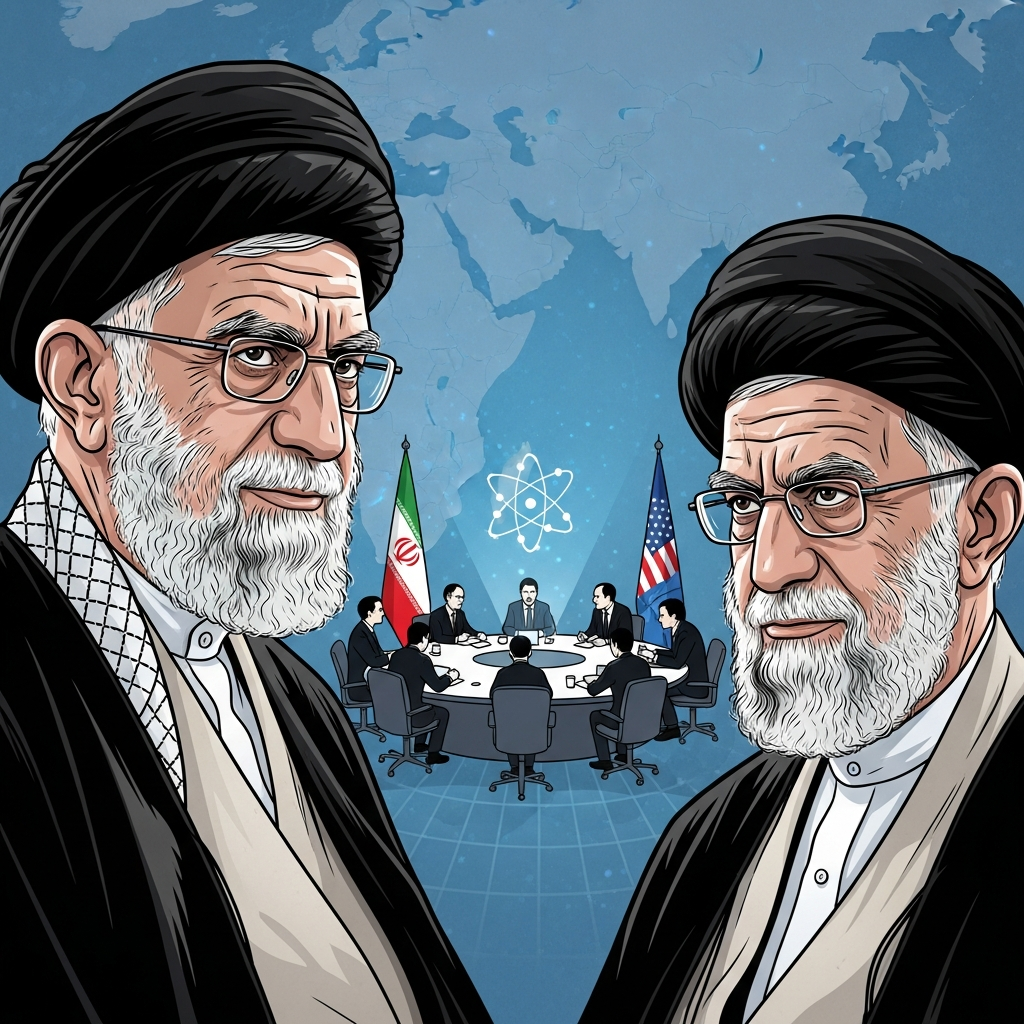
Geopolitical tensions simmer between Tehran and Washington as Iran’s Supreme Leader, Ayatollah Ali Khamenei, maintains an unyielding stance against the United States. This firm position persists even as diplomats engage in critical indirect nuclear talks. While Iran’s chief diplomat suggests “guiding principles” have been agreed upon, the supreme leader’s rhetoric casts a shadow of skepticism over any meaningful rapprochement, highlighting the complex chasm dividing the two nations. This article delves into the latest diplomatic dance, the stark contrasts in messaging, and the military posturing defining the future of US-Iran relations.
Khamenei’s Defiant Message Amidst Diplomacy
On February 16, 2026, the 86-year-old Ayatollah Ali Khamenei delivered a powerful address, reaffirming Iran’s “strategy of resistance.” He explicitly rejected US demands regarding Iran’s nuclear energy program, deeming the call for “zero enrichment” as “foolish.” Khamenei asserted Iran’s inherent right to develop nuclear energy for peaceful purposes, aligning with its adherence to the nuclear Non-Proliferation Treaty (NPT). His comments underscored a deep-seated mistrust, accusing the US of continuous attempts to undermine Iranian sovereignty.
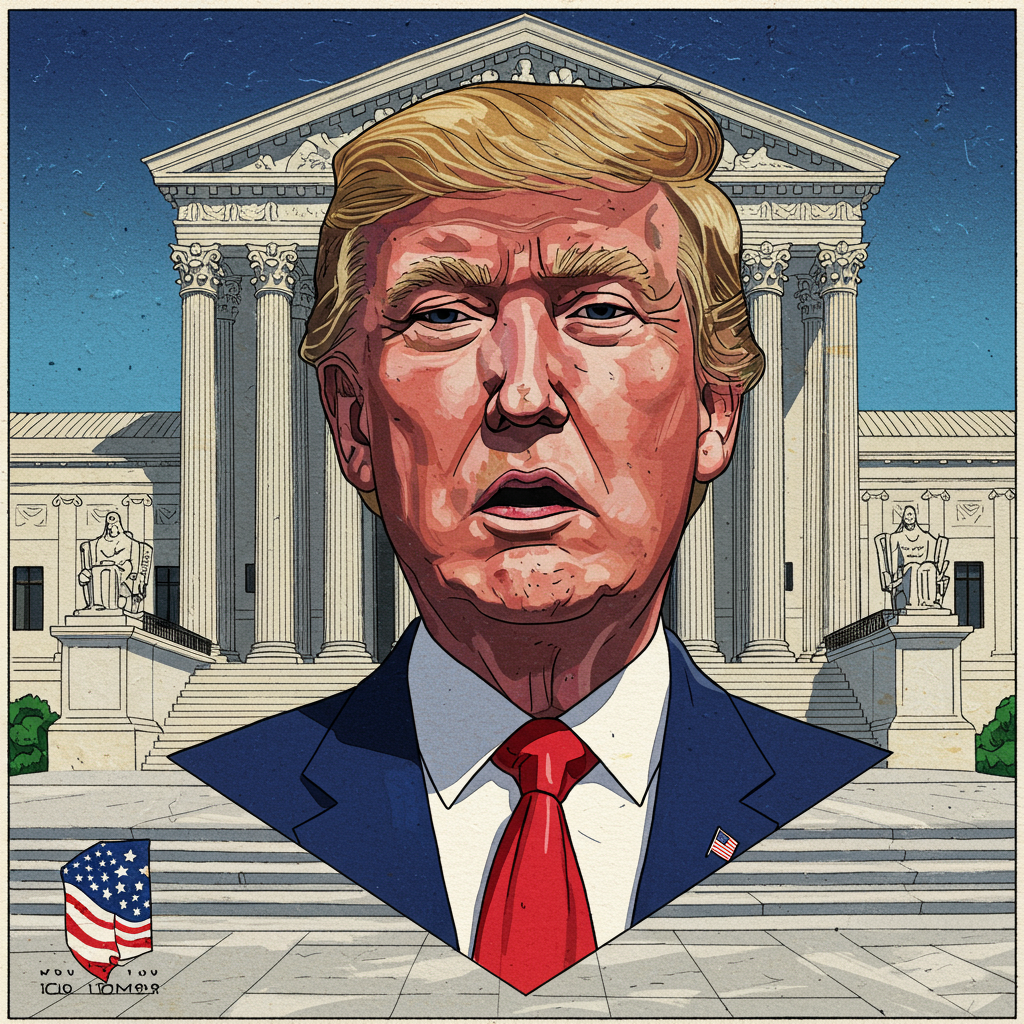
Khamenei notably referenced former US President Donald Trump’s prior admission that the US had tried and failed to topple Iran’s theocratic government since the 1979 Islamic Revolution. “This is a good confession. You will not be able to do this either,” Khamenei retorted, dismissing any future attempts at regime change. He further employed religious symbolism, drawing parallels between current American leaders and historical figures who opposed Shia Muslim imams over 1,350 years ago. This served to powerfully reject any notion of “pledging allegiance to corrupt leaders” like those he perceives in power in America today.
Navigating the Nuclear Negotiations: Progress and Red Lines
Despite Khamenei’s hardline rhetoric, diplomatic channels remain open. Iranian Foreign Minister Abbas Araghchi, after a round of indirect talks with US representatives in Geneva, reported “good progress.” He stated that “very serious discussions” in a “constructive atmosphere” had led to “some agreements and some guiding principles,” with a document anticipated for drafting. The Iranian negotiating team, mediated by Oman, conveyed Tehran’s seriousness about these talks, primarily aiming for the lifting of harsh US sanctions. These sanctions were reimposed after the Trump administration unilaterally withdrew from the 2015 nuclear deal (Joint Comprehensive Plan of Action or JCPOA) three years prior.
However, the US, represented by special envoy Steve Witkoff and Jared Kushner, maintained a firm position. US Vice President JD Vance acknowledged some progress, but emphasized that “certain red lines” remain unacknowledged by Tehran. Washington insists on zero uranium enrichment within Iran, the handover of highly enriched uranium stockpiles (reportedly buried after US airstrikes in June), and limitations on Iran’s missile program. Furthermore, the US demands an end to Iran’s support for its regional “axis of resistance” groups in Lebanon, Iraq, Yemen, and Palestine. Iran vehemently rejects these as “red lines,” deeming them infringements on its rights and national security.
Economic Leverage and Counter-Proposals
The economic impact of sanctions heavily influences Iran’s negotiation strategy. The Iranian rial recently depreciated to near an all-time low after the Geneva talks concluded. Iran’s Deputy Foreign Minister Hamid Ghanbari suggested offering the Trump administration “deals in areas with high economic output that can be achieved quicker.” These proposals included selling energy to the US, engaging in joint oil and gas field ventures, or even purchasing aircraft from the US. Such overtures aim to integrate the US into potential economic benefits of any agreement, offering tangible incentives for sanctions relief.
Meanwhile, the US continues to target Iran’s “ghost fleet” of ships, which sell oil—primarily to China—in defiance of sanctions. Threats of 20% tariffs on countries trading with Iran further underscore Washington’s economic pressure tactics. In response, Iran’s Supreme National Security Council secretary, Ali Larijani, met with Russian Energy Minister Sergey Tsivilyov to explore new energy agreements, signaling Iran’s proactive approach to mitigating sanctions’ impact. Iranian President Masoud Pezeshkian has also consistently affirmed that Tehran is “absolutely not seeking nuclear weapons” and remains open to verification, while asserting its right to use nuclear science for medical, industrial, and agricultural advancement.
Escalating Military Posturing and Regional Tensions
Beyond the diplomatic table, military developments paint a picture of heightened regional tensions. The US continues to amass military assets, deploying a second aircraft carrier, the USS Abraham Lincoln, and positioning F-35s and F-18 fighter jets with air defense systems in multiple countries. This build-up aims to counter potential Iranian missile and drone attacks. In a display of defiance, Iran’s Islamic Revolutionary Guard Corps (IRGC) staged military exercises in the strategic Strait of Hormuz, reportedly closing parts of the vital waterway for several hours. IRGC navy chief Alireza Tangsiri threatened to close the strait, through which roughly 20% of global oil and gas supplies flow, if Iranian leaders order it.
Khamenei himself boasted of Iran’s capability to “sink” a US aircraft carrier and “slap” the world’s largest military to the ground. These threats come against a backdrop of a 12-day conflict in June, during which Israel launched surprise strikes and the US bombed three Iranian nuclear sites. The International Atomic Energy Agency (IAEA) Director Rafael Grossi is slated to lead any future inspection missions, underscoring the critical role of international oversight. Experts like Ali Vaez, director at the International Crisis Group, note the rapid conclusion of these recent talks suggests either a lack of patience or “gaps are simply too large to bridge,” casting a pessimistic outlook on quick resolutions, especially given the two and a half years it took to negotiate the 2015 deal.
Expert Perspectives and the Path Forward
The contrasting narratives from Geneva to the Strait of Hormuz highlight the immense challenges ahead. Iranian newspapers reflected this duality, with headlines like “Power from Geneva to the Strait of Hormuz” and “Iran is not Venezuela,” showcasing a mix of defiance and perceived strength. While some US and Israeli officials, such as Senator Lindsey Graham and former Israeli defense minister Yoav Gallant, continue to advocate for military action or regime change, Khamenei dismisses these threats, drawing on historical precedent of failed attempts to dismantle the Islamic Republic.
Ali Vaez suggests that agreement on the nuclear front might be more achievable, partly because Iran’s nuclear program has been “degraded” since the June war. He notes Iran has not spun a single centrifuge since that conflict, potentially making “zero enrichment for a period of time” more palatable. However, Vaez predicts Iran would likely offer only “superficial concessions” on non-nuclear issues, falling short of a “grand bargain capitulation” the US might expect. The deep-seated mistrust, coupled with unyielding “red lines” from both sides, indicates that a comprehensive diplomatic resolution will require significant patience, flexibility, and a monumental shift in strategic calculations from both Tehran and Washington.
Frequently Asked Questions
What are the main points of contention in the US-Iran nuclear talks?
The primary disagreements in the US-Iran nuclear talks revolve around several core issues. The US demands Iran cease uranium enrichment, hand over highly enriched uranium stockpiles, limit its ballistic missile program, and end support for regional proxy groups. Iran, conversely, rejects these as “red lines,” insisting on its right to civilian nuclear energy and enrichment, refusing to negotiate its missile capabilities, and demanding the complete lifting of US sanctions to achieve tangible economic benefits. The fundamental distrust between the two nations further complicates these issues.
Who are the key figures involved in the ongoing US-Iran nuclear discussions?
Key figures involved in these complex discussions include Iran’s Supreme Leader Ayatollah Ali Khamenei, who sets the overarching strategic direction, and Foreign Minister Abbas Araghchi, who leads the diplomatic team. On the US side, special envoy Steve Witkoff and Jared Kushner have acted as lead representatives. Other important figures include Omani Foreign Minister Badr bin Hamad al-Busaidi, who mediates the indirect talks, and Rafael Grossi, the director of the International Atomic Energy Agency (IAEA), responsible for potential future inspections. Experts like Ali Vaez of the International Crisis Group also provide critical analysis.
How do US sanctions impact Iran’s economy and its approach to nuclear negotiations?
US sanctions profoundly impact Iran’s economy, leading to a depreciation of its currency, the rial, and severely limiting its oil exports and international trade. This economic pressure is a central driving force behind Iran’s participation in nuclear negotiations, as it primarily seeks comprehensive sanctions relief to revitalize its economy and improve living standards. While Iran publicly maintains a defiant stance against external pressure, the economic realities compel it to seek agreements that can deliver tangible financial benefits, influencing its counter-proposals and willingness to engage in diplomacy despite ideological differences.
Conclusion
The current state of US-Iran nuclear talks is a delicate balance of contrasting rhetoric and tentative diplomacy. While Iranian diplomats report initial progress on “guiding principles,” Supreme Leader Khamenei’s unwavering hardline stance underscores profound ideological and strategic differences. Against a backdrop of escalating military maneuvers in the Strait of Hormuz and continuous economic pressure, the path to a comprehensive agreement remains fraught with challenges. Both nations appear determined to uphold their “red lines,” suggesting that any future resolution will require significant concessions and a monumental effort to bridge the deep chasm of distrust and competing interests. The international community watches closely, hoping for a breakthrough that could de-escalate regional tensions and foster greater stability in the Middle East.