The Washington Post, a venerated institution of American journalism, faces a period of profound uncertainty following widespread layoffs that have reshaped its newsroom. Amidst deep staff cuts impacting critical departments, executive editor Matt Murray asserts owner Jeff Bezos remains steadfastly dedicated to the publication’s future. However, a significant internal rift has emerged, with many journalists and readers questioning the viability of growth through contraction and expressing doubts about Bezos’s true commitment to the Post’s core mission. This challenging environment highlights the complex interplay between financial pressures, strategic leadership, and the enduring importance of independent journalism in the digital age.
Washington Post Undergoes Sweeping Staff Reductions
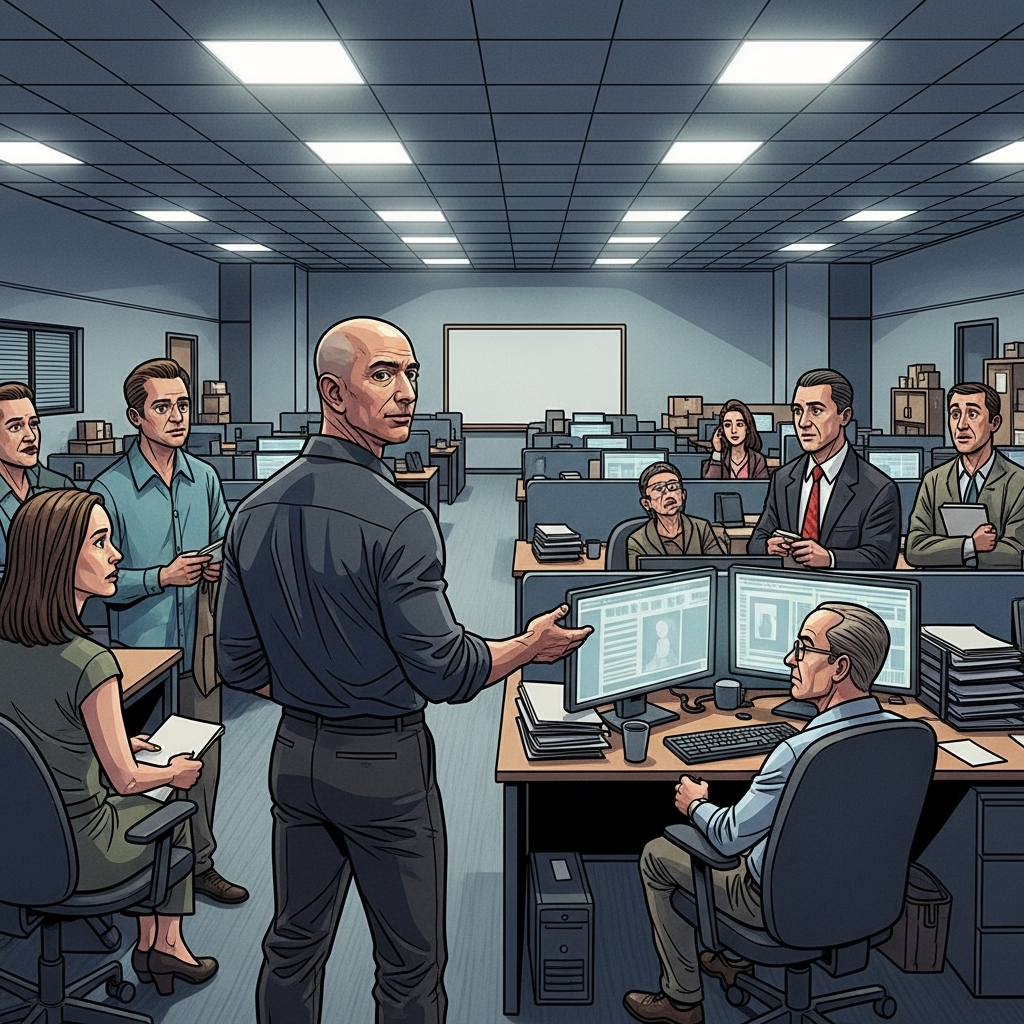
The recent wave of redundancies at The Washington Post represents one of the most substantial workforce overhauls in its modern history. Roughly one-third of the newspaper’s employees were let go, including over 300 journalists from the newsroom. These severe cutbacks have significantly impacted key areas, notably reducing coverage in foreign news, local reporting, and sports. For instance, reports indicate a substantial reduction in the technology beat, with more than half of its reporters laid off, and entire regional teams, such as those covering the Middle East, eliminated.
The scale of these layoffs, following previous buyouts and a reported $100 million loss in 2024, has triggered widespread alarm among staff and former leaders. Former executive editor Marty Baron, who led the Post during a period of resurgence, described the situation as a “darkest moment,” warning that the cuts would diminish the paper’s ambitions and compromise its capacity for essential ground-level reporting. Journalists launched an online campaign using the hashtag #SaveThePost, appealing directly to Bezos and senior management to reconsider the drastic reductions. The Post Guild, representing employees, issued a strong statement arguing that the institution cannot simply “cut its way to growth” and needs sustained investment to thrive.
Executive Leadership Defends Restructuring for Stability
Executive editor Matt Murray, who assumed his role around the time of these changes, has been the primary public voice defending the strategic overhaul. He emphasized that while the cuts were undeniably painful, they are a necessary “reset” designed to restore the Post’s long-term financial stability. Murray explained that the newspaper had become overly reliant on outdated media models and struggled to adapt to a sharp decline in digital traffic, exacerbated by industry shifts driven by artificial intelligence and evolving audience behaviors.
According to Murray, Bezos views the Post as needing to be “a bigger, relevant, thriving institution” and supports the current “reinvention” efforts. Murray portrayed Bezos as an owner who is “nothing but supportive” of getting the “house in order” for growth. Crucially, Murray also stressed Bezos’s non-interference in editorial decisions, describing him as “perfect” in not dictating coverage or responding to stories. He also defended publisher and CEO Will Lewis, whom Bezos personally appointed to turn the Post’s fortunes around. Murray credited Lewis with developing alternative revenue streams, investing in product technology, and strengthening the digital subscription business, despite acknowledging some experimental initiatives hadn’t fully succeeded.
Growing Rift and Scrutiny Over Bezos’s Influence
Despite reassurances from leadership, significant skepticism and frustration persist within the Post’s newsroom and among its readership. Many journalists openly question whether the deep staff reductions align with Bezos’s stated commitment to growth, fearing that diminished resources will undermine the paper’s capacity for critical investigative and political reporting. The perception of a growing divergence between management’s cost-cutting strategy and the newsroom’s desire for investment has intensified the internal rift.
Adding to the unease, Bezos’s influence over the Post has drawn increasing scrutiny from both staff and external observers. Critics point to several instances where Bezos’s actions or perceived priorities clashed with the paper’s journalistic independence or its traditional stance. For example, the Post experienced a significant loss of hundreds of thousands of subscribers following the reported decision in late 2024 to scrap a planned editorial endorsement of then-Vice President Kamala Harris. This move broke a long-standing tradition of endorsements and ignited debate over political interference.
Editorial Shifts and Perceived Political Leanings
Further concerns arose from a “sharp right turn” in the Post’s opinion section. Bezos’s announced refocus on “personal liberties and free markets” prompted a petition signed by over 400 staff members opposing the shift. This period also saw the departure of prominent liberal columnists and the hiring of conservative writers, leading some to accuse Bezos of steering the paper in a “MAGA-friendly direction.” Former President Donald Trump, who previously criticized the Post, reportedly praised Bezos’s changes, contributing to the perception of a shifting political alignment.
The perception of Bezos’s priorities has also been shaped by events beyond the newsroom. His notable silence following an FBI search of Post reporter Hannah Natanson’s home earlier this month, widely condemned as a threat to press freedom, drew sharp criticism from readers who flooded the Post’s comment sections. Simultaneously, Amazon MGM Studios reportedly paid $40 million for licensing rights to a Melania Trump documentary, and Amazon contributed to Trump’s ballroom project. Such actions, alongside Bezos’s vast and expanding personal real estate portfolio—which includes multi-million dollar properties in D.C., Seattle, New York, and Hawaii, and a recent move to Miami’s “billionaire bunker”—have fueled internal anxieties about whether his focus remains fully aligned with the Post’s journalistic mission, particularly amidst its financial struggles.
The Future of Washington Post Journalism
Despite the turbulent internal environment and external scrutiny, executive editor Matt Murray maintains that the Washington Post remains dedicated to aggressive, independent reporting. He affirmed the paper’s commitment to covering US politics “without fear or favor” and highlighted the continued production of “great work” and “scoops” by its staff. While acknowledging the hard calls made in various departments, including technology, Murray emphasized that some cuts aim for short-term stabilization rather than a permanent reduction in the Post’s journalistic ambitions.
The Post’s current challenges reflect broader struggles facing legacy media in adapting to the digital landscape. While Murray defended publisher Will Lewis’s efforts to develop new revenue streams and digital products, the stark contrast with rivals like The New York Times, which has reported significant digital subscription growth, underscores the urgency of the Post’s transformation. The institution stands at a critical juncture, attempting to balance commercial viability with its historic role as a guardian of democracy. The ability to maintain its journalistic influence and investigative depth while undergoing such dramatic restructuring will ultimately define its future trajectory.
Frequently Asked Questions
What prompted the significant layoffs at The Washington Post?
The recent layoffs at The Washington Post were primarily driven by substantial financial losses, including a reported $100 million deficit in 2024, and a sharp decline in digital traffic. Executive editor Matt Murray explained that the newspaper had become overly reliant on an older media model and failed to adapt to industry shifts, necessitating a “reset” to restore long-term stability and profitability. The goal is to re-evaluate its journalistic approach and business model to ensure survival in a changing digital landscape.
Where does The Washington Post’s leadership plan to focus its editorial resources moving forward?
Despite the widespread cuts, The Washington Post’s leadership plans to concentrate resources on areas where it believes it has clear authority and impact. Executive editor Matt Murray indicated a strategic focus on core beats such as politics, national security, science, technology, and business reporting. While some specialized areas, including foreign bureaus and local coverage, saw significant reductions, the aim is to consolidate efforts to maintain influence in key journalistic domains and strengthen the digital subscription business.
What are the key concerns raised by journalists and readers regarding Jeff Bezos’s ownership and the future of the Post?
Journalists and readers have raised several concerns about Jeff Bezos’s ownership amid the Post’s restructuring. Many question if “cutting its way to growth” is a viable strategy for a major news institution, fearing diminished resources will compromise investigative capacity. There’s also unease over perceived editorial shifts, such as the scrapped Kamala Harris endorsement and a “sharp right turn” in the opinion section, which have alienated readers and staff. Additionally, Bezos’s public silence on critical press freedom issues (like the FBI raid on a reporter) and his other business ventures, like the Melania Trump documentary, lead some to doubt his consistent commitment to the Post’s journalistic mission versus other interests.