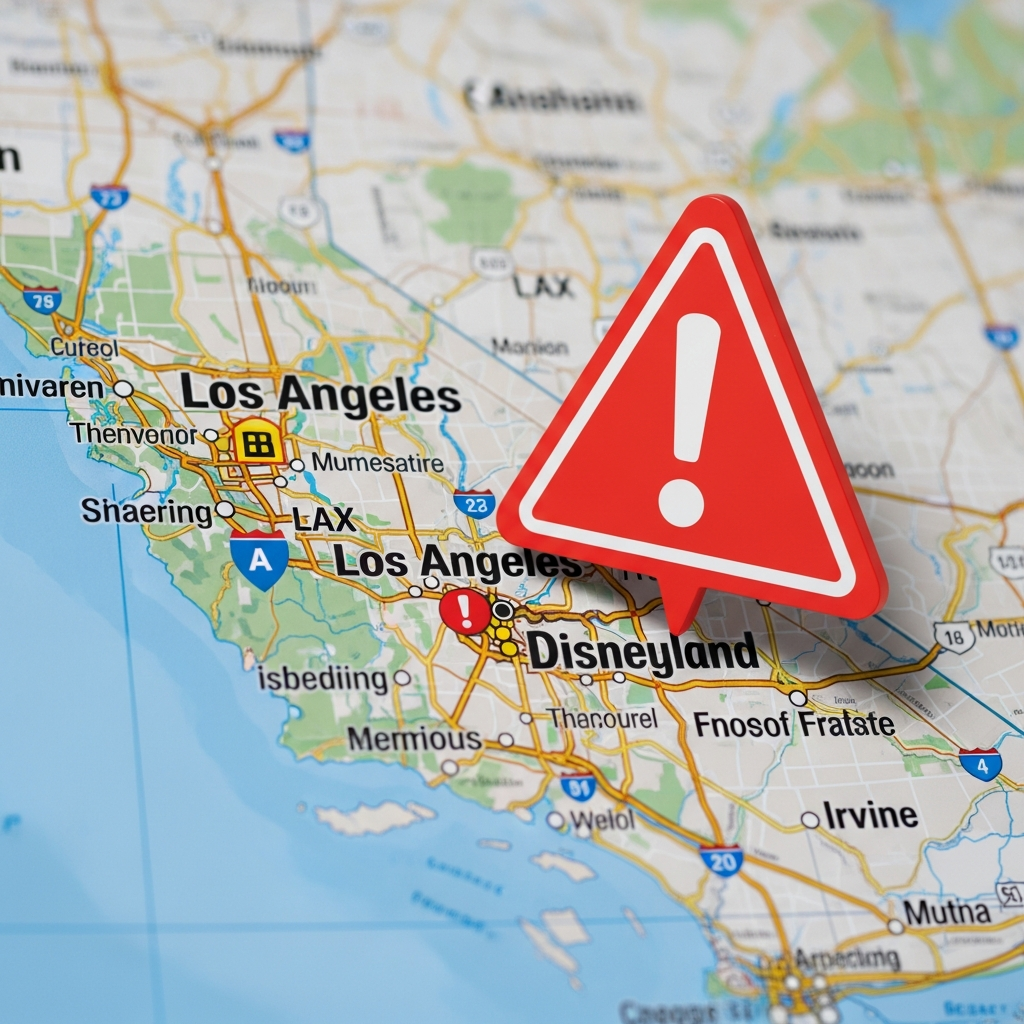
Southern California health officials have issued a critical public health alert after a confirmed measles case exposed thousands at high-traffic locations, including Los Angeles International Airport (LAX) and the Disneyland Resort. An international traveler, infectious with the highly contagious measles virus, moved through various popular venues in late January 2026, prompting immediate warnings and calls for public vigilance. This incident marks the second measles case in both Los Angeles and Orange Counties for 2026, coinciding with a significant nationwide surge in infections. Understanding the specific exposure sites, symptoms, and preventative measures is crucial for anyone who may have been present.
What Happened: The Confirmed Measles Case and Traveler’s Route
Los Angeles County health officials confirmed the latest measles infection, identifying it as the county’s second case of 2026. This case involves an international traveler who arrived in Southern California while contagious and subsequently visited several public locations across Los Angeles and Orange Counties. The rapid movement of the infected individual through densely populated areas underscores the ease with which measles can spread, especially among unprotected individuals. Health departments from both Los Angeles and Orange Counties, in collaboration with the Centers for Disease Control and Prevention (CDC), swiftly initiated contact tracing and public notifications.
Key Exposure Locations & Times Identified
The infectious traveler visited a range of prominent sites, establishing specific windows of potential measles exposure. If you or your family were at these locations during the specified times, it is vital to review the guidance provided by health officials.
LAX Terminal B (Tom Bradley International Airport): The traveler arrived on Viva Aerobus Flight 518 at gate 201A. Potential exposure occurred from Monday, January 26 (10:45 p.m.) to Tuesday, January 27 (1 a.m.). The monitoring deadline for those exposed at LAX is February 16.
Disneyland Resort: On Wednesday, January 28, the individual visited:
Goofy’s Kitchen at the Disneyland Hotel: 10:30 a.m. to 1:30 p.m.
Disneyland Park and Disney California Adventure Park: 12:30 p.m. to closing.
The monitoring deadline for Disneyland exposures is February 18.
Dunkin’ Donuts (Woodland Hills): The location at 22020 Ventura Blvd. was visited on Friday, January 30 (3 p.m. to 4:45 p.m.). The final monitoring deadline for this site is February 20.
Health officials are actively notifying passengers on the affected flight and working with Disneyland to contact potentially exposed staff and guests. Additionally, the traveler visited unnamed healthcare settings in LA County, where facilities are directly contacting those at risk.
Understanding Measles: Symptoms, Transmission, and Incubation
Measles is a highly contagious respiratory disease caused by a virus. It spreads easily through the air when an infected person coughs or sneezes. The virus can also live on surfaces for several hours, making transmission possible even without direct contact. A critical challenge in containing outbreaks is that an infected individual can spread the illness for up to four days before the characteristic rash even appears, making early detection and prevention challenging.
Symptoms of measles typically develop between 7 and 21 days after exposure. These include:
High fever
Cough
Runny nose
Red, watery eyes
A distinctive rash, which usually starts on the face and behind the ears before spreading across the body.
Dr. Muntu Davis, LA County Health Officer, underscored the seriousness of the disease, particularly for those not protected by vaccination.
Why This Exposure Matters: The Broader Measles Landscape
This local measles exposure coincides with a significant and concerning surge in measles cases across the United States. According to CDC data cited by Orange County health officials, there have been 588 confirmed measles cases nationwide so far in 2026 (as of January 30). This marks the highest January total since the disease was declared eliminated in the U.S. in 2000. For context, the year 2025 recorded a staggering 2,267 cases, the highest annual total in over three decades.
The current Los Angeles and Orange County cases are not isolated incidents. Orange County had already reported a measles infection in a toddler on January 30, following a confirmed case in a 19-year-old international traveler just days prior. These local infections, coupled with ongoing outbreaks in states like South Carolina, Arizona, and Utah, highlight a broader public health challenge. Dr. Anissa Davis, Orange County’s deputy health officer, emphasized, “Measles doesn’t only affect people who travel internationally—everyone is at risk if they’re not protected.” This underscores the virus’s potential for rapid spread within communities, regardless of travel history.
Urgent Public Health Advice: What to Do If Exposed
For anyone who may have been at the identified exposure sites during the specified times, health officials have issued crucial advice. Taking prompt action can help protect yourself and prevent further community spread.
Checking Your Immunity and Vaccination Status
The first step is to confirm your immunity to measles. This typically means verifying you have received two doses of the Measles, Mumps, and Rubella (MMR) vaccine. Most fully vaccinated individuals are considered well-protected against the virus. If your exposure occurred less than seven days ago, contact your healthcare provider immediately to discuss receiving a preventative vaccine or immune globulin. Immune globulin is especially recommended for vulnerable groups, including infants under 12 months, pregnant individuals without immunity, and those with weakened immune systems.
Monitoring for Symptoms & Seeking Medical Care
If you were potentially exposed, you should diligently monitor yourself for symptoms for 7 to 21 days after your last exposure. If symptoms such as fever or an unexplained rash develop, it is absolutely critical to stay home and call your doctor before visiting a clinic or hospital. This proactive step prevents potential further transmission of the highly contagious virus in waiting rooms or other healthcare settings. Provide your healthcare provider with details of your potential exposure and symptoms so they can advise on the best course of action.
Protecting Yourself and Your Loved Ones
The best and most effective way to protect yourself and your family from measles is through vaccination. The MMR vaccine is highly effective and safe, providing robust immunity against measles, mumps, and rubella. As international travel resumes and community transmission increases, ensuring up-to-date vaccinations is more important than ever. Health officials consistently reiterate that vaccination is not just a personal choice but a community responsibility, safeguarding vulnerable populations who cannot be vaccinated. For more information on recommended vaccinations, consult your local health department or healthcare provider.
Frequently Asked Questions
What are the key symptoms of measles and when do they appear after exposure?
Measles symptoms typically include a high fever, cough, runny nose, and red, watery eyes. These initial symptoms are usually followed by a distinctive rash that begins on the face and spreads across the body. Symptoms generally manifest between 7 and 21 days after exposure to the virus. It’s important to note that an infected person can spread measles up to four days before the rash appears, making early detection challenging.
Which specific locations and dates were identified as potential measles exposure sites in Southern California?
Health officials have identified several key potential measles exposure sites:
LAX Terminal B (Tom Bradley International Airport): January 26 (10:45 p.m.) to January 27 (1 a.m.).
Goofy’s Kitchen at Disneyland Hotel: January 28 (10:30 a.m. to 1:30 p.m.).
Disneyland Park & Disney California Adventure Park: January 28 (12:30 p.m. to closing).
Dunkin’ Donuts (22020 Ventura Blvd., Woodland Hills): January 30 (3 p.m. to 4:45 p.m.).
Monitoring deadlines for these sites range from February 16 to February 20, 2026.
What immediate steps should I take if I believe I was exposed to measles at one of these locations?
If you believe you were exposed, immediately verify your MMR vaccination status with your healthcare provider. If your exposure was less than seven days ago, discuss receiving a preventative vaccine or immune globulin. Continuously monitor for symptoms like fever or an unexplained rash for up to 21 days. Should symptoms develop, call your doctor or a healthcare facility before visiting in person to prevent further spread of the highly contagious virus.
In light of the confirmed measles case and the widespread measles exposure at high-traffic Southern California locations, public health officials urge utmost caution. This incident serves as a critical reminder of measles’ highly contagious nature and the importance of robust public health measures. Checking your vaccination status, remaining vigilant for symptoms, and adhering to health advice are paramount. Vaccination remains the most effective defense, not only for personal protection but also for safeguarding the broader community against serious infectious diseases like measles. Stay informed and prioritize your health and the well-being of those around you.