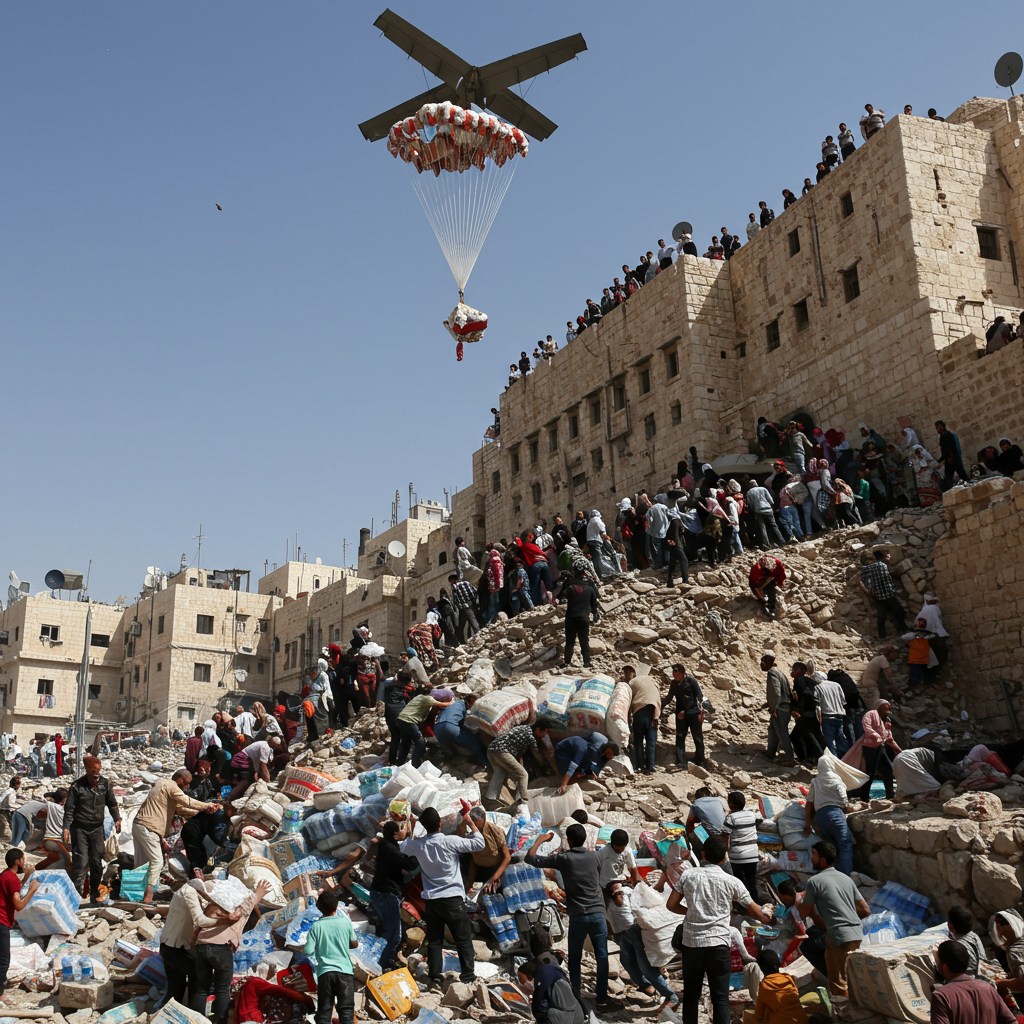
Amidst escalating Middle East tensions and the devastating Israel-Hamas War of 2024-2025, former US President Donald Trump unveiled a controversial initiative: the “Board of Peace” for Gaza. This ambitious, yet polarizing, plan emerged in October 2025 as part of a broader peace framework aimed at stabilizing the region. The Board promised a path to Palestinian statehood, Gaza’s reconstruction, and an international stabilization force. While some nations embraced this vision, others viewed it as a direct challenge to established international diplomacy, raising significant questions about its true intent and long-term implications for global governance.
The Genesis of Trump’s Gaza Peace Initiative
The regional landscape in 2024-2025 was marked by profound instability. The Israel-Hamas War saw a fragile ceasefire and hostage exchange in early 2025 collapse, leading to renewed hostilities. Escalations extended beyond Gaza, with increased Israeli raids in the West Bank, intense skirmishes with Hezbollah in Lebanon, and Houthi attacks from Yemen. A significant 12-day conflict in June 2025 even saw Israel, with US support, severely damage Iran’s military and nuclear infrastructure. It was against this backdrop of widespread conflict and the grim milestone of over 65,000 Gazan fatalities by September 2025 that international pressure intensified for a lasting resolution.
In September 2025, with nearly a dozen countries recognizing Palestinian statehood, Trump announced his comprehensive peace framework. This plan, endorsed by UN Security Council Resolution 2803, included a ceasefire that took effect on October 10. Central to this framework was the formation of the “Board of Peace,” an international body Trump envisioned leading the reconstruction and stabilization efforts in Gaza without displacement. The plan also proposed amnesty for disarming Hamas members and a clear path towards Palestinian statehood.
Decoding the Board of Peace: Structure and Ambition
While ostensibly focused on Gaza, the Board of Peace’s stated charter did not explicitly limit its scope, sparking concerns among international observers. Many viewed the initiative as a strategic maneuver designed to circumvent the United Nations and reshape the existing international order under Trump’s influence. Trump himself, speaking at the World Economic Forum in Davos, had earlier promoted his proposed “Board of Peace” as potentially “the most prestigious board ever formed,” suggesting considerable global interest.
The proposed structure was notable. It aimed to establish a new international organization and a transitional governing authority, justified by claims that existing institutions had repeatedly failed to achieve lasting peace. However, European officials reportedly dubbed it a “Trump United Nations,” fearing it disregarded fundamental UN Charter principles. A key point of contention was that the structure would concentrate significant political and financial power in the hands of its chair, a position reserved for Trump. Adding to the unease were provisions requiring countries seeking permanent membership to contribute up to one billion dollars, granting them exemption from term limits at the president’s discretion—a “pay-to-stay” model.
International Reactions: Support, Scrutiny, and Strategic Silence
The invitation to join Trump’s Board of Peace was extended to approximately sixty countries, including key regional and global players. Reactions varied dramatically, reflecting the complex geopolitical landscape and differing diplomatic priorities.
Nations Embracing the Initiative
Some countries swiftly accepted the invitation. The United Arab Emirates (UAE) formally joined, with Deputy Prime Minister Sheikh Abdullah bin Zayed Al Nahyan emphasizing strong support for Trump’s comprehensive Gaza peace plan. The UAE affirmed its commitment to stability, reconstruction, and safeguarding Palestinian rights, highlighting the critical importance of fully implementing Trump’s 20-point plan. This decision followed the UAE’s earlier welcome of the second phase of the peace plan and the formation of the National Committee for the Administration of Gaza (NCAG), a temporary transitional body under UNSC Resolution 2803. Both Argentina and Hungary also quickly endorsed the proposal.
Pakistan also announced its decision to join the Board, following an invitation extended by President Trump to Prime Minister Shehbaz Sharif. Pakistan’s foreign ministry clarified its participation stemmed from a commitment to support the Gaza plan within the United Nations Security Council framework. Islamabad expressed hope for concrete actions toward a permanent ceasefire, enhanced humanitarian assistance, and reconstruction efforts in Gaza.
Skepticism and Measured Responses
Despite the enthusiasm from some quarters, the initiative faced considerable skepticism. European nations voiced strong apprehension, particularly regarding its potential to bypass established UN protocols. Israel also expressed discomfort, objecting to the composition of the Gaza executive board and a perceived lack of prior coordination. Concerns were raised within Israel about the inclusion of actors perceived as sympathetic to Hamas.
Other crucial regional players like Turkey, Egypt, Jordan, and Italy adopted a more cautious stance, announcing they were still actively examining the proposal before committing. These nations likely weighed the potential diplomatic fallout and the implications for their own regional interests and relationships with international bodies.
India’s Diplomatic Tightrope Walk
India’s position was particularly intricate. Having received a formal invitation for Prime Minister Narendra Modi, New Delhi maintained public silence. Officials were reportedly assessing the implications of participation, especially concerning the initiative’s opaque governance structure and its potential challenge to India’s long-standing commitment to multilateralism. The decision carried significant diplomatic weight, coming amidst sensitive trade negotiations with Washington and efforts by Modi to rebuild personal rapport with Trump. Historically, India has supported Palestinian statehood but has also cultivated closer ties with Israel in recent years, adopting a cautious stance in UN voting. With Pakistan also confirming its participation, India faced a difficult calculation, balancing immediate bilateral considerations against the longer-term implications for global governance and its standing within the Global South.
Trump’s Narrative: Stability and Deterrence
In public remarks, Trump often framed the Board of Peace within a broader narrative of US-led stability in the Middle East. At the Davos forum, he declared the region to be in an unprecedented state of calm, largely attributing this to American involvement. He asserted significant progress in Gaza, claiming peace would have remained elusive without US intervention, despite acknowledging persistent threats from groups like Hamas and Hezbollah. Trump issued stern warnings to these factions, demanding disarmament or severe consequences.
He also repeatedly claimed that targeted US military action had successfully prevented Iran from developing a nuclear weapon within a two-month timeframe, vowing to continue strict sanctions. Beyond security, Trump also involved himself in regional disputes, describing the Ethiopian dam on the Nile as “dangerous” for Egypt and pledging to facilitate dialogue to resolve the issue. These statements highlighted Trump’s assertion of a strong, decisive US role in shaping regional outcomes, a philosophy that underpinned the very existence of the Board of Peace.
Frequently Asked Questions
What is Trump’s Gaza Peace Board and when was it proposed?
Trump’s Gaza Peace Board is an international initiative proposed as part of a comprehensive peace framework announced in September 2025. It aims to solidify ceasefires, facilitate Gaza’s reconstruction without displacement, establish an international stabilization force, and create a path to Palestinian statehood. The Board itself was intended to lead these efforts, with its creation coinciding with a UN Security Council-endorsed ceasefire that took effect on October 10, 2025, following intense regional conflict.
Which countries supported or joined Trump’s Board of Peace?
Several nations either expressed support or confirmed their participation in Trump’s Board of Peace. The United Arab Emirates (UAE) formally accepted the invitation, emphasizing its commitment to stability and Palestinian rights. Pakistan also announced its decision to join, citing its commitment to supporting the Gaza plan within the UN framework. Other early acceptors included Argentina and Hungary. However, many European nations, Israel, Turkey, Egypt, Jordan, and Italy reacted with caution or skepticism, with some still examining the proposal.
Why did some countries view the Board of Peace as controversial or a “Trump United Nations”?
Many countries, particularly in Europe, viewed Trump’s Board of Peace with skepticism, labeling it a “Trump United Nations.” Concerns arose because the initiative was perceived as an attempt to circumvent established UN protocols and concentrate significant political and financial power in the hands of its chair, former President Trump. Provisions requiring countries to contribute up to one billion dollars for permanent membership, alongside the Board’s broad charter not explicitly limited to Gaza, fueled fears it aimed to establish a new, Trump-centric international order rather than a truly multilateral peace effort.
Conclusion: A New Era of Geopolitical Engagement?
Trump’s Board of Peace represents a significant, albeit contentious, moment in international diplomacy concerning the Middle East. Emerging from a period of intense conflict, the initiative sought to offer a direct, US-led pathway to peace and reconstruction in Gaza. While garnering support from some nations eager for a resolution, it simultaneously triggered widespread apprehension about its potential to undermine existing multilateral institutions and reshape global governance. The diverse international reactions, from enthusiastic acceptance to cautious scrutiny, underscore the complex and often competing interests at play in the quest for stability in the Middle East. The Board’s ambition to redefine the contours of conflict resolution and international cooperation continues to be a focal point for geopolitical analysis, highlighting the persistent challenges and the evolving nature of global power dynamics.