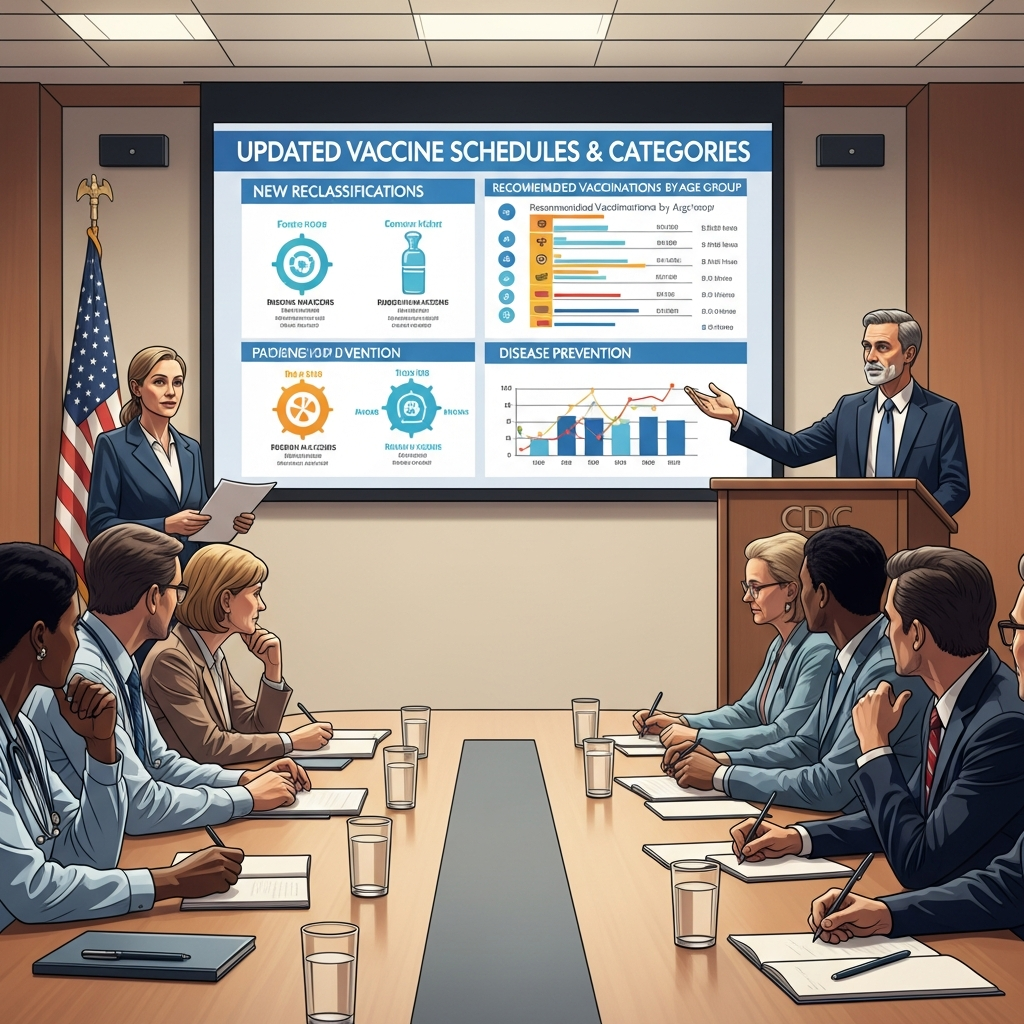
A significant shift in federal health policy is reshaping childhood vaccine recommendations, impacting how parents approach immunization for their children. The Centers for Disease Control and Prevention (CDC) has reclassified several routine childhood vaccines, moving them from universally recommended to categories requiring “shared clinical decision-making” or reserved for “high-risk” children. This move has sparked considerable debate among public health experts, pediatricians, and state officials, raising urgent questions about public health, vaccine safety, and parental responsibility. This guide cuts through the confusion, explaining these pivotal childhood vaccine changes and their potential ramifications for your family.
Unpacking the CDC’s Major Immunization Schedule Revisions
The federal government has substantially scaled back its recommendations for routine childhood immunizations. Six previously universal vaccines—targeting hepatitis A, hepatitis B, rotavirus, respiratory syncytial virus (RSV), meningococcal disease, flu, and COVID-19—are no longer routinely advised for all children. Instead, these immunizations are now recommended either for children at elevated risk of severe illness or following a “shared clinical decision-making” process between doctors and parents.
In contrast, the CDC maintains its universal recommendations for 11 other crucial childhood vaccines. These include immunizations against measles, mumps, rubella (MMR); whooping cough, tetanus, and diphtheria (DTaP); Haemophilus influenzae type b (Hib); pneumonia; polio; chickenpox; and human papillomavirus (HPV). It’s important to note that despite these changes in recommendation status, federal and private insurance plans are expected to continue covering the “sidelined” vaccines, ensuring parents won’t incur out-of-pocket costs if they choose these immunizations for their children.
The Justification and the Mounting Criticism
The Department of Health and Human Services (HHS) cited a “scientific review of the underlying science” and a desire to align the U.S. with vaccination programs in other developed nations as reasons for the changes. HHS Secretary Robert F. Kennedy Jr., identified as an anti-vaccine activist, reportedly championed Denmark as a model for this revised approach, suggesting the U.S. was a “global outlier” with an overly aggressive schedule.
However, these justifications have been met with widespread concern and outright condemnation from public health experts. Many childhood disease specialists express profound “bafflement” at the revised guidance. They argue that the vast majority of European countries maintain vaccination schedules far more akin to the previous U.S. standard, not the scaled-back version. For instance, Denmark, which omits routine rotavirus vaccination, reports approximately 1,200 infant and toddler rotavirus hospitalizations annually. This rate mirrors the U.S. experience before routine vaccination was implemented. Dr. Paul Offit, director of the Vaccine Education Center at the Children’s Hospital of Philadelphia and a rotavirus vaccine co-inventor, starkly noted, “They should be trying to emulate us, not the other way around.”
A Look at the Proven Value of “Sidelined” Vaccines
The vaccines now subject to revised recommendations have a remarkable track record of success in safeguarding children’s health. According to the CDC’s own data, just three of these—hepatitis A, hepatitis B, and rotavirus—prevented nearly 2 million hospitalizations and over 90,000 deaths in the past three decades.
Let’s examine the diseases these vaccines combat:
Respiratory Syncytial Virus (RSV)
RSV is the most frequent cause of infant hospitalization in the U.S., particularly during fall and winter. While often presenting as cold-like symptoms, it can be deadly for young children, leading to tens of thousands of hospitalizations and hundreds of deaths each year. Crucially, about 80% of children under two hospitalized with RSV have no identifiable risk factors, highlighting the need for broad protection. Long-awaited RSV vaccines were introduced in 2023.
Hepatitis A
Vaccination against hepatitis A, widely adopted in the late 1990s and universally recommended for toddlers by 2006, has led to a dramatic decline exceeding 90% in disease incidence since 1996. This foodborne virus causes a severe illness, though it continues to affect unvaccinated adults, especially vulnerable populations.
Hepatitis B
Hepatitis B can cause serious conditions like liver cancer and cirrhosis, particularly dangerous when contracted by infants. The virus is highly transmissible and persistent, surviving on surfaces for a week. Universal childhood vaccination dramatically reduced acute hepatitis B cases among children and teens by 99% between 1990 and 2019, significantly cutting childhood liver cancer rates. The virus, however, persists, with thousands of acute and chronic cases reported annually in unvaccinated adults.
Rotavirus
Before routine rotavirus vaccination began in 2006, the virus was responsible for approximately 70,000 hospitalizations and 50 deaths among young children annually. Known as “winter vomiting syndrome,” it caused immense suffering. Experts warn that reduced immunization rates could see a resurgence of this debilitating disease.
Meningococcal Disease
Meningococcal vaccines are primarily given to teenagers and college students, who are highly vulnerable to this severe bacterial infection. Though relatively rare (600-1,000 cases annually in the U.S.), it is lethal in over 10% of cases, and one in five survivors suffer permanent disabilities.
Flu and COVID-19
Both influenza and COVID-19 have claimed hundreds of children’s lives in recent years, despite typically being more severe in older adults. The current flu season in regions like Georgia illustrates the potential impact of low vaccination rates, with significant surges in cases, hospitalizations, and deaths straining healthcare systems. Medical experts continue to emphasize that flu vaccines, even with variant mismatches, significantly reduce the risk of severe complications and death.
Navigating “Shared Clinical Decision-Making”
A key component of the new guidance is the expanded use of “shared clinical decision-making.” This means that for vaccines against influenza, COVID-19, rotavirus, meningococcal disease, and hepatitis A and B, parents will now need to actively consult with a healthcare provider to assess if a vaccine is appropriate for their child.
This approach signifies a departure from the previous standard, where most childhood vaccines were universally recommended based on broad public health benefits. While a conversation between a doctor and patient is always valuable, experts like Dr. Lori Handy, a pediatric infectious disease specialist, argue this shift does not align with the robust scientific evidence supporting the proven protective benefits for the vast majority of the population. Previously, this term was reserved for very narrow circumstances.
Pediatricians like Eric Ball in California express deep concern that this change will generate confusion among parents. They fear it might inadvertently lead parents to question the safety or efficacy of these extensively vetted vaccines, believing that “shared clinical decision-making” implies a lack of safety rather than a change in policy. This could force doctors to spend limited clinic time reassuring parents about vaccine safety instead of focusing on individual health needs.
Broader Implications for Public Health and Trust
The new federal guidance has broader implications beyond individual families. Public health officials worry it places an undue burden on parents to research and understand each vaccine’s importance. State leaders, such as those in Connecticut, have strongly criticized the changes as “unscientific and dangerous,” warning they will “exacerbate confusion and anxiety among parents” and “endanger the health of children.” They emphasize that clear, evidence-based national guidance is crucial for public confidence and effective preventive care.
The process itself has also drawn criticism. The revision reportedly bypassed the usual review by the Advisory Committee on Immunization Practices (ACIP), the expert body typically responsible for developing vaccine recommendations. This procedural deviation has been called a “seismic shift” and further fuels concerns about the scientific rigor behind the changes.
Compounding these policy changes are recent federal funding cuts. The CDC abruptly canceled $11.4 billion in COVID-related funds for state and local health departments, money often used for broader immunization efforts. This has led to the cancellation of vaccine clinics, staff layoffs, and a scaling back of public health outreach in states like Arizona, Nevada, California, and Missouri. Former U.S. Surgeon General Jerome Adams warned that such cuts, alongside altered recommendations, risk “setting vulnerable populations and communities up for preventable harm,” citing recent measles outbreaks in Texas and rising whooping cough cases in Louisiana as alarming examples. These actions dismantle critical public health infrastructure, potentially exacerbating the impact of any reduction in vaccination rates.
Despite the federal changes, it’s crucial to remember that state vaccination laws remain unaffected. This means prudent medical practitioners are still legally and ethically able to recommend vaccinations based on established scientific evidence and professional care guidelines. Many pediatricians are expected to continue recommending these vaccines, emphasizing that diseases like RSV, meningococcal disease, and hepatitis remain serious threats to children’s health.
Frequently Asked Questions
What exactly does “shared clinical decision-making” mean for childhood vaccines?
“Shared clinical decision-making” means that for certain vaccines, the decision to vaccinate will involve a detailed discussion between parents and their healthcare provider. This conversation should cover the specific risks and benefits for the individual child, allowing parents to make an informed choice. It moves away from a blanket universal recommendation, placing more responsibility on families to initiate and understand these discussions, rather than simply following a routine schedule.
Which childhood vaccines are still universally recommended by the CDC?
Despite recent changes, the CDC continues to universally recommend 11 essential childhood vaccines. These protect against measles, mumps, and rubella (MMR); whooping cough, tetanus, and diphtheria (DTaP); Haemophilus influenzae type b (Hib); pneumonia; polio; chickenpox; and human papillomavirus (HPV). These vaccines remain foundational to the U.S. immunization schedule for broad public health protection.
Given these changes, should parents still consider the “sidelined” vaccines for their children?
Public health experts overwhelmingly recommend that parents should still consider the vaccines moved to “shared clinical decision-making” status. These immunizations have a strong track record of preventing millions of hospitalizations and tens of thousands of deaths from serious diseases like rotavirus, hepatitis A, B, and RSV. Consulting with your pediatrician to understand the individual benefits and risks for your child is crucial, as experts emphasize these vaccines are proven safe and effective for the vast majority of the population.
Making Informed Choices for Your Child’s Health
The CDC’s recent changes to childhood vaccine recommendations have created a complex landscape for parents. While the intent behind the shifts is framed as aligning with other nations and enhancing parental choice, many public health leaders and medical professionals warn of potential negative consequences, including increased confusion, administrative burdens, and a rise in preventable illnesses. The proven effectiveness of the “sidelined” vaccines in preventing severe diseases, coupled with concerns about the process and broader public health funding cuts, underscores the critical need for vigilance.
As you navigate these updates, prioritize open and thorough conversations with your pediatrician. They remain your most trusted resource for understanding the latest guidance, assessing your child’s individual needs, and making the best health decisions for your family based on sound scientific evidence. Your proactive engagement is more vital than ever in safeguarding your child’s well-being and contributing to community health.