The Islamic Republic of Iran faces an unprecedented moment of internal and external pressure, signaling a potential turning point in its four-decade rule. Widespread public anger, intensified by severe economic hardship and brutal state repression, is colliding with a formidable international response to Iran’s nuclear ambitions and its role as a state sponsor of terror. This deepening crisis highlights a regime clinging to power through force, yet increasingly vulnerable, with profound implications for regional stability and global security.
The Iron Fist of Repression: Inside Iran’s Authoritarian Rule
Under the leadership of Ayatollah Ali Khamenei, Iran’s regime has solidified its control through systematic repression and a pervasive climate of fear. Since his contentious ascent to Supreme Leader in 1989, Khamenei, a master strategist, has diligently dismantled republican structures, centralized power, and cultivated a vast patronage network among the clerical and military elite. This centralization of power, deeply rooted in the concept of velayat-e faqih (guardianship of the Islamist jurist), has seen the systematic suppression of free speech, assembly, and a free press.
The regime’s brutality is starkly evident in its human rights record. In 2025 alone, nearly 1,800 executions were recorded, with numbers reportedly climbing to over 1,932 in early 2026. These are not mere criminal justice outcomes but “judicial murders” – calculated acts of state terror designed to crush dissent. Authorities are weaponizing courts to silence opposition, a practice drawing chilling parallels to the 1988 massacre of 30,000 political prisoners, an event many now urge be officially designated a genocide and crime against humanity. Despite these extreme measures, the flame of resistance endures across Iran.
A Population Under Duress: Economic Hardship and Deepening Discontent
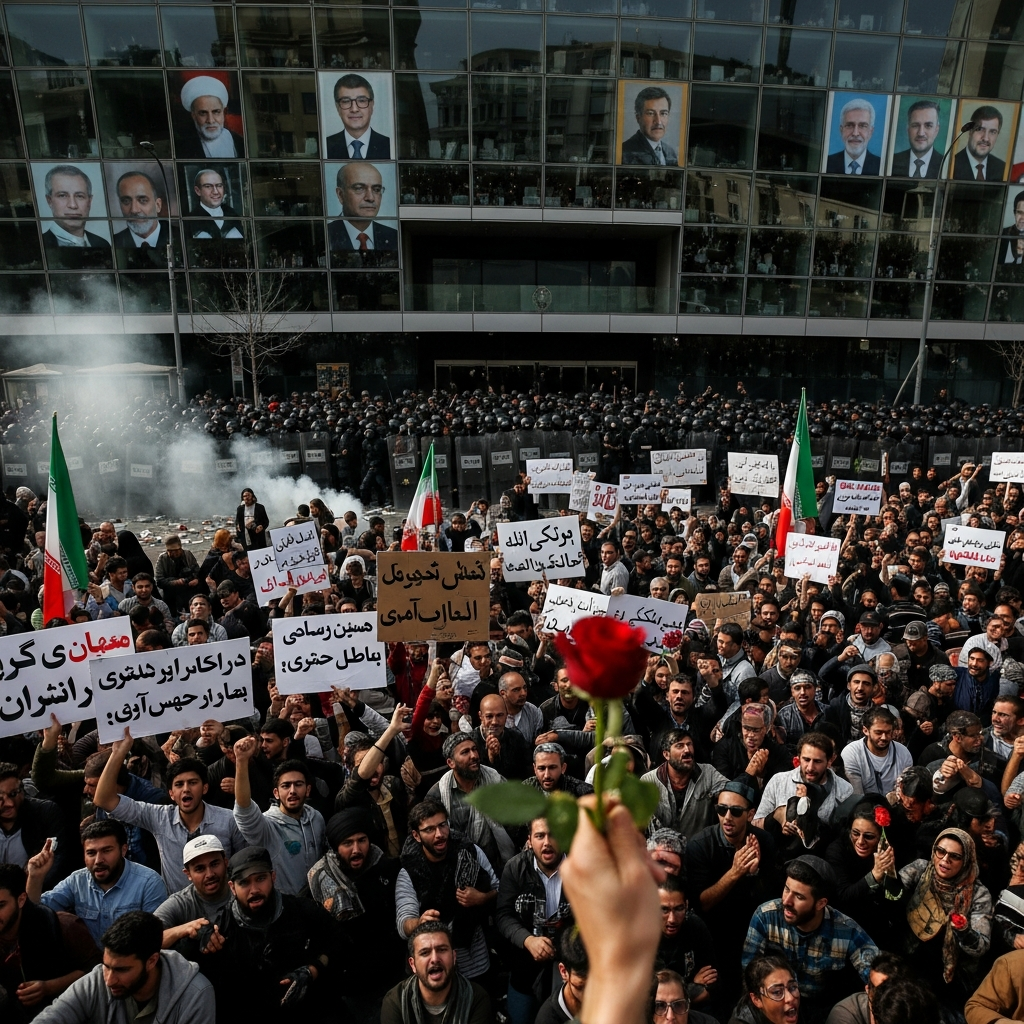
Iran’s populace lives under immense strain. Decades of “industrial-scale corruption” have crippled the economy, leading to a plunging rial and severe hardship for ordinary citizens. This economic distress has ignited successive waves of anti-government protests, echoing the spirit of the 2022 “Woman, Life, Freedom” demonstrations. By late 2025 and early 2026, fresh unrest, fueled by economic despair, erupted across Tehran and other cities, with chants of “death to the dictator” and “death to the Islamic Republic” becoming commonplace.
The regime’s response to these protests has been uncompromising. Reports from early 2026 indicated over 538 people killed, including nearly 500 protesters, and 10,000 arrests. An internet blackout was frequently imposed to obscure the extent of the crackdown, allowing authorities to brutally suppress dissent away from global scrutiny. Prosecutor General Mohammad Movahedi Azad has openly threatened the death penalty for those involved in “sabotage” or “clashing with security forces,” signaling a zero-tolerance approach. Supreme Leader Khamenei himself has dismissed protests as foreign-instigated, instructing security forces to show no mercy. This unwavering stance stems from his belief that the Shah’s downfall in 1979 was due to making concessions, a mistake he is determined not to repeat.
Iran’s Global Reach: Nuclear Ambitions and a Network of Proxies
Beyond its borders, Iran’s regime poses a significant threat to global security. It stands as a leading state sponsor of terror, leveraging proxy groups to destabilize the Middle East and project its influence. Key examples include:
Hezbollah in Lebanon: A formidable force that has posed significant threats to regional security.
Houthi militants in Yemen: Responsible for attacks on Saudi oil facilities and disruptions to global maritime trade.
Shiite militias in Iraq: Attacking U.S. bases and solidifying Iranian influence.
Hamas and Islamic Jihad: In the West Bank and Gaza, funded, trained, and armed by Iran, these groups have been responsible for thousands of rocket attacks, including the devastating October 7, 2023, terrorist attack.
The regime’s pursuit of a nuclear weapon further escalates these tensions. Despite its claims of a peaceful nuclear program, international watchdogs have censured Iran for violating nonproliferation obligations. Experts argue that Iran’s nuclear program is unequivocally not civilian, with its enrichment capabilities nearing weapons-grade capacity.
Escalating Confrontation: International Action Against Iran
The international community, particularly the United States and Israel, has adopted an increasingly robust approach to counter Iran’s nuclear ambitions and regional aggression.
Operation Rising Lion and US Airstrikes
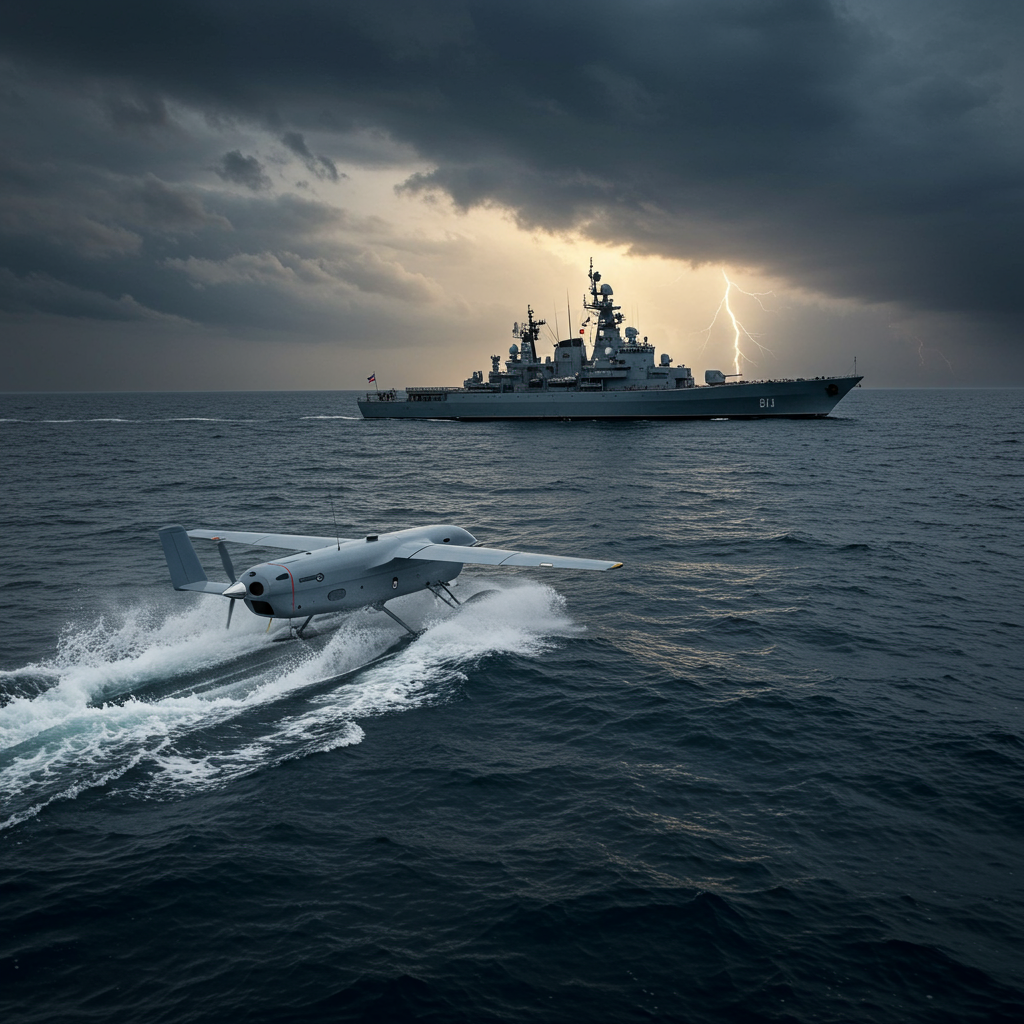
In a series of dramatic military actions, Israel conducted “Operation Rising Lion,” a preemptive, daring, and multifaceted strike against Iran’s nuclear and military infrastructure. This operation, reportedly launched with covert U.S. involvement, inflicted significant damage, reportedly destroying critical centrifuge halls at Natanz, as well as targets in Isfahan and Fordow, while also striking the Iranian Revolutionary Guard Corps’ (IRGC) command structure and eliminating nuclear scientists. This was seen as a crucial “warning shot” against Iran’s nuclear program.
Following Israel’s extensive operations that systematically degraded Iran’s air defenses and eliminated senior military officials, the United States escalated its own intervention. On June 21, 2025, the U.S. launched “spectacular military success” airstrikes against three key Iranian nuclear facilities: Fordow, Natanz, and Isfahan. Using B-2 stealth bombers and GBU-57 “bunker-buster” bombs on Fordow, and Tomahawk missiles on other sites, President Donald Trump declared Iran’s nuclear enrichment capabilities “completely and totally obliterated.” The justifications cited included Iran being on the verge of developing nuclear weapons, its status as a state sponsor of terror responsible for American deaths, and its aggressive rhetoric.
Ripple Effects and Diplomatic Stalemate
These strikes led to immediate escalation. Hours later, Iran retaliated with missiles targeting Israel, causing injuries, which was met by further Israeli Air Force strikes in western Iran. International reactions were split, with Republicans, Israel, and the UK largely supporting the U.S. action as necessary to curb a “grave threat.” Conversely, U.S. Democrats and Iran’s Foreign Ministry condemned the strikes as unconstitutional and a “savage military aggression” violating international law.
Diplomatic efforts have largely failed. A backchannel initiative, facilitated by Turkey, collapsed when Supreme Leader Khamenei reportedly became unreachable while in hiding. This reinforces the view that prolonged negotiations with the current regime are futile, with Iran refusing to be an “equal negotiator.” The EU has faced calls to end its “moral cowardice” and designate the IRGC as a terrorist organization, conditioning all diplomatic relations on measurable human rights progress.
The Regime’s Endgame: Vulnerability and Succession
Despite its apparent resilience, Iran’s ayatollahs are more vulnerable than ever. The current protests are described as “not routine unrest”; the anger is “deeper, broader, and more hopeless,” driven by exhaustion. Fear, once a primary tool of control, has significantly lost its power among the populace. The regime’s military power has also been “badly eroded,” with key proxies weakened, and its nuclear facilities severely degraded by recent strikes.
Supreme Leader Khamenei, aged 86, maintains his grip through force and a deep-seated belief that any concession is a fatal error. However, he is deeply unpopular, with estimates suggesting around 90% of Iranians, including the political elite, dislike him, often practicing taqiyya (dissimulation) to protect themselves. Public reactions, such as celebrations after President Raisi’s helicopter crash in May 2024, underscore this widespread discontent.
The question of succession looms large as Khamenei’s rule nears its end. While an Assembly of Experts is constitutionally tasked with choosing the next leader, his second son, Mojtaba Khamenei, is a frequently discussed candidate. However, appointing a son immediately goes against Shi’a tradition, suggesting an elderly intermediary cleric might serve first. Mojtaba is seen as equally power-hungry, brutal, and ideological as his father, implying that a change in leadership may not necessarily bring an end to the hardline policies, including the ongoing anti-Semitic and anti-American stances. The opportunity for significant change, opened by external pressures, could quickly close if such a successor assumes power.
Frequently Asked Questions
What are the main drivers behind the current widespread anti-government protests in Iran?
The current protests, intensifying through late 2025 and early 2026, are primarily driven by severe economic hardship, including a plunging national currency, widespread corruption within the regime, and a deep-seated anger against the government’s repressive policies. Echoing the 2022 “Woman, Life, Freedom” movement, these demonstrations reflect a populace exhausted by decades of authoritarian rule and a lack of fundamental freedoms, leading to demands for the complete overthrow of the Islamic Republic.
How has the international community responded to Iran’s nuclear program and its regional activities?
The international response has significantly escalated, moving beyond sanctions and diplomacy to direct military action. Israel conducted “Operation Rising Lion” to damage Iran’s nuclear and military infrastructure. This was followed by major U.S. airstrikes in June 2025, which President Trump declared “obliterated” Iran’s key nuclear facilities at Fordow, Natanz, and Isfahan using bunker-buster bombs and Tomahawk missiles. Additionally, there are ongoing calls for the EU to designate Iran’s Islamic Revolutionary Guard Corps (IRGC) as a terrorist organization and condition diplomatic relations on human rights improvements.
What are the potential implications of Ayatollah Ali Khamenei’s eventual succession for Iran’s future?
Ayatollah Ali Khamenei’s succession is a critical concern given his tight grip on power and the widespread unpopularity of the current regime. While the Assembly of Experts is meant to choose the next Supreme Leader, his son, Mojtaba Khamenei, is considered a potential candidate. Experts warn that Mojtaba is perceived as similarly power-hungry and ideological, suggesting that his ascent could lead to a continuation of hardline policies, including further repression, anti-Western stances, and potentially increased regional destabilization, rather than a move towards reform or liberalization.
The Global Stakes of Iran’s Future
The crisis gripping Iran is far more than an internal struggle; it is a pivotal geopolitical challenge with global ramifications. The regime’s brutal repression, its unrelenting nuclear ambitions, and its extensive network of proxy forces directly impact human rights, regional stability in the Middle East, and international security. As the “flame of resistance” burns within Iran, supported by increasing international pressure, the future of the Islamic Republic remains uncertain. Tyrannies built on fear and violence are destined to collapse, and the world watches keenly, with justice and accountability as paramount objectives for a more stable future.