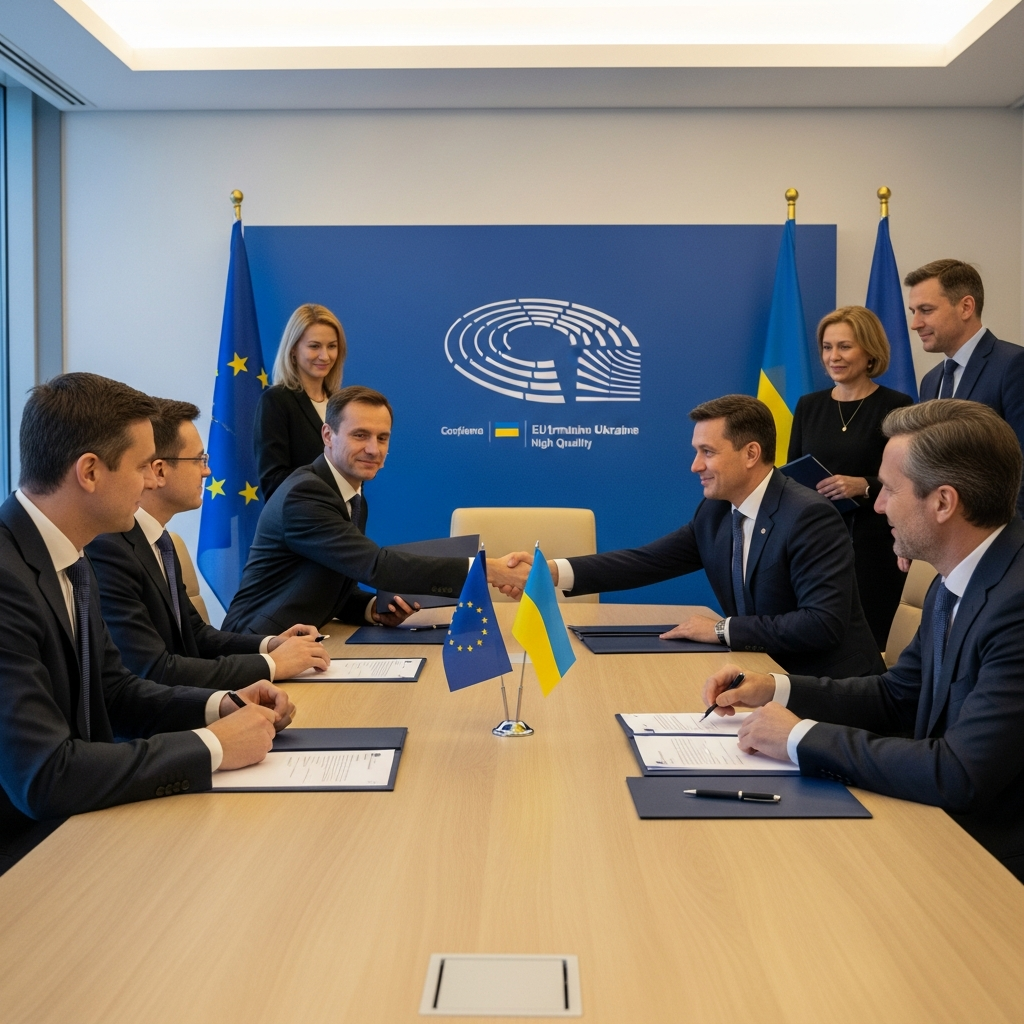
The European Union has decisively stepped forward, approving a vital €90 billion loan for Ukraine over the next two years. This monumental financial package, designed to bolster Kyiv’s resilience, arrives at a critical juncture, as Ukraine faced projections of running out of cash by spring. While hailed as a significant victory for Ukraine and European solidarity, the agreement also illuminates deep-seated divisions within the bloc, particularly concerning the contentious issue of frozen Russian assets. This comprehensive aid represents a strategic move by the EU to ensure Ukraine’s continued defense and public services, demonstrating unwavering support in the face of ongoing conflict and complex geopolitical pressures.
Unpacking the €90 Billion Lifeline: How Ukraine Will Benefit
The newly agreed EU loan for Ukraine, totaling €90 billion (approximately $105 billion), is earmarked to cover roughly two-thirds of the country’s estimated €137 billion financial needs for military operations and essential public services between 2026 and 2027. This substantial commitment is a crucial financial lifeline, providing much-needed budgetary stability for Kyiv. Ukrainian President Volodymyr Zelenskyy promptly expressed gratitude for the “significant support that truly strengthens our resilience,” emphasizing its importance for the coming years.
A unique condition attached to the loan is that Ukraine will only be required to repay the funds once Russia provides compensation for damages incurred during its full-scale invasion. The EU explicitly reserves its right to utilize immobilized Russian assets to facilitate this repayment, effectively linking future restitution to current financial aid. This ingenious mechanism underscores a strategic long-term vision for Ukraine’s recovery and Russia’s accountability.
The Funding Mechanism: Bypassing Frozen Russian Assets
The €90 billion package will be raised on capital markets, backed by the EU budget’s “headroom”—the available margin between member states’ actual contributions and the European Commission’s maximum spending limit. This approach was adopted after intense, late-night negotiations, primarily because EU leaders failed to reach a consensus on directly using frozen Russian assets as collateral for the loan.
Estimates suggest around €210 billion in Russian central bank assets are currently frozen within the EU, with a staggering 88% held in Belgium by the clearing house Euroclear. Many member states preferred leveraging these assets directly, but the proposal faced considerable opposition, most notably from Belgium. Belgian officials cited insufficient protections against potential Russian retaliation and concerns about complex legal risks. Reports indicate Euroclear faces a $230 billion lawsuit from the Russian central bank, with its executives reportedly facing intimidation campaigns. Despite this, interest accrued from these frozen assets is already being channeled to Ukraine, and their indefinite immobilization has been deemed a “big win” by some EU leaders.
EU Unity Under Strain: Internal Divisions Exposed
While the Ukraine financial aid deal was ultimately secured, it came at the cost of exposing significant internal divisions within the European bloc. The agreement necessitated an “opt-out clause” for three member states: Hungary, Slovakia, and the Czech Republic. These nations, governed by Euro-sceptical and Russia-leaning parties, refused to guarantee the loans.
Hungarian Prime Minister Viktor Orban, a vocal critic, characterized the €90 billion loan as “losing money,” arguing that Ukraine would “never be able to pay it back” and that the funding only prolongs the war. Slovakia’s Robert Fico echoed this sentiment, opposing further funding for Ukraine’s defense. Czech Prime Minister Andrej Babis also conditioned his agreement, ensuring his country would not be liable for the loan. This “V3 cooperation,” as Orban termed it, successfully shielded their citizens from direct financial obligation for the guarantees, highlighting a persistent challenge to EU unanimity on critical foreign policy decisions.
Geopolitical Chessboard: Reactions and Broader Implications
The European Council summit decision prompted varied reactions across the international stage. Ukrainian leaders, including President Zelenskyy and Prime Minister Yuliya Svyrydenko, lauded the agreement as “a decisive step for economic resilience.” European Council chief António Costa declared, “We committed, we delivered.” German Chancellor Friedrich Merz, a strong advocate for using Russian assets, saw the budget-backed loan as a “decisive message” to Putin, stating that Russia would only make concessions when the war proved unprofitable.
Conversely, Russian President Vladimir Putin vehemently criticized discussions surrounding his country’s frozen assets, branding it “theft” and warning of “grave consequences.” His envoy, Kirill Dmitriev, welcomed the failure to “illegitimately use Russian assets,” interpreting it as a “Major BLOW to EU warmongers.” This stark contrast in perspectives underscores the deeply entrenched animosity and the high stakes involved in international financial and political maneuvers.
The EU’s Role in a Shifting Global Landscape
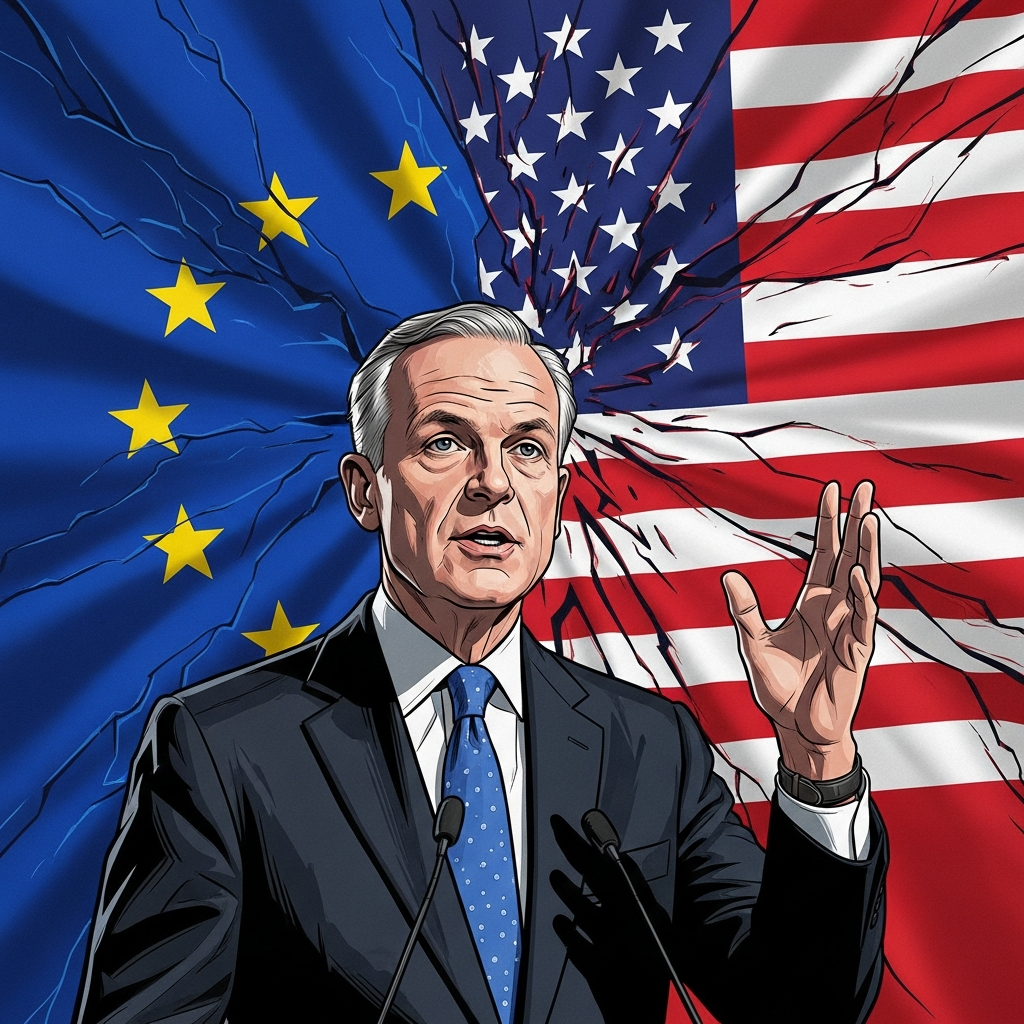
The agreement’s timing and nature are also deeply intertwined with broader geopolitical shifts. The decision to accelerate aid comes partly in anticipation of a potential shift in US foreign policy under a future “America first” administration, which could be less consistently supportive of Ukraine. Recent US actions, including a national security strategy that criticized Europe more than Russia, signal a growing detachment from the transatlantic alliance. This puts increased pressure on the EU to take greater control of its own security and define its international role more decisively.
The EU’s internal struggles extend beyond Ukraine funding. The summit also saw the postponement of a long-negotiated trade agreement with the South American Mercosur bloc. This deal, 25 years in the making, was delayed until January due to significant opposition from countries like France, Italy, and Poland, who feared cheaper imports would harm European farmers. This incident, combined with the Ukraine funding divisions, paints a picture of a bloc grappling with its capacity for decisive international action, caught between Washington, Moscow, and Beijing.
Future Outlook: Reparations, Allies, and Diplomacy
The EU’s chosen funding method offers a key advantage: speed. Funds are expected to be available from mid-January, well ahead of Ukraine’s anticipated cash crunch. This bypasses the potentially complicated and lengthy legal process of directly repurposing frozen assets, ensuring immediate support. However, the debate over how to definitively use frozen Russian assets for Ukraine’s reconstruction or as direct collateral remains an active, unresolved issue among EU members.
The EU’s decision also influences other Western allies, such as the UK, Canada, and Japan, who hold significant amounts of frozen Russian assets. Their actions were previously linked to the EU’s approach. Now, Brussels is calling on non-EU allies to contribute an additional €45 billion to cover Ukraine’s total estimated needs for 2026 and 2027, prompting countries like the UK to re-evaluate their strategies for contributing their estimated £20 billion in frozen Russian funds. Furthermore, French President Emmanuel Macron suggested that it would be “useful” for Europe to re-engage with President Putin in the coming weeks, hinting at a renewed diplomatic push to find a framework for peace discussions.
Frequently Asked Questions
What is the purpose of the EU’s €90 billion loan to Ukraine?
The €90 billion loan serves as crucial financial support for Ukraine over the next two years (2026-2027), addressing approximately two-thirds of its estimated €137 billion needs. This funding is vital for both military operations to defend against Russia and maintaining essential public services, as Ukraine was projected to run out of cash by spring. Its primary purpose is to provide budgetary stability and strengthen Ukraine’s overall resilience during the ongoing conflict.
How will the EU’s €90 billion loan to Ukraine be funded, and why wasn’t it sourced from frozen Russian assets directly?
The EU loan will be funded by raising money on capital markets, backed by the EU budget’s “headroom,” which is the margin between member states’ contributions and the European Commission’s maximum spending limit. This method was chosen after EU leaders failed to agree on directly using €210 billion in frozen Russian assets. The direct use of these assets was blocked primarily due to Belgian concerns over potential Russian retaliation and complex legal risks, even though the EU reserves the right to use these assets for repayment if Russia doesn’t compensate Ukraine.
What are the key implications of the EU’s €90 billion loan for Ukraine and broader EU unity?
For Ukraine, the loan is a significant lifeline providing immediate financial security and strengthening its position on the battlefield and at the negotiating table. For the EU, it signals unwavering support for Ukraine but simultaneously exposed deep internal divisions. The necessity of an “opt-out clause” for Hungary, Slovakia, and the Czech Republic, who refused to guarantee the loans, highlights persistent challenges to unanimity within the bloc. This compromise underscores the EU’s struggle to maintain a united front on critical foreign policy and financial decisions amidst geopolitical pressures.
The EU’s €90 billion loan to Ukraine marks a pivotal moment, securing essential financial backing while navigating complex internal politics and global geopolitical shifts. It reflects a determined effort to fortify Ukraine’s future, even as the bloc grapples with its own unity and international standing.