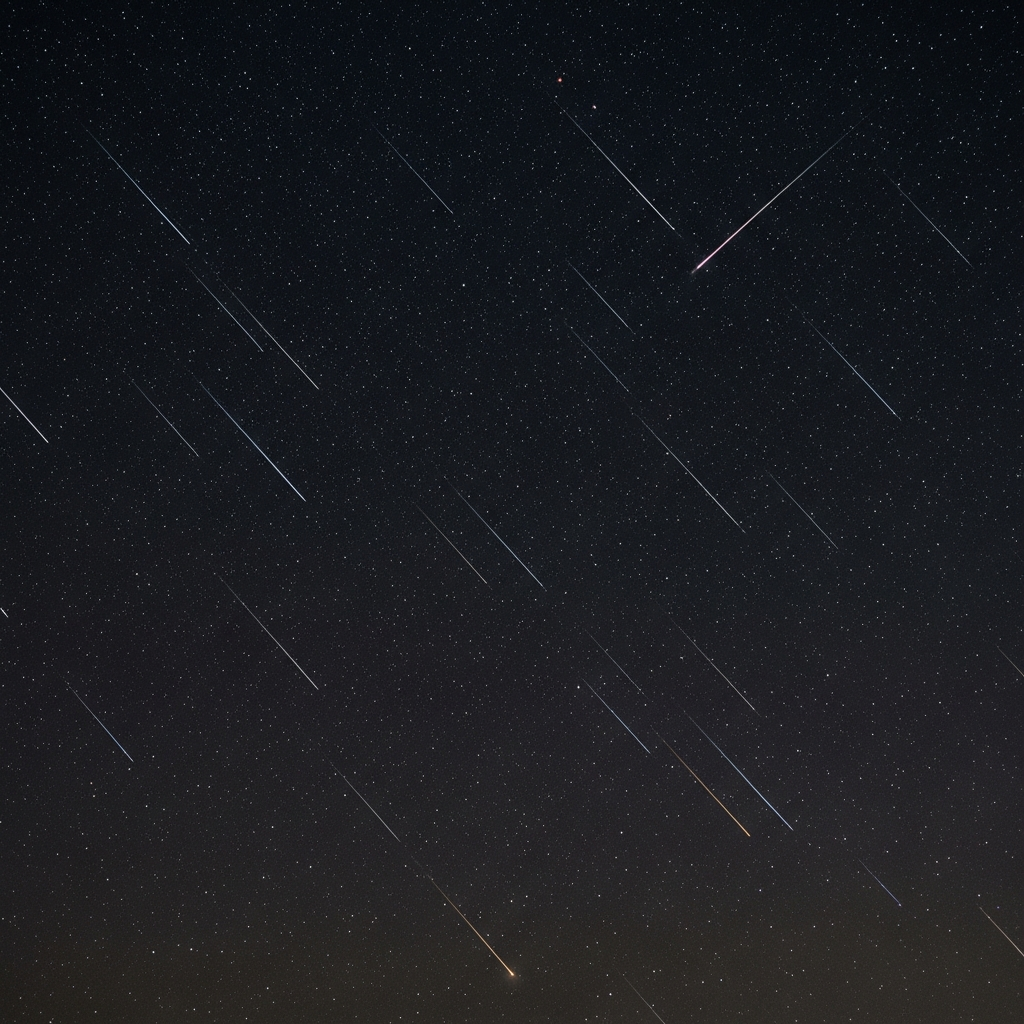
Prepare for an extraordinary celestial display as the Geminid meteor shower, one of the most anticipated astronomical events of the year, reaches its spectacular peak in 2025. This guide provides everything you need to know to experience this breathtaking “shooting star” show, whether from a prime dark-sky location or the comfort of your own home via a free, expert-hosted livestream. Get ready to witness the unique spectacle of the Geminid meteor shower and discover why it consistently ranks among the most reliable and impressive annual meteor showers.
Why the Geminid Meteor Shower Reigns Supreme in 2025
The Geminid meteor shower stands out as a true heavyweight in the annual calendar of celestial events. Unlike most meteor showers, which originate from comets, the Geminids are unique, born from the debris trail of an asteroid-like object: 3200 Phaethon. This distinction contributes to their remarkable predictability and consistent high rates, often producing bright, colorful fireballs that streak vividly across the night sky. NASA consistently ranks the Geminids as “one of the best and most reliable annual meteor showers.” Experts, including the Denver Astronomical Society, even anticipate the 2025 Geminids to be the “strongest” of the year, promising an exceptional show.
The Enigma of Asteroid 3200 Phaethon
At the heart of the Geminid meteor shower’s brilliance is asteroid 3200 Phaethon. This enigmatic object displays characteristics of both an asteroid and a comet, making it a “rock comet.” As Phaethon orbits the Sun, its extreme proximity causes intense heating, leading it to shed dust and rocky fragments. When Earth passes through this debris-strewn path each December, these particles collide with our atmosphere. The friction causes them to burn up in brilliant flashes of light, creating the luminous streaks we know as Geminid meteors. The chemical composition of Phaethon’s debris directly influences the distinct and eye-catching colors—from yellows to reds and even greenish hues—that make Geminids so memorable.
When to Catch the Celestial Spectacle
The Geminid meteor shower is active for several weeks, but its absolute peak activity for 2025 is expected overnight on Saturday, December 13, into the early hours of Sunday, December 14. While “shooting stars” can be spotted from mid-evening, the optimal viewing period begins after midnight and extends through the pre-dawn hours of December 14. This timing is critical for several reasons: the constellation Gemini ascends higher in the sky, and Earth rotates into the densest part of Phaethon’s debris stream, leading to a higher frequency of meteors.
Prime Viewing Hours for Maximum Impact
For those dedicated stargazers, aiming to observe between midnight local time and dawn will yield the most impressive results. During these prime hours, under ideal dark-sky conditions, observers could potentially witness an astounding 120 to 150 meteors per hour. Even for those with earlier bedtimes, the shower is expected to begin around 8 p.m. local time, with activity intensifying a couple of hours later. The good news for 2025 is that lunar interference will be minimal. A waning crescent moon, only about 26-34% illuminated, will rise later in the night, ensuring darker skies for most of the peak viewing window.
Finding Your Viewing Sweet Spot
To fully appreciate the Geminid meteor shower, strategic viewing is essential. The shower is named for its radiant point, which appears to emanate from the constellation Gemini. Gemini is easily identifiable by its two bright stars, Castor and Pollux, situated northeast of Orion. However, a common misconception is to look directly at the radiant. Meteors near this point appear shorter and are harder to discern.
Navigating the Night Sky: Locating Gemini
Instead of staring directly at Gemini, direct your gaze towards the darkest part of the sky, slightly away from the constellation. By scanning adjacent constellations, you’ll increase your chances of spotting longer, more dramatic meteor trails. Gemini rises above the eastern horizon a few hours after sunset, remains visible throughout the night, and reaches its highest point around 2 a.m. local time. This allows for nearly all-night viewing opportunities in the Northern Hemisphere. Observers in the Southern Hemisphere should generally look towards the northern sky around 2 a.m.
Escaping Light Pollution: Your Key to Success
The single most crucial factor for optimal meteor viewing is escaping light pollution. City lights significantly diminish the number of visible meteors. Seek out locations far from urban centers, streetlights, and even bright homes. For residents of areas like Denver, the Eastern Plains are often recommended due to their open landscape and minimal light obstruction. Generally, the further away from civilization you can get, the better your chances of seeing the full glory of the Geminids. Even in light-polluted urban environments, you might still catch a dozen or so brighter meteors per hour, but true dark skies offer an incomparable experience.
Preparing for Your Geminid Experience
Successfully enjoying the Geminids requires a little preparation. Since you’ll be outdoors at night in December, temperatures will be cold, especially during the peak hours. Dressing warmly is paramount. Layers, thermal wear, hats, gloves, and insulated footwear are highly recommended.
Essential Gear for a Comfortable Night
Consider bringing a sleeping pad, blankets, or even a sleeping bag to stay warm and comfortable. Many experts suggest lying down with your feet facing south and head facing north, orienting yourself towards the sky, to maximize your field of view. Allow your eyes at least 20-30 minutes to fully adapt to the dark; this dramatically enhances your ability to spot fainter meteors. Experts also advise against using telescopes or binoculars. While great for planets or distant galaxies, these instruments severely limit your field of view, and the goal for meteor showers is to observe as much of the expansive night sky as possible.
The Geminid Livestream: Your Couch-Side Seat
For those unable to venture outdoors due to weather, location (like the Southern Hemisphere where the shower isn’t well-visible), or simply preferring warmth, a free livestream offers an excellent alternative. The Virtual Telescope Project will host a live online observation of the 2025 Geminid meteor shower.
Livestream Schedule and Access
The livestream is scheduled to begin at 4 p.m. EST (2100 GMT) on December 13 and will run until dawn. You can tune in on The Virtual Telescope Project’s YouTube channel. This free broadcast will feature live views from the organization’s super-wide-angle all-sky camera, strategically located in Manciano, Italy—a region renowned for its exceptionally dark skies. This ensures that everyone, regardless of their local conditions, can witness one of the most impressive natural light shows of the year.
What to Expect: A Shower of Colors and Fireballs
The Geminids are celebrated not just for their quantity but also for their quality. Observers under optimal dark-sky conditions can anticipate seeing up to 150 meteors per hour. These meteors are known for their impressive speed, traveling at approximately 21 miles per second (75,600 miles per hour).
Unraveling Geminid Characteristics
One distinct phenomenon associated with the Geminids are “Earth-grazers.” These meteors are visible around 10 p.m. local time and appear to last longer—a second or two extra—because they don’t penetrate Earth’s atmosphere as deeply, offering a more extended visual treat. The Geminids are also famous for producing fireballs. These are exceptionally bright meteors that outshine any star or planet, easily identifiable by their vivid colors and extended duration. The diverse chemical composition of asteroid 3200 Phaethon’s debris results in meteors that can display a spectrum of yellows, reds, and even greenish hues, adding to their captivating beauty.
Capturing the Moment: Tips for Astrophotographers
For aspiring astrophotographers, the Geminid meteor shower presents an excellent opportunity. Robert Lunsford, fireball report coordinator for the American Meteor Society, notes that Geminid meteors tend to move slower compared to those in other major showers like the Perseids or Leonids. This slower speed makes them more amenable to time-exposure photography. Lunsford recommends setting camera shutters between 15 and 30 seconds for continuous shooting throughout the night. Equip yourself with a sturdy tripod, a wide-angle lens, and enough battery power to capture those fleeting moments of celestial brilliance. Remember to focus your lens to infinity and experiment with ISO settings to find the right balance for your location.
Frequently Asked Questions
What makes the Geminid meteor shower unique compared to others?
The Geminid meteor shower is distinctive because its parent body is asteroid 3200 Phaethon, not a comet like most other meteor showers. This asteroid-like origin contributes to the Geminids’ remarkable reliability, consistent high meteor rates, and the vibrant, colorful fireballs they produce. The chemical composition of Phaethon’s debris results in meteors that can display yellows, reds, and even green hues, offering a visually stunning spectacle that sets them apart.
Where can I watch the Geminid meteor shower if I have cloudy skies or light pollution?
If your local weather is uncooperative or you live in an area with significant light pollution, you can still enjoy the Geminid meteor shower from home. The Virtual Telescope Project offers a free livestream of the event, scheduled to start at 4 p.m. EST (2100 GMT) on December 13, running until dawn. This broadcast features live views from a super-wide-angle camera in Manciano, Italy, one of the darkest sky regions, providing a clear and comprehensive view of the shower.
What’s the absolute best time and preparation for viewing the 2025 Geminid meteor shower?
The absolute best time to view the 2025 Geminid meteor shower is after midnight local time on December 14, stretching into the pre-dawn hours. To prepare, find a location away from city lights to minimize light pollution. Allow your eyes at least 20-30 minutes to adapt to the dark. Dress in multiple warm layers, bring blankets or a reclining chair for comfort, and avoid using binoculars or telescopes as they restrict your field of vision. This preparation ensures maximum comfort and optimal viewing conditions for this spectacular celestial event.
Embrace the Celestial Spectacle
The 2025 Geminid meteor shower promises to be a truly unforgettable celestial event, offering a dazzling display of “shooting stars” and vibrant fireballs. Whether you bundle up for an outdoor stargazing adventure under a dark sky or tune into the live online observation from home, the Geminids provide a unique opportunity to connect with the cosmos. Mark your calendars for December 13-14 and prepare to be amazed by one of the night sky’s most reliable and breathtaking performances.