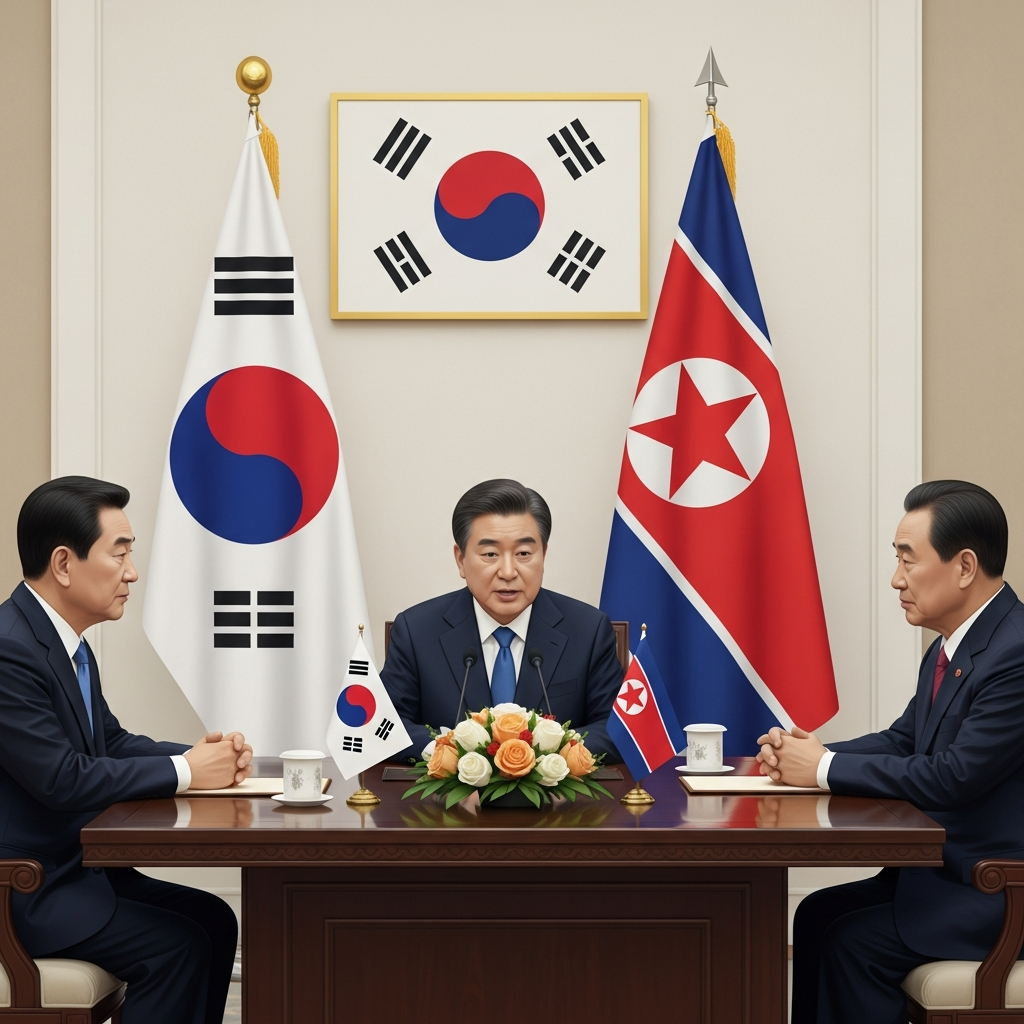
The delicate dance of inter-Korean relations often hinges on symbolic gestures and complex diplomatic overtures. Recently, reports indicate South Korea’s president is mulling a significant apology to North Korea, a move that could reshape the dynamics on the peninsula. This potential South Korean president apology to North is more than just words; it represents a profound strategic calculus aiming for de-escalation, a new path to dialogue, or a reset in stalled reconciliation efforts. Understanding this pivotal development requires diving into the historical context, potential motivations, and wide-ranging implications for peace and stability on the Korean Peninsula.
The Deep Roots of Inter-Korean Tensions
For decades, the relationship between South and North Korea has been defined by a tense armistice rather than a peace treaty, leaving the two nations technically still at war. This enduring division, stemming from the 1950-1953 Korean War, has fueled a cycle of provocations, sanctions, and sporadic attempts at reconciliation. Historical grievances run deep, with each side holding firm narratives about past aggressions and injustices. An apology, therefore, is not merely a polite diplomatic act but a loaded statement, potentially acknowledging fault or expressing regret for specific actions or broader historical contexts.
Historical Precedents in Reconciliation Efforts
While a presidential apology of this nature would be significant, it wouldn’t be entirely without precedent in the broader context of inter-Korean relations. Throughout history, various South Korean leaders have extended olive branches, sometimes acknowledging shared suffering or regrettable past policies. The “Sunshine Policy” of the late 1990s and early 2000s, for instance, involved significant humanitarian aid and economic cooperation, reflecting a desire to reduce tensions through engagement. However, formal, unilateral apologies for specific actions from a South Korean president to the North have been exceptionally rare, often perceived as undermining national resolve or legitimizing North Korean claims. Any such gesture would face intense scrutiny.
Current State of North-South Relations
The present climate between Seoul and Pyongyang remains largely frigid. North Korea continues its advanced missile and nuclear weapons programs, often responding to joint U.S.-South Korean military exercises with bellicose rhetoric and missile launches. Recent years have seen the shutdown of key inter-Korean liaison offices and a general breakdown in communication channels. Given this backdrop, the consideration of a South Korean president apology to North signals a potential shift in strategy. It might suggest a desperate attempt to break the diplomatic stalemate, especially if other avenues for engagement have proven fruitless or if external pressures are mounting.
Potential Motivations Behind the Apology
Deliberating such a high-stakes move suggests the South Korean government is weighing numerous internal and external factors. The motivations could be multifaceted, ranging from a genuine desire for peace to strategic political maneuvering.
Seeking De-escalation and Renewed Dialogue
One primary driver could be the urgent need for de-escalation. Rising tensions on the peninsula, coupled with global instability, present significant security risks. A presidential apology might be seen as a way to lower the temperature, create goodwill, and open channels for dialogue that have long been closed. It could be a calculated risk to demonstrate flexibility and a willingness to compromise, hoping to elicit a reciprocal gesture from Pyongyang. Ultimately, restarting direct talks is crucial for addressing issues like denuclearization and long-term peace.
Domestic Political Considerations and Legacy
Domestic politics undeniably play a role in foreign policy decisions. A South Korean president considering an apology might be seeking to bolster their legacy as a peacemaker or to address domestic calls for a more proactive approach to inter-Korean affairs. Public opinion in South Korea is often divided, with some advocating for hardline deterrence and others for greater engagement. A bold move like an apology could appeal to a segment of the electorate yearning for a peaceful resolution, even if it alienates others. It could also be a strategic effort to regain political momentum or distract from other domestic challenges.
International Pressure and Regional Stability
The international community, particularly major powers like the United States and China, closely monitors developments on the Korean Peninsula. There might be subtle or overt pressure on South Korea to explore all diplomatic avenues to reduce tensions. An apology could be a way to demonstrate South Korea’s commitment to peace and its willingness to take difficult steps for regional stability. Such a move could also influence how other nations perceive South Korea’s leadership in regional security matters.
Anticipated Reactions and Outcomes
Should the South Korean president proceed with an apology, the ripple effects would be significant, both domestically and internationally. Predicting the exact response is challenging, as North Korea’s reactions are often unpredictable and heavily influenced by its internal political dynamics.
North Korea’s Likely Response
North Korea’s reaction would be paramount. They might interpret the apology as a sign of weakness, potentially emboldening them to demand further concessions or exploit the gesture for propaganda purposes. Alternatively, they could view it as an opportunity to restart dialogue on their terms, perhaps demanding specific actions or economic relief in return for their engagement. A complete rejection of the apology, however, remains a real possibility, especially if they deem it insufficient or insincere. Any South Korean president apology to North would need careful phrasing to navigate these sensitivities.
International Community’s Perspective
The international community would watch closely. Allies like the United States might welcome any move towards de-escalation but would likely remain cautious, ensuring the apology does not undermine existing sanctions regimes or denuclearization efforts. China, a key regional player, might view it positively as a step towards stability. Japan, often wary of North Korea’s actions, might express concerns if the apology is perceived to legitimize Pyongyang’s behavior. The global perception would depend heavily on the specifics of the apology and North Korea’s subsequent actions.
Public Opinion in South Korea
Within South Korea, an apology would ignite fervent debate. Supporters might laud it as a courageous step towards peace, advocating for reconciliation and a peaceful future. Critics, however, might condemn it as a concession, arguing that it undermines national pride or rewards North Korean aggression. The historical grievances and political divisions run deep, and any presidential apology would inevitably face a divided public, requiring strong leadership to justify the strategic rationale.
The Path Forward: Challenges and Opportunities
An apology, whether delivered or merely considered, represents a critical juncture for inter-Korean relations. It opens both profound challenges and potential opportunities for lasting peace.
Building Trust Beyond Symbolic Gestures
A presidential apology, while symbolic, cannot stand alone. For it to have any meaningful impact, it must be followed by concrete actions aimed at building trust and fostering cooperation. This could involve restoring communication lines, facilitating humanitarian aid, or establishing working-level discussions on shared issues. The real challenge lies in translating a symbolic gesture into tangible progress. Trust-building initiatives are essential to move beyond the rhetoric and foster genuine understanding across the border.
Economic Cooperation and Humanitarian Aid
Should an apology pave the way for renewed dialogue, discussions could pivot to areas of mutual benefit, such as economic cooperation and humanitarian aid. Historically, these areas have provided avenues for engagement even during periods of tension. Easing restrictions on cross-border trade, resuming joint industrial projects, or providing food and medical supplies could serve as practical steps towards reconciliation. However, such initiatives are always carefully balanced against international sanctions and the need to prevent resources from being diverted to North Korea’s illicit weapons programs.
Frequently Asked Questions
What specific events or actions might prompt a South Korean presidential apology to North Korea?
A South Korean presidential apology to North Korea could be prompted by a desire to address historical grievances or specific incidents. Historically, points of contention include past military clashes, like the sinking of the Cheonan warship or the Yeonpyeong Island shelling, where responsibilities remain disputed. An apology might also broadly address the trauma of division, past South Korean anti-North rhetoric, or perceived missteps in previous reconciliation attempts. The underlying aim would be to signal a new beginning or acknowledge a specific aspect of the strained bilateral history, hoping to unlock a diplomatic breakthrough.
How have previous South Korean leaders approached reconciliation and apologies with North Korea?
Previous South Korean leaders have adopted varied approaches to reconciliation. The “Sunshine Policy” era (late 1990s-early 2000s) under Presidents Kim Dae-jung and Roh Moo-hyun prioritized engagement, economic cooperation, and cultural exchanges, leading to historic inter-Korean summits. This approach implicitly aimed to reduce tensions through dialogue rather than explicit apologies. Conservative administrations often adopted a more confrontational stance, emphasizing deterrence and denuclearization before engagement. While expressions of regret for general suffering have occurred, formal, unilateral apologies for specific actions from Seoul to Pyongyang have been rare, reflecting a cautious diplomatic posture.
What are the key diplomatic considerations and potential risks of a South Korean president apologizing to North Korea?
A South Korean presidential apology to North Korea carries significant diplomatic considerations and risks. Firstly, there’s the risk of being perceived as a sign of weakness, potentially emboldening North Korea to demand further concessions without offering reciprocity. Domestically, such an apology could spark a strong backlash from conservative factions, who might view it as undermining national pride or legitimizing North Korea’s regime. Internationally, allies might worry if the apology is seen to disregard existing sanctions or denuclearization objectives. Carefully crafting the apology to avoid these pitfalls, while achieving the intended diplomatic goal of opening dialogue, is a paramount challenge.
Conclusion: A Delicate Diplomatic Gambit
The prospect of a South Korean president apology to North underscores the perennial complexity of inter-Korean relations. This isn’t merely a polite gesture but a profound diplomatic gambit, pregnant with potential for both progress and peril. While the stated aim would likely be to de-escalate tensions and foster dialogue, the outcomes are far from certain. Such a move demands strategic foresight, careful communication, and a clear understanding of both North Korea’s motivations and the nuanced dynamics of regional geopolitics. Ultimately, whether this apology materializes and what it achieves will be a critical chapter in the ongoing quest for peace and stability on the Korean Peninsula.