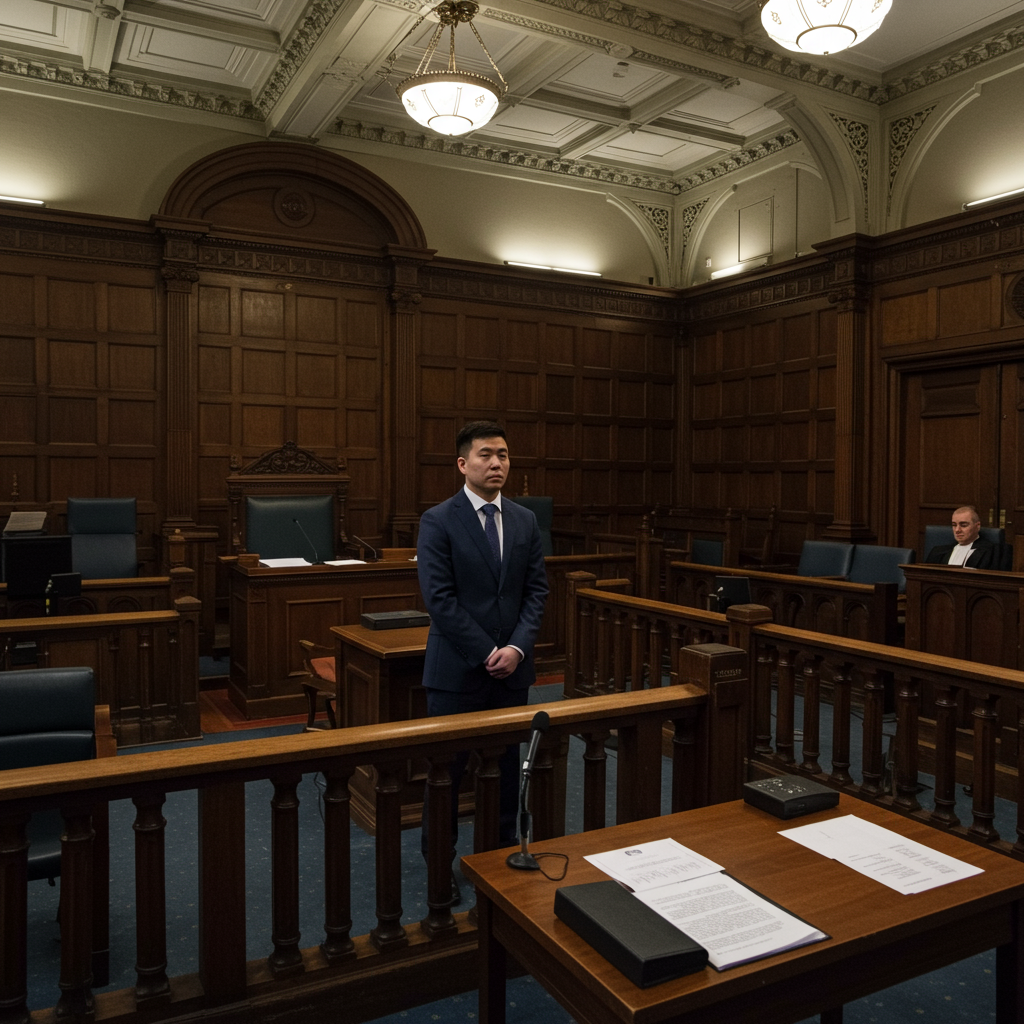
In a case that captivated Australia and drew global attention, Erin patterson has been found guilty of murdering three relatives and attempting to murder a fourth with a poisonous meal. The verdict, delivered by a jury in the Victoria Supreme Court on July 7, 2025, concludes a complex and closely watched trial stemming from a fatal lunch served in July 2023.
Patterson, 50, was convicted of three counts of murder and one count of attempted murder. The charges related to a lunch she hosted at her home in Leongatha, a small town southeast of Melbourne. guests at the meal tragically fell ill after consuming a Beef Wellington dish containing highly toxic death cap mushrooms.
The Fatal Lunch and Its Aftermath
The deadly gathering took place on July 29, 2023. Erin Patterson welcomed four guests: her estranged husband’s parents, Gail Patterson, 70, and Donald Patterson, 70, along with Gail’s sister, Heather Wilkinson, 66, and Heather’s husband, Ian Wilkinson, 68. Erin Patterson’s estranged husband, Simon Patterson, was invited but did not attend the lunch.
Following the meal, all four guests became severely ill, experiencing intense gastrointestinal symptoms. They were hospitalized the next day. Despite medical efforts, three of the guests succumbed to the poisoning. Heather Wilkinson and Gail Patterson passed away on August 4, 2023, followed by Donald Patterson on August 5, 2023. Autopsies confirmed the cause of death was poisoning from Amanita mushrooms, specifically the potent death cap (Amanita phalloides) variety. Ian Wilkinson was the sole survivor, enduring seven weeks of intensive care before recovering.
The case quickly escalated into a homicide investigation, leading to Erin Patterson’s arrest and subsequent charges in November 2023. She pleaded not guilty to all four charges, maintaining that the inclusion of the deadly fungi was accidental.
A Trial Under the Spotlight
The trial unfolded over 10 weeks in Morwell, Victoria, attracting extensive media coverage and public fascination. Journalists from local and international outlets descended on Court 4 of the Latrobe Valley Magistrates’ Court, where proceedings took place. The case’s prominence led to multiple true-crime podcasts dissecting daily testimony and documentaries reportedly entering production even before the verdict.
The central question for the jury was not whether death cap mushrooms were in the food or if they caused the deaths – these facts were undisputed. Instead, the jury had to determine if Patterson knowingly served the poisonous mushrooms with the intent to kill or seriously harm her guests.
Prosecution’s Case: Allegations of Deception
Prosecutor Nanette Rogers SC argued that Erin Patterson deliberately poisoned her guests, detailing what the prosecution characterized as “calculated deceptions.” Rogers told the court Patterson used four main tactics to facilitate the murders and cover her tracks.
Firstly, the prosecution alleged Patterson fabricated a cancer diagnosis as a pretense for inviting her guests to the lunch, seeking advice on how to tell her children. Patterson later admitted lying about having cancer but claimed it was after the meal and related to her plan to have weight-loss surgery.
Secondly, the prosecution contended Patterson intentionally placed lethal doses of death cap mushrooms into individual servings of Beef Wellington meant for her guests. They presented evidence suggesting she served herself from a different plate or bowl to avoid consuming the poisonous fungi.
Thirdly, prosecutors claimed Patterson falsely stated she also felt unwell from the food to divert suspicion, though her alleged symptoms did not align with those of the poisoned guests.
Finally, the prosecution alleged Patterson engaged in a sustained cover-up. Evidence included phone photos of wild mushrooms being weighed on a dehydrator tray and location data. Patterson initially denied foraging or owning a food dehydrator. She admitted lying about these facts, claiming she panicked after realizing the tragic outcome. Police retrieved data from her phone after she factory reset it, uncovering potentially incriminating information. The prosecution also highlighted an alleged question from Simon Patterson to Erin while she was in the hospital concerning whether she poisoned his parents with the dehydrator, although Simon denied this specific exchange.
Defence’s Argument: A Tragic Accident
Patterson’s defence team, led by Colin Mandy SC, maintained that the presence of death cap mushrooms was a “tragedy and terrible accident.” Patterson herself was the sole witness for the defence, testifying for eight days, including five days under cross-examination.
She told the court she had struggled with her weight, an eating disorder, and low self-esteem throughout her life. She admitted lying about having cancer, stating she was embarrassed and wanted advice about weight-loss surgery. Patterson also claimed she did not become as ill as her guests because she secretly binged on a cake brought by her mother-in-law before the main meal and later made herself sick due to her eating disorder.
The defence argued Patterson had no motive to harm her guests, portraying her as having a stable life with sole custody of her children, financially comfortable, and planning future studies. They suggested actions like buying the dehydrator in her own name and later disposing of it openly were inconsistent with a deliberate murder plot. Her lies to police, they contended, were born out of panic and fear, not guilt over intentional poisoning. The defence stressed that while Patterson admitted to dishonesty, she was not on trial for lying, and panic-induced lies did not automatically prove murder.
The Verdict and What Comes Next
After six days of deliberation, the jury of seven men and five women returned unanimous guilty verdicts on all four charges. Erin Patterson reportedly showed no visible emotion as the verdicts were read in court. The guilty findings indicate the jury rejected the defence’s assertion that the deaths were an accident and accepted the prosecution’s case that Patterson acted with criminal intent.
Death cap mushrooms are among the world’s most dangerous fungi, containing potent amatoxins that cause severe liver and kidney damage, often leading to death. They are known for being easily mistaken for edible varieties and reportedly having a pleasant taste when cooked, making accidental consumption particularly perilous.
Following the verdict, Justice Christopher Beale thanked the jurors for their service in the lengthy and complex case and granted them a 15-year exemption from future jury duty.
Patterson faces a maximum sentence of life imprisonment. She will be sentenced at a later date, which has not yet been scheduled. Patterson retains the right to appeal the jury’s verdict.
While the families of the victims have requested privacy, Victoria Police acknowledged the verdict and expressed thoughts for those impacted by the tragedy. The case has left a lasting impact, highlighting the devastating consequences of mushroom poisoning and the complexities of proving intent in a criminal trial.
Frequently Asked Questions
What was the Erin Patterson mushroom murder case about?
The case involved Australian woman Erin Patterson who hosted a family lunch in July 2023 where four guests ate a Beef Wellington dish containing poisonous death cap mushrooms. Three of the guests – her estranged husband’s parents, Gail and Donald Patterson, and Gail’s sister, Heather Wilkinson – died from the poisoning. The fourth guest, Heather’s husband Ian Wilkinson, survived after extensive hospital treatment. Patterson was charged with their murders and the attempted murder of Ian Wilkinson and was found guilty by a jury in July 2025.
Why did the prosecution argue Erin Patterson was guilty?
The prosecution alleged Erin Patterson deliberately poisoned her guests, outlining a case built on “calculated deceptions.” They claimed she fabricated a cancer diagnosis to lure guests, knowingly added lethal death cap mushrooms to specific servings while ensuring her own portion was safe, feigned illness to avoid suspicion, and engaged in a cover-up including attempting to destroy evidence and lying to investigators about foraging mushrooms and owning a food dehydrator, which police later linked to the case through recovered phone data.
What is the potential sentence and what happens next for Erin Patterson?
Following her conviction for three counts of murder and one count of attempted murder, Erin Patterson faces a maximum penalty of life imprisonment under Australian law. Her sentencing hearing will take place at a later date, which has not yet been scheduled. Patterson also has the legal right to appeal the jury’s guilty verdict after her sentence is determined.