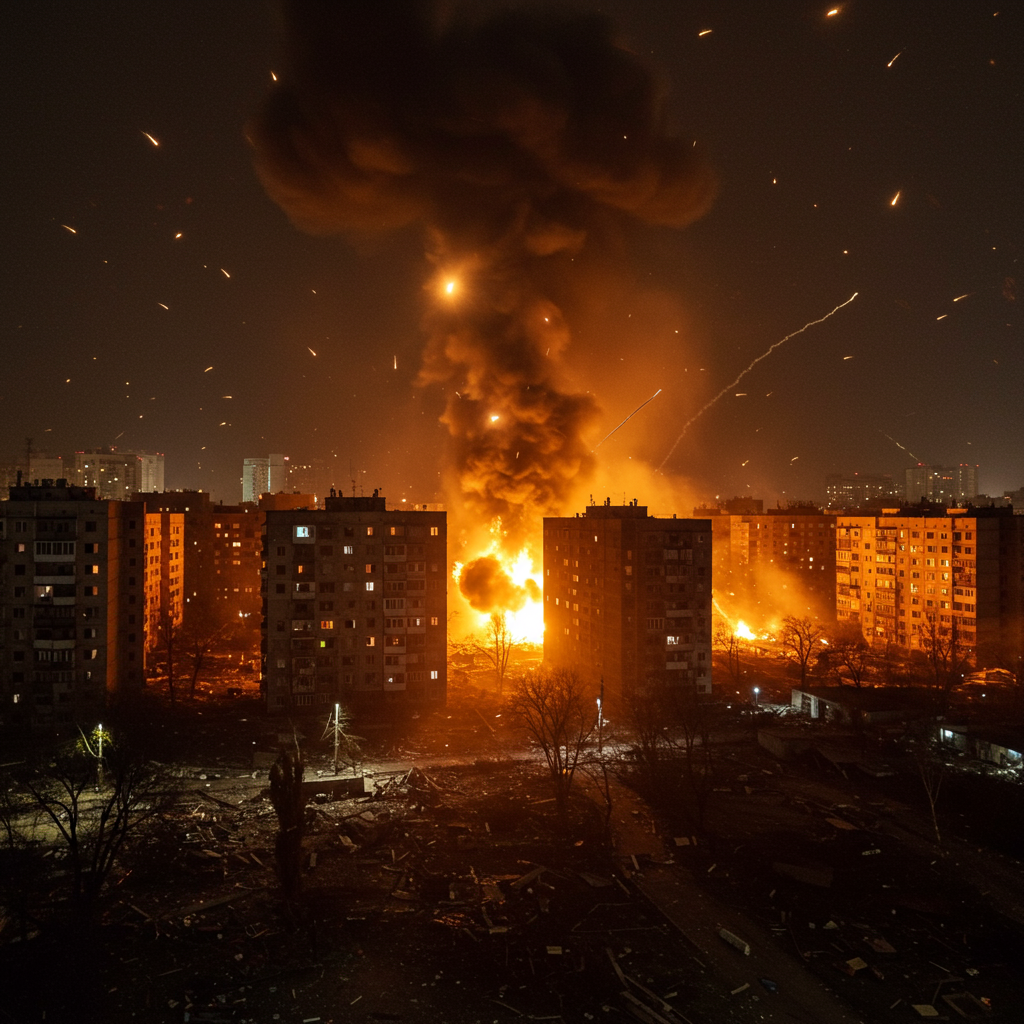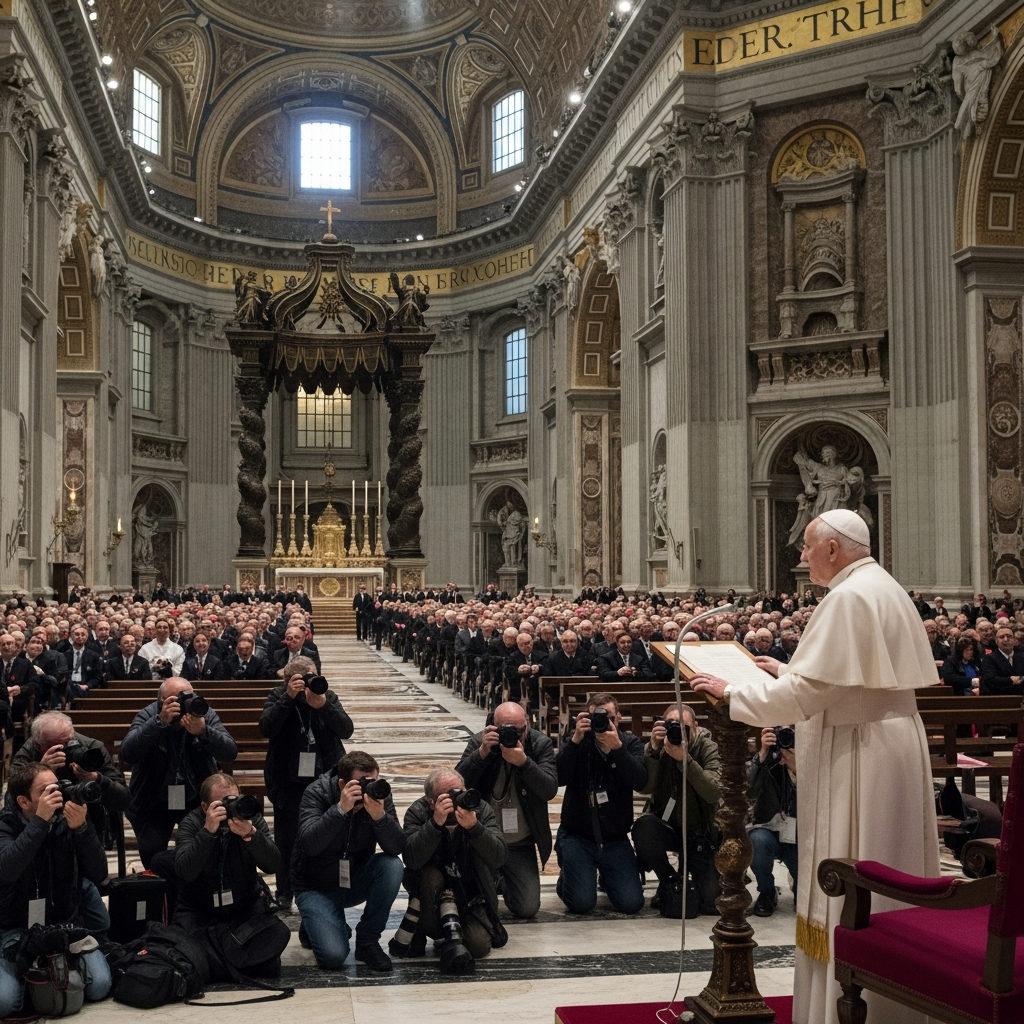
In a powerful and unprecedented address, Pope Leo XIV delivered his strongest condemnation yet of the “delusion of omnipotence” driving the U.S.-Israel war in Iran. From the solemn confines of St. Peter’s Basilica, the Pontiff issued an urgent plea for political leaders to cease hostilities and prioritize peace negotiations. His impactful words resonated globally, coinciding with fragile ceasefire talks between the United States and Iran in Pakistan. This pivotal moment marks a significant escalation in the Vatican’s moral pressure against the devastating conflict.
Pope Leo’s Urgent Call for Global Peace
On Saturday, April 11, 2026, Pope Leo XIV presided over an evening prayer vigil for peace. The historic service took place at the Vatican, drawing thousands to St. Peter’s and uniting parishes across continents in a coordinated global liturgical action. His homily was a direct, unwavering message aimed squarely at world leaders, particularly those involved in the delicate Islamabad negotiations.
The first U.S.-born Pope, Leo XIV, minced no words. He denounced the “idolatry of self and money,” the “display of power,” and the relentless pursuit of war. His pronouncements urged an immediate halt to the violence, demanding genuine dialogue for a lasting peace. This powerful intervention underscored the Vatican’s deep concern over the escalating human cost and geopolitical instability fueled by the conflict.
Challenging the “Delusion of Omnipotence”
Central to Pope Leo’s message was his critique of the “delusion of omnipotence.” He described this as an increasingly “unpredictable and aggressive” force. The Pope asserted that such a mindset breeds a false sense of invincibility, leading to reckless actions and profound suffering. He positioned prayer as a crucial “bulwark” against this dangerous ideology, offering a path to break the “demonic cycle of evil.”
His words directly challenged narratives that justify war through religious rhetoric. He lamented how “the holy Name of God, the God of life, is being dragged into discourses of death.” This statement was a pointed rebuke to U.S. officials, including Defense Secretary Pete Hegseth, who had publicly invoked Christian faith to frame the United States as a Christian nation battling its adversaries. Pope Leo unequivocally declared that God does not bless any war, especially not those involving the dropping of bombs.
The Context of Fragile Peace Talks
The Pontiff’s powerful denunciation arrived amidst critical diplomatic efforts. Face-to-face negotiations between the United States and Iran had just commenced in Islamabad, Pakistan. These talks were an outcome of weeks of frantic international diplomacy. A fragile ceasefire was tenuously holding, but its permanence remained uncertain.
Key figures in attendance at the vigil included Belgian Cardinal Dominique Joseph Mathieu, the Archbishop of Tehran, and Laura Hochla, the U.S. Embassy’s deputy chief of mission. Their presence highlighted the diplomatic weight attached to the Pope’s statements. The U.S. delegation in Islamabad, led by Vice President JD Vance, faced immense pressure. Reports indicated that core Iranian conditions, such as reparations and sanctions relief, were “off the table” for the White House. This posed a significant challenge to achieving a meaningful resolution.
The Pope’s Evolving Stance
Pope Leo XIV’s strong words marked a significant evolution in his public stance on the conflict. In the initial weeks of the war, the Chicago-born Pontiff had been reluctant to issue direct condemnations. He limited his early comments to more muted appeals for general peace and dialogue.
However, his criticism sharpened dramatically starting on Palm Sunday. He later deemed President Trump’s threat to annihilate Iranian civilization as “truly unacceptable,” consistently advocating for dialogue to prevail. The April 11 vigil represented an apex, transforming papal statements into a globally coordinated liturgical action. This broadcast a unified demand for peace to millions worldwide.
A Legacy of Papal Calls for Peace
Pope Leo XIV’s impassioned plea for an end to war echoes a long and consistent lineage of papal authority on peace. He invoked the wisdom of his predecessors, reinforcing the Church’s unwavering commitment to non-violence and diplomatic resolution. This historical context provides significant weight and moral authority to his current intervention.
He cited Pope Paul VI’s urgent appeal at the United Nations: “We must do everything possible.” Pope Leo also referenced Pope John XXIII’s profound warning, “Nothing is lost by peace; everything may be lost by war.” Furthermore, he recalled Pope John Paul II’s post-World War II plea, “No more war.” His immediate predecessor, Pope Francis, taught the indispensable role of “peacemakers” in initiating healing and fostering renewed encounter. This rich history underscores the consistent papal conclusion against war across generations, strengthening Pope Leo’s contemporary call.
Broader Vatican Concerns and Geopolitical Stakes
Beyond the immediate U.S.-Iran conflict, the Vatican harbors profound concerns about regional stability. A major worry is the potential spillover of Israel’s ongoing war against Hezbollah in Lebanon. This concern is particularly acute given the precarious plight of Christian communities residing in southern Lebanon. The interconnectedness of regional conflicts underscores the urgency of comprehensive peace efforts.
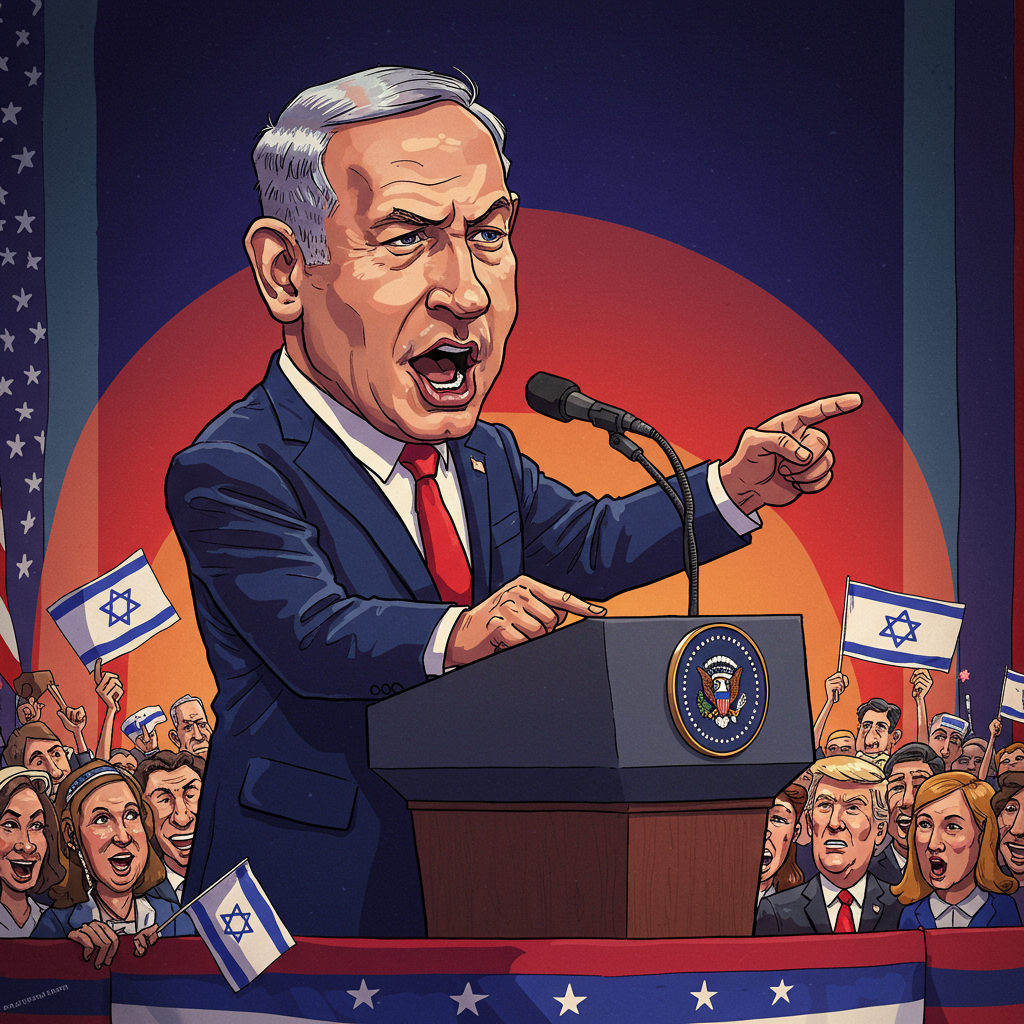
The Pope’s intervention also adds moral pressure to complex geopolitical dynamics. Lobbying efforts against the ceasefire by figures like Israeli Prime Minister Benjamin Netanyahu highlight the deep divisions and high stakes involved. With the ceasefire’s expiration looming, Pope Leo placed the responsibility for peace firmly on both governing leaders and the global citizenry who can hold them accountable. He concluded by asserting that “Now more than ever… we must show that peace is not a utopia.”
Frequently Asked Questions
What is the “delusion of omnipotence” Pope Leo XIV refers to, and why is it significant?
Pope Leo XIV used the phrase “delusion of omnipotence” to describe a dangerous mindset characterized by an excessive belief in one’s own power, often leading to aggression and a disregard for human life. He stated this delusion fuels the U.S.-Israel war in Iran, making it “increasingly unpredictable and aggressive.” The Pope views it as significant because it prevents leaders from seeking peaceful solutions and even misuses religious justifications for conflict, dragging “the holy Name of God, the God of life, into discourses of death.”
How has Pope Leo XIV’s stance on the U.S.-Israel war in Iran evolved?
Initially, Pope Leo XIV was hesitant to publicly condemn the violence in the early weeks of the war, limiting his comments to general appeals for peace and dialogue. However, his criticism escalated significantly starting on Palm Sunday. He later deemed President Trump’s threat to annihilate Iranian civilization “truly unacceptable.” His April 11, 2026, vigil in St. Peter’s Basilica marked his strongest and most direct denouncement yet, transforming his appeals into a globally coordinated call for an end to the “delusion of omnipotence” driving the conflict.
What actions did Pope Leo XIV call for to end the conflict and build peace?
Pope Leo XIV made several key demands for peace. He urged political leaders to “stop” hostilities immediately and engage in genuine dialogue and mediation. He explicitly stated, “Enough of the idolatry of self and money! Enough of the display of power! Enough of war!” The Pope called for all people of good will to pray for peace, viewing it as a way to “break the demonic cycle of evil” and build the “Kingdom of God,” a realm free from “swords, drones or ‘unjust profit’.” He implored leaders to “Sit at the table of dialogue and mediation — not at the table where rearmament is planned and deadly actions are decided.”
The Path Forward: A Call to Action
Pope Leo XIV’s powerful intervention serves as a moral compass during a period of intense global conflict. His unwavering call for an end to the “delusion of omnipotence” and a renewed commitment to peace negotiations offers a critical perspective. As diplomatic efforts continue in Islamabad and regional tensions persist, the world watches to see if political leaders will heed the Pontiff’s urgent appeal. The message is clear: true strength lies in serving life, not in the display of power.