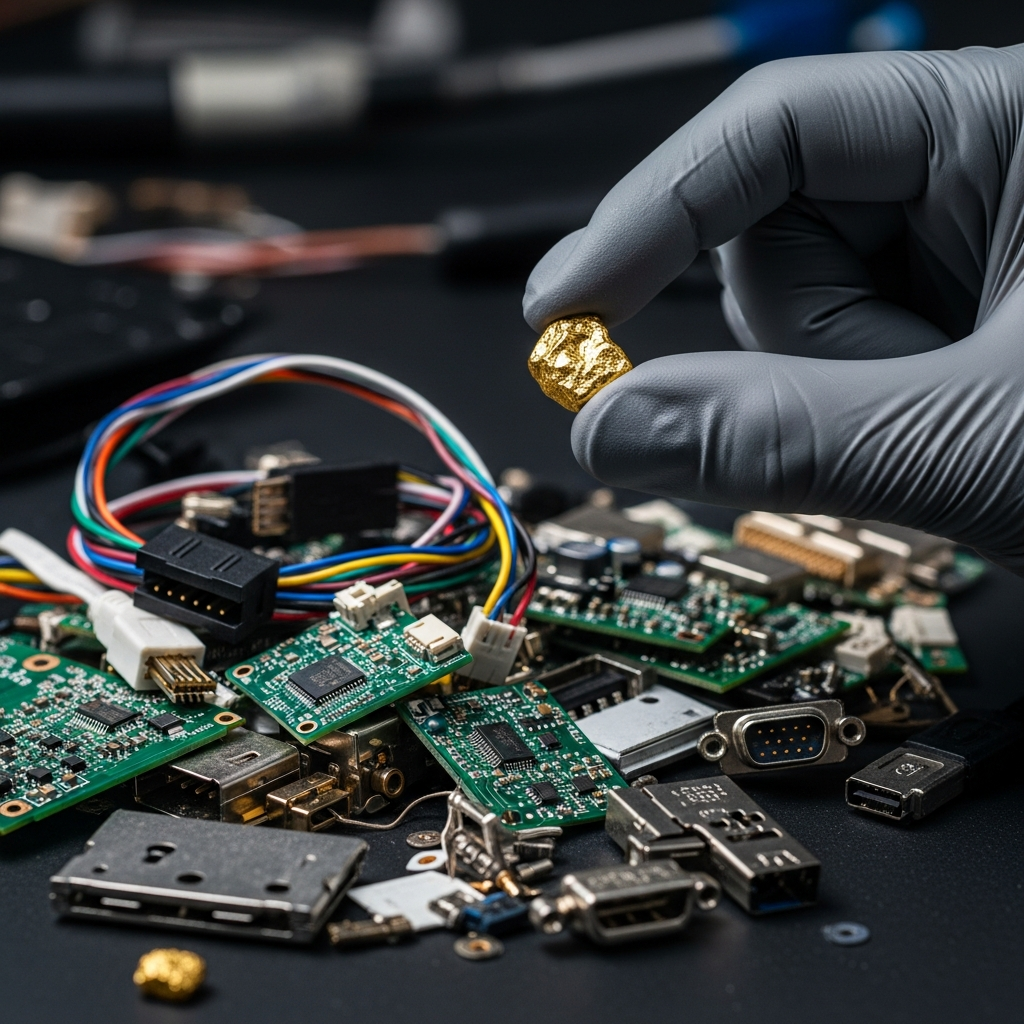
Every year, millions of electronic devices reach their end-of-life, often destined for landfills. This ever-growing mountain of electronic waste, or e-waste, not only pollutes our planet but also buries a hidden treasure: precious metals like gold. For decades, recovering this valuable resource from discarded gadgets has been a significant challenge, requiring costly and often environmentally harmful methods. Now, a groundbreaking discovery from Swiss scientists offers a revolutionary, eco-friendly solution, turning common dairy waste into a powerful tool for sustainable gold extraction.
The Global E-Waste Crisis: A Hidden Environmental Threat
The sheer volume of electronic waste generated worldwide is staggering. According to the U.S. Environmental Protection Agency (EPA), consumer electronics alone contributed 2.7 million tons to municipal solid waste in 2018. Globally, the problem is even more immense. In 2022, the world generated an astonishing 62 million tonnes of e-waste, equivalent to roughly 7.8 kilograms per person. This figure is continuously rising, highlighting a critical environmental challenge.
Despite the escalating issue, global recycling rates for e-waste remain alarmingly low. Only about 22.3% of e-waste was formally collected and recycled in 2022. The vast majority – nearly 75% – ends up in landfills, is improperly stored, or illegally dumped. This represents a colossal loss of valuable materials, with recoverable elements worth an estimated $91 billion contained within discarded electronics in 2022.
Why E-Waste Is So Dangerous
Beyond the economic loss, the environmental and health risks associated with e-waste are profound. Electronic devices contain toxic substances like lead, mercury, cadmium, and brominated flame retardants. When these items are incinerated, landfilled, or processed informally (often in low- and middle-income countries), these chemicals can leach into soil and groundwater, contaminate the air, and pose severe health threats. Open-air burning, for example, releases up to 1,000 different toxic chemicals into the atmosphere.
Children and pregnant women are particularly vulnerable to e-waste exposure. Many children are tragically involved in waste picking or manual dismantling, exposing them to potent neurotoxicants that can lead to irreversible health effects. These include developmental issues, respiratory problems, and neurological damage, with lifelong consequences. The urgent need for safer, more efficient e-waste recycling methods has never been clearer.
Unlocking the Hidden Gold in Your Electronics
While the environmental concerns are pressing, there’s a powerful incentive for better e-waste management: the valuable materials locked inside. Motherboards, processors, connectors, and other components in our electronics rely on minuscule traces of gold for its superior electrical conductivity and corrosion resistance. These tiny gold pathways, often measured in microns, accumulate to significant quantities across millions of devices.
The concept of “urban mining” – extracting valuable resources from discarded manufactured products rather than virgin ore – is gaining traction. This approach offers a sustainable alternative to traditional mining, which is energy-intensive and often environmentally destructive. Recovering gold from electronics not only conserves finite natural resources but also drastically reduces the carbon footprint associated with producing new metals. For instance, recycled metals are 2 to 10 times more energy-efficient to produce than those from virgin ore, and recovering gold from e-waste produces 80% less CO2 emissions per unit compared to ground mining.
The ETH Zurich Breakthrough: Whey Protein Recovers Pure Gold
A team of innovative scientists at ETH Zurich in Switzerland has unveiled a revolutionary method for recovering high-purity gold from electronic waste, leveraging an unexpected source: whey. This liquid byproduct, typically considered waste from the cheesemaking industry, holds the key to a cleaner, more sustainable gold extraction process.
Professor Raffaele Mezzenga and his colleagues developed a technique that processes old computer motherboards without the need for high-temperature furnaces or toxic industrial solvents. Their approach centers on transforming whey proteins into a highly effective “protein sponge.”
How the Whey-Based Method Works
The process begins by dissolving the metal components of discarded motherboards in an acidic bath. This creates a solution containing various metal ions, including gold, copper, iron, and aluminum. The magic happens when the specially prepared whey protein sponge is introduced.
Here’s a simplified breakdown:
Whey Protein Transformation: Under specific acidic and high-temperature conditions, whey proteins reorganize into microscopic structures called amyloid fibrils.
Sponge Creation: These fibrils tangle together, forming a gel that, once freeze-dried, creates a porous, absorbent sponge.
Selective Gold Capture: When this protein sponge is immersed in the acid solution, the amyloid fibrils selectively bind with gold ions, acting like molecular magnets. They capture gold far more aggressively than other metals present.
Solid Gold Recovery: Once the sponge has absorbed its fill of gold ions, it is subjected to heat. This heat treatment reduces the trapped gold ions into solid metallic particles that collect on the sponge’s surface. Melting these particles together yields a pure gold nugget.
In a remarkable demonstration, the ETH Zurich team processed just 20 discarded computer motherboards and successfully recovered a 450-milligram nugget of 22-carat gold. This recovered gold was approximately 91 percent pure, with the remaining 9 percent being copper, and required no secondary refining before industrial use.
Economic and Environmental Impact of Sustainable Gold Extraction
This whey-based method presents a compelling case for a truly circular economy in electronics. It addresses two significant waste streams – dairy whey and electronic waste – transforming both into a valuable output. The economic viability of the process is a major draw: the research team estimates that the cost of procuring whey and conducting the extraction is approximately 50 times lower than the market value of the gold recovered. This substantial profit margin makes the technology commercially attractive for industrial adoption.
From an environmental standpoint, the advantages are equally significant. By avoiding hazardous chemicals and energy-intensive high-temperature melting processes, the ETH Zurich method drastically reduces the ecological footprint of gold recovery. It offers a tangible pathway to decrease reliance on destructive virgin mining practices, contributing directly to climate change mitigation by reducing carbon emissions. This innovation positions Switzerland and the global scientific community at the forefront of green technology and sustainable resource management.
Beyond Gold: A Blueprint for Future Resource Recovery
The potential of this protein sponge technology extends far beyond gold. The researchers are already exploring whether the same amyloid fibril sponge can be tuned to capture other valuable precious metals, such as platinum and palladium. These metals are extensively used in various electronic components and catalytic converters, representing another massive untapped resource in the e-waste stream. By adjusting parameters like acidity and temperature during fibril formation, the sponge’s selectivity could be modified.
Furthermore, the team is actively working to optimize the acid dissolution step. Their goal is to create a closed-loop system where the acid liquid can be neutralized and reused for multiple batches, rather than being discarded after each extraction. Closing this loop would further minimize chemical inputs, making the process even more environmentally friendly and sustainable.
Your Role in the Circular Economy
While scientists work on large-scale industrial solutions, individuals also play a crucial role in tackling the e-waste crisis. Before simply tossing old electronics in the trash, consider these actionable steps:
Buy Refurbished: Opting for refurbished consoles or devices extends their lifespan, reducing the demand for new manufacturing and thus, new raw material extraction.
Donate Working Electronics: Many charities and organizations accept working electronics, giving them a second life and preventing them from becoming waste.
Sell or Trade-In: Retailers often offer trade-in programs for used electronics, providing economic value and ensuring proper handling.
Utilize Certified E-Waste Recyclers: For broken or unusable items, find certified e-waste recycling centers. Companies like Best Buy offer free recycling programs for video game consoles and other electronics. Check your local municipality for electronics collection events or drop-off points.
- Avoid Illegal Dumping: Never dispose of electronics in regular trash, as toxic components can contaminate the environment.
- www.epa.gov
- timesofindia.indiatimes.com
- www.thecooldown.com
- www.genevaenvironmentnetwork.org
- www.who.int)
By making conscious choices about how we acquire, use, and dispose of our electronic devices, we can collectively contribute to a more sustainable future, supporting the circular economy and ensuring valuable resources like gold are recovered, not lost.
Frequently Asked Questions
What kind of electronic items contain recoverable gold, and how much?
Common electronic items like computer motherboards, circuit boards, CPUs, and connectors contain small but significant amounts of gold due to its excellent conductivity and corrosion resistance. The ETH Zurich team successfully recovered 450 milligrams of 22-carat (91% pure) gold from just 20 discarded computer motherboards. This demonstrates that even tiny traces, when accumulated, can yield substantial amounts of precious metal, supporting the concept of “urban mining.”
How does the new whey-based method make gold recovery from e-waste more sustainable?
The whey-based method developed by ETH Zurich significantly enhances sustainability by avoiding the high-temperature furnaces and toxic industrial solvents typically used in conventional gold extraction. Instead, it utilizes whey, a common dairy industry byproduct, to create a protein sponge. This sponge selectively captures gold ions from an acid solution. The process is low-energy, reduces hazardous chemical use, and transforms two waste streams (whey and e-waste) into a valuable resource, making it an eco-friendly alternative to traditional mining, which produces 80% more CO2 emissions for gold.
Why is it important to properly recycle or donate old electronics instead of throwing them away?
Properly recycling or donating old electronics is crucial for both environmental protection and resource conservation. E-waste contains valuable materials like gold, copper, and platinum, which can be recovered and reused, reducing the need for virgin mining and saving energy. More importantly, electronics also contain toxic substances such as lead and mercury. If these items are landfilled or improperly processed, these harmful chemicals can leach into soil, water, and air, posing severe threats to human health and ecosystems. Responsible disposal supports a circular economy and minimizes pollution.
The Future is Golden and Green
The pioneering work at ETH Zurich offers a compelling vision for a future where electronic waste is no longer a liability but a valuable resource. By harnessing the power of nature’s own byproducts, scientists are paving the way for cleaner, more efficient, and economically viable methods of recovering precious metals. This innovation, combining environmental responsibility with financial opportunity, underscores a critical shift towards a truly circular economy. As consumers, our actions in recycling and responsible disposal complement these scientific advancements, ensuring that the hidden gold in our electronics contributes to a golden and greener tomorrow.