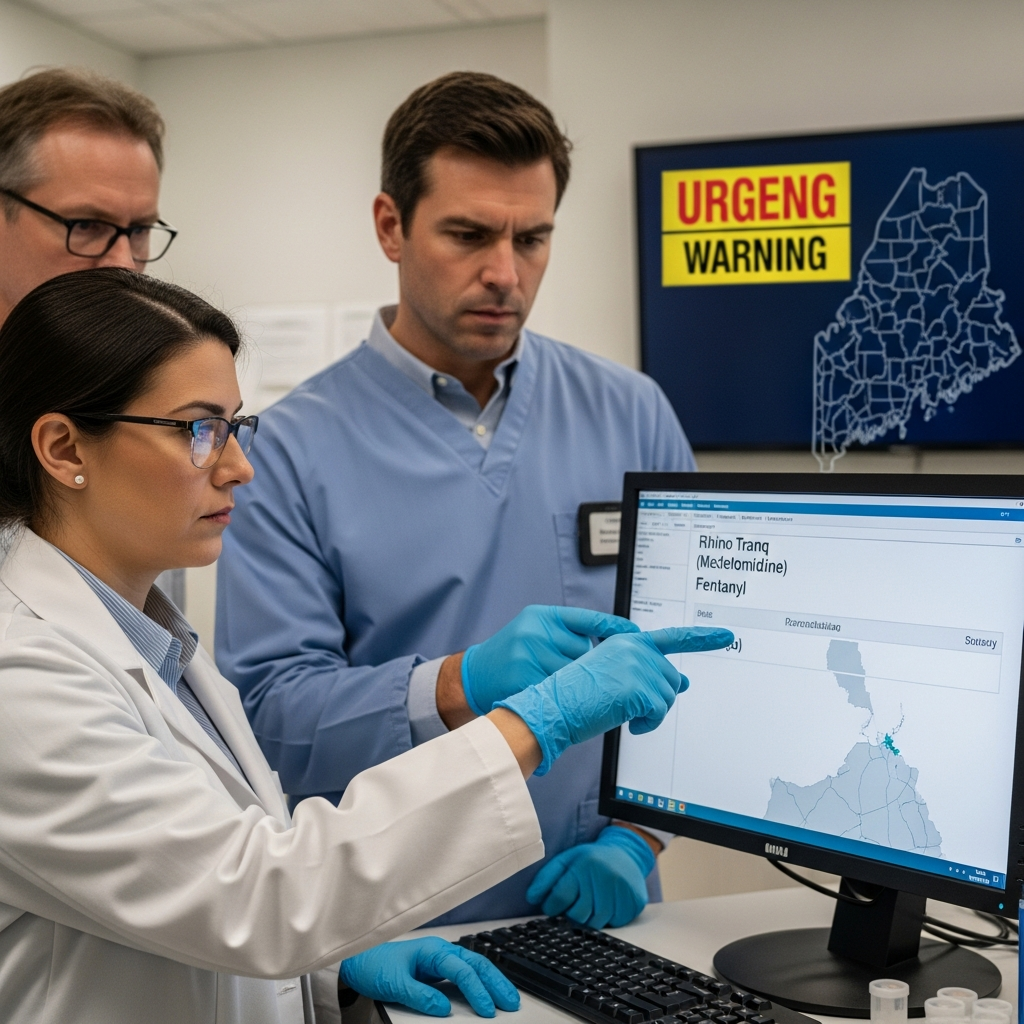
Maine’s illicit drug supply faces a grave new threat: the powerful veterinary tranquilizer medetomidine, commonly known as “rhino tranq.” This highly potent substance is increasingly detected in drug samples, particularly mixed with fentanyl, raising alarm among public health officials and harm reduction advocates across the state and the wider Northeast. Its emergence introduces severe risks, including dangerous overdose symptoms, complex withdrawals, and a challenging detection process, demanding urgent awareness and enhanced harm reduction strategies.
The Alarming Rise of “Rhino Tranq” in Illicit Drugs
Medetomidine, originally used to sedate large animals like rhinos, has infiltrated the street drug market, posing an unprecedented danger. The Maine Center for Disease Control and Prevention (Maine CDC) recently issued an alert highlighting its detection within the state. This compound is significantly more potent than xylazine, another veterinary tranquilizer (“tranq”) that has already complicated the opioid crisis. Experts estimate medetomidine is 200 to 300 times stronger than xylazine, intensifying the hazards of an already volatile drug supply.
The Street Drug Analysis Lab at the University of North Carolina at Chapel Hill, a key facility for tracking drug trends nationwide, first identified medetomidine in other states in 2022. It made its initial appearance in a Maine sample about a year ago, with a more recent detection noted in a Bangor sample last September. This spread is not isolated to Maine; officials report concentrations in the Northeast, particularly Philadelphia, and its presence has been confirmed in at least 18 states and the District of Columbia, as well as in Los Angeles County. This broad distribution signals a rapidly evolving and increasingly dangerous drug landscape, often driven by Mexican drug cartels who constantly modify drug compositions for increased potency and profitability.
Why Medetomidine is Exceptionally Dangerous
The presence of medetomidine introduces several critical risks that complicate overdose response and addiction treatment:
Extreme Potency: Its high strength means even tiny amounts can induce profound sedation, dangerously low blood pressure, and a severely reduced heart rate.
Naloxone Resistance: Crucially, medetomidine does not respond to naloxone, the life-saving medication used to reverse opioid overdoses. While naloxone is still recommended for suspected overdoses due to the common co-occurrence with fentanyl (which does respond), it will not counteract the effects of the tranquilizer itself. This necessitates additional supportive medical care.
Severe Withdrawal Syndrome: Individuals experiencing medetomidine withdrawal can suffer perilously high blood pressure, heart damage, brain damage, continuous vomiting, and fluctuating consciousness. Health experts, like Anna McConnell of Maine Access Points, stress that these severe withdrawals are not manageable at home and require immediate emergency medical attention.
Hallucinations: Unlike opioids, street samples of medetomidine have been linked to intense hallucinations. This unexpected symptom can serve as an early warning sign of the drug’s presence in a supply.
While xylazine is infamous for causing severe skin wounds, medetomidine, despite its higher potency, does not appear to be associated with similar wound development. However, the overall health implications are severe, adding another layer of complexity to public health challenges.
Detection Challenges and Response Limitations
Detecting medetomidine in drug samples presents significant hurdles. Its extreme potency means it is effective in very small quantities, making it difficult to identify accurately. Unlike xylazine, widely available test strips for medetomidine are not common in Maine, and using them effectively requires specialized training. This lack of accessible detection tools puts individuals at greater risk, as they may be unaware they are consuming “rhino tranq.”
Given these challenges, public health agencies and harm reduction organizations are intensifying calls for enhanced testing and surveillance efforts. Improved coordination across healthcare systems and laboratories is vital to better identify and respond to novel substances continually entering the drug market.
Critical Harm Reduction Strategies for Maine Communities
In light of the unpredictable drug supply, robust harm reduction strategies are more critical than ever. Organizations like Maine Access Points and Needlepoint Sanctuary in Bangor are on the front lines, offering vital services and advice to safeguard lives.
Here are key actionable steps for individuals and communities:
Never Use Alone: Always use drugs in the presence of someone who can respond in an emergency.
Carry Naloxone (Narcan): Despite medetomidine’s resistance, naloxone remains essential because “rhino tranq” is frequently mixed with fentanyl, which does respond to the reversal medication. Administer naloxone in any suspected overdose.
Practice Rescue Breathing: For suspected overdoses involving veterinary tranquilizers, rescue breathing is especially important and can be life-saving.
Utilize Drug Checking Services: Harm reduction organizations offer services to test drugs for unknown substances. Maine Access Points provides drug checking at its locations in Machias, Calais, Sanford, Rumford, and Biddeford. Needlepoint Sanctuary in Bangor also encourages drug testing.
Seek Emergency Medical Attention: If someone exhibits symptoms of medetomidine withdrawal (continuous vomiting, chest pain, fluctuating awareness) or overdose, call 911 immediately. Attempting to manage these at home can be fatal.
Be Aware of Changing Drug Supply: The illicit drug supply is constantly evolving. Staying informed about new threats like “rhino tranq” is crucial.
The ongoing opioid crisis in Maine, including a recent HIV outbreak in Penobscot County and Bangor, underscores the urgency of these harm reduction efforts. While statewide overdose deaths saw a decline last year, they regrettably continued to climb in these highly impacted areas, emphasizing the dynamic and localized nature of this public health emergency.
Frequently Asked Questions
What exactly is “Rhino Tranq” (medetomidine) and why is it so dangerous?
“Rhino Tranq” is the street name for medetomidine, a powerful veterinary tranquilizer primarily used to sedate large animals. It has increasingly infiltrated the illicit drug supply, often mixed with fentanyl. Its extreme danger stems from several factors: it is 200 to 300 times more potent than xylazine (another common cutting agent), it causes severe and life-threatening withdrawal symptoms that require emergency medical care, and critically, its effects are not reversible by naloxone, the standard opioid overdose medication. This means individuals overdosing on medetomidine need additional, specialized medical intervention beyond typical overdose response.
Where can individuals get drug testing services for “rhino tranq” in Maine?
Due to the extreme potency of medetomidine and the lack of widely available, easy-to-use test strips, professional drug checking services are highly recommended. In Maine, organizations like Maine Access Points offer these vital services at their locations in Machias, Calais, Sanford, Rumford, and Biddeford. Additionally, Needlepoint Sanctuary in Bangor also encourages individuals to utilize drug testing resources. These services are crucial for identifying unknown substances in the ever-changing drug supply and helping individuals make informed decisions to reduce harm.
What are the immediate steps to take if someone is experiencing a suspected “Rhino Tranq” overdose?
If you suspect someone is experiencing a “Rhino Tranq” overdose, immediate emergency action is critical. First, call 911 immediately for professional medical assistance, as severe withdrawal symptoms or overdose effects are not manageable at home. Second, administer naloxone (Narcan), even though it does not reverse medetomidine’s effects. This is because “rhino tranq” is frequently mixed with fentanyl, which does respond to naloxone. Third, perform rescue breathing, which is particularly important for overdoses involving veterinary tranquilizers. Stay with the person until emergency responders arrive.
Staying Vigilant in a Shifting Crisis
The appearance of medetomidine in Maine’s drug supply underscores the relentless and evolving nature of the opioid crisis. As new, dangerous substances emerge, communities must remain vigilant, informed, and proactive. The collective efforts of public health agencies, law enforcement, and dedicated harm reduction organizations are vital in navigating these complex challenges. By understanding the risks, promoting accessible testing, and emphasizing critical harm reduction strategies, we can collectively work to mitigate the devastating impact of “rhino tranq” and protect the lives of those affected by substance use.