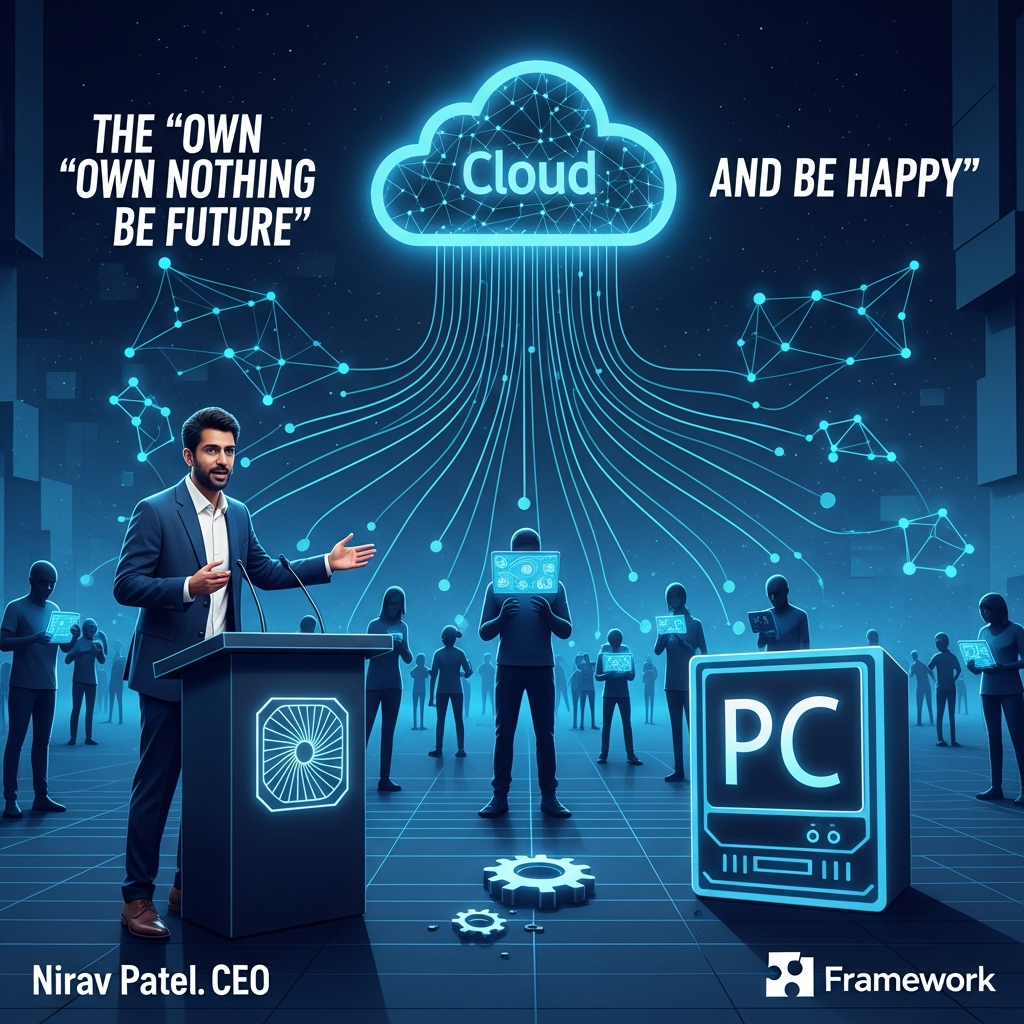
The personal computing landscape is undergoing a monumental shift, battered by escalating costs, persistent supply chain disruptions, and a growing emphasis on cloud-based solutions. At the heart of this PC industry crisis, Framework CEO Nirav Patel issues a stark warning, suggesting the industry is subtly “asking you to own nothing and be happy.” This provocative statement encapsulates a fundamental concern for the future of digital ownership and user autonomy.
This isn’t merely a theoretical debate. The economic realities are already pushing personal computing towards a subscription-driven, cloud-centric future, where convenience might come at the cost of control. Understanding these pressures is crucial for consumers and businesses alike as they navigate an increasingly complex tech environment.
The Looming Cloud Domination: An Economic Reality
Nirav Patel, founder and CEO of Framework, a company renowned for its ultra-customizable and repairable laptops, articulated a critical observation in a recent blog post: “The computer in the cloud has increasingly greater economic output than the computer in the hand.” This insight highlights a pivotal economic imbalance. When global supply chains face constraints, the vast, economically powerful cloud infrastructure will inevitably command priority for vital resources over individual personal devices. This trend isn’t just about technological evolution; it’s about a reordering of economic power that could fundamentally reshape how we interact with our digital tools.
The “Own Nothing” Warning: A Future of Subscriptions?
Patel’s stark message, “The industry is asking you to own nothing and be happy,” isn’t hyperbole for many personal computing advocates. It reflects a legitimate fear: a cloud-centric future where users are increasingly compelled into costly, Netflix-like subscription models for hardware, software, and even basic computing functions. While some industry executives, such as those at Lenovo, envision a “hybrid” future balancing local and cloud computing to offset soaring PC prices, critics like Patel worry this path inexorably leads to diminished personal ownership and greater reliance on third-party services. This shift poses significant questions about long-term costs, data privacy, and user control.
Escalating Costs & Supply Chain Woes Fuel PC Industry Crisis
The evidence of this PC industry crisis is tangible and widespread. Framework itself, despite its commitment to sustainable and user-upgradable hardware, has been forced to implement repeated price increases for core components. In recent months, the company hiked costs for RAM and storage, specifically larger SSDs (4TB or higher), and prebuilt configurations of its Framework Laptop 16 featuring 64GB of DDR5 RAM. Framework, due to its business model selling customizable components, has been more transparent than many about the direct impact of the ongoing RAM crisis.
However, Framework is not alone in feeling the pinch. The entire PC manufacturing sector is experiencing significant pressure. For instance, Asus controversially adjusted the price of its Zenbook A16 laptop from $1,600 to $1,700 mere hours after its initial launch. While Asus attributed the change to a “retailer error,” it underscored the volatile and rapidly shifting pricing environment facing consumers.
Behind the Price Hikes: AI’s Insatiable Demand for Memory
A primary driver behind these escalating component costs is the astronomical demand for High-Bandwidth Memory (HBM) from burgeoning Artificial Intelligence (AI) datacenter projects. The three leading semiconductor manufacturers—Samsung, SK Hynix, and Micron—have strategically reoriented their production capacities. They are now predominantly supplying the AI industry, which offers higher margins and more stable demand, rather than consumer or commercial electronics. This strategic pivot has rendered the cost of consumer-grade DRAM and NAND flash storage increasingly untenable, leading to significant price surges across a spectrum of components, including RAM, SSDs, and even GPUs. This prioritization of AI infrastructure directly impacts the affordability and availability of hardware for traditional personal computing.
Market Flux, Global Pressures, and Economic Headwinds
Beyond component shortages, the overall PC industry is navigating a period of profound instability. Market analysis firm IDC’s latest PC shipments report revealed a troubling trend: while the first quarter of 2026 initially showed robust growth, this momentum “took a nosedive at the tail end” of the period. This downturn was attributed to a confluence of factors, including persistent component shortages and a deteriorating global economic climate. Despite many companies (except HP) reporting strong year-over-year growth, IDC hinted that this positive trend might not be sustainable.
Further exacerbating the situation are geopolitical events. According to IDC senior research analyst Isaac Ngatia, the ongoing conflict in Iran is inflicting additional damage on PC manufacturers’ prospects. The resulting strain on global logistics and supply chains is “trickling down the value chain,” directly intensifying pricing pressure on end-users. This complex interplay of technological demand, economic uncertainty, and geopolitical instability creates a challenging outlook for the affordability and accessibility of personal computers.
Framework’s Counter-Narrative: Championing Ownership
In the face of these formidable challenges, Framework’s Nirav Patel isn’t merely lamenting the state of affairs; he’s actively advocating for a different path. Quoting Steve Jobs, Patel remarked, “Computers are no longer a bicycle for the mind… They are becoming the self-driving car that takes you directly to the destination.” This metaphor highlights a perceived loss of agency and customization for the user, a trend Framework aims to reverse.
Framework is actively leveraging this industry sentiment to promote its core values: user control, repairability, and choice. The company’s products, including the Framework Desktop, Laptop 13, and Laptop 16, are meticulously designed to allow users to install operating systems like Linux or purchase a Windows 11 license. This emphasis on user choice stands in stark contrast to the “own nothing” philosophy.
The Linux Connection and the Future of Personal PCs
Framework’s impending product announcement, teased with “penguin-laden icons” hinting at a strong Linux connection, represents a strategic move. By potentially relying more on the open-source Linux operating system, Framework might aim to mitigate software costs and appeal to a niche of dedicated PC buyers. These users often prioritize open-source solutions, ownership, and the ability to repair and customize their hardware, rejecting the trend towards cloud dependence.
Ultimately, Patel hopes that dedicated PC enthusiasts will be willing to invest more for the sake of true ownership and control. However, the broader implication remains: regardless of these efforts, personal computers are increasingly becoming a luxury item. This makes the choice between a disposable, cloud-dependent device and a repairable, owner-centric machine more critical than ever. The PC industry crisis is forcing consumers to re-evaluate their relationship with technology, demanding a closer look at what true digital ownership entails in an evolving world. For those seeking genuine value and control, understanding these dynamics is paramount.
Frequently Asked Questions
Why are personal computer components like RAM and SSDs becoming so expensive?
The escalating costs of PC components are primarily driven by two major factors: the immense demand for High-Bandwidth Memory (HBM) from AI datacenter projects and ongoing global supply chain disruptions. Leading semiconductor manufacturers are prioritizing supplying the AI industry due to its higher profitability, leading to reduced availability and increased prices for consumer-grade DRAM and NAND flash storage. Geopolitical events also exacerbate logistics issues, pushing prices higher for end-users.
How is Framework challenging the shift towards cloud-only computing and promoting digital ownership?
Framework actively counters the “own nothing” trend by designing ultra-customizable and repairable laptops. Their products are built for user-upgradability and support open-source operating systems like Linux, empowering users with greater control over their hardware and software. By enabling easy repairs and component replacements, Framework promotes longevity and user agency, offering an alternative to the increasingly expensive, subscription-based, and less repairable cloud-dependent computing models.
Should consumers be concerned about the future of personal computer ownership?
Yes, consumers should be concerned about the future of personal computer ownership. As the industry increasingly leans towards cloud-centric models and subscription services, there’s a risk of losing direct control over hardware and software. This shift could lead to higher long-term costs through mandatory subscriptions, limited customization options, and reduced repairability, making personal computers more of a luxury and potentially diminishing user autonomy in the digital realm. Staying informed about these trends and considering alternatives that prioritize ownership and repairability is crucial.