The international community is vehemently condemning Israel’s recent approval of 34 new settlements in the occupied West Bank. This move, critics argue, represents a significant escalation of policies that violate international law and actively undermine the prospects for peace in the region. The Organisation of Islamic Cooperation (OIC) has led the wave of condemnations, declaring Israel’s actions “null and void.”
Urgent Condemnation from Global Bodies
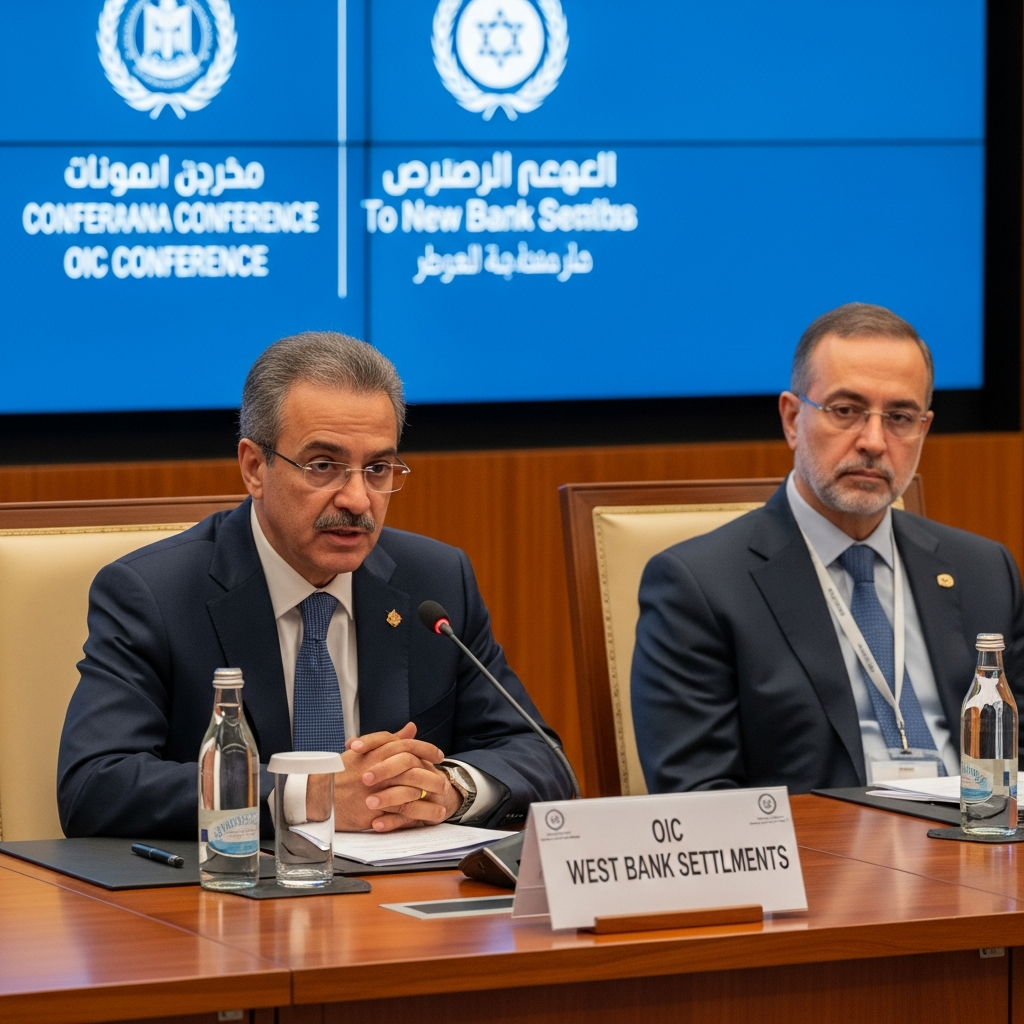
The OIC, representing 57 member states, released a powerful statement from its general secretariat in Jeddah. It unequivocally condemned Israel’s decision, asserting that as an occupying power, Israel holds no legitimate sovereignty over the Occupied Palestinian Territory, including East Al-Quds (Jerusalem). The OIC emphasized that any Israeli measures designed to alter the demographic or geographic reality of these areas are baseless under international law. This stance aligns with previous OIC emergency meetings that have consistently denounced Israeli annexation plans and claims of “state property” in the West Bank, often citing them as “flagrant violations of international humanitarian law.”
The Palestinian Presidency’s office echoed this sentiment, describing the new plan as a “flagrant violation of international law.” They stressed that such actions directly infringe upon the fundamental rights of the Palestinian people, including their right to self-determination and the establishment of an independent state with East Jerusalem as its capital, based on the June 4, 1967 borders.
International Outcry Intensifies
Beyond the OIC and Palestinian authorities, a chorus of international voices has joined the condemnation. Turkiye criticized Israel’s approval, labeling it a “serious violation of international law and UN resolutions.” The European Union, through its spokesperson for Foreign Affairs and Security Policy, Anouar el Anouni, “strongly condemned Israel’s unilateral actions.” He specifically referenced the International Court of Justice’s (ICJ) advisory opinion of July 19, 2024, which declared such unilateral expansions unlawful. The EU urged Israel to reverse these decisions, comply with its international obligations, and protect the Palestinian population in the occupied territories.
Sweden’s Ministry of Foreign Affairs also posted a condemnation, stating that the West Bank settlements were a “flagrant violation of international law” and imperiled regional peace efforts. They joined the call for Israel to immediately reverse its decision and uphold its international commitments. A broader coalition of 19 countries, including Spain, Ireland, Norway, and Portugal, alongside the Arab League, also issued a joint statement. This collective declaration warned against altering the reality on the ground and the advancement of “unacceptable de facto annexation.”
The Secrecy and Scale of the Approvals
Israeli rights group Peace Now first reported that the government had “secretly” approved these 34 new settlement plans in early April. This information was subsequently widely reported by Israeli media outlets. Channel 24 noted that the security cabinet greenlit these sites during a recent session, highlighting that it represented the “largest number of settlements ever approved in a single cabinet session.”
These 34 new approvals come on top of 68 previously sanctioned Israeli West Bank settlements since Prime Minister Benjamin Netanyahu’s right-wing government took power in 2022. The locations for these newly approved sites are particularly contentious. They include areas within existing Palestinian neighborhoods in the northern West Bank, as well as remote regions rarely accessed by Israeli forces. Crucially, 10 of the 34 are already existing outposts, which are illegal even under Israeli law. This decision will retroactively legalize them. The remaining 24 are planned for future construction, further entrenching the Israeli presence in occupied territory. Despite the widespread reporting and international outcry, the Israeli government has not officially published the decision, and there was no immediate comment from Israeli authorities.
Unprecedented Acceleration and Policy Shifts
The policy of settlement expansion has been a consistent feature of successive Israeli governments since the 1967 occupation of the West Bank. However, this expansion has dramatically accelerated under the current Netanyahu-led coalition. Rights groups report a sharp increase in approvals, land seizures, and settler violence, particularly since the escalation of conflict in Gaza in October 2023. This ongoing war has reportedly claimed over 72,000 Palestinian lives.
New Israeli measures go beyond just approvals. They include sweeping changes to land registration and civil control in the occupied West Bank. Palestinian leaders assert these moves breach the Oslo Accords, agreements that established limited Palestinian self-rule and divided the West Bank into administrative areas. Israeli ministers, including Finance Minister Bezalel Smotrich, have openly stated that these policies aim to “kill the idea of a Palestinian state” and provide settlers with equal “legal and civil rights.”
These changes empower the military with expanded authority over so-called unlicensed buildings in Palestinian areas, potentially leading to land confiscation and demolitions using heritage or archaeological sites as justification. Furthermore, secrecy surrounding West Bank land registries is being lifted. This move enables settlers to identify and directly purchase land from Palestinian owners. Critics warn that this could facilitate fraudulent claims and accelerate land seizures, a tactic widely documented.
The Impact on the Two-State Solution and Regional Stability
The OIC has consistently warned of the serious implications of escalating settlement policies, land confiscation, and settler terrorism. They stress that these actions, coupled with attempts to annex the West Bank and impose Israeli sovereignty, are designed to systematically undermine the two-state solution. This internationally favored framework aims to resolve the Israeli-Palestinian conflict by establishing an independent Palestinian state alongside Israel.
The continued expansion of West Bank settlements creates irreversible facts on the ground. These facts make the formation of a contiguous, viable Palestinian state increasingly difficult, if not impossible. This geographical fragmentation directly sabotages opportunities for peace and exacerbates regional tensions. An internal Israeli perspective reveals some of the challenges. Military chief Eyal Zamir reportedly warned the security cabinet on April 1 that the army could “collapse.” This warning stemmed from increasing demands on manpower, including the need to protect these newly legalized outposts. This highlights the operational strain that settlement expansion places on Israeli military resources and overall stability.
Settler violence has also reached alarming levels. There has been an “alarming escalation” in the West Bank, with calls for Israel to end this violence and hold perpetrators accountable. Incidents include arson attacks on mosques and racist slogans. Official data shows thousands of cases of settler violence in recent years. This violence, combined with the expansion of Israeli West Bank settlements, deeply entrenches the occupation and fuels a cycle of conflict. All Israeli settlements in the occupied West Bank are considered illegal under international law, a position reinforced by numerous UN resolutions and international legal bodies.
Currently, over 500,000 Israelis reside in West Bank settlements (excluding East Jerusalem), amidst approximately three million Palestinians. This demographic reality, continually altered by new approvals, represents a critical obstacle to any future peace agreement.
Frequently Asked Questions
What is the international legal status of Israeli settlements in the West Bank?
Under international law, all Israeli settlements in the occupied West Bank are considered illegal. This position is largely based on the Fourth Geneva Convention, which prohibits an occupying power from transferring its own population into occupied territory. Numerous United Nations Security Council resolutions, including Resolution 2334, have reaffirmed this stance. The International Court of Justice also issued an advisory opinion in July 2024, declaring such actions unlawful. Despite this widespread international consensus, Israel disputes this interpretation, asserting historical and security claims to the land.
Which major international organizations and countries have condemned Israel’s new settlement approvals?
A broad coalition of international entities and nations has condemned Israel’s recent approval of 34 new settlements. Key among them is the Organisation of Islamic Cooperation (OIC), which labeled the decision a “flagrant violation of international law.” The Palestinian Presidency, Turkiye, and the European Union have also issued strong condemnations, with the EU specifically citing the International Court of Justice’s opinion. Sweden, along with 19 other countries including Spain, Ireland, Norway, and Portugal, and the Arab League, have collectively voiced their opposition, urging Israel to reverse these decisions and respect international obligations.
How do expanding settlements impact the two-state solution and regional stability?
The expansion of Israeli settlements in the West Bank severely undermines the viability of the two-state solution, which envisions an independent Palestinian state coexisting alongside Israel. Each new settlement, particularly those retroactively legalized or built in sensitive areas, fragments Palestinian territory. This makes the creation of a contiguous and economically viable Palestinian state increasingly difficult. Such actions are seen by the OIC and other international bodies as de facto annexation, actively sabotaging peace efforts, and increasing regional instability by fueling tensions, settler violence, and undermining the rights of the Palestinian people.
The approval of 34 new Israeli West Bank settlements sends a stark message to the international community and further complicates an already volatile region. The widespread condemnation underscores the global consensus against such unilateral actions, emphasizing their illegality under international law and their detrimental impact on peace prospects. As calls for reversal grow louder, the future of the two-state solution hangs precariously in the balance, deeply affected by these accelerating policies of expansion.