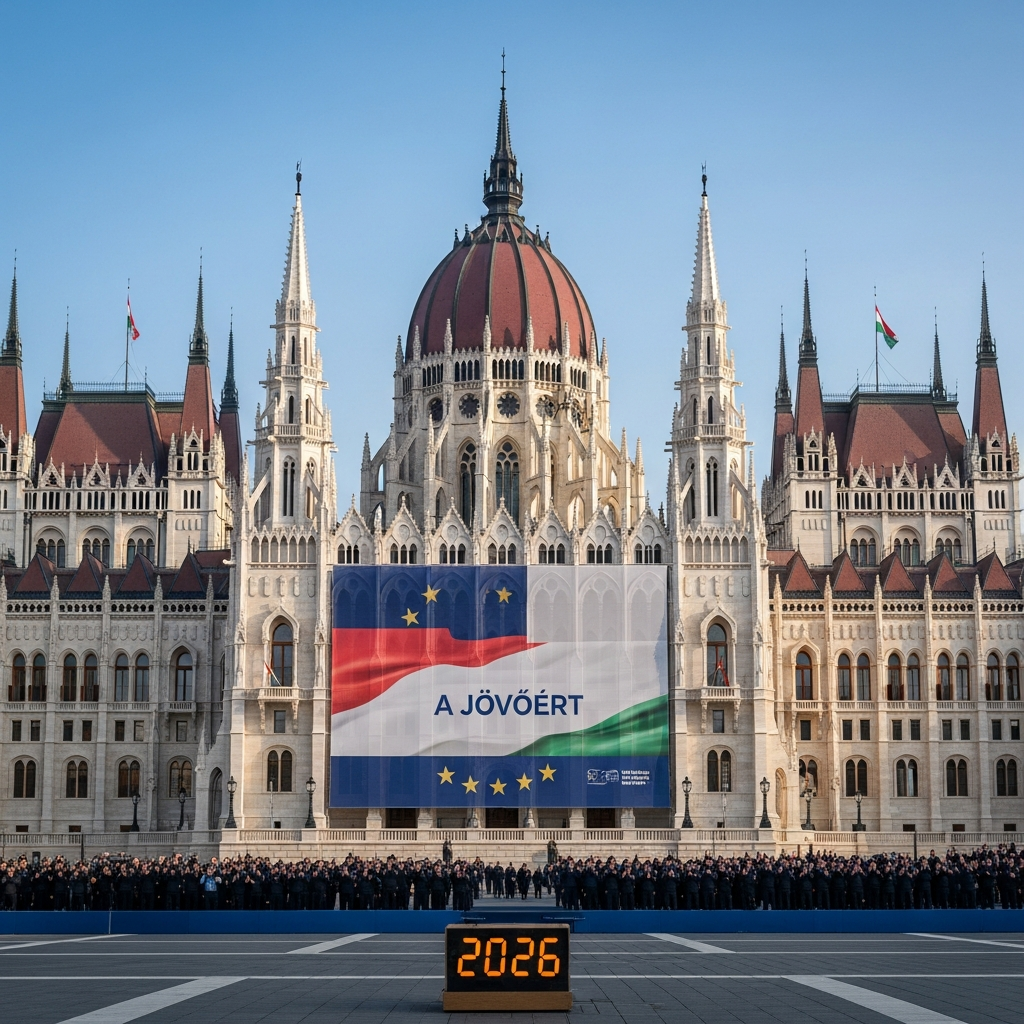
Hungary’s upcoming parliamentary election, scheduled for April 12, 2026, represents far more than a routine vote for leadership. This pivotal event in Budapest is a critical referendum on Prime Minister Viktor Orbán’s distinctive political model, often termed “illiberal democracy,” and his sixteen-year tenure. The outcome of the Hungarian election will not only dictate the nation’s future direction but could also send significant ripples across Europe and influence conservative movements as far afield as the United States, especially given U.S. Vice President Vance’s recent visit to bolster Orbán’s campaign.
The Architect of “Illiberal Democracy”
Viktor Orbán, who first served as Prime Minister from 1998 to 2002 as a more conventional center-right, pro-European figure, returned to power with his Fidesz party in 2010. Since then, he has fundamentally reshaped Hungary’s political and institutional landscape. Orbán’s vision involves an “illiberal state” built on “national foundations” or “Christian democracy,” a stark departure from traditional Western liberal democratic norms.
Under his leadership, the government has rewritten the constitution and dramatically restructured the judiciary. This consolidation of control extends to key state institutions. Independent observers have voiced significant concerns regarding these changes. Freedom House, a U.S.-based non-governmental organization, now labels Hungary as only “partly free.” Similarly, the V-Dem Institute, a Swedish research organization, describes the nation as an “electoral autocracy.” These assessments underscore the profound shift in Hungary’s democratic health under Orbán.
Extending Influence Beyond Politics
The Fidesz government’s reach extends far beyond legal and political structures. Critics argue that its influence permeates media, business, and academia, profoundly impacting public discourse and independent thought. The media landscape, for instance, has largely been brought into alignment with the government’s narrative. The public broadcaster faces significant constraints, while many private networks are now controlled by business entities closely linked to Fidesz. This effectively limits diverse viewpoints and promotes a unified government-friendly message.
Higher education has also experienced direct intervention. The Central European University (CEU), founded by Hungarian-American philanthropist George Soros, was controversially forced out of Budapest. In 2017, the Orbán government enacted “Lex CEU,” a law specifically targeting the institution by requiring it to establish a campus in the U.S. or cease operations. Despite significant expense, CEU relocated to Vienna. Michael Ignatieff, its former president, once described Hungary as a “training ground” for a broader, global illiberal political movement, highlighting its strategic significance.
Electoral Dynamics: A Skewed Playing Field
Despite the significant erosion of democratic checks, Hungary continues to hold regular elections, and opposition parties are free to campaign. However, electoral analysts consistently point to a profoundly uneven playing field. The ruling Fidesz party enjoys substantial structural advantages that make it exceptionally difficult for challengers to succeed.
These advantages stem from several key factors. Changes to electoral rules have subtly but effectively favored the incumbent. There is also an increasing executive branch control over the judiciary, which can influence legal challenges related to elections. Coupled with pervasive media dominance and the strategic use of state resources, the ruling party possesses a built-in advantage. Consequently, any challenger in this Hungarian election must secure a decisive victory to overcome these embedded biases.
Péter Magyar: A New, Formidable Challenger
The political landscape leading up to the 2026 Hungarian election has been dramatically reshaped by the emergence of Péter Magyar. Heading the relatively new Tisza (Respect and Freedom) party, Magyar poses the most significant challenge to Viktor Orbán’s long rule to date. A lawyer and former diplomat, Magyar was once an insider within Fidesz and the ex-husband of former Justice Minister Judit Varga. His dramatic break from the government occurred in early 2024.
Magyar’s departure was triggered by a high-profile scandal involving a presidential pardon for an individual implicated in child abuse. He transformed this personal rupture into a potent political movement, vehemently criticizing the government for pervasive corruption and economic stagnation. His rallies across the country have drawn large crowds, indicating a deep well of voter frustration. His platform is clear: crack down on corruption, engage the EU’s public prosecutor to investigate alleged misuse of EU funds, and restore rule-of-law standards to unlock billions in frozen European transfers. Magyar also advocates for closer alignment with EU and Western institutions while reducing dependence on Russian energy. His rallying cry, “We don’t want to live in fear anymore… This country belongs to all of us, not just those in power,” resonates deeply with a populace experiencing voter fatigue and economic pressures after more than a decade of Orbán’s leadership.
Economic Discontent Fuels Opposition
A primary driver of voter dissatisfaction in the lead-up to the Hungarian election is the country’s economic performance. Hungary has experienced three years of economic stagnation coupled with rising living costs, turning the election into a de facto referendum on everyday economic pressures. Public anger is further fueled by persistent allegations of illicit enrichment among oligarchs closely associated with the government.
Péter Magyar has skillfully capitalized on this sentiment. He pledges to combat corruption vigorously, implement new taxes on the wealthiest individuals, and significantly enhance public services, particularly healthcare. While polls suggest an unpredictable outcome, with a significant percentage of voters still undecided, a recent Publicus poll of polls showed Tisza leading Fidesz. This indicates a palpable shift in voter sentiment, driven by a desire for tangible improvements in economic well-being and a rejection of perceived government corruption.
Beyond Hungary’s Borders: European and Global Stakes
The stakes of the 2026 Hungarian election extend far beyond the country’s borders. As a member of both the European Union and NATO, Hungary under Orbán has frequently clashed with its Western allies. These disagreements often center on rule-of-law concerns and Orbán’s contentious relations with Russia. Think tanks, such as the German Marshall Fund, identify Hungary as a crucial test case for democratic backsliding within the West, an alarming trend that could inspire similar movements elsewhere.
Orbán has strategically positioned his “illiberal democracy” as an influential model for nationalist movements globally. He maintains close strategic ties with the Trump administration, Russia, and China. This was recently underscored by U.S. Vice President Vance’s visit, explicitly to bolster Orbán’s support ahead of the vote. Conversely, Magyar presents the election as an opportunity to strengthen Hungary’s European integration and unlock vital frozen EU funds, signaling a potential shift in the country’s international alignment. The election’s result will thus provide a crucial indicator of whether the illiberal model retains its durability or if Hungarian voters are ready to steer their nation in a fundamentally different direction.
Frequently Asked Questions
What is “illiberal democracy” and how has Orbán implemented it in Hungary?
“Illiberal democracy” is a political model, championed by Viktor Orbán, that maintains the facade of democratic elections while systematically eroding the checks and balances inherent in a liberal democracy. In Hungary, Orbán has implemented this by rewriting the constitution, consolidating control over the judiciary, and aligning much of the media with the government. Institutions like the Central European University were forced out, and independent monitors like Freedom House and the V-Dem Institute now classify Hungary as “partly free” or an “electoral autocracy” due to these significant democratic backsliding measures since Orbán returned to power in 2010.
Who is Péter Magyar, and what makes his challenge significant in Hungary’s election?
Péter Magyar is a former Fidesz insider and diplomat who emerged as a formidable challenger to Viktor Orbán in early 2024, leading the new Tisza party. His challenge is significant because, unlike previous opposition figures, he comes from within Orbán’s own party and has capitalized on widespread public frustration over corruption and economic stagnation. Magyar’s platform, which advocates for combating corruption, restoring the rule of law to unlock EU funds, and strengthening ties with the EU, offers a clear alternative to Orbán’s direction, making him a credible threat after 16 years of Fidesz rule.
Why does Hungary’s 2026 election matter for the wider European Union and NATO?
Hungary’s 2026 election carries significant weight for the European Union and NATO because Prime Minister Orbán’s government has frequently clashed with Western allies over rule-of-law concerns and its close ties with Russia and China. The election’s outcome will determine if Hungary continues its path as a “test case for democratic backsliding” within the West, potentially emboldening other nationalist movements. A shift towards Péter Magyar’s pro-EU stance could strengthen European cohesion and NATO unity, while a continued Orbán victory might further strain these international alliances and reinforce the illiberal model’s global influence.
The Road Ahead: A Moment of Decision
As the 2026 Hungarian election approaches, the nation stands at a crossroads. Voters face a choice between a deeply entrenched, “illiberal” political system championed by Viktor Orbán and a fresh challenge promising a return to democratic norms and closer European alignment under Péter Magyar. The core issues—corruption, economic stagnation, and the future of democratic institutions—resonate deeply with Hungarian citizens.
The outcome will be closely watched by international observers, particularly within the EU and NATO, who see Hungary as a litmus test for the durability of democratic values in a world grappling with rising nationalism. Regardless of the victor, any attempt to unwind Orbán-era reforms would require a substantial mandate, signaling potential legislative challenges. This election is not merely about who governs Hungary but about the fundamental direction of a nation and the enduring influence of its unique political experiment.