NASA’s Artemis II crew is poised for a truly momentous return from the moon, scheduled for Friday. As their Orion capsule slams into Earth’s atmosphere at over 32 times the speed of sound, all eyes will be on its heat shield. This critical reentry maneuver will test a revised technique, directly addressing an unexpected flaw discovered after the uncrewed Artemis I mission. The stakes are incredibly high, as the success of this mission could pave the way for humanity’s sustained presence on the moon and beyond.
The High-Stakes Return: Artemis II Prepares for Reentry
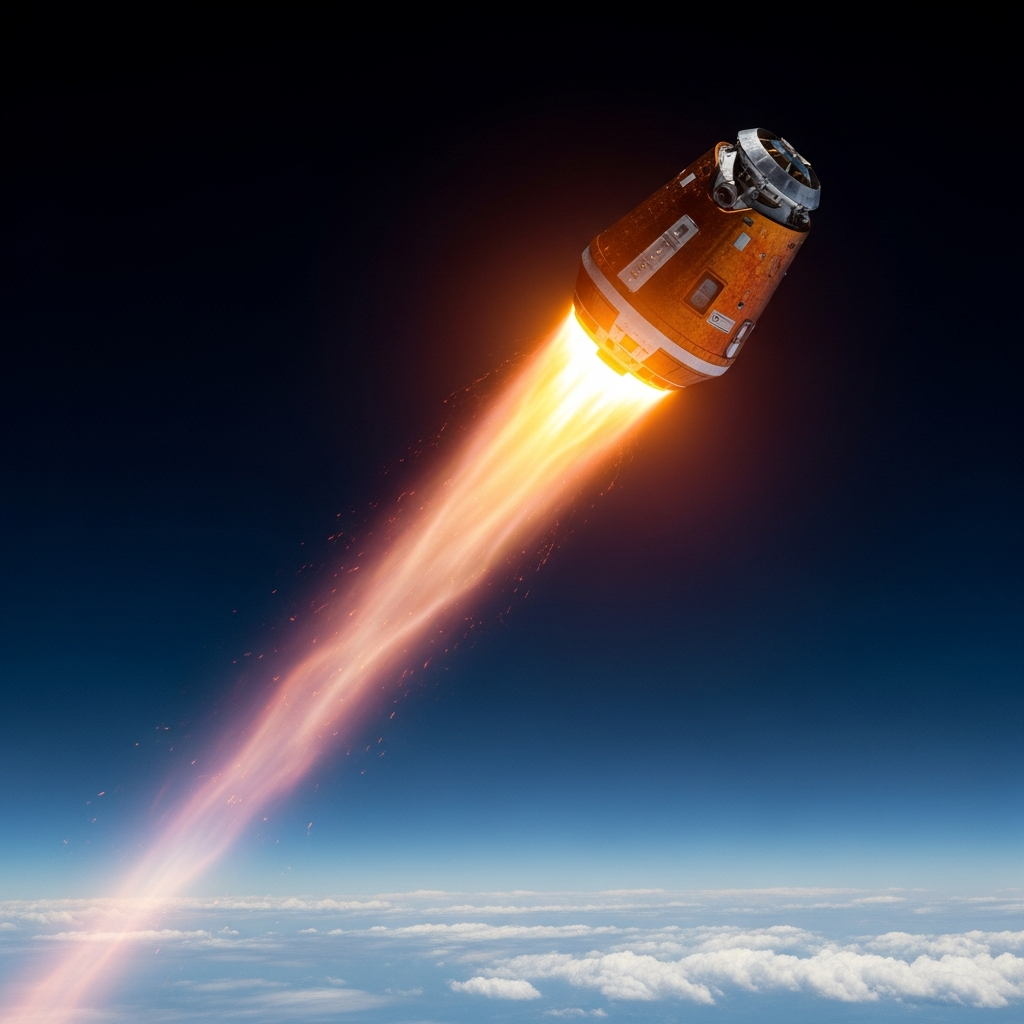
The upcoming reentry of the Artemis II mission represents a pivotal moment for NASA and human spaceflight. Commander Reid Wiseman, pilot Victor Glover, and mission specialists Christina Koch and Jeremy Hansen (from Canada) are set to experience an atmospheric plunge that, while meticulously planned, remains untested with a crew onboard. Their capsule will transform into a brilliant fireball, generating temperatures reaching nearly half that of the sun’s surface, before a planned splashdown off the coast of San Diego.
Unpacking the Artemis I Heat Shield Anomaly
Back in 2022, the uncrewed Artemis I test mission successfully orbited the moon. Upon its return to Earth, NASA employed a novel “skip reentry” approach. This technique involved the capsule briefly grazing the Earth’s atmosphere, then “skipping” back into space before its final, complete reentry. The intention was to reduce G-forces on astronauts and allow for more precise landing control, regardless of the lunar departure trajectory.
However, post-splashdown inspections revealed unexpected damage to the Artemis I heat shield. The heat shield is engineered to gradually erode, or “ablate,” during reentry. This process involves its outer layer heating up, then shedding material as gas and char, effectively carrying heat away from the capsule. Air just inches from the shield can reach 5,000 degrees Fahrenheit, making this protective mechanism vital for maintaining livable internal conditions.
The skip reentry, with its brief respite from intense heat, inadvertently disrupted this critical ablation process. During the “skip” phase, the heat shield’s interior continued to generate gases from residual heat, but its exterior surface, no longer shedding material at the expected rate, trapped these gases. This pressure buildup led to cracks in the heat shield and, subsequently, larger pieces chipping off during the final atmospheric entry. While analyses indicated a crew would likely have survived, NASA deemed such a risk unacceptable for the crewed Artemis II mission.
NASA’s Innovative Solution: A New Reentry Strategy
Faced with the Artemis I heat shield anomaly, NASA considered two primary options for Artemis II. One was to replace the already-built heat shield with a new design, capable of handling the problematic skip reentry path. The second option was to alter the reentry trajectory itself, adopting a simpler, “straight-in” approach that would eliminate the conditions leading to the pressure buildup.
Ultimately, the agency concluded that replacing the Artemis II heat shield would present significant logistical hurdles. Therefore, NASA opted for the latter, more straightforward approach: modifying the reentry path. This decision means that the Artemis II mission will now serve as a crucial test of this revised strategy. Scientists have emphasized that despite extensive ground preparation and simulations, the exact behavior of the Artemis II heat shield will only be definitively known after this bona fide, high-speed reentry.
The Science of Ablation: Protecting Astronauts from Extreme Heat
Ablation is a cornerstone of atmospheric reentry for spacecraft. It’s a carefully engineered process where the heat shield, made of specialized materials, sacrifices its outer layers to protect the vehicle and its occupants. As the capsule plunges into the atmosphere, intense friction and compression superheat the air around it. The heat shield’s exterior heats dramatically, and its material begins to vaporize or char. This hot gas and char then flow away from the capsule, carrying a substantial amount of thermal energy with them.
This controlled erosion ensures that the critical internal structures and the crew inside remain at safe temperatures, even as the outside of the Artemis II heat shield endures extreme thermal stress. The anomaly on Artemis I highlighted the delicate balance required for effective ablation, underscoring that even minor disruptions in the process can have significant consequences. The “straight-in” reentry aims to restore the continuous, controlled ablation profile necessary for optimal heat dissipation.
A Symphony of Surveillance: Monitoring the Fiery Descent
To gather comprehensive data on the Artemis II heat shield’s performance, a joint team of NASA and Department of Defense scientists and test pilots has been assembled. They stand ready to execute a complex, high-speed relay chase as the Orion capsule streaks through the sky. This intricate operation will involve a sequence of specialized aircraft, each playing a crucial role in data collection.
The chase begins with a NASA business jet, followed by a Navy surveillance aircraft, then another NASA jet, and finally, a NASA weather research aircraft. These test pilots, stationed at Southern California military bases, will take turns following the fiery reentry. Ground crews will continuously monitor the Artemis II capsule, providing precise speeds and coordinates to guide the chase planes. Researchers onboard these aircraft will meticulously track the capsule using advanced telescopes and sensors, collecting vital telemetry and visual data. Robert Navarro, project manager at NASA’s Armstrong Flight Research Center, highlighted the extreme precision required, describing it as “threading the needle multiple times” within a very short observation window.
Armstrong Flight Research Center’s Pivotal Role
NASA’s Armstrong Flight Research Center in Edwards, California, plays a central role in this vital data collection effort. Historically, the center has been at the forefront of human flight, even assisting in the design and testing of a mock-up for the Apollo lunar landing vehicle in the 1960s. Its aircraft are often referred to as “flying labs” by former director Brad Flick, emphasizing their role in groundbreaking research.
For Artemis II, an Armstrong team is responsible for the critical third segment of the aerial relay. After splashdown, a separate team from the center will recover a fortified sensor specifically affixed to the capsule’s exterior to study the heat shield up close. Patty Ortiz, deputy project manager for the capsule sensor project, expressed her excitement for this “full-circle moment,” having worked on the project since 2019. The center’s long-standing expertise in pushing the boundaries of flight and collecting crucial data has made it an indispensable asset in understanding the complexities of atmospheric reentry, especially following the issues discovered with Artemis I.
What This Means for Future Lunar Missions
The successful reentry of Artemis II, and particularly the validated performance of its heat shield, is paramount for the entire Artemis program. This mission represents a crucial step toward establishing a long-term human presence on the moon. Proving the reliability of crew safety systems during high-speed atmospheric returns is foundational for subsequent missions, including Artemis III, which aims to land astronauts on the lunar surface.
The data gathered from this Artemis II heat shield test will inform future capsule designs, reentry protocols, and mission planning for deep-space exploration. It underscores NASA’s commitment to prioritizing astronaut safety while pushing the boundaries of scientific discovery and human endeavor beyond Earth’s orbit. The delicate balance between innovative mission profiles, managing unforeseen risks, and ensuring crew protection remains at the heart of NASA’s ambitious lunar exploration goals.
Frequently Asked Questions
What was the specific issue with the Artemis I heat shield during reentry?
The uncrewed Artemis I mission experienced an issue with its heat shield during a novel “skip reentry” maneuver. This method involved briefly popping back into space after an initial dip into the atmosphere. The problem arose because this short respite from intense heat disrupted the heat shield’s ablation process—its designed erosion. Gases generated by the hot interior of the shield became trapped by the temporarily cooler exterior, causing pressure to build up. This ultimately led to cracking and chipping of the heat shield material, which, while not catastrophic for the uncrewed capsule, presented an unacceptable risk for human astronauts.
How will NASA monitor the Artemis II capsule’s heat shield performance during its critical reentry?
NASA will implement a sophisticated, multi-stage aerial surveillance operation to monitor the Artemis II heat shield. A joint team of NASA and Department of Defense test pilots, flying from Southern California military bases, will execute a high-speed relay chase. This will involve a sequence of specialized aircraft, including a NASA business jet, a Navy surveillance aircraft, another NASA jet, and a NASA weather research aircraft. These planes will follow the capsule, guided by precise coordinates from ground control. Researchers aboard the aircraft will use telescopes and sensors to collect detailed data as the capsule descends. Additionally, a fortified sensor affixed to the capsule’s exterior will be recovered after splashdown for close-up study.
Why did NASA choose a modified reentry path for Artemis II instead of redesigning the heat shield?
After identifying the heat shield issues on Artemis I, NASA considered two main solutions for Artemis II: either replace the existing heat shield with a newly designed one or change the reentry path. The agency determined that replacing the already-built Artemis II heat shield would be too complex and logistically challenging, potentially causing significant delays. Therefore, NASA opted for the simpler, more feasible approach of modifying the reentry path. This “straight-in” reentry strategy bypasses the initial atmospheric dip that caused the pressure buildup on Artemis I, aiming to eliminate the conditions that disrupted the heat shield’s crucial ablation process in the first place.
Conclusion: Paving the Way for Humanity’s Lunar Return
The upcoming reentry of the Artemis II mission signifies far more than just the end of a journey; it represents a critical validation point for the future of deep-space human exploration. The lessons learned from Artemis I, and the subsequent engineering and procedural modifications for the Artemis II heat shield, highlight NASA’s meticulous approach to crew safety and mission success. As the world watches the fiery descent of the Orion capsule, the successful test of this revised reentry strategy will not only safeguard the astronauts onboard but also unlock new possibilities for lunar habitats, Martian expeditions, and the broader human endeavor into the cosmos. NASA’s relentless pursuit of innovation, coupled with an unwavering commitment to safety, continues to drive humanity’s reach beyond our home planet.