LG’s ambitious “Rollable” smartphone, a device that promised a truly futuristic experience, never made it to market. This groundbreaking concept from a once-dominant smartphone player offers a fascinating look into the challenges of next-generation mobile technology. A recent, in-depth teardown by YouTube’s JerryRigEverything has provided an unprecedented look inside this unreleased prototype. It powerfully illustrates why the innovative rollable phone form factor, despite its allure, ultimately struggled to take off. We will explore the LG Rollable’s ingenious engineering, its inherent flaws, and the critical lessons it offers for the future of smartphone design.
The Dream of the Rollable Display: A Glimpse into a Future That Wasn’t
LG was once a major force in the smartphone industry, known for pushing boundaries. However, as the market matured, the company faced mounting competitive pressures and declining sales. In its final years, LG desperately sought a way to reclaim its innovative edge. The LG Rollable, teased in 2021, represented a bold last attempt. It promised a unique alternative to traditional smartphones and even the burgeoning foldable phone market.
The early 2020s sparked immense excitement around flexible OLED screens. This new display technology opened the door for revolutionary designs like the Samsung Galaxy Z Fold. Alongside foldables, several manufacturers, including Motorola and Oppo, also showcased intriguing rollable phone concepts. LG’s version, however, stood out. It aimed to offer a larger screen without the added thickness or visible crease often associated with folding devices. The core “party trick” was simple yet captivating: with a quick swipe, the screen would expand from a standard 5.5-inch smartphone display to a nearly 7.5-inch tablet-like experience, offering about 40% more viewable area.
An Engineering Marvel Ahead of Its Time
The LG Rollable was far from a mere concept; it was a highly polished, near-finished product. The device, which JerryRigEverything’s Zack Nelson managed to acquire, was potentially the very unit LG demoed at CES 2021. This working prototype functioned remarkably well, expanding smoothly and silently. Its design even now appears futuristic, potentially outshining some devices in today’s market. LG had clearly invested heavily in making this vision a reality, even developing software features like animated wallpapers that dynamically grew with the display. It also included a clever rear second-screen mode, where the flexible panel would tuck under a glass back to show widgets and camera previews.
Inside the Machine: Unpacking the LG Rollable’s Intricate Design
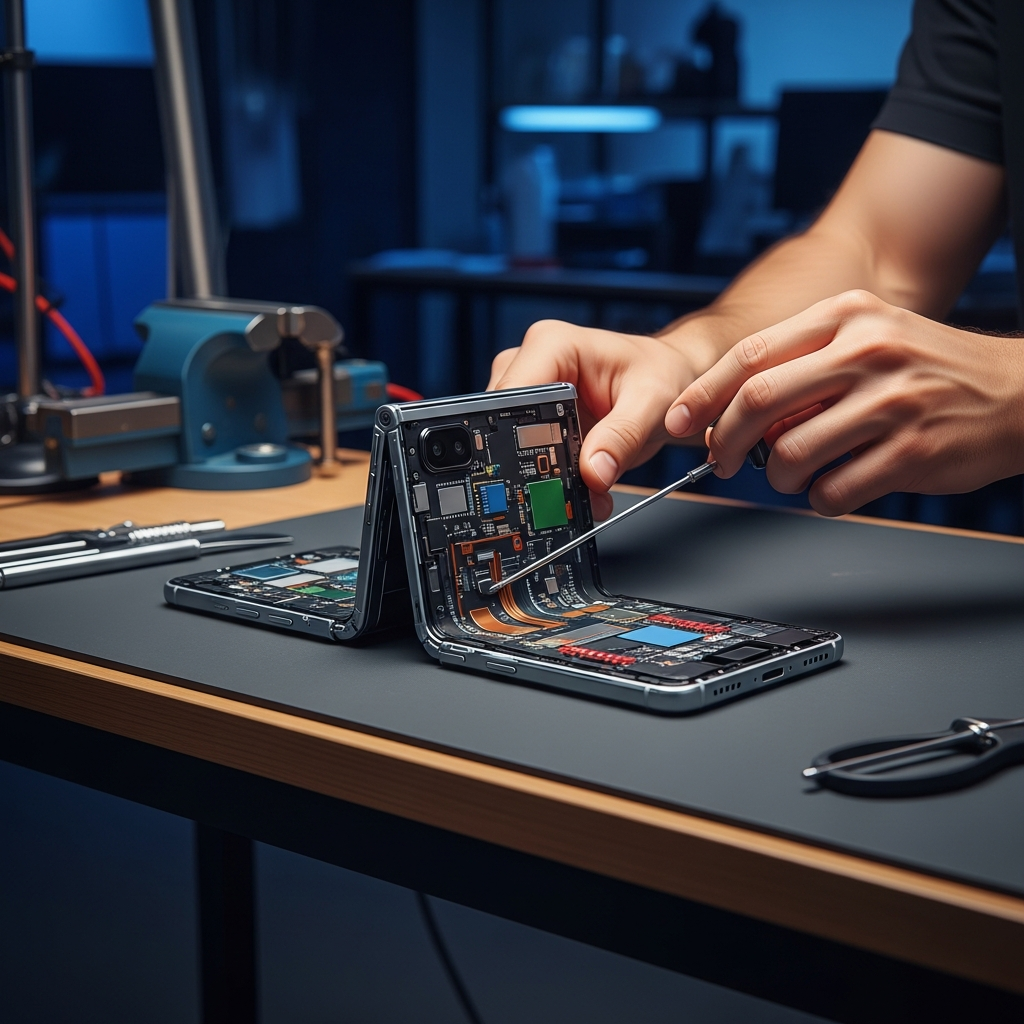
Nelson’s teardown revealed an extraordinary level of engineering complexity hidden beneath the LG Rollable’s sleek exterior. The device’s expansion mechanism is a testament to LG’s sophisticated design capabilities. It utilizes two tiny motors, which are connected via straight teeth to an internal track. These motors are responsible for the smooth, horizontal movement of the display. The screen assembly itself features “zipper-like teeth” along its edges, precisely designed to keep the flexible OLED panel securely locked into the frame as it extends and retracts.
The internal structure is a marvel of miniaturization and precision. A lattice of articulating, spring-loaded arms works in conjunction with the motors, ensuring the OLED panel remains perfectly smooth and even during its entire expansion. This prevents any ripples or unevenness in the display. The battery and motherboard are cleverly housed in a specialized tray, engineered to expand along with the phone’s back as the OLED screen rolls into view. To protect the delicate flexible display from daily wear and tear, LG integrated dust-blocking bristles lining the housing, preventing debris from entering the rolled section of the screen. This detail highlights LG’s foresight regarding durability challenges.
Designed for Robustness, Even in Prototype Form
Despite its intricate moving parts, the LG Rollable was built with impressive robustness. LG internally rated the mechanism for approximately 200,000 extensions, suggesting a design intended for long-term daily use. Furthermore, the teardown itself provided a compelling demonstration of its build quality. Nelson successfully disassembled and then reassembled the phone, powering it back on without damage. This feat is remarkable for such a complex prototype. It hints at a level of repairability that could have been beneficial had the device shipped. The engineering prowess displayed here was truly “over-engineered” to an impressive degree, rivaling top-tier competitors like Samsung at the time.
The Achille’s Heel: Why Rollable Phones Never Rolled Out
Despite its brilliant engineering and innovative spirit, the LG Rollable never reached consumers. The teardown provides clear insights into the fundamental challenges that ultimately doomed the device and, perhaps, the broader rollable phone form factor. These issues proved insurmountable for LG, leading to its difficult decision to exit the smartphone market in 2021.
Prohibitive Manufacturing Costs
The sheer complexity of the LG Rollable’s internals meant it would have been incredibly expensive to produce. Building a device with multiple tiny motors, intricate geared tracks, articulating spring-loaded arms, and a sophisticated expanding frame is far more costly than manufacturing a standard smartphone. Even foldable phones, which rely on passive hinges, were (and remain) premium-priced devices. A motorized rollable phone would have commanded an even higher price tag. Asking consumers to pay “Galaxy Z money” for an LG phone in 2021, given LG’s struggles, was likely a non-starter. This financial barrier was a significant hurdle.
Enduring Durability Concerns
The LG Rollable, with its numerous moving parts, presented substantial durability risks. Every motor, every spring-loaded arm, and every track represented an additional potential point of failure. Early foldable phones faced significant challenges with hinge durability and dust ingress, problems Samsung took several iterations to resolve. A motorized, expanding screen mechanism would be exponentially more vulnerable to dust, grit, and the stresses of daily use. It seems unlikely that the LG Rollable could have reliably withstood years of pocket-dwelling and constant expansion/retraction without mechanical issues. The exposed soft plastic of the outward-facing display, while protected by bristles, was still a point of concern for a device meant for a pocket.
Unexpected Operational Noise
One surprising finding from the teardown was the audibility of the internal motors. When activated, the motors made a noticeable whirring sound. LG engineers, ever resourceful, designed the phone to play a musical chime to mask this operational noise. While a clever workaround, this highlights a fundamental design challenge. A premium device should operate seamlessly and silently. An audible mechanism, even with a melodic cover, could detract from the overall user experience.
Practicality and Market Timing
Beyond the core engineering challenges, the LG Rollable also faced practical hurdles. The prototype featured a somewhat chunky frame. While the device avoided the thickness of a folded phone, the very nature of an expanding screen meant it might not have been ideal for everyday pocketability. Ultimately, LG exited the smartphone business before the market fully matured to embrace such radical designs. Although Samsung Display recently showcased similar “slidable” concepts at MWC 2026, validating LG’s foresight, LG’s timing was unfortunately premature for a commercial launch.
Rollable vs. Foldable: A Form Factor Showdown
The comparison between rollable and folding phones is crucial for understanding the LG Rollable’s context. Both form factors aim to deliver a larger screen in a compact package, leveraging flexible OLED technology. Foldables, like the Galaxy Z Fold series, have “chugged along,” enduring their initial durability issues to become a niche, but established, premium market segment.
The key advantage of the LG Rollable was its crease-free display. Unlike foldables, which inherently have a crease at the bend point, the rollable design offered a perfectly flat, expanded screen. This provided a cleaner and potentially more practical visual experience. However, this advantage came with significant trade-offs in terms of mechanical complexity, potential fragility, and manufacturing cost. While foldables presented their own challenges, their simpler hinge mechanisms ultimately proved more viable for mass production and durability in the short term. The LG Rollable represented an alternative path, a truly innovative leap that the market was perhaps not ready for, or LG itself couldn’t sustain.
LG’s Legacy of Innovation and Its Untimely Exit
LG’s departure from the smartphone market in 2021 marked the end of an era for one of the industry’s most experimental players. The company was renowned for its “wacky concepts,” from hand gestures and rotating screens (like the LG Wing, which became its final smartphone release) to modular accessories. The LG Rollable stands as a powerful testament to this innovative spirit. It showcased LG’s engineering prowess, even as its mobile division faced immense pressure.
The teardown reminds us what the Android world lost when LG ceased smartphone production. It was a company willing to take risks, push boundaries, and invest in bold, if sometimes unproven, technologies. The LG Rollable was a brilliant piece of engineering, designed by a company mere months away from shutting down its mobile operations. It embodies the tragic irony of technological innovation: even groundbreaking ideas, when faced with overwhelming economic and practical barriers, sometimes never see the light of day. The LG Rollable remains a poignant “what if,” a fascinating glimpse into an alternative future for mobile technology.
Frequently Asked Questions
What made the LG Rollable unique compared to contemporary foldable phones?
The LG Rollable offered a distinct motorized expansion system that provided a completely crease-free display. Unlike foldable phones, which bend their screen, the Rollable’s flexible OLED panel would smoothly unroll from behind a glass back, expanding from 5.5 inches to nearly 7.5 inches. This innovative approach offered a larger screen without the visible fold line, providing a cleaner and potentially more immersive viewing experience than early foldable devices.
What were the main engineering challenges that prevented the LG Rollable from launching?
The LG Rollable faced several critical hurdles. Its highly complex internal mechanisms, including dual motors, geared tracks, and articulating spring-loaded arms, made manufacturing extremely expensive. Durability was a significant concern due as multiple moving parts created numerous potential points of failure, making it vulnerable to dust and wear. Additionally, the motors produced noticeable noise during operation, requiring a musical chime to mask it, pointing to a design flaw that could impact user experience.
Are rollable phones still a viable concept for the future smartphone market?
Despite LG’s inability to launch the Rollable, the concept remains highly relevant. Recent demonstrations by companies like Samsung Display at MWC 2026 showcase continued interest in “slidable” or rollable displays. While rollable phones present significant engineering and cost challenges compared to foldables, their ability to offer a larger, crease-free screen without adding excessive thickness is still highly desirable. If manufacturers can overcome the issues of cost, durability, and mechanical complexity, rollable phones could potentially find a niche as aspirational, premium devices in the future.
Conclusion: A Vision Unfulfilled
The teardown of the unreleased LG Rollable offers a captivating post-mortem on a device that truly pushed the boundaries of smartphone design. It reveals LG’s remarkable engineering talent and its unwavering commitment to innovation, even in the face of immense corporate challenges. While the LG Rollable showcased a brilliant solution for expanding screen real estate, its inherent complexities related to manufacturing cost, durability, and operational noise ultimately proved too great. It stands as a powerful reminder that technological brilliance alone does not guarantee commercial success. As foldable phones continue to evolve, the LG Rollable remains a significant, albeit unfulfilled, chapter in the ongoing quest for the next generation of mobile experiences.