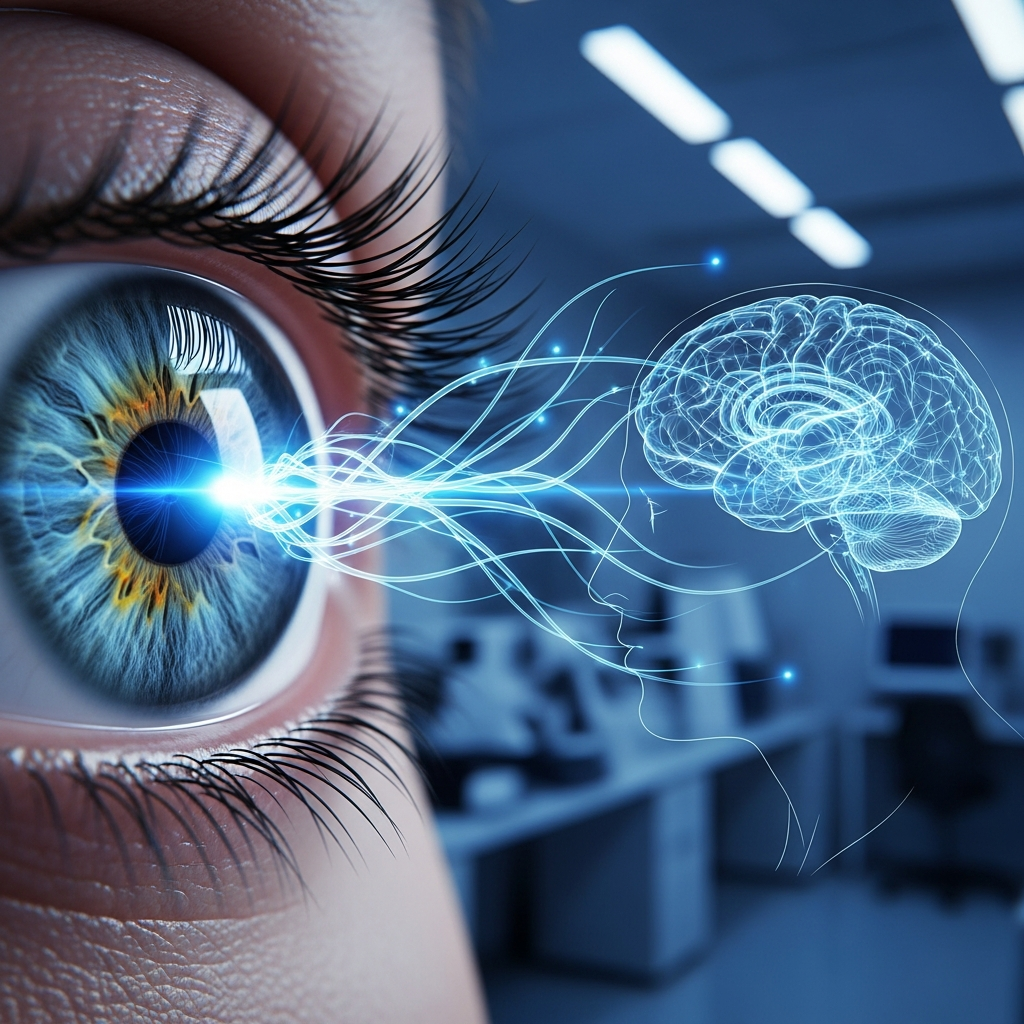
Dementia, a condition that profoundly impacts memory, thinking, and daily life, presents an escalating global challenge. As researchers tirelessly seek ways to detect it earlier, groundbreaking studies are revealing a fascinating connection: your eyes could hold vital clues to your brain’s future, potentially predicting cognitive decline more than a decade before a formal diagnosis. This emerging science offers new hope for early intervention and prevention strategies, emphasizing the often-overlooked link between vision and brain health.
The Eyes: A Unique Window to Your Brain
The human eye is much more than just an organ for sight; it’s a direct, accessible extension of the central nervous system. This unique connection makes the eyes a potential “window to the brain,” offering non-invasive insights into neurological health. Recent large-scale population studies from the United Kingdom, Australia, and China are shedding light on how subtle changes in vision and retinal health might serve as early indicators of impending dementia and Alzheimer’s risk.
Groundbreaking Studies Uncover the Visual Link to Dementia
The evidence linking vision to future cognitive decline is increasingly compelling. Several significant research efforts have pinpointed specific visual metrics that correlate with dementia risk years later.
Slower Visual Processing Speeds Signal Risk
A pivotal UK study, published in 2024, observed over 8,000 participants undergoing a simple visual processing test. Individuals were asked to press a button as soon as they saw a triangle appear on a screen. Researchers found that those with slower visual processing speeds were significantly more likely to receive a dementia diagnosis over the subsequent 12 years. This suggests that the brain regions responsible for rapid visual interpretation may be among the first to show subtle impairments.
Visual Acuity, Social Engagement, and Cognitive Decline
Simultaneously, a 2024 Australian study led by neuroscientist Nikki-Anne Wilson at Neuroscience Research Australia (NeuRA) focused on visual acuity. Analyzing data from 2,281 participants, the study concluded that deteriorating visual acuity was a significant predictor of poorer problem-solving, memory, and attention scores over a similar 12-year period.
Interestingly, Wilson’s team also uncovered a crucial mediating factor: social engagement. “People experiencing poorer vision may be more likely to avoid social events due to anxiety,” Wilson explained. “This too may impact their cognitive performance.” The findings underscore the importance of maintaining social contact, not only because social isolation is an independent risk factor for dementia but also because it can help mitigate the impact of other risks like poor vision.
Retinal Thinning: A Biomarker for Alzheimer’s and FTD
Adding another layer to this understanding, a Chinese study published in Frontiers in Aging Neuroscience in 2025 explored the thickness of the retina. The retina, a thin layer of nerve cells at the back of the eye, can be precisely measured using an Optical Coherence Tomography (OCT) test—a quick, painless, and non-invasive procedure.
Analyzing data from nearly 30,000 adults over almost a decade, the study made a remarkable discovery:
A thinner retina directly correlated with a higher risk of developing Alzheimer’s. Each measurable decrease in retinal thickness corresponded to an approximate 3% increase in Alzheimer’s risk.
Participants with a particularly thin central retinal layer faced a 41% higher risk of developing frontotemporal dementia (FTD), a rarer but more aggressive form of dementia.
Researchers propose that the shared neurodegenerative processes, such as protein accumulation and nerve cell degeneration, that occur in the brain during dementia also manifest in the retina, causing its gradual thinning. This makes the retina an accessible “barometer” of brain health, potentially indicating changes years before cognitive symptoms appear.
The Lancet Recognizes Vision Loss as a New Dementia Risk Factor
The growing body of evidence has not gone unnoticed by the wider scientific community. The Lancet’s latest Commission on dementia in 2024 officially identified late-life vision loss as a new, modifiable risk factor for cognitive decline. It’s estimated to contribute to up to 2.2 percent of dementia cases, comparable to other established risk factors like untreated hearing loss, which contributes to an estimated seven percent of cases.
This recognition carries significant weight. The Commission strongly recommends making screening and treatment for vision loss universally accessible. Their conclusion is clear: “A clear opportunity for dementia prevention exists with treatment of visual loss.”
Beyond Basic Vision: Eye Movement Patterns and Cognition
The intricate connection between our eyes and brain extends beyond simple acuity or retinal thickness. How our eyes move and process information also offers profound insights. Research from institutions like Loughborough University highlights specific eye movement patterns linked to cognitive health:
Inhibitory Control Deficits: Individuals who later develop Alzheimer’s often struggle with “inhibitory control” in their eye movements. This means they have difficulty ignoring distracting visual stimuli, leading their attention to be easily captured by irrelevant information.
Inefficient Facial Scanning: Healthy individuals typically scan new faces in a specific, purposeful pattern (eyes to nose to mouth) to “imprint” and recognize them later. People with dementia, however, often deviate from this standard pattern, which might explain their struggles with recognizing newly met individuals. This suggests a problem with visual processing, not just pure memory recall.
Eye Movements to Enhance Memory: Intriguingly, some studies suggest that deliberate eye movements, particularly rapid left-to-right eye movements, can improve autobiographical memory. Activities like reading and watching television, which involve constant eye movements, are also associated with better memory function and lower dementia risk. While often linked to “brain reserve capacity” from education, the visual engagement itself may play a role.
Actionable Insights: Safeguarding Your Cognitive Health
While the idea of using eye tests for definitive dementia diagnosis is still developing, the emerging research offers powerful, actionable takeaways for individuals concerned about their cognitive health:
Treat Treatable Vision Issues: Conditions like cataracts or uncorrected refractive errors (needing glasses) can worsen vision. Addressing these problems early may not only improve sight but also potentially reduce dementia risk. Regular eye check-ups are paramount, especially as you age.
Prioritize Social Engagement: As the Australian study highlighted, poor vision can lead to social isolation, which itself is a major dementia risk factor. If vision problems are limiting your social life, seek solutions and actively try to maintain connections. Joining clubs, volunteering, or simply reaching out to friends can make a difference.
Embrace a Brain-Healthy Lifestyle: The eyes are part of a larger system. What’s good for your heart is good for your brain and eyes. This includes:
Regular Physical Activity: Exercise can significantly reduce overall dementia risk.
Healthy Diet: A balanced diet supports overall vascular and brain health.
Prioritize Sleep: Consistent, quality sleep is crucial for the brain’s “clearing” processes.
Lifelong Learning: Engaging your brain through learning, reading, and puzzles builds cognitive reserve.
Manage Stress: Chronic stress can impact brain health.
Be Conscientious: Personality traits like high conscientiousness and low neuroticism are linked to lower dementia risk, possibly by building resilience.
- Keep Your Eyes Engaged: Activities that require focused visual attention, such as reading, watching documentaries, or playing certain computer games, might help keep visual processing pathways active and engaged.
- www.sciencealert.com
- www.jpost.com
- theconversation.com
- www.sciencefocus.com
- timesofindia.indiatimes.com
Early Detection, Not Sole Diagnosis: The Future of Screening
It’s crucial to understand that these vision tests are not currently standalone diagnostic tools for individual dementia cases. They are better seen as valuable screening tools that, when integrated with other cognitive assessments, could help identify populations at higher risk. The goal is to flag individuals early, allowing for potential interventions or closer monitoring before severe symptoms manifest.
The non-invasive nature and affordability of tests like OCT scans make them promising candidates for widespread screening in ophthalmology clinics. While advanced eye-tracking technologies still face challenges in cost and accessibility for clinical use, ongoing research aims to make these tools more practical for identifying early-stage Alzheimer’s and other dementias.
Frequently Asked Questions
How exactly do vision changes connect to dementia risk?
Vision changes can indicate dementia risk through several mechanisms. Slower visual processing speeds, where the brain takes longer to interpret what the eyes see, suggest early neural pathway damage. Deteriorating visual acuity (sharpness of vision) can lead to reduced social engagement, a known dementia risk factor. Furthermore, the retina, a direct extension of the brain, can show thinning, which correlates with shared neurodegenerative processes like amyloid plaque accumulation seen in Alzheimer’s disease. These changes often precede cognitive symptoms by over a decade.
What types of eye tests could help predict dementia early?
Several types of eye tests show promise for early dementia prediction. These include visual processing speed tests (like identifying shapes in dynamic patterns), assessments of visual acuity, and Optical Coherence Tomography (OCT) scans to measure retinal thickness. Additionally, specialized eye-tracking technologies analyze eye movement patterns, such as the ability to filter distractions or efficiently scan faces, which can reveal subtle deficits in brain function years before a dementia diagnosis. While not yet routine clinical diagnostics, these are powerful research tools.
What can I do to protect my vision and reduce my dementia risk?
To protect your vision and potentially reduce dementia risk, start with regular eye check-ups to treat any treatable conditions like cataracts or uncorrected refractive errors. Maintain an active social life, as poor vision can lead to isolation, a known risk. Adopt a holistic brain-healthy lifestyle: exercise regularly, eat a balanced diet, prioritize 7-9 hours of quality sleep, engage in lifelong learning activities like reading, and manage stress. These proactive steps support overall brain health and may mitigate various dementia risk factors.
A Glimpse into a Healthier Future
The intricate relationship between our eyes and brain is far more profound than previously imagined. New research increasingly positions eye health and visual function as crucial indicators of long-term cognitive well-being. While dementia remains a complex challenge, the potential for early detection through vision tests offers a powerful avenue for prevention and intervention. By being proactive about eye care, maintaining social connections, and embracing a healthy lifestyle, individuals can take significant steps to safeguard their cognitive future and contribute to a healthier, more informed approach to brain aging.