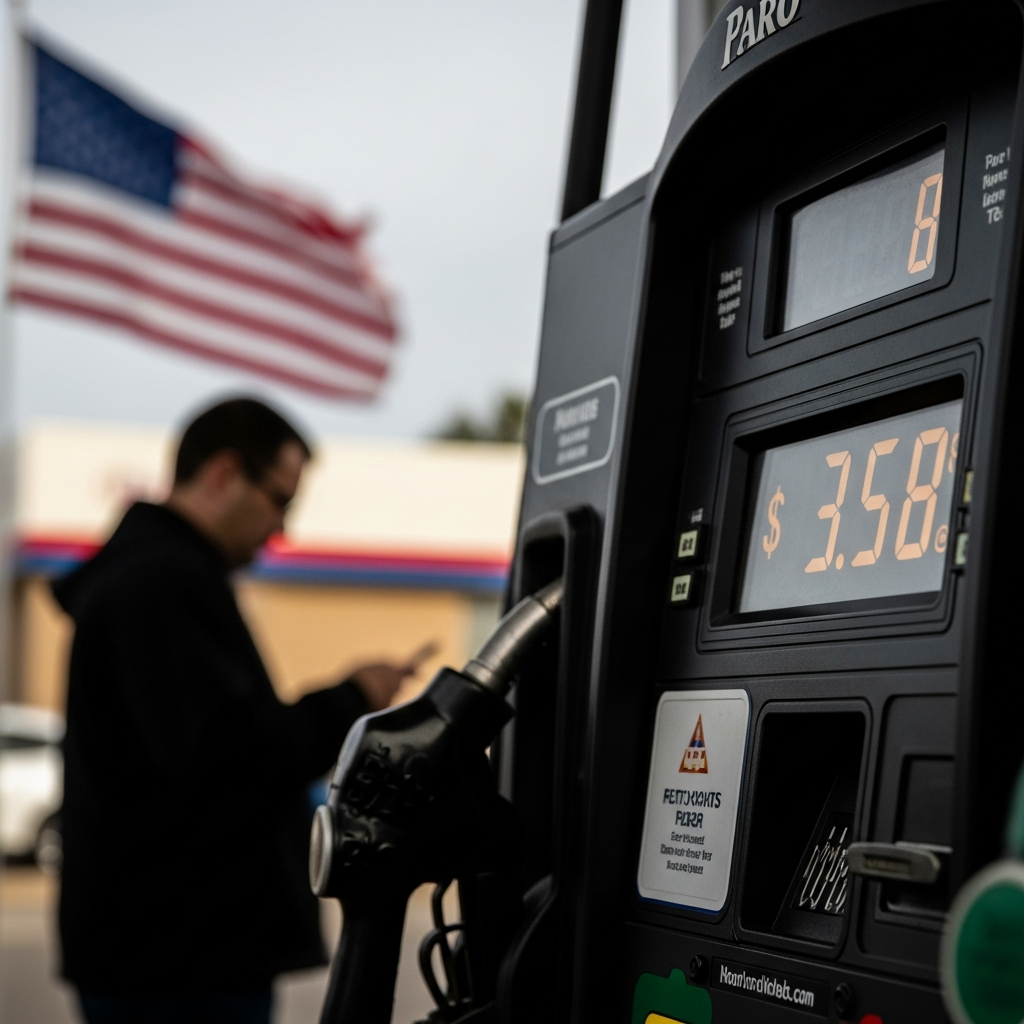
The American motorist is facing an unprecedented challenge at the pump as gasoline prices surge across the nation. For the first time since 2023, every single U.S. state now reports an average regular gas price above $3 per gallon. This widespread increase, pushing the national average to approximately $3.58, represents a significant financial squeeze for households and businesses alike. What’s driving this sudden, uniform leap in fuel costs, and why is America, a major oil producer, so susceptible to global market tremors?
Understanding the Unprecedented Surge in Fuel Costs
The recent jump in gasoline prices has caught many by surprise, transforming the daily commute into a costly affair. Data from early April 2026, compiled by organizations like AAA, shows a stark landscape. Even states traditionally known for lower fuel costs, such as Kansas, have crossed the $3 threshold. Kansas, which recorded an average of $2.96 just a day prior, saw its prices climb to $3.01, cementing this nationwide trend. This development signals growing “pain at the pump” for millions of American consumers.
This dramatic shift isn’t an isolated incident. It’s the culmination of intensifying geopolitical events that have sent shockwaves through the global energy sector. Understanding these underlying causes is crucial for grasping the current market dynamics and what they mean for your wallet.
Geopolitical Tensions Fueling the Price Hike
The primary catalyst behind the recent gas price escalation is the deepening geopolitical instability in the Middle East. Specifically, the U.S.-Israeli attacks on Iran, which commenced in February 2026, have significantly disrupted global oil supplies. This widening conflict has created immense volatility in energy markets, causing gas station signs to change daily for over a month. Oil production and distribution channels in the region face severe threats, leading to a tightening of supply.
The Critical Role of the Strait of Hormuz
A key flashpoint exacerbating the current crisis is the Strait of Hormuz. This narrow waterway, situated south of Iran, is a vital chokepoint. It handles an astonishing 20% of the world’s oil and liquefied natural gas (LNG) shipments. Amidst the escalating conflict, shipping traffic through the Strait has experienced a significant slowdown. This disruption restricts the flow of crude oil to international markets. Furthermore, reports indicate that Tehran has actively targeted regional energy infrastructure. Such actions further strain global production capacities, directly impacting the availability and price of oil worldwide.
Global Supply vs. U.S. Export Status: A Complex Equation
Many Americans wonder why U.S. gas prices are so sensitive to Middle Eastern conflicts when the United States is a net exporter of petroleum products. This appears to be a paradox. However, the explanation lies in the intricate nature of the global oil market. While the U.S. does export finished petroleum products, it still depends on importing millions of barrels of crude oil daily. This imported crude is essential for domestic refineries. They process and blend it with domestically produced oil to create the gasoline we use. Consequently, the cost of these globally sourced barrels directly influences U.S. fuel prices. Any “shockwaves” in the global market, such as those caused by geopolitical tensions, immediately reverberate through the U.S. energy supply chain. This reliance makes America vulnerable to international supply disruptions, regardless of its export status.
Across the Map: Unpacking Regional Gas Price Disparities
While the overall trend shows rising prices nationwide, the cost of gasoline is far from uniform across the United States. There are significant regional disparities in what drivers pay at the pump. For example, in states like California, drivers consistently face some of the highest fuel costs in the country. A gallon of regular unleaded gasoline there can average well over $5. In stark contrast, states like Oklahoma have recently seen prices closer to the $3 mark. These wide ranges highlight how local factors significantly influence what consumers ultimately pay.
Beyond Crude: Local Factors Driving Price Gaps
The differences in gas prices from one state to another are not solely dependent on global crude oil costs. Several regional factors contribute to these disparities. State taxes on gasoline vary considerably, directly adding to the final price. Distribution costs, which include transportation and logistics from refineries to gas stations, also play a role. These costs can be higher in more remote areas or regions with less efficient infrastructure. Additionally, refining margins, the profit refiners make, differ based on regional supply and demand, competition, and specific refinery configurations. Environmental regulations, such as those in California that require specialized fuel blends, can also increase production costs. These combined elements explain why a gallon of gas can cost significantly more in one state compared to another, even within the same national average trend.
What the Future Holds: Economic Impact and Market Interventions
The continuous rise in fuel prices poses a considerable financial burden on American consumers. It chips away at disposable income, impacts transportation costs for goods, and can contribute to broader inflationary pressures. In an effort to stabilize markets and mitigate the deepening energy crisis, international bodies have taken action. The International Energy Agency (IEA), for instance, announced a coordinated release of 400 million barrels from its strategic reserves. This intervention aimed to bolster global supply and alleviate some price pressure.
Before this intervention, Brent crude, the international benchmark for fossil fuel pricing, experienced a substantial surge. It soared from approximately $70 a barrel in late February to more than $110 at the peak of the escalation. Following the IEA’s efforts, Brent futures saw some stabilization, trading between $86 and $91 per barrel. However, the market remains highly volatile. Analysts warn that if the Middle East conflict drags on, fuel prices will likely continue their upward trend. This situation could place an increasing financial strain on American families and businesses for the foreseeable future.
Navigating High Gas Prices: Practical Tips for Consumers
Facing persistently high gas prices requires consumers to be strategic about their fuel consumption. Implementing a few practical habits can help mitigate the financial impact. Firstly, focus on fuel efficiency: ensure your vehicle is regularly maintained, with properly inflated tires and clean air filters. These simple steps can improve your car’s mileage. Secondly, plan your routes efficiently to combine errands and avoid unnecessary trips. Utilizing navigation apps that identify the shortest or least congested routes can also save fuel. Thirdly, consider carpooling or using public transportation when feasible to reduce individual vehicle usage. Finally, shop around for gas prices; various apps and websites can help you locate the cheapest fuel stations in your area, even saving you a few cents per gallon that add up over time.
Frequently Asked Questions
Why have US gas prices recently surged past $3 per gallon in every state?
US gas prices have surged past $3 per gallon in all states primarily due to escalating geopolitical tensions in the Middle East, specifically the U.S.-Israeli attacks on Iran since February 2026. This conflict has disrupted global oil supplies, particularly through critical shipping lanes like the Strait of Hormuz. The resulting tightening of international crude oil availability and increased market volatility have driven up costs. Additionally, the U.S.’s reliance on imported crude for refining, despite being an exporter of finished products, makes it vulnerable to these global market “shockwaves.”
Which US states are experiencing the highest and lowest gasoline prices, and what causes these regional differences?
As of early April 2026, states like California are experiencing some of the highest gasoline prices, often averaging well over $5 per gallon. Conversely, states such as Oklahoma have seen prices closer to $3 per gallon. These regional disparities are due to several local factors beyond global crude costs. Key contributors include varying state taxes on gasoline, differing distribution costs from refineries to gas stations, and diverse refining margins that reflect regional supply, demand, and environmental regulations like those requiring specialized fuel blends.
What impact does the Middle East conflict have on US gas prices, even though America is an oil exporter?
The Middle East conflict significantly impacts US gas prices because the United States, despite being a net exporter of petroleum products, still imports millions of barrels of crude oil daily for its domestic refining needs. When conflicts disrupt global oil supplies, like the U.S.-Israeli attacks on Iran have done to the Strait of Hormuz, the international price of crude oil rises. This increased cost for imported barrels directly translates to higher production costs for gasoline in the U.S., which is then passed on to consumers at the pump.
Conclusion: Adapting to Evolving Energy Realities
The current landscape of US gas prices, with every state now above the $3 mark, underscores the profound interconnectedness of global energy markets and geopolitical stability. The ongoing conflict in the Middle East serves as a stark reminder of how international events directly impact domestic consumer costs. As Americans navigate these elevated fuel costs, understanding the underlying causes—from global supply disruptions to regional market dynamics—becomes essential. While market interventions like strategic reserve releases offer temporary relief, the long-term outlook suggests that vigilance and adaptive consumer strategies will be crucial until global energy markets find a more stable footing.