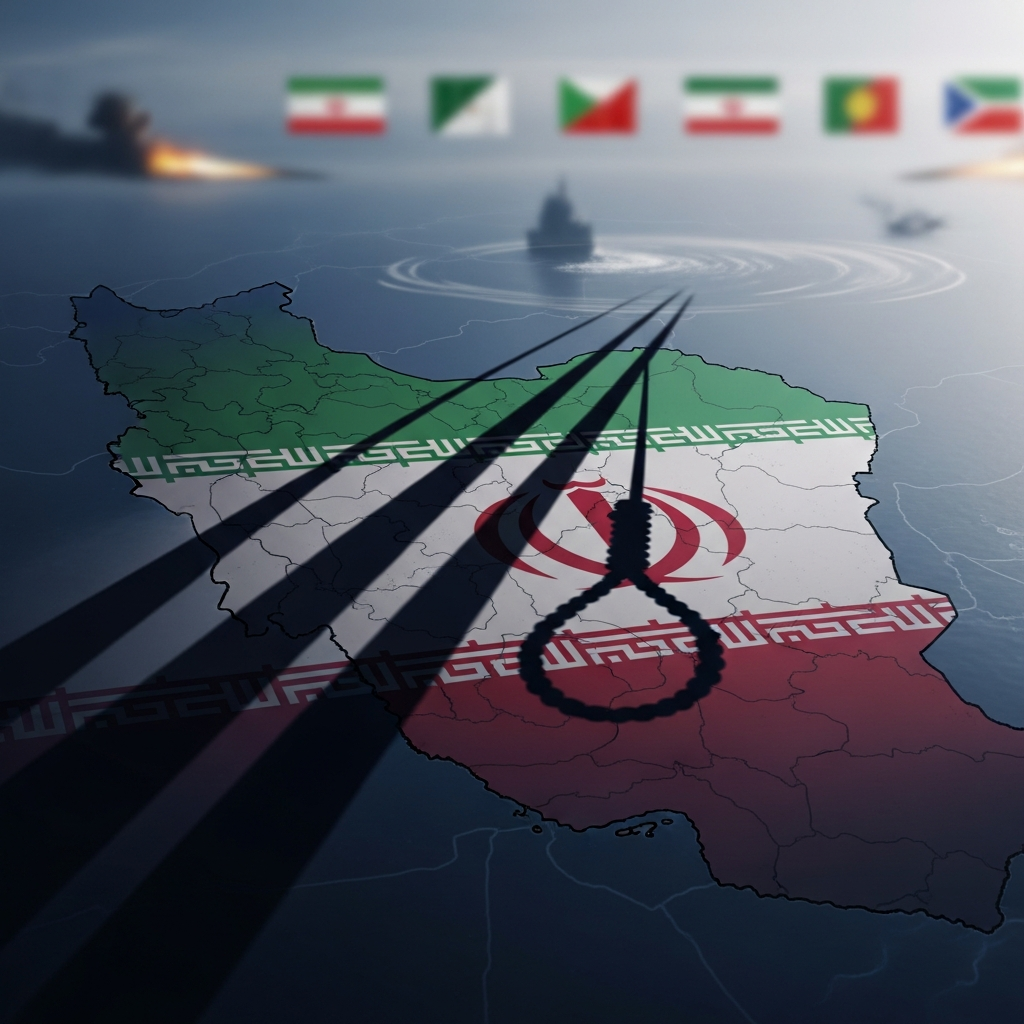
A disturbing surge in Iran executions is unfolding behind the shadow of escalating regional conflict and global concerns over oil prices. Human rights organizations warn that the Iranian regime is systematically weaponizing the death penalty to crush dissent. This alarming trend, marked by profound lack of transparency and severe human rights abuses, appears strategically timed to exploit international distraction. While the world grapples with geopolitical tensions and energy market volatility, hundreds of prisoners face arbitrary death sentences, often following forced confessions extracted under torture, with minimal global outcry.
War’s Shadow: How Geopolitics Shields Iran’s Repression
The ongoing US-Israel war on Iran has created a critical diversion, allowing Tehran to intensify its crackdown. This conflict, now well into its second week, has triggered unprecedented volatility in global energy markets. Threats from Iran’s Revolutionary Guard Corps (IRGC) to close the Strait of Hormuz, a vital shipping lane for one-fifth of the world’s oil, sent Brent crude prices soaring. Attacks on key energy infrastructure in Qatar and Saudi Arabia have further exacerbated fuel price pressures worldwide.
United States President Donald Trump’s stated intent to “take over” the Strait of Hormuz, coupled with his aggressive rhetoric, has monopolized headlines. However, experts note the legal complexities of such a move, as the Strait lies within Iranian and Omani sovereign waters. This focus on military maneuvers and economic repercussions, particularly in the US and UK, has inadvertently lowered the international “political cost” for Iran’s domestic actions.
Global Economic Impact: Fueling Distraction
Across the globe, citizens are feeling the direct economic strain of this escalating conflict. In the United States, gas prices have surged, with the national average jumping significantly since the war began. Americans, regardless of political affiliation, share a common frustration over these rising costs. Many express disillusionment with political promises, seeing the war as directly impacting their daily finances.
Similarly, in the UK, the Labour Party leader Keir Starmer has warned of the profound impact on “lives and households of everybody.” Oil prices exceeding $100 a barrel are translating into higher petrol and energy bills. While the UK economy shows some resilience, its reliance on gas from the Middle East, with 20% of global LNG transiting the Strait of Hormuz, makes it vulnerable to disruption. These tangible economic anxieties consume public and political attention, shifting focus away from severe human rights abuses Iran perpetrates internally.
The Alarming Surge in Iran Executions
Amidst this global backdrop, a stark reality of escalating capital punishment unfolds in Iran. Rights groups report a shocking increase in Iran executions, with the regime deliberately obscuring the true scale. In 2026 alone, at least 145 people are confirmed killed, with over 400 additional cases reported but unverified. This follows an already sharp rise, with the UN special rapporteur noting 1,639 executions in 2025, a significant jump from 975 in 2024. Civil society organizations estimate the 2025 figure to be over 2,000.
Crucially, Iran officially announces only about 7% of these executions. Many death sentences, or even charges that could lead to them, are communicated solely to prisoners and their families. An ongoing internet shutdown further compounds the difficulty of determining the exact number of executions carried out this year. This calculated lack of judicial transparency is a hallmark of the Iranian regime’s dissent suppression tactics.
Weaponizing the Death Penalty to Crush Dissent
Experts like Mahmood Amiry-Moghaddam, director of Iran Human Rights, highlight how global focus on issues like oil prices reduces the political cost of these executions for Iran. Amnesty International’s Iran researcher, Mansoureh Mills, asserts that since the 2022 “Woman, Life, Freedom” uprising, Iranian authorities have “deliberately weaponised the death penalty to instil fear among the population and suppress dissent.” The first deputy chief of the judiciary has publicly confirmed a hardline stance, declaring no leniency for those convicted in connection with recent protests.
This strategy aims to intimidate any opposition. The government uses state media to broadcast executions as a stark warning to the public. This deliberate use of capital punishment as a tool of political suppression underscores the urgent need for international scrutiny.
Harrowing Tales of Torture and Mock Executions
The reality for prisoners in Iran is brutal and defies international legal standards. Peyvand Naimi, 30, arrested during the January protests, endured over a month in solitary confinement. His ordeal included a televised forced confession, two mock hangings, severe beatings, interrogation, psychological torture, and starvation. Despite his family’s insistence on his innocence and the absence of formal charges, he was denied a lawyer, and his relatives fear his execution.
Other documented cases paint a grim picture:
Public Hangings: Nineteen-year-old wrestling star Saleh Mohammadi, along with Mehdi Ghasemi and Saeed Davoudi, were publicly hanged after being convicted of moharebeh (waging war against God) following the January protests.
Dual National Execution: Kourosh Keyvani, a Swedish-Iranian dual national, was executed for alleged spying for Israel.
Unfair Trials: Mohammad Taghavi, 59, and Akbar Daneshvarkar, 60, were executed for baghi (armed rebellion) after what Amnesty International described as grossly unfair trials, marred by torture allegations used to extract forced confessions.
Opposition Members Targeted: Babak Alipour, 34, and Pouya Ghobadi, 33, were executed for membership in an exiled opposition group after months of interrogation and torture.
The Arbitrary Nature of Justice
The Iranian justice system often operates with shocking cruelty and disregard for due process. Shervin Bagherian Jabali, 18, learned of his death sentence for moharebeh via state television. Unaware of the charge’s meaning, he was simply told “Execution.” He reportedly faced three mock executions, with a noose placed around his neck, to coerce confessions.
Danial Niazi, another 18-year-old from the Kurdish minority, was severely beaten, his face bruised and swollen to the point he couldn’t walk. Authorities threatened to arrest and rape his mother, and torture his brother, all to extract confessions for charges including moharebeh. Families of tens of thousands still detained are warned by authorities not to contact anyone.
Deteriorating Prison Conditions and Enforced Disappearances
The human toll extends beyond executions. Reports detail severe overcrowding in prisons, with detainees denied basic necessities like food, water, medicine, and sanitation. Enforced disappearances and torture are rampant. In Mahabad, security forces reportedly used teargas against prisoners protesting for release. In Tehran’s infamous Evin prison, activists and dissidents from Section 209 have been transferred to unidentified locations, leaving families without vital information. The forced removal of 22 prisoners from Ghezel Hesar prison, including a professor’s brother, highlights the extreme secrecy and disregard for families’ rights.
International Accountability and the Need for Action
The urgency for international attention to these escalating Iran death penalty cases cannot be overstated. When crimes are committed in darkness, perpetrators feel secure. Shining a spotlight on these abuses is crucial to create accountability and potentially save lives. The current geopolitical climate, particularly the intense focus on oil prices and regional conflict, inadvertently provides cover for the Iranian regime’s brutal tactics. By understanding this deliberate weaponization of capital punishment and demanding transparency, the international community can exert pressure and expose these grave human rights abuses Iran continues to commit.
Frequently Asked Questions
What factors contribute to the reported surge in Iran executions?
Multiple factors contribute to the alarming surge. The Iranian regime is actively weaponizing the death penalty to suppress dissent, particularly after the 2022 “Woman, Life, Freedom” uprising and the January 2026 protests. This crackdown is intensified by a calculated lack of judicial transparency, internet shutdowns, and the use of torture to extract forced confessions. Additionally, the ongoing US-Israel war on Iran and the resulting global focus on oil prices provide a geopolitical distraction, significantly lowering the international political cost for these human rights violations.
How does the “US-Israel war on Iran” impact global oil prices and what role does the Strait of Hormuz play?
The US-Israel war on Iran has caused significant volatility in global oil markets. Iran has threatened to close the Strait of Hormuz, a critical maritime passage through which about one-fifth of the world’s oil supply transits. This threat, along with attacks on energy infrastructure in the region (like QatarEnergy and Saudi refineries), has driven Brent crude prices above $90 a barrel, briefly topping $119. These rising oil prices directly lead to higher fuel costs for consumers in countries like the US and UK, making global energy security a primary concern and a major international distraction.
What are the main human rights violations documented in Iranian prisons for political prisoners?
Political prisoners in Iran face a litany of severe human rights violations. These include prolonged solitary confinement, physical and psychological torture, mock executions, beatings, and starvation. They are often denied access to lawyers and subjected to grossly unfair trials, where forced confessions, extracted under duress, are used as evidence. Prison conditions are deteriorating with severe overcrowding, and prisoners are denied basic necessities like food, water, medicine, and sanitation. Additionally, enforced disappearances are common, with detainees transferred to unknown locations and families given no or contradictory information about their whereabouts.